





— Blogs —
—Products—
 Consumer hotline +8618073152920
 WhatsApp:+8615367865107
Address:Room 102, District D, Houhu Industrial Park, Yuelu District, Changsha City, Hunan Province, China
Product knowledge
Time:2024-09-08 15:54:28 Popularity:5612
A cup anemometer measures wind speed, while a wind vane measures wind direction. The two instruments are commonly installed together in weather stations because wind speed and wind direction are two different meteorological parameters.
A cup anemometer determines wind speed from the rotation of three or four cups. A wind vane aligns itself with the incoming wind and indicates the direction from which the wind is blowing.
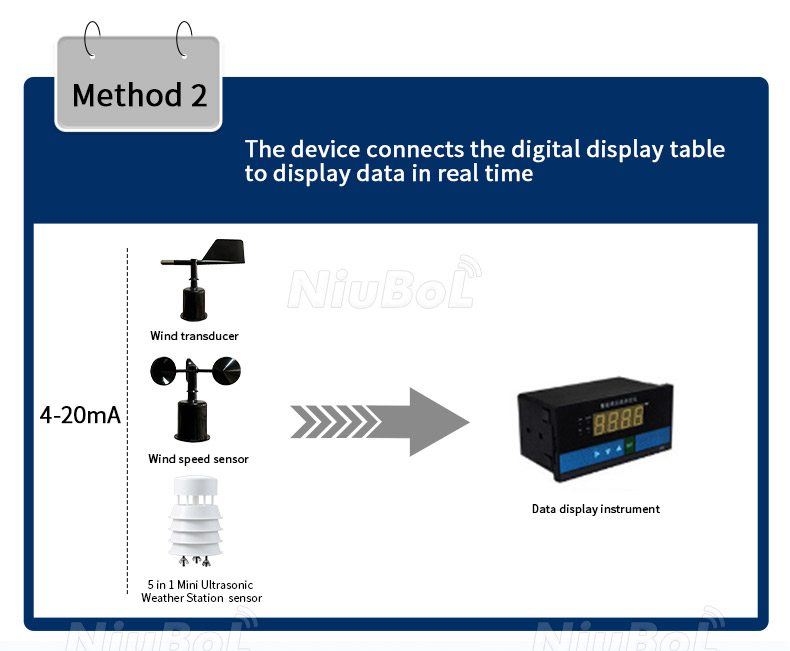
Modern electronic versions can provide RS485 Modbus, 4–20 mA, voltage or pulse outputs for connection to automatic weather stations, PLCs, data loggers and IoT monitoring systems.
| Feature | Cup Anemometer | Wind Vane |
|---|---|---|
| Measures | Wind speed | Wind direction |
| Typical Unit | m/s, km/h, knots | Degrees or compass direction |
| Working Principle | Wind rotates the cups; rotational speed is converted into wind speed. | The vane aligns with the incoming wind. |
| Typical Output | RS485, 4–20 mA, voltage or pulse | RS485, 4–20 mA or voltage |
| Main Applications | Weather, agriculture, wind energy, environmental monitoring | Weather, agriculture, ports, airports and environmental monitoring |
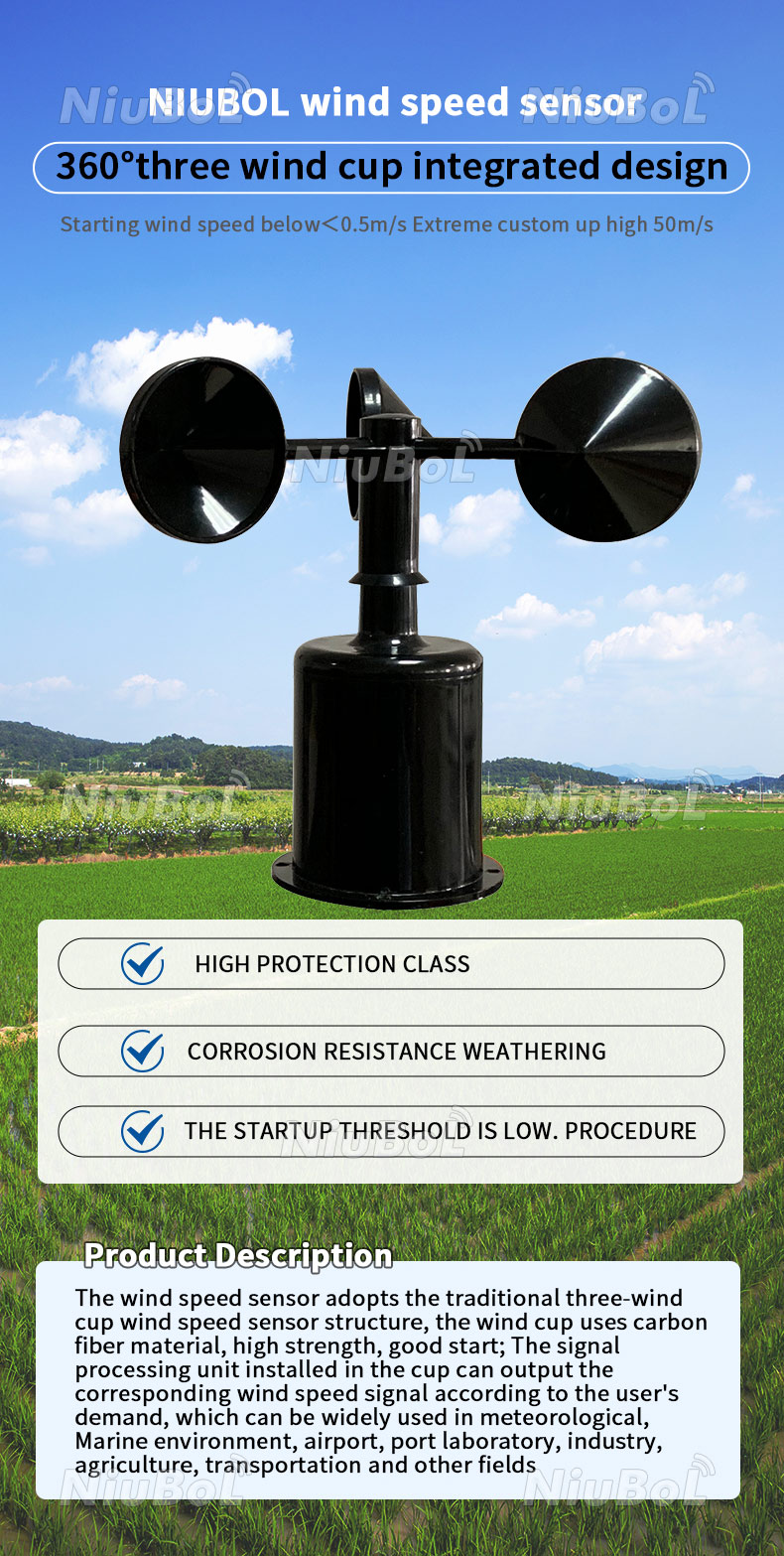
A cup anemometer is a mechanical instrument used to measure wind speed. The sensing element normally consists of three or four cups mounted around a vertical rotating shaft.
When wind acts on the cups, the assembly rotates. As wind speed increases, the rotational speed also increases. An electronic sensor converts this rotation into a measurable electrical signal and calculates the corresponding wind speed.
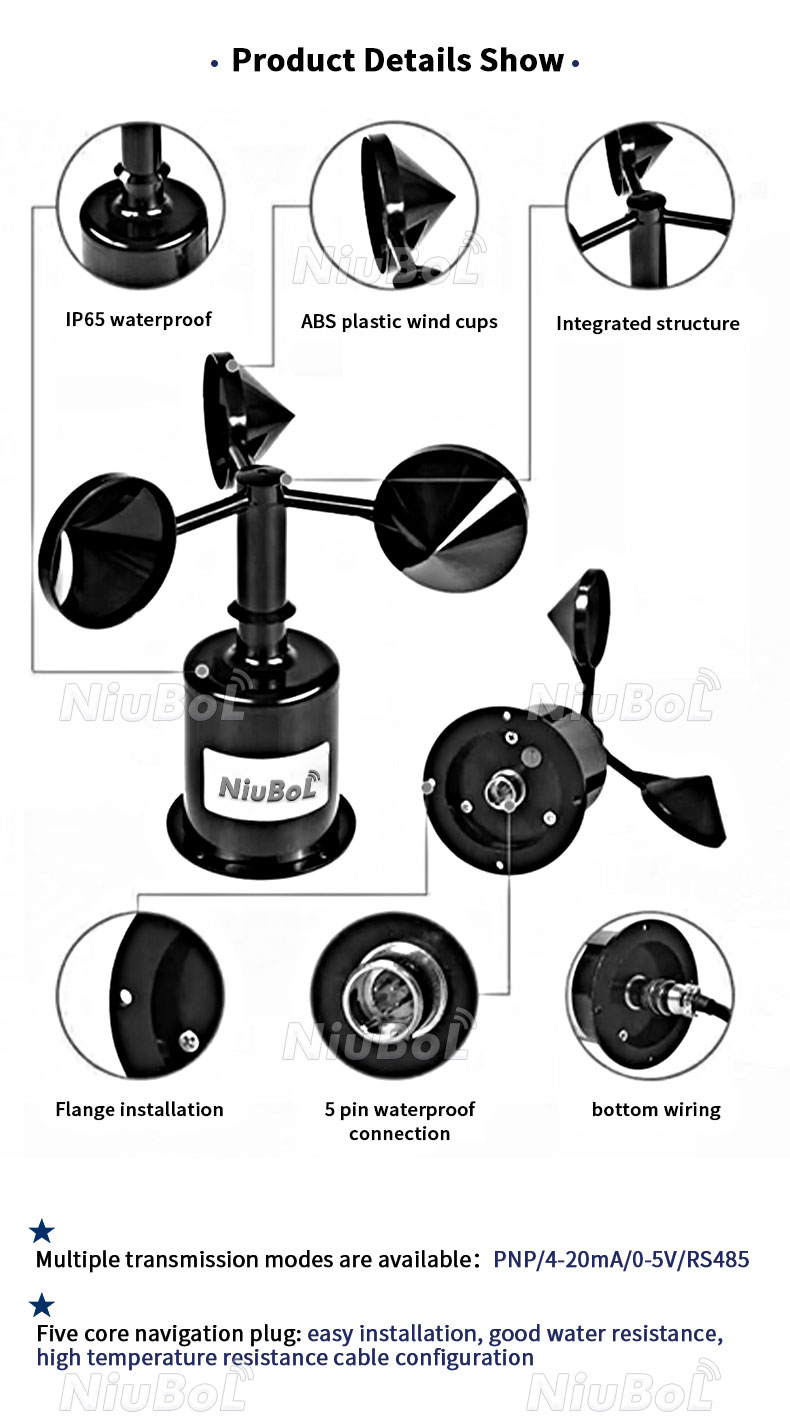
The wind cups experience different aerodynamic forces on their concave and convex surfaces. This difference causes the cup assembly to rotate around the vertical axis.
The sensor detects the rotation electronically. Depending on the model, the signal may be converted into pulse frequency, analog output or digital RS485 Modbus data.
For example, the NiuBoL NBL-W-SS cup wind speed sensor is available with measurement ranges up to 45 m/s or 70 m/s depending on configuration, with 0.1 m/s resolution and multiple output options.
Recommended Product: NBL-W-SS Cup Wind Speed Sensor
Suitable for automatic weather stations, agriculture, ports, environmental monitoring and industrial applications. Available with RS485 Modbus, 4–20 mA, voltage and pulse outputs.View Product →
A wind vane is an instrument used to determine wind direction. It normally consists of a pointer or arrow, a larger tail section, a rotating shaft and a mounting base.
When wind flows around the vane, the larger tail experiences greater aerodynamic force and rotates the assembly until the pointer aligns with the incoming wind direction.
Wind direction is commonly represented as degrees from north or as compass directions such as N, NE, E, SE, S, SW, W and NW.
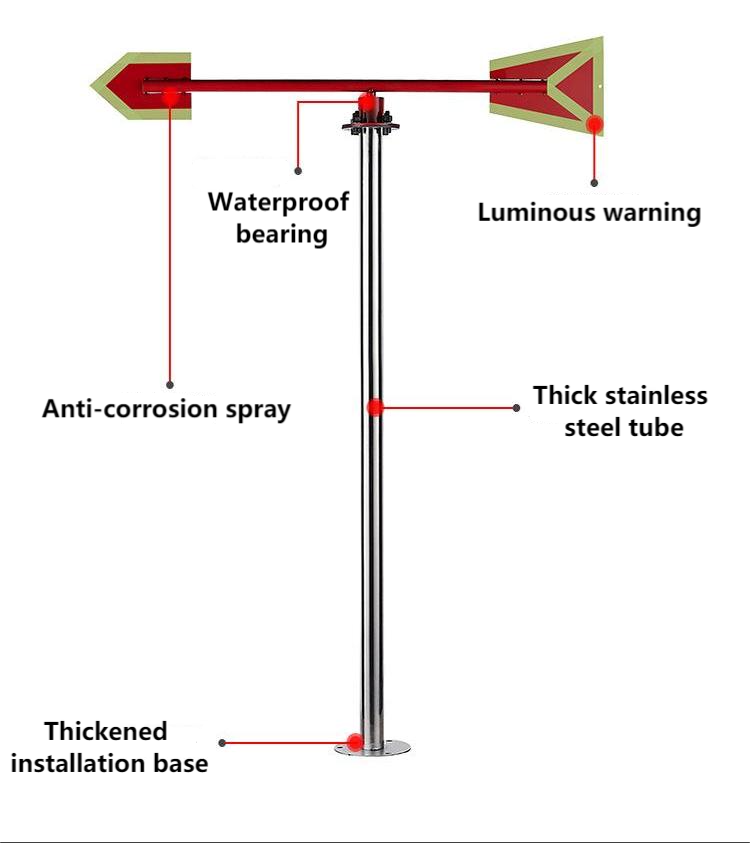
A modern electronic wind direction sensor combines the mechanical wind vane with an internal position-sensing system. As the vane rotates, the sensor converts its angular position into an electrical or digital output.
The NiuBoL NBL-W-DS wind direction sensor measures from 0 to 360°, with approximately 1° resolution and ±3° accuracy. Output options include RS485, 4–20 mA and voltage signals depending on configuration.
Recommended Product: NBL-W-DS Wind Direction Sensor
0–360° wind direction measurement for weather stations, agriculture, ports, airports and environmental monitoring. Available with RS485 Modbus and analog outputs.View Product →
Wind speed alone tells us how fast the air is moving but not where it is coming from. Wind direction alone provides orientation but does not indicate the strength of the wind.
Combining both measurements gives a more complete description of wind conditions. This is important for:
Weather forecasting and meteorological observation
Agricultural spraying and irrigation planning
Wind-energy assessment
Air-pollution dispersion monitoring
Airport and port operations
Construction and crane safety
Road and transportation weather monitoring
Environmental research
| Feature | Cup Anemometer | Ultrasonic Wind Sensor |
|---|---|---|
| Moving Parts | Yes | No |
| Measures | Usually wind speed only | Usually wind speed and direction together |
| Maintenance | Bearings and cups should be checked periodically | Lower mechanical maintenance |
| Cost | Generally lower | Generally higher |
| Typical Use | Conventional weather stations and industrial monitoring | Compact and low-maintenance weather stations |
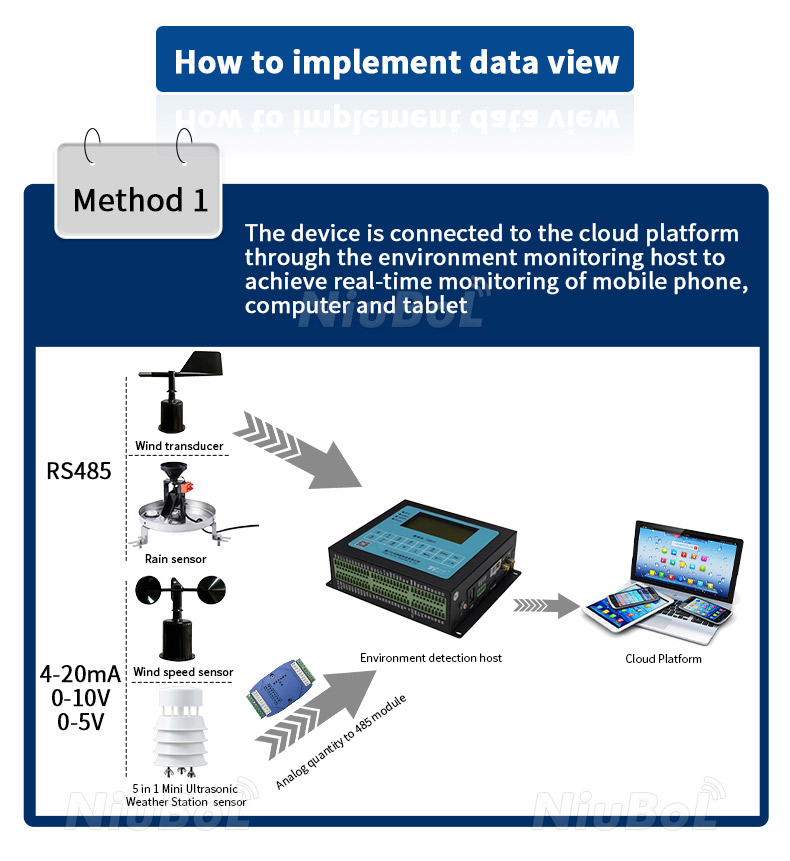
For industrial and IoT projects, wind speed and direction sensors can be connected to a PLC, RTU, data logger or gateway through RS485 Modbus RTU.
Wind Speed Sensor + Wind Direction Sensor → RS485 Modbus → Data Logger / PLC → 4G / Ethernet → Cloud or Customer Server
Multiple RS485 sensors can share the same communication bus when each device uses a unique address and the wiring, power supply and termination are designed correctly.
Wind sensors should be installed where nearby buildings, trees, walls and equipment do not significantly disturb the airflow. The mounting position should represent the wind conditions that the project needs to monitor.
The mounting pole and brackets should remain stable under expected wind conditions. Mechanical vibration or movement can affect measurement quality.
A wind direction sensor must be aligned with the specified geographic reference during installation. For the NBL-W-DS, the reference marking should be oriented according to the installation instructions before the wind direction readings are used.
After installation, confirm that the wind cups rotate freely and that the vane can move smoothly through the full direction range without obstruction.
Inspect the wind cups and vane for physical damage.
Check that the rotating parts move freely.
Remove dust, ice, insects or other debris when necessary.
Check mounting screws and brackets periodically.
Inspect cables and connectors for weathering or damage.
Confirm that the wind direction reference has not shifted.
Check sensor readings if abnormal values or excessive mechanical resistance appear.
Mechanical cup anemometers contain bearings and rotating components, so they generally require more periodic inspection than ultrasonic wind sensors.
Wind speed and direction are core parameters in conventional automatic weather stations and long-term meteorological monitoring.
Wind measurements can support spraying decisions, greenhouse ventilation, irrigation planning and agricultural weather monitoring.
Wind speed data is used for site assessment and operational monitoring. Project requirements for wind-energy applications should determine the required sensor class and accuracy.
Wind speed and direction help explain the movement and dispersion of airborne pollutants when combined with air-quality or gas measurements.
Wind conditions are important for aviation, marine operations and transportation safety. These applications may require project-specific accuracy, installation and certification requirements.
Before selecting a wind sensor, confirm:
Required wind speed range
Required wind speed and direction accuracy
Minimum starting wind speed
Cup/vane or ultrasonic measurement principle
RS485, 4–20 mA, voltage or pulse output
Available DC power supply
Operating temperature
Required cable length
Mounting height and structure
Whether a complete automatic weather station is required
For projects that require separate sensors, a cup anemometer and wind vane provide a simple and widely used configuration. Where compact installation and reduced mechanical maintenance are priorities, an integrated ultrasonic wind sensor may be more suitable.
See also:Wind Speed and Wind Direction Sensors.
No. A standard cup anemometer measures wind speed. A separate wind vane or integrated wind direction sensor is required to measure wind direction.
No. A wind vane indicates wind direction. Wind speed must be measured using an anemometer or another wind-speed measurement instrument.
A wind vane is designed to indicate the direction from which the wind is coming. For example, a northerly wind originates from the north.
Yes. Sensors with RS485 Modbus or compatible analog outputs can be integrated with PLCs, RTUs, data loggers and industrial controllers.
Yes. Wind sensors can connect to a compatible data logger or IoT gateway, which can then transmit data through 4G or Ethernet using protocols such as MQTT or HTTP depending on the system configuration.
Neither is universally better. Cup anemometers are simple, proven and relatively economical. Ultrasonic sensors have no moving parts and can combine wind speed and direction measurement in a compact device. The correct choice depends on accuracy, maintenance, environmental conditions and budget.
Download NBL-W-SS Wind Speed Sensor Instruction Manual
Download NBL-W-DS Wind Direction Sensor Instruction Manual
NiuBoL provides cup anemometers, wind direction sensors, integrated wind sensors, ultrasonic wind sensors and complete automatic weather stations for meteorological, agricultural, environmental and industrial monitoring.
For product selection, provide the required wind speed range, accuracy, output signal, power supply, cable length, operating environment and whether a data logger, 4G communication, solar power system or complete weather station is required.
Prev:What are automated weather stations?
Next:How Does a Rain Gauge Work? Types & Measurement Principles
Related recommendations
Sensors & Weather Stations Catalog
 Agriculture Sensors and Weather Stations Catalog-NiuBoL.pdf
Weather Stations Catalog-NiuBoL.pdf
Agriculture Sensors Catalog-NiuBoL.pdf
Water Quality Sensor Catalog-NiuBoL.pdf
Related products
 Combined air temperature and relative humidity sensor
 TDR Soil Moisture & Temperature Sensor for irrigation| RS485 |4-20mA| NBL-S-THR
 Soil pH sensor RS485 soil Testing instrument soil ph meter for agriculture |NBL-S-PH
 Wind Speed sensor Output Modbus/RS485/Analog/0-5V/4-20mA
 Tipping bucket rain gauge for weather monitoring auto rainfall sensor RS485/Outdoor/stainless steel
 Pyranometer Solar Radiation Sensor 4-20mA/RS485

Screenshot, WhatsApp to identify the QR code
WhatsApp number:+8615367865107
(Click on WhatsApp to copy and add friends)

