





— Blogs —
—Products—
 Consumer hotline +8618073152920
 WhatsApp:+8615367865107
Address:Room 102, District D, Houhu Industrial Park, Yuelu District, Changsha City, Hunan Province, China
Product knowledge
Time:2024-09-12 10:00:07 Popularity:7371
A rain gauge measures precipitation by collecting rain over a known area and converting the collected water into a rainfall depth, normally expressed in millimeters (mm).
Different rain gauges use different measurement principles. A manual rain gauge collects water for direct reading, a tipping bucket rain gauge converts rainfall into calibrated tipping events, and a weighing gauge determines precipitation from changes in mass.
For automatic weather and hydrological monitoring, tipping bucket rain gauges are widely used because rainfall can be converted directly into pulse or RS485 data and transmitted to a weather station, data logger or IoT platform.
The basic principle of rainfall measurement is:
Collect Rain Over a Known Area → Measure the Water → Convert It to Rainfall Depth in mm
Rainfall depth does not describe the volume of water inside the gauge itself. Instead, it represents the depth of water that would cover a horizontal surface if the rainfall were distributed evenly.
1 mm of rainfall = 1 liter of water per square meter.
| Rainfall | Water per m² | Water per Hectare |
|---|---|---|
| 1 mm | 1 L | 10 m³ |
| 10 mm | 10 L | 100 m³ |
| 50 mm | 50 L | 500 m³ |
| Type | Measurement Principle | Typical Application |
|---|---|---|
| Standard / Manual Rain Gauge | Collects rainfall for manual depth measurement | Manual observations and education |
| Tipping Bucket Rain Gauge | Counts calibrated tipping events | Automatic weather, agriculture and hydrology |
| Weighing Rain Gauge | Measures precipitation from accumulated weight | Professional meteorology and research |
| Siphon Rain Gauge | Float records water level continuously before automatic siphoning | Traditional recording stations |
| Optical Rain Sensor | Detects raindrops using optical signals | Specialized automatic monitoring |
Weather radar is also used to estimate precipitation over large areas, but it is a remote-sensing system rather than a conventional point rain gauge installed at one monitoring location.
For a broader comparison, see Types of Rain Gauges.
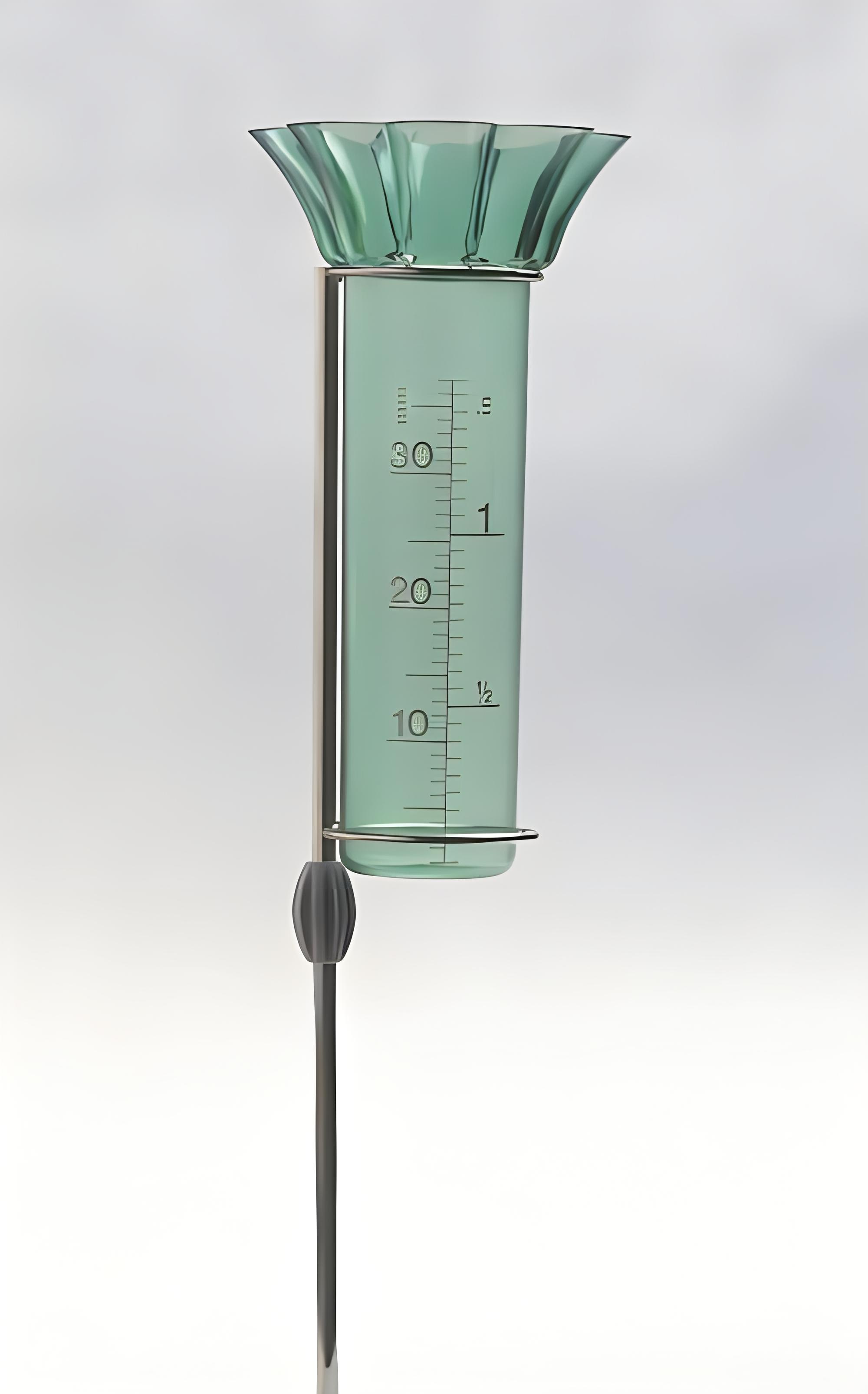
A standard rain gauge is one of the simplest precipitation instruments. Rain falls into a collector or funnel and is directed into a graduated measuring cylinder or storage container.
After a defined observation period, an operator reads the collected rainfall manually. The markings on the measuring cylinder are calibrated so the reading directly represents rainfall depth.
The main advantages are simplicity and low cost. The main disadvantage is that someone must visit the instrument to read and empty it.
A tipping bucket rain gauge collects rain through a funnel and directs it into a small two-sided bucket mechanism.
When one side collects a calibrated quantity of water, the bucket tips. The collected water drains out while the opposite bucket moves into position.
Each tipping movement activates a reed switch or electronic sensor and produces one measurement event.
Rain → Funnel → Calibrated Bucket → Tip → Pulse / Digital Data → Rainfall Value
For example, with a 0.2 mm tipping bucket rain gauge:
| Tips | Calculated Rainfall |
|---|---|
| 1 | 0.2 mm |
| 5 | 1.0 mm |
| 25 | 5.0 mm |
| 50 | 10.0 mm |
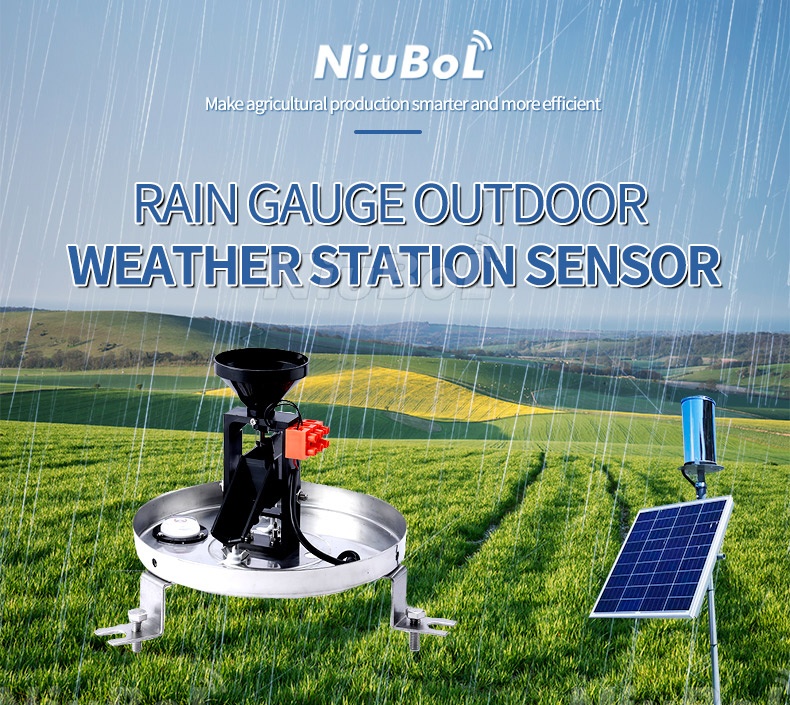
Recommended Product: NBL-W-RS Tipping Bucket Rain Gauge
Designed for automatic rainfall monitoring in meteorology, hydrology, agriculture and environmental monitoring. Pulse and RS485 configurations are available depending on the selected model.
View NBL-W-RS Rain Gauge →
For a detailed explanation, see Tipping Bucket Rain Gauge Working Principle.
A weighing rain gauge collects precipitation in a container positioned on a weighing mechanism or load cell.
As precipitation accumulates, the mass increases. The instrument continuously measures the change in weight and converts it into equivalent precipitation depth.
Because the instrument measures accumulated mass rather than relying on discrete bucket tips, weighing gauges can provide detailed precipitation records and can be designed for rain, snow or mixed precipitation depending on the instrument configuration.
A siphon rain gauge is a traditional recording instrument. Rain enters a float chamber and raises a float as the water level increases.
The float moves a recording pen, which draws the rainfall accumulation curve on a chart driven by a clock mechanism.
When the water reaches a defined level, a siphon automatically empties the chamber. The pen returns to its starting position and a new measurement cycle begins.
Modern electronic data loggers have largely replaced mechanical chart recorders in many automatic monitoring applications.
Optical rain sensors use changes in light caused by falling raindrops to detect precipitation.
Depending on the design, a light source and detector monitor changes in transmitted or scattered light when raindrops pass through the sensing area.
Signal-processing algorithms then estimate precipitation presence, intensity or drop characteristics.
Optical sensors have no tipping mechanism, but their performance depends on optical design, contamination, environmental conditions and the manufacturer's signal-processing method.
Automatic rain gauges convert precipitation into an electrical signal that can be recorded without manual observation.
Typical signal options include:
| Output | How It Works | Typical Connection |
|---|---|---|
| Pulse / Dry Contact | One event for each calibrated bucket tip | Weather logger / pulse counter |
| RS485 Modbus | Digital transmitter provides rainfall data | PLC / RTU / data logger |
| Voltage | Rainfall represented by analog voltage | Analog acquisition system |
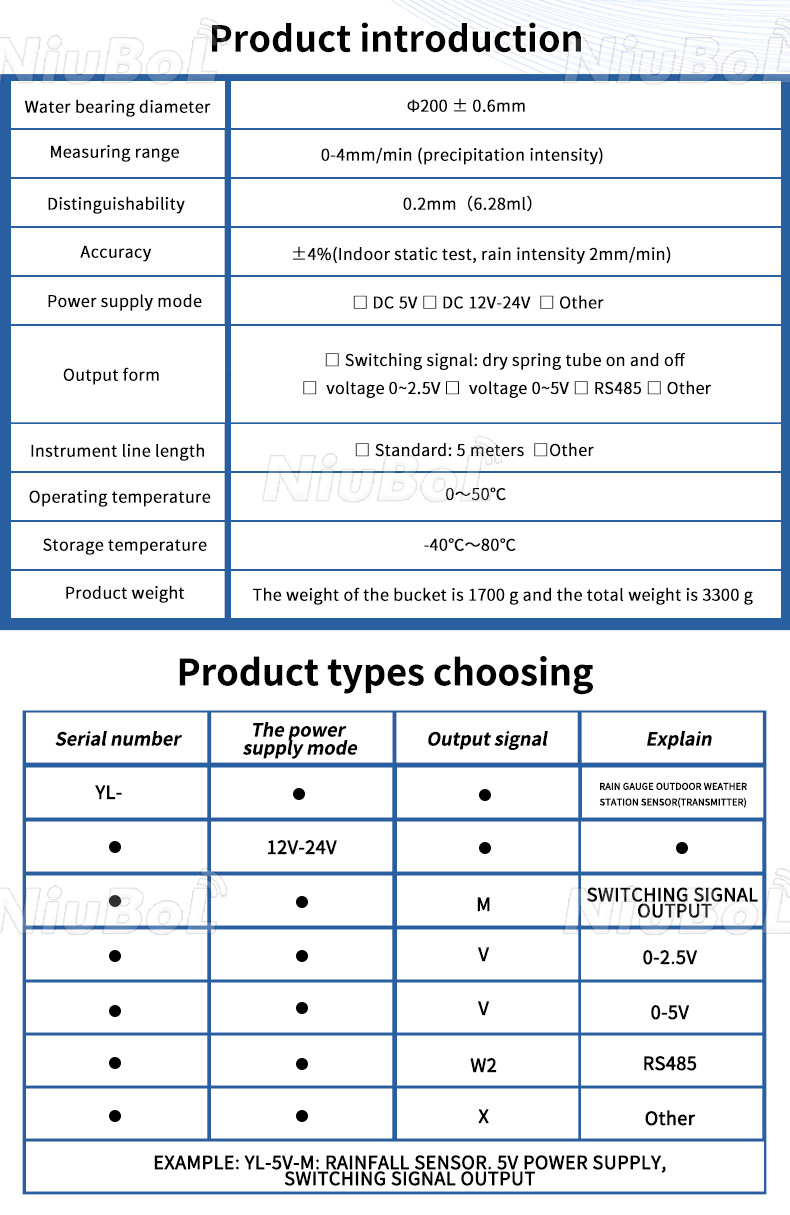
Rain Gauge → Pulse / RS485 → Data Logger → 4G / Ethernet → MQTT / HTTP → Cloud or Private Server
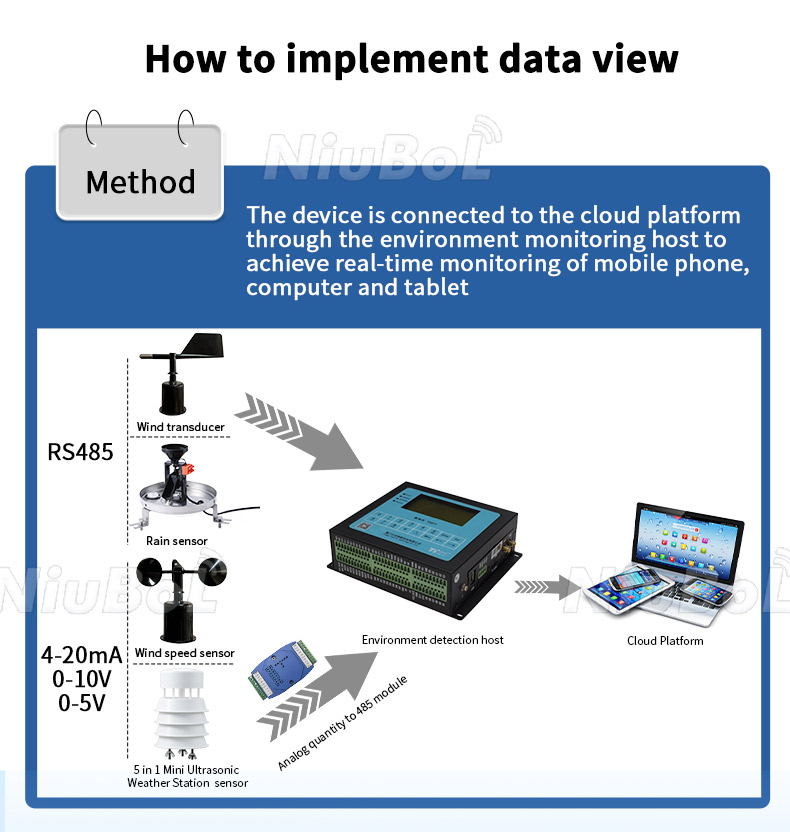
| Measurement Principle | Tipping bucket |
| Collector Diameter | Φ200 ±0.6 mm |
| Rainfall Intensity Range | 0–4 mm/min |
| Resolution | 0.2 mm / 6.28 ml |
| Accuracy | ±4% under specified indoor static test conditions at 2 mm/min |
| Output Options | Reed switch / pulse, RS485 and other options depending on model |
| Power Supply | 5 V or 12–24 V DC depending on configuration |
| Standard Cable | 5 m |
| Working Temperature | 0–50°C |
| RS485 Protocol | Modbus RTU |
| Default Baud Rate | 9600 bps |
Rainfall amount and rainfall intensity describe different aspects of precipitation.
| Measurement | Meaning | Typical Unit |
|---|---|---|
| Rainfall Amount | Accumulated precipitation during a period | mm |
| Rainfall Intensity | Rate at which precipitation is falling | mm/h or mm/min |
For a tipping bucket gauge, accumulated rainfall is calculated from the total number of tips, while intensity can be estimated from the timing between successive tips.
Wind changes the trajectory of falling raindrops and can reduce the amount of precipitation captured by the collector.
A tipping bucket gauge must be level so both sides of the mechanism operate correctly.
Buildings, trees and other structures can alter airflow and rainfall catch around the gauge.
Leaves, insects, mud and dust can block the funnel or water channel.
Mechanical tipping gauges can show intensity-dependent error during very heavy rainfall because water continues flowing while the bucket moves between positions.
A standard unheated rain gauge is intended mainly for liquid precipitation. Snow and freezing precipitation may require a heated or specialized gauge.
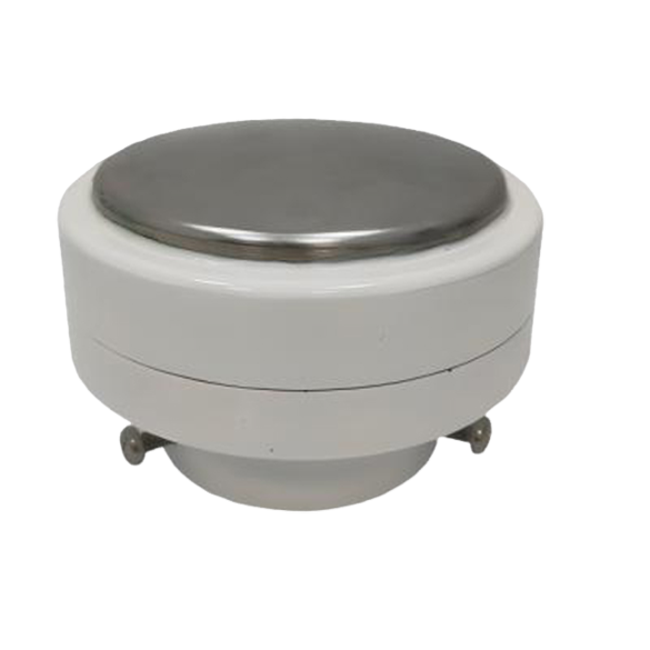
For reliable rainfall data:
Choose an open and representative location.
Avoid unnecessary interference from nearby buildings and trees.
Mount the instrument securely.
Keep a tipping bucket rain gauge level.
Check that water can flow freely through the funnel.
Confirm the bucket moves without obstruction.
Test the signal after installation.
Provide reasonable access for cleaning and maintenance.
Automatic rain gauges still require routine inspection. A tipping bucket gauge should not be treated as completely maintenance-free.
Remove leaves, insects, mud, sand and dust.
Clean the collector and filter.
Check the internal water path.
Confirm that the tipping mechanism moves freely.
Check that the instrument remains level.
Inspect cables and connectors.
Perform a controlled water test if values appear abnormal.
| Requirement | Recommended Type |
|---|---|
| Simple manual rainfall observation | Standard manual gauge |
| Automatic weather station | Tipping bucket rain gauge |
| RS485 PLC / IoT system | RS485 tipping bucket rain gauge |
| Rain, snow and mixed precipitation | Suitable weighing / heated precipitation gauge |
| No moving tipping mechanism | Optical or other electronic precipitation sensor |
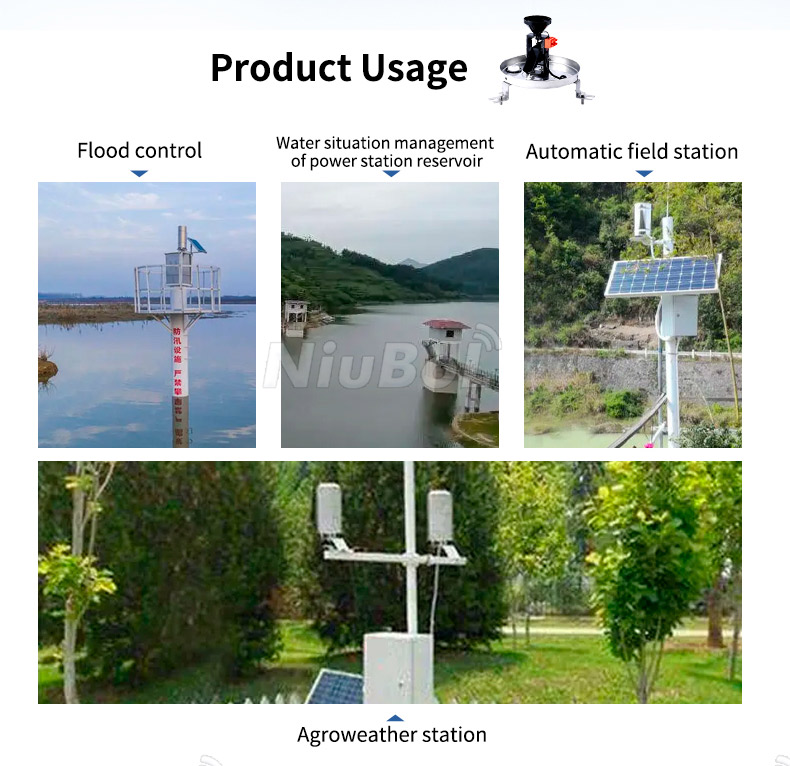
A1. A rain gauge collects precipitation over a known area and converts the collected water into rainfall depth, normally expressed in millimeters.
A2. One millimeter of rainfall means one liter of water has fallen on each square meter of horizontal area.
A3. Rain fills one side of a calibrated bucket. When the defined volume is reached, the bucket tips and creates a pulse or measurement event. The system counts these events to calculate rainfall.
A4. For a 0.2 mm tipping bucket gauge, each completed bucket tip represents 0.2 mm of rainfall.
A5. Yes. Automatic gauges can determine rainfall intensity from the amount of rainfall measured over time. Tipping bucket systems can use the timing between successive tips.
A6. Yes. An RS485 Modbus rain gauge can connect to a compatible PLC, RTU or data logger. Pulse versions require a pulse-counting input.
A7. Leveling is particularly important for tipping bucket gauges because an inclined mechanism can change the tipping balance and measurement accuracy.
A8. Yes. Funnels, filters and water paths should be inspected regularly for leaves, insects, dust and other debris.
A9. A standard unheated tipping bucket gauge is mainly intended for liquid precipitation. Snow and freezing precipitation may require a heated or specialized instrument.
A10. Yes. An RS485 rain gauge can connect to a compatible data logger or IoT gateway, which can send data through protocols such as MQTT, HTTP or TCP.
1. NBL-W-ARS Tipping Bucket Rain Gauge Instruction Manual
 NBL-W-ARS-Tipping-bucket-rain-gauge-instruction-manual.pdf
2. NBL-W-RS Rain Sensor Instruction Manual
NBL-W-RS-Rain-sensors-instruction-manual-V4.0.pdf
3. NBL-W-DRS Double Tipping Bucket Rain Sensor 0.1 mm Manual
NBL-W-DRS-Double-Tipping-Bucket-Rain-Sensor-Instruction-Manual.pdf
NiuBoL provides tipping bucket rain gauges and automatic rainfall sensors for meteorological stations, hydrology, agriculture, reservoirs, flood monitoring and environmental IoT projects.
For product selection, provide the required resolution, output signal, quantity, cable length, operating environment and whether a data logger, 4G gateway, solar power system or complete automatic weather station is required.
Related recommendations
Sensors & Weather Stations Catalog
 Agriculture Sensors and Weather Stations Catalog-NiuBoL.pdf
Weather Stations Catalog-NiuBoL.pdf
Agriculture Sensors Catalog-NiuBoL.pdf
Water Quality Sensor Catalog-NiuBoL.pdf
Related products
 Combined air temperature and relative humidity sensor
 TDR Soil Moisture & Temperature Sensor for irrigation| RS485 |4-20mA| NBL-S-THR
 Soil pH sensor RS485 soil Testing instrument soil ph meter for agriculture |NBL-S-PH
 Wind Speed sensor Output Modbus/RS485/Analog/0-5V/4-20mA
 Tipping bucket rain gauge for weather monitoring auto rainfall sensor RS485/Outdoor/stainless steel
 Pyranometer Solar Radiation Sensor 4-20mA/RS485

Screenshot, WhatsApp to identify the QR code
WhatsApp number:+8615367865107
(Click on WhatsApp to copy and add friends)

