





— Blogs —
—Products—
 Consumer hotline +8618073152920
 WhatsApp:+8615367865107
Address:Room 102, District D, Houhu Industrial Park, Yuelu District, Changsha City, Hunan Province, China
Product knowledge
Time:2024-01-14 14:32:52 Popularity:25945
Rain gauges are instruments used to measure the amount of precipitation that falls at a particular location over a specified period of time. Rainfall data can be used to understand precipitation amount, intensity, duration and distribution, making rain gauges important for meteorological observation, hydrological monitoring, flood warning, agricultural irrigation, water resource management and environmental research.
Different rainfall monitoring applications require different measurement technologies. Common types include standard rain gauges, tipping bucket rain gauges, weighing rain gauges, optical rain gauges, piezoelectric rain gauges and acoustic rain gauges.
A standard rain gauge, also called a cylindrical or manual rain gauge, is one of the simplest instruments for measuring rainfall. It normally consists of a collection funnel and a graduated measuring cylinder. Rain enters the funnel and is collected for manual measurement after the rainfall event.
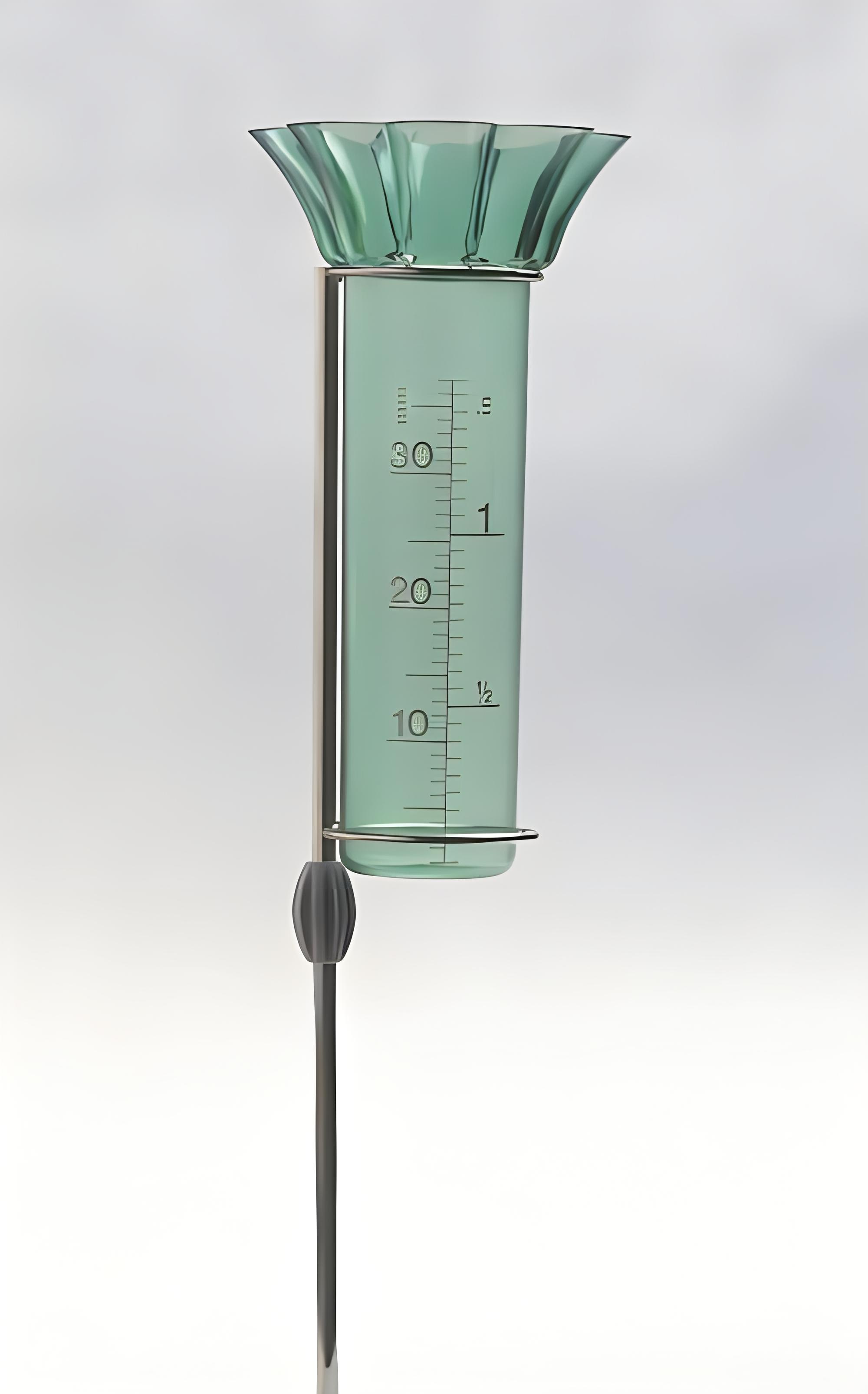
Advantages
Simple construction and easy operation
Relatively low cost
No external power normally required
Direct measurement of collected rainfall
Easy to inspect and maintain
Typical Applications
Basic meteorological observation
Agricultural rainfall records
Education and research
Manual environmental monitoring
Sites without automatic data transmission
The main limitation is that readings normally need to be taken manually, making this type less suitable for remote and unattended stations.
The tipping bucket rain gauge is one of the most widely used automatic rainfall measurement instruments. Rainwater enters a collection funnel and flows into a two-sided tipping bucket mechanism. When one side reaches a calibrated volume, the bucket tips, empties the water and positions the opposite side under the outlet.
Each tipping action produces an electrical pulse or switching signal. By counting the number of tips, the monitoring system calculates accumulated rainfall, while the time interval between tips can be used to determine rainfall intensity.
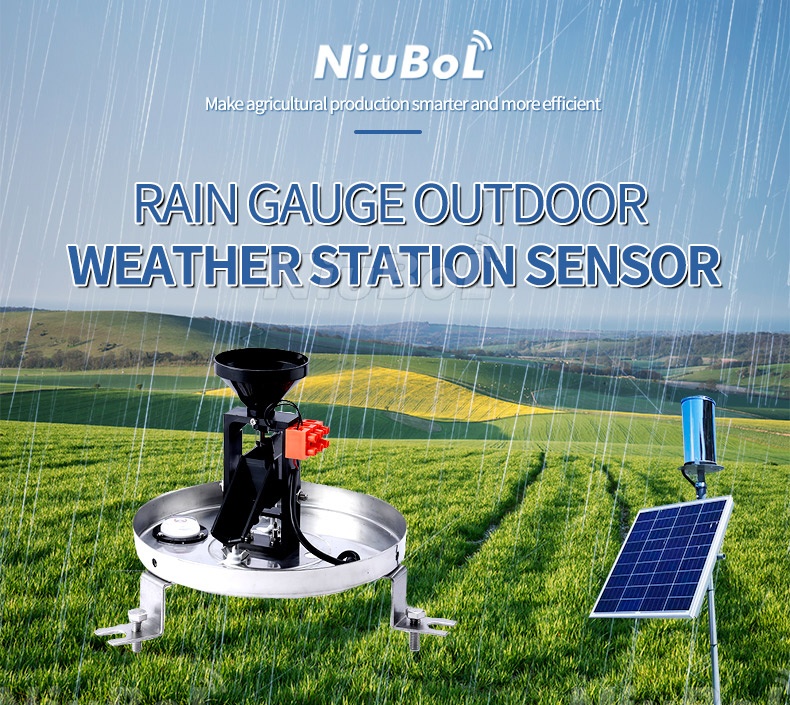
Advantages
Automatic rainfall measurement
Continuous unattended monitoring
Real-time rainfall data collection
Measures rainfall amount and rainfall intensity
Self-emptying after each tipping event
Easy integration with data loggers and weather stations
Typical Applications
Agricultural monitoring
Smart irrigation
Hydrological stations
Flood monitoring
IoT weather monitoring systems
Depending on the model, tipping bucket rain gauges may have resolutions such as 0.1 mm, 0.2 mm or 0.5 mm per tip. The appropriate resolution should be selected according to project requirements. Resolution and overall measurement accuracy are not the same specification.
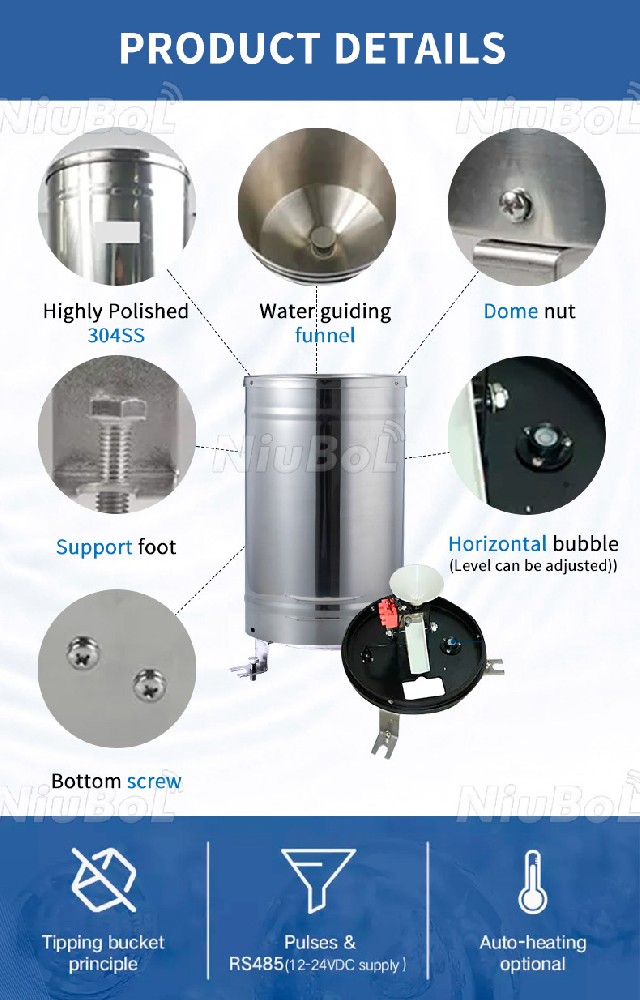
Related Product:Stainless Steel Tipping Bucket Rain Gauge
A weighing rain gauge measures precipitation by monitoring the weight of collected water or precipitation. Rain enters a collection container mounted on a weighing mechanism or load cell. As precipitation accumulates, the increase in weight is converted into precipitation depth.
Advantages
High measurement accuracy
Direct measurement based on precipitation mass
Continuous accumulation measurement
Suitable for long-duration precipitation events
Some designs can measure rain, snow and mixed precipitation
Typical Applications
Professional meteorological stations
Climate research
Hydrological research
Precipitation reference stations
Scientific monitoring networks
Compared with tipping bucket gauges, weighing rain gauges are generally more complex and may involve higher equipment and maintenance costs.
An optical rain gauge uses light, infrared or laser sensing technology to detect precipitation. When raindrops pass through the sensing area, they interrupt, scatter or change the optical signal. The instrument analyses these changes to estimate rainfall intensity and, depending on the sensor design, raindrop characteristics.
Advantages
No tipping bucket mechanism
Fast response to precipitation
Suitable for real-time rainfall detection
Low mechanical wear
Some models can analyse raindrop characteristics
Typical Applications
Meteorological monitoring
Road weather monitoring
Transportation systems
Research applications
Automatic precipitation detection
A piezoelectric rain gauge detects the impact generated when raindrops strike a sensing surface. The impact causes the piezoelectric element to produce an electrical signal. By analysing the number, amplitude and characteristics of these signals, the sensor can estimate rainfall amount and rainfall intensity.
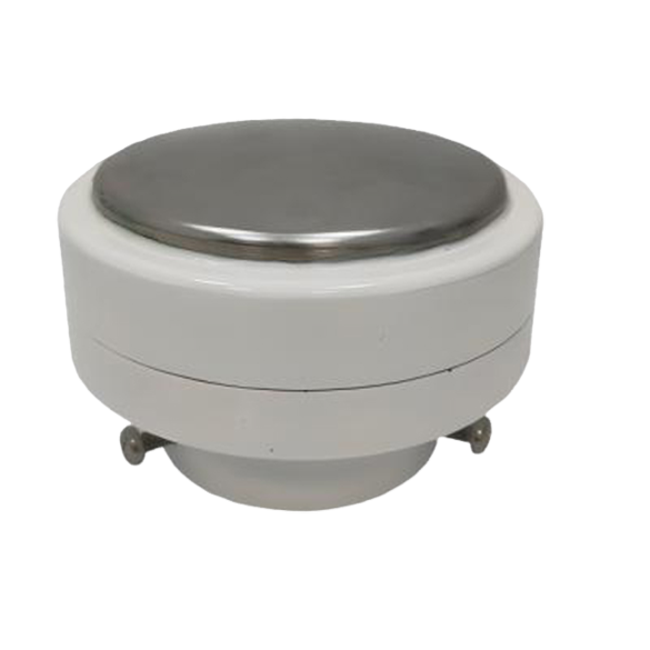
Advantages
No tipping bucket mechanism
Few conventional moving components
Compact structure
Fast rainfall response
Suitable for unattended monitoring
Reduced risk of mechanical bucket blockage
Typical Applications
Agricultural meteorological monitoring
Smart agriculture
Environmental monitoring
Remote rainfall monitoring
Related Product:Piezoelectric Rain Gauge
Acoustic rain gauges estimate rainfall by analysing sound or vibration generated when raindrops strike a sensing surface. The resulting signals can be processed to estimate rainfall characteristics such as rainfall intensity. This technology is generally used in specialized monitoring and research applications.
Advantages
No conventional tipping mechanism
Fast rainfall response
Suitable for specialized measurement
Can provide rainfall intensity information
Typical Applications
Meteorological research
Environmental research
Remote observation
Specialized precipitation studies
| Rain Gauge Type | Measurement Principle | Main Advantages | Typical Applications |
|---|---|---|---|
| Standard | Collects rainwater for manual measurement | Simple and economical | Manual meteorological observation |
| Tipping Bucket | Counts calibrated bucket tips | Automatic and continuous | Weather stations, agriculture and hydrology |
| Weighing | Measures precipitation weight | High accuracy and continuous accumulation | Professional meteorology and research |
| Optical | Optical detection of droplets | Fast response and no tipping mechanism | Weather monitoring and research |
| Piezoelectric | Detects raindrop impact | Compact with few moving components | IoT and automatic weather stations |
| Acoustic | Analyses sound or vibration | Fast specialized detection | Research applications |
Tipping bucket and piezoelectric rain gauges are both used for automatic rainfall monitoring, but their measurement principles are different. A tipping bucket rain gauge physically collects a calibrated volume of water, while a piezoelectric rain sensor estimates rainfall by detecting raindrop impacts.
Suitable for accumulated rainfall measurement
Conventional and widely used technology
Easy integration with weather stations
Suitable for pulse or RS485 monitoring systems
Requires periodic funnel and bucket inspection
Piezoelectric Rain Gauge
Compact construction
No conventional tipping mechanism
Fast rainfall detection
Suitable for compact weather stations
Reduced mechanical maintenance
Neither technology is suitable for every project. Selection should be based on accuracy requirements, rainfall characteristics, maintenance conditions, output signal and monitoring system design.
When selecting a rainfall sensor, consider measurement requirements, site conditions, communication requirements and long-term maintenance.
1. Measurement Accuracy
Select the required accuracy according to meteorological, agricultural, hydrological or general monitoring requirements.
2. Rainfall Resolution
Common tipping bucket resolutions include 0.1 mm, 0.2 mm and 0.5 mm. Resolution and overall accuracy are different specifications.
3. Rainfall Intensity
Check that the sensor can handle the maximum expected rainfall intensity, especially in tropical and monsoon regions.
4. Automatic or Manual
Manual gauges suit basic local observation, while automatic sensors are better for remote and unattended monitoring.
5. Output Signal
Common options include pulse output, switching signal, voltage and RS485 / Modbus RTU.
6. Power Supply
Check compatibility with 12 VDC, 24 VDC, battery or solar-powered monitoring systems.
7. Environmental Conditions
Consider temperature, humidity, dust, wind, snow, ice, corrosion, insects and debris.
8. Maintenance
Outdoor rain gauges require regular cleaning and inspection to prevent funnel blockage and mechanical problems.
Installation Guidelines
Install the rain gauge in an open location.
Keep it away from buildings, trees and large obstacles.
Keep tipping bucket rain gauges level.
Avoid locations where water can splash into the funnel.
Secure the instrument against strong wind and vibration.
Maintenance
Remove leaves, insects and dust from the funnel.
Check drainage channels regularly.
Confirm that the tipping mechanism moves freely.
Inspect cables and connectors.
Check mounting screws and instrument level.
Perform calibration or verification when required.
Maintenance frequency depends on the installation environment. Dusty agricultural sites may require more frequent inspection and cleaning than clean meteorological observation sites.
Several terms are associated with rainfall and precipitation measurement:
Rain gauge | Rainfall gauge | Precipitation gauge | Pluviometer | Ombrometer | Hyetometer | Rain collector | Rain recorder | Pluviograph
These terms are related but do not always have exactly the same technical meaning. For example, pluviometer is commonly used as another name for a rain gauge, while pluviograph traditionally refers to an instrument that records rainfall continuously over time.
In modern automatic monitoring systems, terms such as rain sensor, rainfall sensor and precipitation sensor are also widely used.
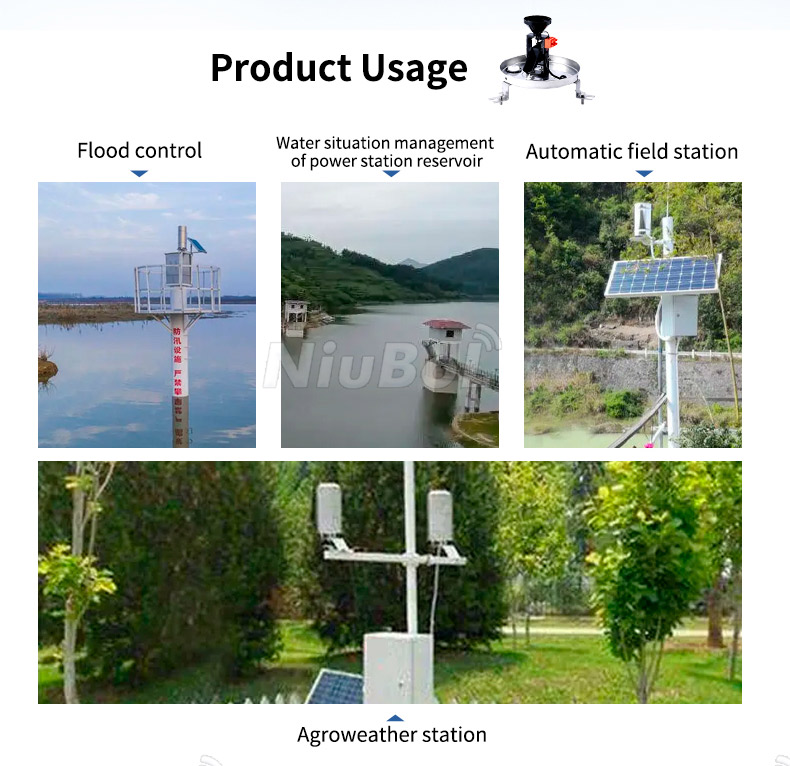
Meteorological Monitoring
Automatic weather stations and meteorological observation networks.
Agriculture
Irrigation planning, soil water balance, crop water management and drought monitoring.
Hydrological Monitoring
River basins, reservoirs, watersheds and water resource management.
Flood Warning
Real-time rainfall intensity monitoring for flood and flash-flood warning systems.
Environmental Monitoring
Long-term rainfall records for environmental and climate research.
Smart Cities
Urban drainage, stormwater management, road weather monitoring and flood control.
NiuBoL provides rainfall sensors for meteorological, agricultural, hydrological and environmental monitoring applications. Available technologies include tipping bucket rain gauges and piezoelectric rainfall sensors.
Rain sensors can be integrated with automatic weather stations, data loggers, RS485 / Modbus RTU systems, 4G IoT gateways, LoRa / LoRaWAN systems, solar-powered monitoring stations and cloud monitoring platforms.
For project selection, please provide the installation location, application, required rainfall resolution, output signal, power supply, communication method and quantity. This information helps determine the appropriate rainfall sensor and system configuration.
Download NiuBoL tipping bucket rain gauge datasheets and instruction manuals:
 NBL-W-ARS
Tipping Bucket Rain Gauge Instruction ManualNBL-W-RS
Tipping Bucket Rain Gauge Data Sheet / Instruction Manual V4.0NBL-W-DRS
Double Tipping Bucket Rain Sensor Instruction ManualNBL-W-PRS
NBL-W-PRS Piezoelectric Rain Gauge data sheet
The main types of rain gauges include standard, tipping bucket, weighing, optical, piezoelectric and acoustic rain gauges. Each measurement technology has different advantages and is suitable for different environmental and monitoring requirements.
For automatic weather stations, agriculture and hydrological monitoring, tipping bucket rain gauges are widely used because they provide automatic rainfall measurement and can be easily connected to data acquisition systems. Piezoelectric rainfall sensors provide another compact option where a conventional tipping mechanism is not preferred.
When selecting a rain gauge, consider measurement accuracy, resolution, maximum rainfall intensity, environmental conditions, maintenance requirements, output signal, power supply and the overall monitoring system.
Related recommendations
Sensors & Weather Stations Catalog
 Agriculture Sensors and Weather Stations Catalog-NiuBoL.pdf
Weather Stations Catalog-NiuBoL.pdf
Agriculture Sensors Catalog-NiuBoL.pdf
Water Quality Sensor Catalog-NiuBoL.pdf
Related products
 Combined air temperature and relative humidity sensor
 TDR Soil Moisture & Temperature Sensor for irrigation| RS485 |4-20mA| NBL-S-THR
 Soil pH sensor RS485 soil Testing instrument soil ph meter for agriculture |NBL-S-PH
 Wind Speed sensor Output Modbus/RS485/Analog/0-5V/4-20mA
 Tipping bucket rain gauge for weather monitoring auto rainfall sensor RS485/Outdoor/stainless steel
 Pyranometer Solar Radiation Sensor 4-20mA/RS485

Screenshot, WhatsApp to identify the QR code
WhatsApp number:+8615367865107
(Click on WhatsApp to copy and add friends)

