— Blogs —
—Products—
 Consumer hotline +8618073152920
 WhatsApp:+8615367865107
Address:Room 102, District D, Houhu Industrial Park, Yuelu District, Changsha City, Hunan Province, China
Product knowledge
Time:2026-06-29 11:33:41 Popularity:182
A handheld soil tester is not a replacement for a fixed monitoring station. It fills a different role in a smart agriculture project: fast field diagnosis, sampling-point comparison, commissioning support, and maintenance verification. For an integrator, the useful question is not whether the device can show a number on the screen, but whether it can help the project team decide where fixed sensors should be installed, whether irrigation zones are balanced, and whether abnormal crop performance is related to soil moisture, salinity, temperature, pH, or nutrient status.
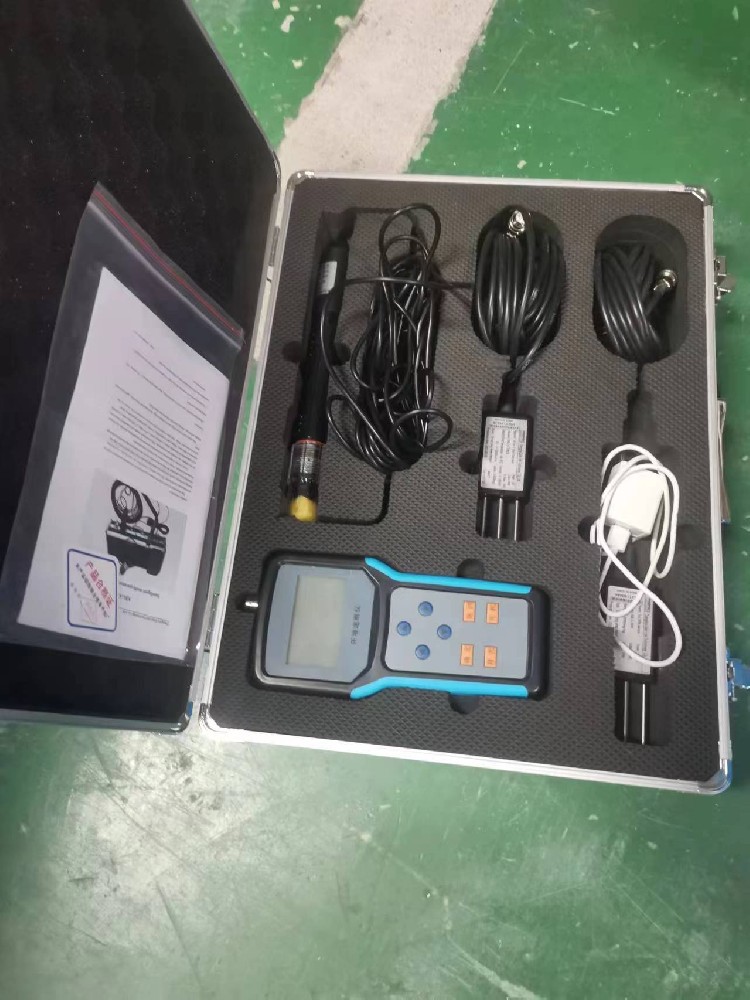
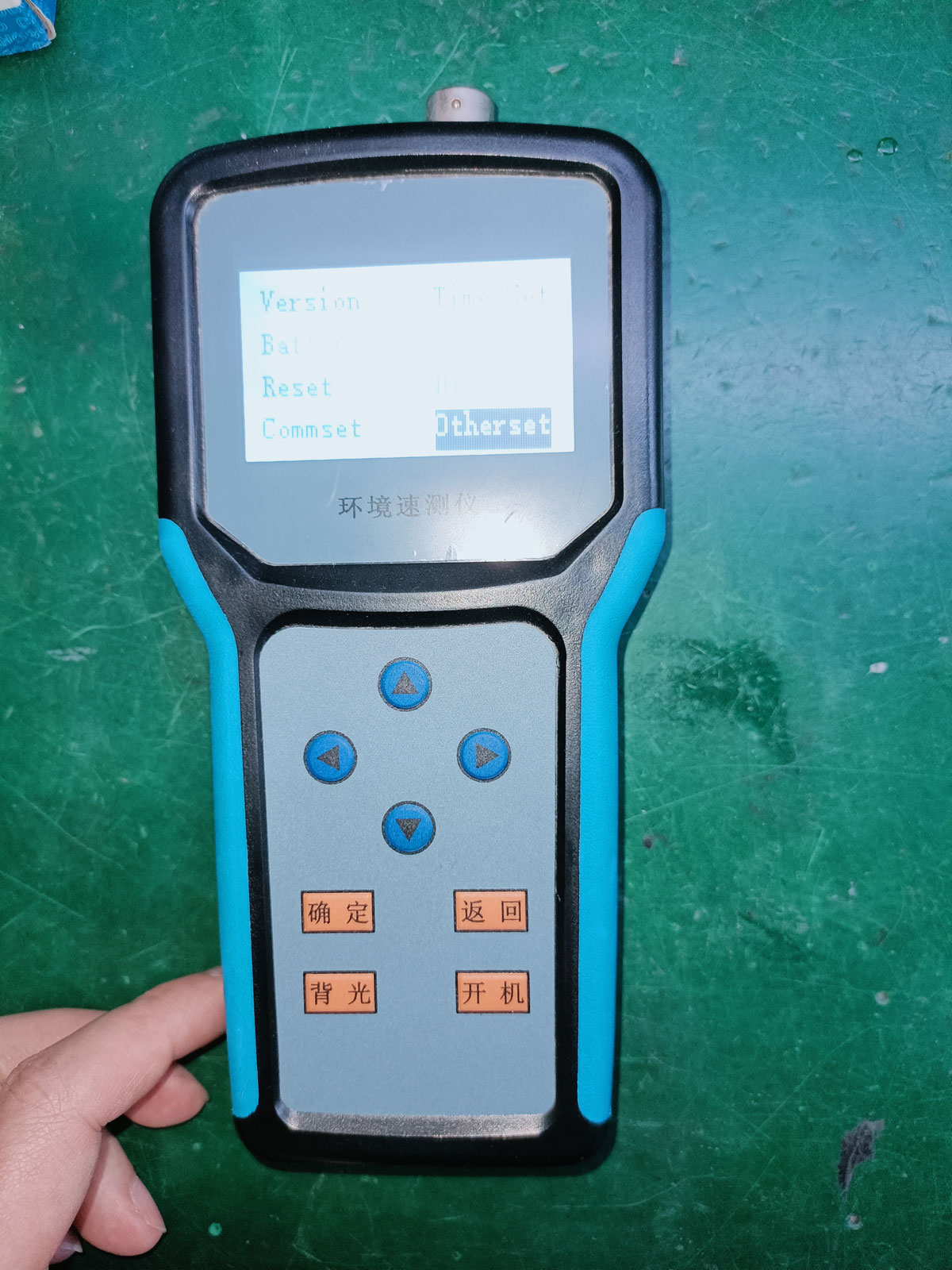
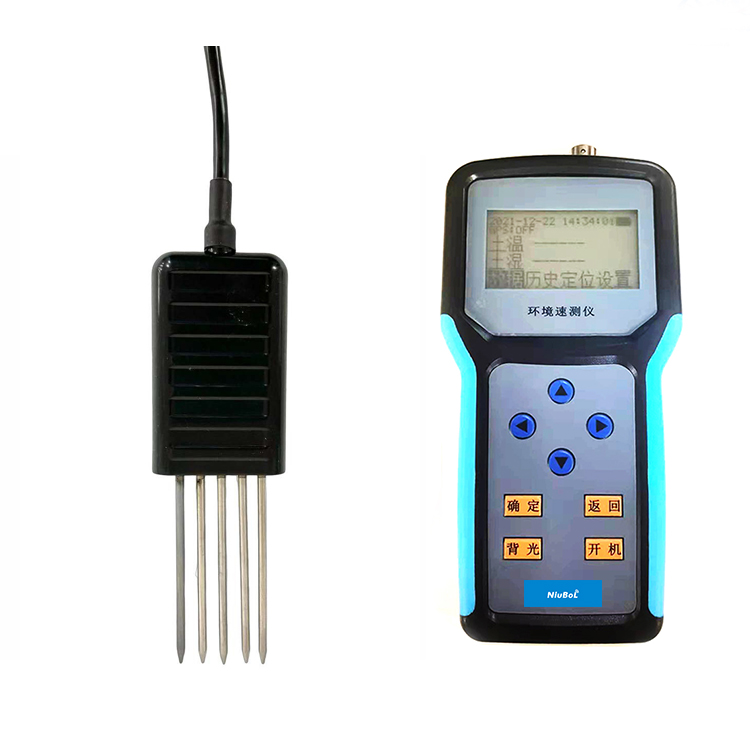
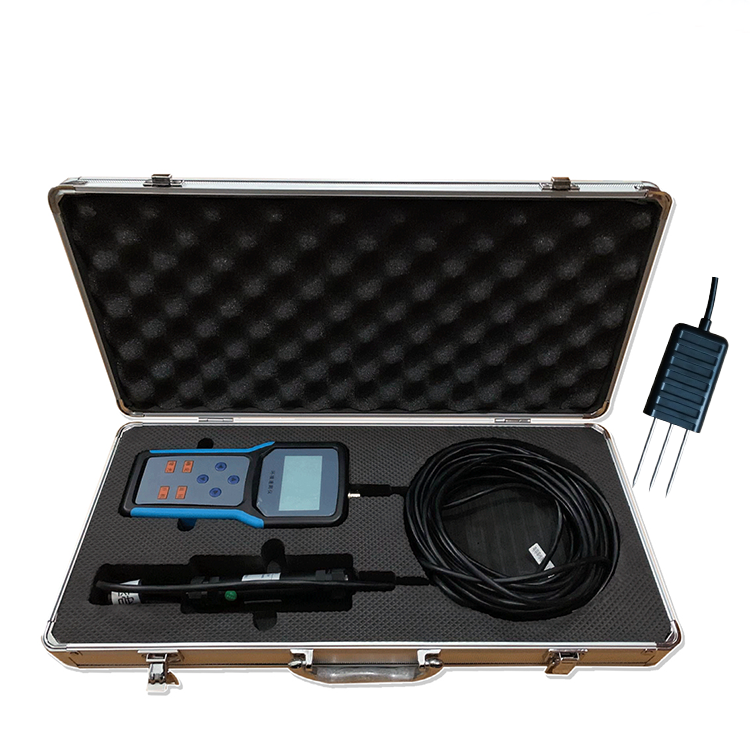
NiuBoL handheld soil testing instruments are used in greenhouses, orchards, nurseries, open-field farms, horticulture bases, forestry plots, and research fields where engineers need portable measurement before building a larger IoT monitoring system. The device form is simple: a handheld host, interchangeable soil probes, LCD display, rechargeable or replaceable lithium battery, USB data export, and optional GPS record. The engineering value comes from repeatable measurement, clear sample labeling, and the ability to export field records instead of relying on manual notes.
In a project workflow, the handheld soil tester is normally used before, during, and after a fixed monitoring deployment. Before deployment, it helps identify spatial variation. During deployment, it checks whether installed probes are reading within a reasonable range. After handover, it becomes a maintenance and troubleshooting tool when a grower reports uneven irrigation, salt accumulation, or inconsistent plant growth.
The tester is especially practical for procurement teams that manage several blocks but do not need permanent sensors at every point. A field technician can test selected grid points, store records, and export the data to Excel. When the project later expands into online monitoring, these records help define sensor depth, representative locations, and alarm thresholds.
For smart agriculture, the common handheld configuration covers soil temperature, soil moisture, electrical conductivity, salinity, pH, and optional NPK-related parameters. Soil moisture helps evaluate irrigation timing. Temperature affects root activity and seedling development. Electrical conductivity and salinity indicate salt accumulation and fertilizer residue risk. pH supports crop suitability assessment and amendment planning.
The instrument described in the supplied project information uses FDR technology for soil moisture and AC detection for conductivity. Needle-type stainless steel probes reduce insertion difficulty in many cultivated soils. The host can automatically identify the connected sensor type, which is important when one field team carries several probes for different measurement tasks.
| Item | Typical Industrial Configuration | Engineering Meaning |
|---|---|---|
| Measurement variables | Soil temperature, moisture, EC, salinity, pH; optional nutrient probes by configuration | Covers quick agronomic diagnosis and sensor-site survey |
| Moisture principle | FDR soil dielectric measurement | Suitable for repeatable volumetric soil moisture comparison |
| Conductivity principle | AC detection method | Reduces electrode polarization during EC measurement |
| Data storage | Up to 22,528 records | Supports field campaigns without immediate computer connection |
| Display | LCD handheld display | Allows immediate reading at sampling points |
| Positioning | Built-in GPS, positioning accuracy less than 5 m under suitable satellite conditions | Links soil records to field coordinates |
| Data export | USB connection; export to Excel through software | Supports project reports and later analysis |
| Power | Rechargeable or replaceable lithium battery, low-power design | Suitable for outdoor sampling routes |
| Probe material | Needle stainless steel probe; model-dependent probe structure | Improves insertion and corrosion resistance |
| System components | Handheld host, soil sensors, USB cable, carrying case | Defines delivery scope for procurement acceptance |
A useful handheld test begins with a sampling plan. The field team should mark crop block, sampling depth, irrigation zone, and crop stage before starting. For surface diagnosis, remove loose residue and avoid stones. For root-zone diagnosis, expose or access the target depth, insert the probe with stable pressure, and wait for the reading to stabilize. If the soil is very dry or compacted, pre-drilling a smaller guide hole can reduce probe bending while still keeping good contact.
Single-point readings should not be used as a project conclusion. A practical field workflow uses several nearby points and records the average or variation range. When the purpose is irrigation management, the technician should test before and after irrigation. When the purpose is salinity assessment, the team should compare wet and dry zones because salts may accumulate differently depending on water movement.
Field environment challenge: Greenhouses often show high spatial variation because irrigation drippers, drainage, shade, and crop load are not identical in every bed.
System integration scheme: Use the portable soil moisture EC pH tester to check several beds, compare EC and moisture before fertigation, and confirm whether fixed greenhouse sensors represent the real root-zone condition.
User value: The grower receives a practical explanation for uneven crop performance and can adjust irrigation, fertigation, or sensor placement with evidence.
Field environment challenge: Tree root distribution and emitter performance may vary across slope, soil texture, and block age.
System integration scheme: Test multiple points around representative trees, record GPS coordinates, and export records for comparison with irrigation zone maps.
User value: The project team can identify dry zones, excessive wet zones, or salinity-prone areas before installing permanent monitoring points.
Field environment challenge: Seedlings respond quickly to root-zone temperature and moisture changes, while small pots and beds dry unevenly.
System integration scheme: Use the handheld host for daily spot checks, combining soil moisture and temperature readings with visual crop inspection.
User value: Managers can reduce decisions based only on appearance and build a traceable record for watering schedules.
Field environment challenge: Research plots need repeatable measurement and documented data records, not only visual observation.
System integration scheme: Use the storage and Excel export functions to collect readings by plot, treatment, and date; GPS helps verify sampling position.
User value: The instrument supports field reports, treatment comparison, and later conversion to online monitoring design.
Choose the configuration according to the decisions the project must support. If the goal is irrigation inspection, soil moisture and temperature may be enough. If the site uses fertigation, EC or salinity should be included. If the crop is sensitive to acidity or alkalinity, pH measurement is necessary. For dealers and system integrators, a multi-parameter kit is often more practical because it can respond to different project inquiries without changing the host.
Buyers should confirm probe interchangeability, storage capacity, data export method, GPS availability, battery type, case protection, and software language requirements. If the instrument will be used by several technicians, ask whether the operation process is simple enough for routine field work and whether replacement probes can be purchased separately.
Although a handheld soil tester is not an RS485 field node, it supports the same engineering workflow as an online monitoring project. The portable data can be used to verify Modbus RTU soil sensor readings, determine sensor depth, and build baseline values before alarms are configured on a platform. In a project that includes fixed RS485 soil sensors, gateways, and cloud software, the handheld tester becomes the independent reference tool for site commissioning.
Do not mix handheld readings with fixed station readings without recording method and depth. A portable probe inserted at 10 cm and a buried sensor at 30 cm may show different values even in the same field. Data is useful only when the sampling method is written clearly.
Required variables: moisture, temperature, EC, salinity, pH, or nutrient-related parameters.
Crop type, soil texture, target sampling depth, and whether the instrument is used indoors or outdoors.
Need for GPS coordinates, data storage, Excel export, and software language.
Expected number of field technicians and whether spare probes are required.
Whether the tester will support a later RS485 or Modbus online soil monitoring project.
A: Its main value is fast field verification. It helps technicians compare soil conditions across plots, select representative sensor locations, check irrigation uniformity, and create field records before investing in permanent online monitoring.
A: No. A handheld tester provides spot data at selected times, while an online station provides continuous records and remote alarms. Many projects use both: the handheld tester for survey and maintenance, and online sensors for 24-hour monitoring.
A: For fertigation, moisture, temperature, EC or salinity, and pH are usually more valuable than moisture alone because fertilizer concentration, salt accumulation, and root-zone water status are linked.
A: GPS links each reading to a field location, making it easier to compare zones, repeat tests, and explain results in a project report. It is especially useful for orchards, demonstration farms, and multi-block irrigation projects.
A: There is no fixed number. The project should sample representative soil types, irrigation zones, crop growth differences, and suspected problem areas. Several nearby points should be averaged when the soil is uneven.
A: Remove stones and hard objects, keep the insertion angle stable, ensure full probe contact with soil, and avoid shaking the probe after insertion. Poor soil contact is a common cause of unstable readings.
A: Yes. The described handheld host stores up to 22,528 records and can export data to Excel through software, which supports commissioning reports and agronomic analysis.
A: Include required parameters, crop type, soil type, sampling depth, GPS requirement, storage/export requirement, expected quantity, and whether the tester will be used with fixed monitoring equipment.
A: Yes. It is suitable for greenhouse beds, orchards, nurseries, horticulture, forestry plots, and research fields where portable measurement and field comparison are required.
A: Portable readings help verify whether fixed RS485 Modbus soil sensors are installed in representative locations and whether platform alarm thresholds match local soil conditions.
A handheld soil tester is a practical procurement item for smart agriculture teams that need field diagnosis, sensor-site selection, irrigation verification, and documented soil records. For NiuBoL projects, the important selection points are measurement variables, probe compatibility, storage capacity, GPS records, battery design, and data export. When used with fixed RS485 soil sensors and a cloud platform, the tester improves commissioning quality and makes soil data easier to explain to project owners.
Related recommendations
Sensors & Weather Stations Catalog
 Agriculture Sensors and Weather Stations Catalog-NiuBoL.pdf
Weather Stations Catalog-NiuBoL.pdf
Agriculture Sensors Catalog-NiuBoL.pdf
Water Quality Sensor Catalog-NiuBoL.pdf
Related products
 Combined air temperature and relative humidity sensor
 TDR Soil Moisture & Temperature Sensor for irrigation| RS485 |4-20mA| NBL-S-THR
 Soil pH sensor RS485 soil Testing instrument soil ph meter for agriculture |NBL-S-PH
 Wind Speed sensor Output Modbus/RS485/Analog/0-5V/4-20mA
 Tipping bucket rain gauge for weather monitoring auto rainfall sensor RS485/Outdoor/stainless steel
 Pyranometer Solar Radiation Sensor 4-20mA/RS485

Screenshot, WhatsApp to identify the QR code
WhatsApp number:+8615367865107
(Click on WhatsApp to copy and add friends)