





— Blogs —
—Products—
 Consumer hotline +8618073152920
 WhatsApp:+8615367865107
Address:Room 102, District D, Houhu Industrial Park, Yuelu District, Changsha City, Hunan Province, China
Product knowledge
Time:2026-06-29 11:33:42 Popularity:209
Online soil moisture monitoring equipment is selected when a project requires continuous soil data, remote viewing, alarms, and historical records. Compared with manual testing, an online station can show moisture trends before and after irrigation, identify communication or power interruptions, and support multi-point management from a mobile phone, PC, or cloud platform. For contractors and integrators, the equipment is part of a complete field data chain: sensor, collector, power supply, communication, platform, and maintenance plan.
NiuBoL soil monitoring systems are used in smart irrigation, farmland drought monitoring, greenhouse management, orchard water-saving projects, and agricultural research stations. The important procurement decision is not only sensor accuracy. Buyers must confirm installation depth, cable protection, power mode, communication method, data retention during power loss, and whether delayed upload is supported after the communication network recovers.
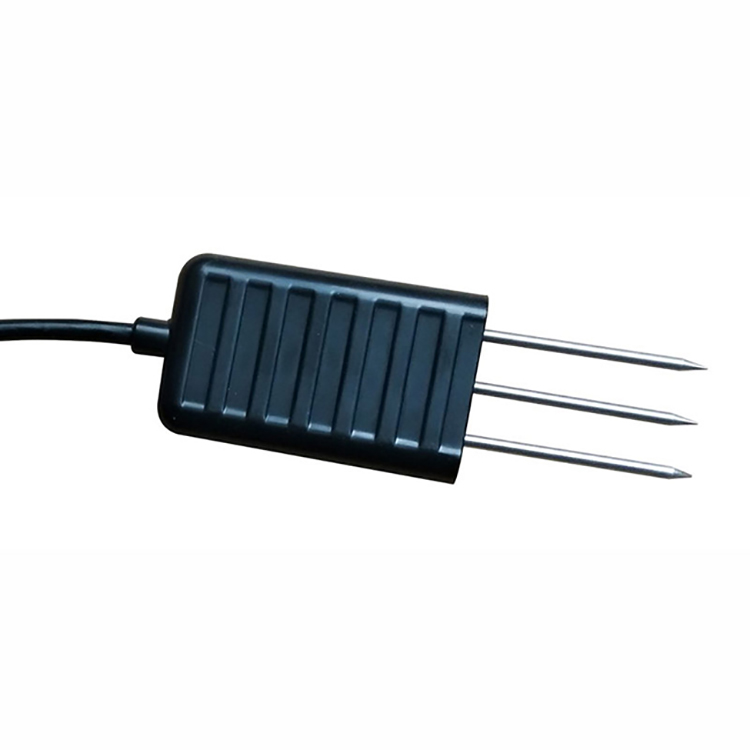
A soil moisture monitoring project normally starts with one of four demands: reducing irrigation waste, identifying drought stress, documenting soil-water conditions for research, or building an IoT agriculture data platform. In each case, the project owner needs more than a sensor. They need stable data from harsh outdoor conditions where rain, mud, heat, cable damage, unstable power, and weak cellular signals are common.
For system integrators, the station must be easy to wire, address, power, and maintain. RS485 and Modbus RTU are common because they support multiple sensors on one bus, long cable runs under proper wiring conditions, and integration with data loggers, PLCs, gateways, and third-party platforms.
A typical online soil monitoring system includes buried or inserted soil sensors, an RS485 data collector, solar or mains power, a 4G/5G or wired communication link, and cloud software. The sensor measures soil moisture and temperature. The collector polls the Modbus registers, timestamps the readings, stores data locally, and uploads the records. The platform then provides real-time display, historical curves, alarm configuration, export, and device management.
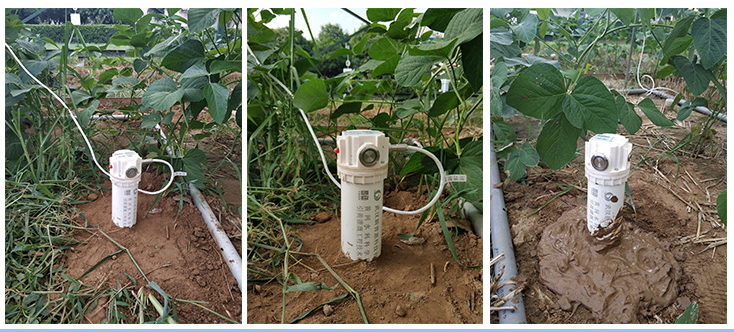
For projects with several depths, a tube-type multi-layer soil moisture sensor can be used. It measures profile moisture and temperature at different layers, helping irrigation managers understand whether water reaches the active root zone or remains only near the surface.
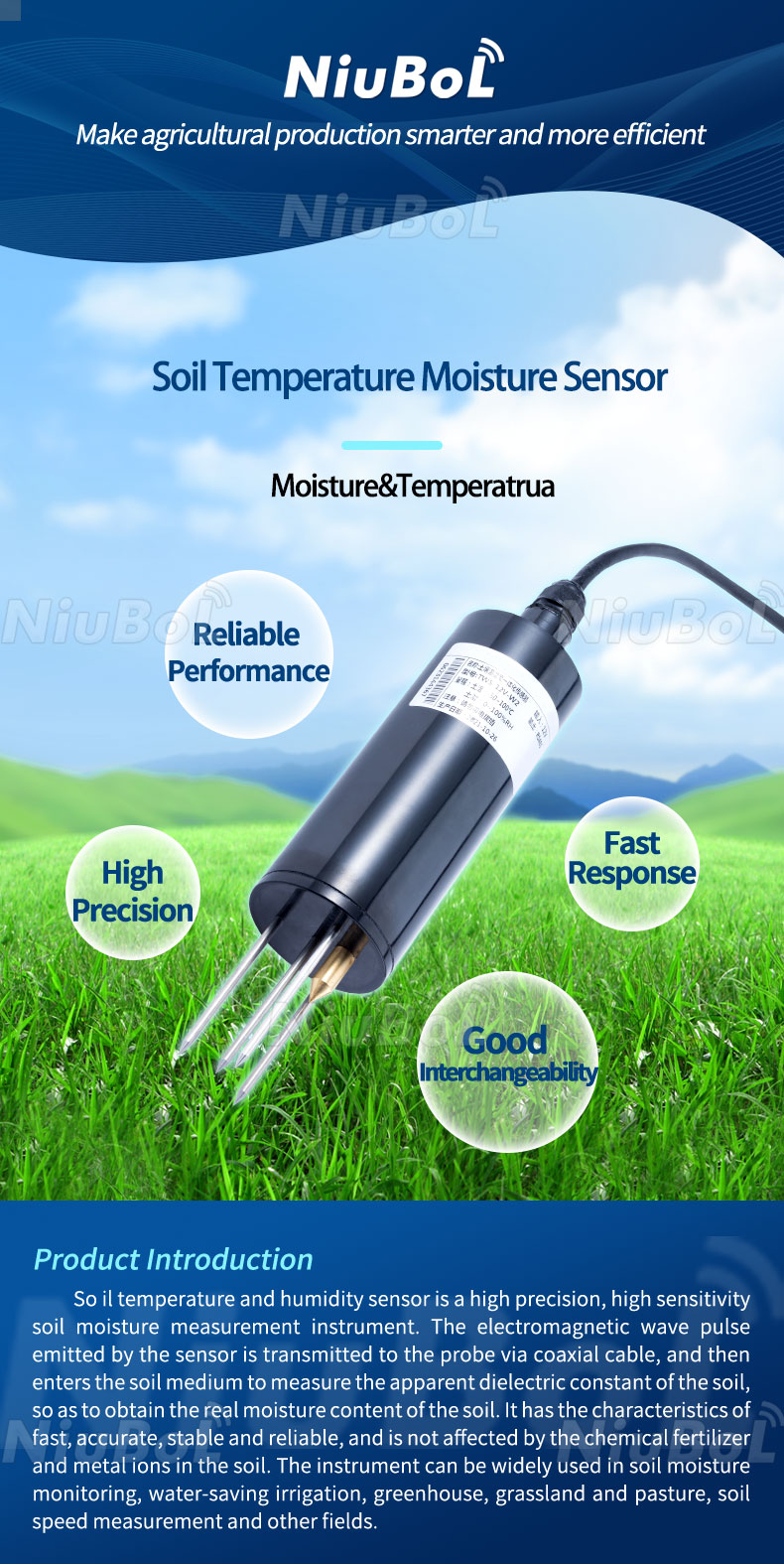
| Parameter | NBL-S-TM Soil Temperature and Moisture Sensor | Project Relevance |
|---|---|---|
| Soil temperature range | -40 to 80 C | Covers outdoor field and greenhouse soil conditions |
| Temperature resolution | 0.1 C | Supports trend analysis and root-zone comparison |
| Temperature accuracy | ±0.5 C | Suitable for agricultural monitoring and platform records |
| Soil moisture range | 0 to 100% | Covers dry to saturated soil states |
| Moisture resolution | 0.1% | Provides visible trend changes after irrigation |
| Moisture accuracy | ±5% | Appropriate for field soil monitoring with correct installation |
| Supply voltage | DC 5 to 24 V | Compatible with common collectors and solar systems |
| Output signal | RS485, Modbus protocol | Connects to data loggers, gateways, PLCs, and IoT systems |
| Measurement principle | FDR | Uses dielectric response for soil moisture measurement |
| Protection grade | IP68 | Supports long-term buried or immersed field use |
| Operating temperature | -40 to 85 C | Supports exposed outdoor equipment conditions |
| Probe and sealing | Corrosion-resistant electrode; black flame-retardant epoxy resin | Improves durability in soil environments |
| Cable | Default 5 m cable, customizable; cold-pressed terminal connection | Simplifies field cabinet wiring |
| Dimensions | 45 x 15 x 135 mm; electrode length 50 mm | Useful for installation planning and hole preparation |
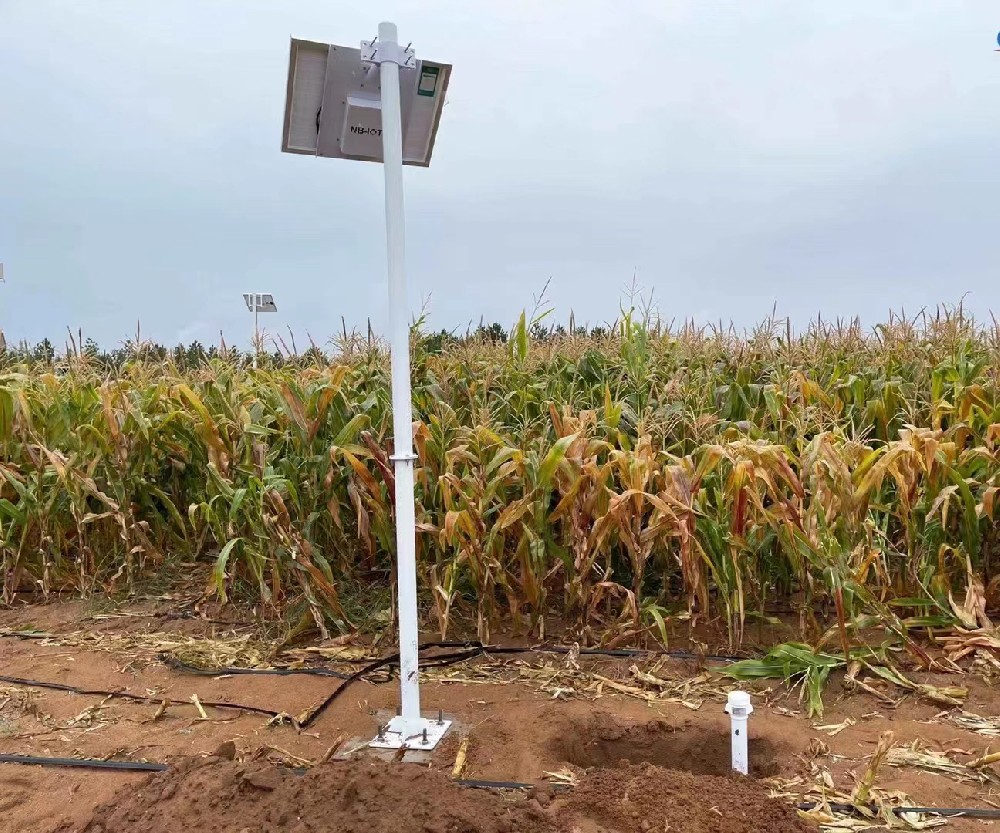
The quick insertion method is useful for inspection and temporary monitoring. Remove surface debris, avoid stones, keep soil structure close to the original state, insert the probe vertically, and do not shake it after insertion. Several nearby points should be measured when the field is uneven.
For long-term monitoring, buried installation is more stable. Dig a vertical pit with enough working space, insert the probes horizontally into the pit wall at the target depth, backfill carefully, compact the soil close to the original density, and allow the sensor-soil contact to stabilize. Hard soil may require a pilot hole smaller than the probe diameter. The installer should avoid striking the sensor with hard tools because impact can damage the probe or sealing.
Temperature measurement also needs protection from false heating. If a black sensor body is exposed to strong sunlight before burial, its temperature can rise much higher than the soil. During commissioning, shade the sensor and wait for stabilization before accepting the temperature reading.
RS485 with Modbus RTU is a practical interface for agricultural field systems. It allows the integrator to connect soil sensors to an existing acquisition cabinet, remote terminal unit, or industrial IoT gateway. During commissioning, each sensor should receive a unique address, consistent baud rate, and documented register map. The platform should store raw data and converted engineering units so later troubleshooting is possible.
Industrial compatibility also includes power tolerance, surge protection, cable routing, waterproof junctions, and communication recovery. In weak-network locations, local storage and delayed upload are important because temporary signal loss should not create permanent data gaps.
Field environment challenge: Large fields often have uneven soil texture and irrigation distribution. A single visual check cannot show when water reaches the root zone.
System integration scheme: Install RS485 soil moisture sensors at representative depths and upload data through a solar-powered collector with 4G communication.
User value: Managers can adjust irrigation timing based on moisture curves instead of fixed schedules, reducing water waste and drought risk.
Field environment challenge: Greenhouse beds may look uniform but differ in drainage, substrate salinity, and irrigation response.
System integration scheme: Use soil temperature and moisture sensors with optional EC monitoring, connect them to a Modbus host or cloud platform, and create zone-based alarms.
User value: Operators can compare zones, detect blocked drippers, and document root-zone conditions during crop cycles.
Field environment challenge: Tree crops have deeper root systems and irrigation zones that vary by slope, canopy, and emitter layout.
System integration scheme: Place sensors at selected depths around representative trees, protect cables, and use solar power where mains power is unavailable.
User value: The owner can understand whether irrigation reaches the effective root zone and whether some blocks require different schedules.
Field environment challenge: Research projects need continuous data with clear timestamps, sensor IDs, and exportable records.
System integration scheme: Deploy multiple RS485 sensors, define address tables, and export historical data for analysis and reporting.
User value: The project gains traceable soil-water records instead of isolated manual readings.
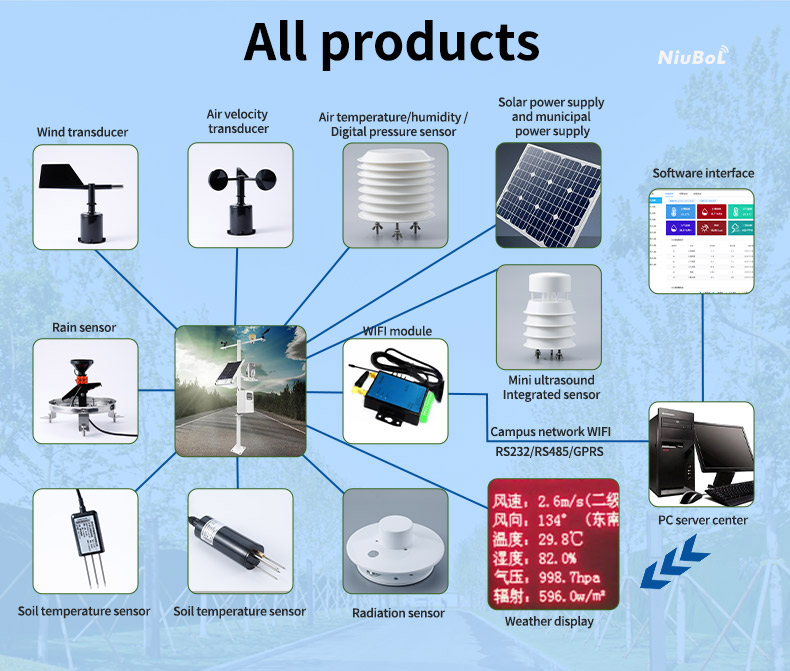
When selecting an online soil moisture monitoring equipment manufacturer, confirm whether the supplier can provide sensors, data collector, power system, communication module, platform, wiring diagrams, Modbus register map, and installation guidance. A sensor-only quote may be cheaper at the beginning but can create project risk if the integrator later discovers that communication, platform, or power details are missing.
For multi-site projects, ask whether the platform supports device grouping, sub-accounts, data export, alarm rules, and offline status display. The platform should help the owner manage equipment, not only display a single reading.
Number of monitoring points, depths, and required variables.
Sensor model, cable length, protection grade, and Modbus register map.
Power method: solar panel plus battery, mains power, or lithium battery.
Communication method: RS485 to local controller, 4G/5G gateway, Ethernet, or custom integration.
Platform functions: real-time values, curves, alarms, export, user permissions, and offline records.
Installation environment: soil texture, groundwater, cable trench, cabinet location, and maintenance access.
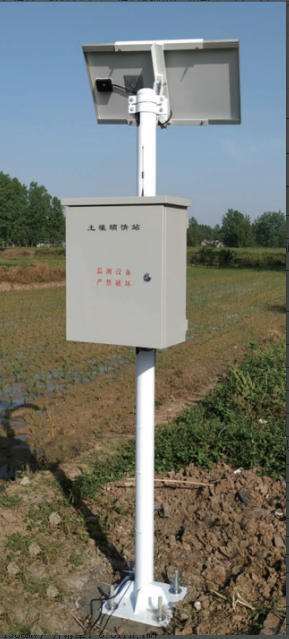
A: It is a complete system that measures soil moisture and usually soil temperature through field sensors, collects the data through a logger or gateway, and uploads records to a platform for real-time viewing, alarms, and historical analysis.
A: RS485 Modbus RTU is common because it supports industrial wiring, multi-sensor addressing, and integration with loggers, PLCs, gateways, and third-party IoT platforms.
A: A sensor measures local soil data. A monitoring station adds power supply, data collection, communication, storage, platform display, alarm logic, and installation accessories.
A: Depth should match crop root distribution and the decision being made. Shallow sensors show surface irrigation response, while deeper sensors show whether water reaches the active root zone.
A: A properly configured station can store data locally and upload delayed records after communication recovers. This function should be confirmed in the project quotation.
A: IP68 is important for long-term buried or wet soil conditions because sensors may face irrigation, rainfall, high humidity, and temporary waterlogging.
A: Poor soil contact, stones near the probe, loose backfill, wrong depth, cable damage, unstable power, and using one sensor to represent a highly variable field can all reduce data reliability.
A: Ask for sensor specifications, Modbus protocol details, cable length, power design, platform functions, installation guide, delivery scope, warranty terms, and whether customization is available.
A: Select it when the project needs profile moisture and temperature at several depths, such as irrigation research, drought monitoring, geological risk monitoring, or deep-root crop management.
A: It provides continuous, exportable, and remotely accessible soil records that support irrigation decisions, project acceptance, maintenance checks, and long-term crop management.
For soil monitoring, missing data is often more damaging than a small measurement error because the irrigation or drought trend becomes incomplete. The platform should therefore show device online status, last upload time, battery or power condition where available, and abnormal interruption records. For large farms, this helps the maintenance team identify which station needs inspection before the data gap becomes long.
A practical platform review should include three curves: moisture at each depth, soil temperature, and communication status. When moisture changes suddenly without rainfall or irrigation, the operator should check whether the probe was disturbed. When data becomes flat for a long period, the operator should check power, communication, and sensor contact. These review rules make the equipment useful after installation, not only during acceptance.
| Acceptance Item | Required Evidence | Why It Matters |
|---|---|---|
| Sensor depth | Photo and installation record for each point | Confirms that readings represent the intended root zone |
| RS485 address | Address table and register map | Supports later troubleshooting and expansion |
| Power system | Solar, battery, or mains specification | Explains expected uptime and maintenance interval |
| Platform data | Screenshot of real-time and historical curves | Confirms successful upload and unit mapping |
| Data export | Sample CSV or Excel export | Supports project reporting and irrigation analysis |
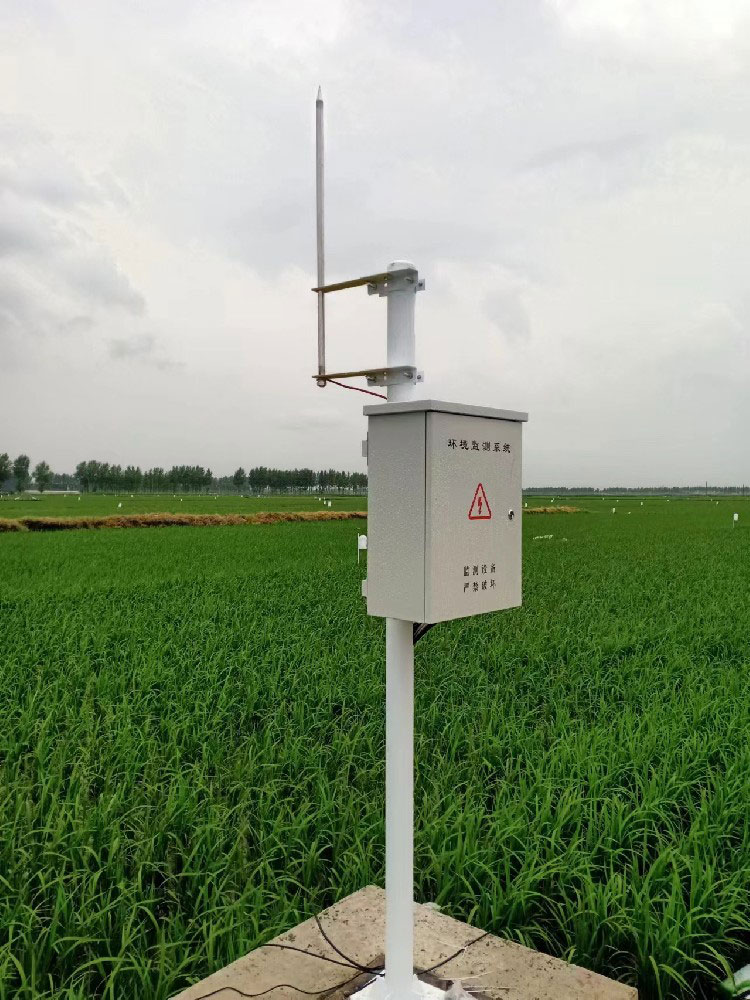
Online soil moisture monitoring equipment should be evaluated as a system, not only as a probe. For irrigation and IoT projects, the buyer should confirm RS485 Modbus compatibility, IP68 protection, installation method, power design, communication recovery, platform functions, and manufacturer support. NiuBoL can provide soil sensors, monitoring stations, gateway integration, and cloud data functions for farmland, greenhouse, orchard, and research applications.
Prev:Handheld Soil Tester for Smart Agriculture: Field Use, Parameters, and Procurement Criteria
Next:Smart Pole Weather Sensor Applications in Smart City Environmental Monitoring
Related recommendations
Sensors & Weather Stations Catalog
 Agriculture Sensors and Weather Stations Catalog-NiuBoL.pdf
Weather Stations Catalog-NiuBoL.pdf
Agriculture Sensors Catalog-NiuBoL.pdf
Water Quality Sensor Catalog-NiuBoL.pdf
Related products
 Combined air temperature and relative humidity sensor
 TDR Soil Moisture & Temperature Sensor for irrigation| RS485 |4-20mA| NBL-S-THR
 Soil pH sensor RS485 soil Testing instrument soil ph meter for agriculture |NBL-S-PH
 Wind Speed sensor Output Modbus/RS485/Analog/0-5V/4-20mA
 Tipping bucket rain gauge for weather monitoring auto rainfall sensor RS485/Outdoor/stainless steel
 Pyranometer Solar Radiation Sensor 4-20mA/RS485

Screenshot, WhatsApp to identify the QR code
WhatsApp number:+8615367865107
(Click on WhatsApp to copy and add friends)

