





— Blogs —
—Products—
 Consumer hotline +8618073152920
 WhatsApp:+8615367865107
Address:Room 102, District D, Houhu Industrial Park, Yuelu District, Changsha City, Hunan Province, China
Product knowledge
Time:2026-06-29 11:33:43 Popularity:255
A smart pole weather sensor turns an existing urban pole network into a distributed environmental monitoring layer. The value is not the pole itself; the value is the data position. Roads, parks, campuses, industrial boundaries, and public areas already need poles for lighting, network coverage, broadcast, cameras, or display screens. Adding compact weather and air quality sensing allows city operators to observe local environmental variation without building a traditional fenced station at every point.
For a smart city integrator, the core requirement is compact installation, stable communication, low maintenance, and compatibility with the pole controller or city IoT platform. A sensor may monitor PM2.5, PM10, CO, SO2, NO2, O3, air temperature, relative humidity, pressure, wind speed, wind direction, rainfall, noise, VOCs, H2S, or solar radiation depending on project scope.

Urban environmental conditions change by street canyon, traffic density, building height, green coverage, industrial activity, and drainage condition. A central weather station may provide official weather records, but it cannot show every local micro-environment. Smart pole monitoring fills this gap by providing distributed data near the locations where people, vehicles, and municipal assets operate.
The project should define the decision supported by each parameter. PM2.5 and PM10 support air-quality mapping. NO2 and CO help evaluate traffic-related pollution. Wind speed and direction help interpret pollutant movement. Rainfall supports drainage and road safety analysis. Temperature and humidity support heat-risk mapping. This parameter-to-decision mapping prevents unnecessary configuration and improves acceptance criteria.
In a pole system, the weather sensor sits at the field layer. It sends measured data to a pole controller, gateway, or environmental monitoring host. The controller uploads data to a municipal platform through Ethernet, 4G/5G, fiber, or a local network. The platform then shows maps, curves, alarms, device status, and records for environmental departments or city operation teams.
NiuBoL integrated weather sensors use compact structures and can be selected for multi-parameter monitoring. A hidden upper-cover ultrasonic probe design helps reduce rain and snow accumulation and avoids wind obstruction from external rotating parts. No moving wind components means lower mechanical wear, which is important for pole installations that are expensive to access.
| Parameter Group | Typical Options | Integration Meaning |
|---|---|---|
| Meteorological variables | Air temperature, relative humidity, pressure, wind speed, wind direction, rainfall | Supports local weather, heat, wind, and drainage analysis |
| Particle monitoring | PM2.5, PM10 | Supports air quality mapping and pollution-event tracking |
| Gas monitoring | CO, SO2, NO2, O3; optional H2S or VOCs | Supports road, industrial boundary, and public-area environmental monitoring |
| Noise | Optional environmental noise monitoring | Useful near roads, campuses, and residential zones |
| Radiation | Optional solar radiation | Useful for heat-island and public facility projects |
| Communication | RS485 / Modbus RTU by configuration; gateway upload through 4G/5G or Ethernet | Allows connection to pole controller and city IoT platform |
| Power | Matched to pole cabinet supply; low-voltage DC conversion as required | Simplifies integration with existing pole electrical design |
| Mechanical design | Integrated compact structure, no exposed rotating wind parts for ultrasonic versions | Reduces maintenance burden on elevated poles |
| Protection | Outdoor enclosure and waterproof installation required | Supports long-term urban field deployment |
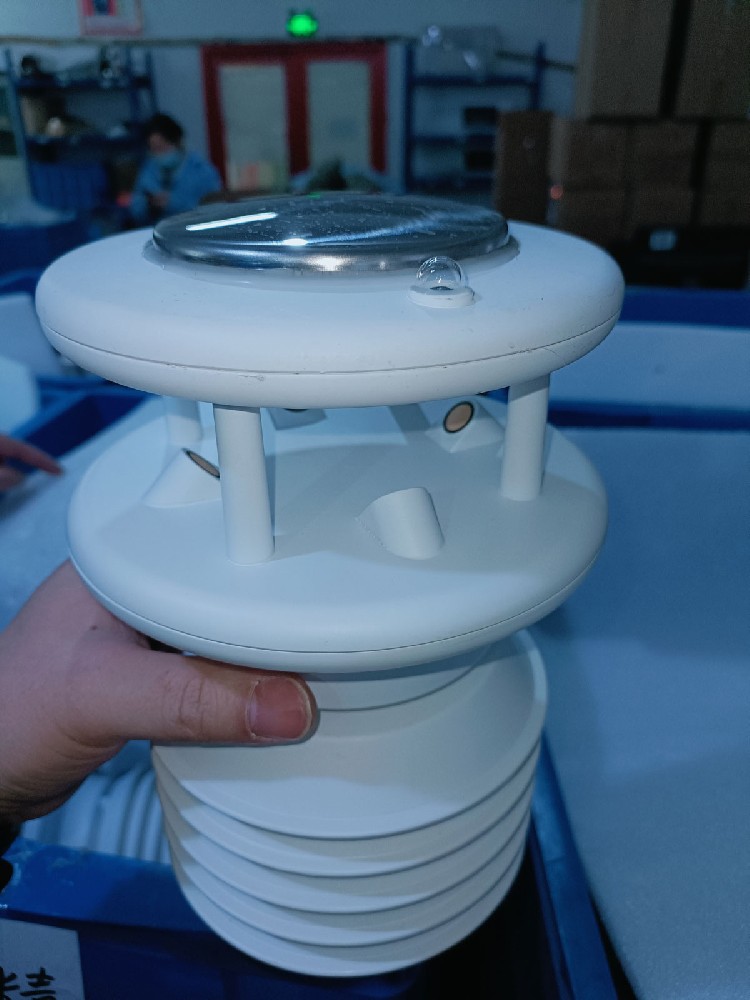
RS485 Modbus RTU is practical in smart pole projects because it can connect the sensor to a pole cabinet controller over a short industrial bus. The integrator should confirm address, baud rate, register map, supply voltage, shielded cable grounding, and whether the pole controller can poll all required variables. If the pole cabinet uses a gateway, the Modbus values should be mapped to the cloud platform with clear units.
Industrial compatibility is more than protocol support. Smart pole cabinets may contain lighting power supplies, camera equipment, network switches, and surge protection devices. Sensor cables should be separated from high-power lines where possible. Waterproof connectors, drip loops, grounding, and lightning protection should be included in the installation drawing.
Field environment challenge: Traffic corridors have pollutant peaks that may not match central station readings. Pole height, buildings, and vehicle flow affect local readings.
System integration scheme: Install particle and gas sensors with wind data on selected lighting poles, connect through RS485 to the pole controller, and upload values to a city platform.
User value: Operators can identify pollution hotspots, compare road sections, and support traffic or environmental analysis with local data.
Field environment challenge: Industrial zones need distributed environmental records, but building a full station at every point may be costly.
System integration scheme: Deploy compact pole-mounted sensors for wind, particles, gases, and optional VOCs or H2S at boundary locations.
User value: The owner gains event records that show concentration changes and wind direction during abnormal periods.
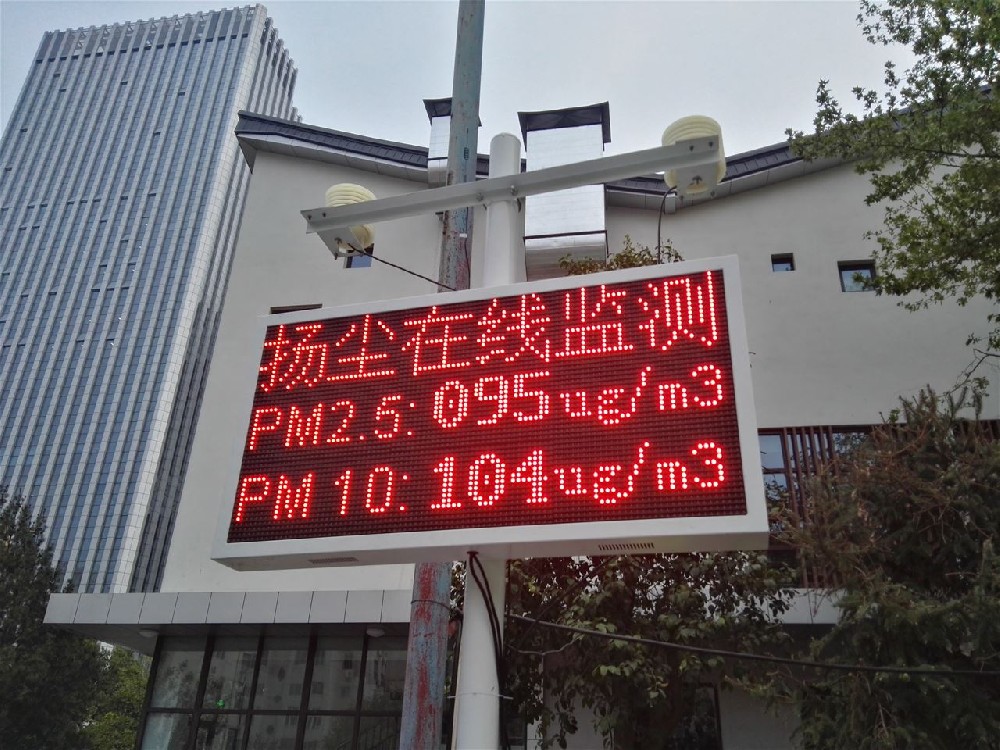
Field environment challenge: Campuses and parks need heat, humidity, air quality, and wind data for operation and education.
System integration scheme: Use smart pole weather sensors connected to the public-area IoT platform, with dashboard access for facility managers.
User value: The project supports public-service displays, heat-risk review, and environmental education without heavy civil work.
Field environment challenge: Smart lighting projects need more value from each pole while keeping installation neat and maintainable.
System integration scheme: Combine environmental sensing with lighting control, communication equipment, display, or broadcast functions in the same pole network.
User value: The owner turns lighting infrastructure into a multi-service urban data network.
Sensor position should avoid direct obstruction by lamps, banners, camera brackets, buildings, and trees. Wind measurement needs exposure. Gas and particle monitoring should be placed where the project wants to measure actual human or traffic exposure, not where the cabinet is easiest to access. The mounting height should balance data purpose and maintenance practicality.
Maintenance should include enclosure inspection, sensor cleaning according to pollutant load, connector inspection, platform data review, and calibration or replacement planning for gas modules. Data review is important because a flat line, sudden jump, or long offline period can indicate a field fault before a technician visits the pole.
Before ordering, define whether the project needs meteorological data only, air quality only, or a combined environmental station. Then confirm the pole cabinet voltage, communication route, platform API requirement, quantity, mounting bracket, cable length, local climate, and maintenance access method. For city projects, the quotation should include data protocol, wiring diagram, installation photos or drawings, and a clear list of measured parameters.
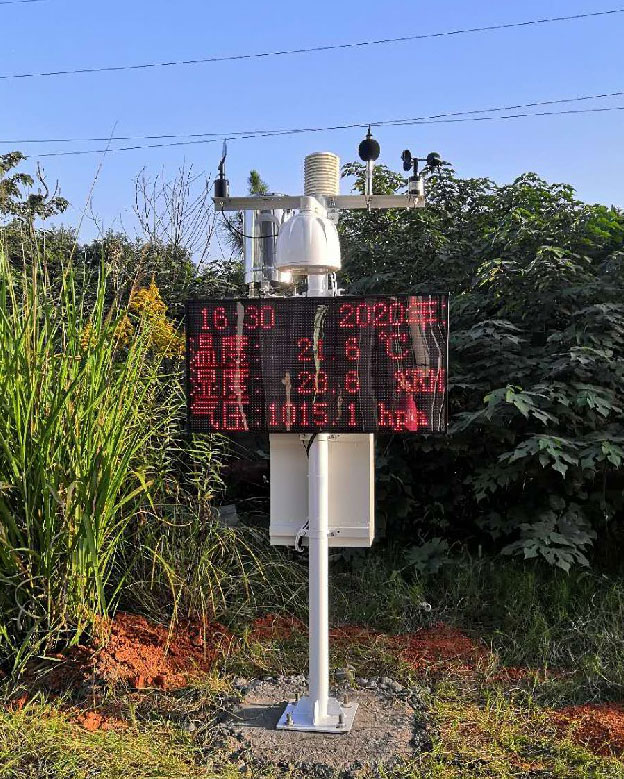
A: It is a compact environmental sensing device installed on a smart lighting or utility pole to measure local weather, air quality, or other urban environmental variables and send data to a pole controller or IoT platform.
A: Common parameters include PM2.5, PM10, CO, SO2, NO2, O3, air temperature, humidity, pressure, wind speed, wind direction, rainfall, noise, VOCs, H2S, and solar radiation depending on project goals.
A: Wind speed and direction help explain pollutant movement. Without wind data, a platform may show concentration changes but cannot easily identify whether pollution is local or transported from another direction.
A: Yes, if the controller supports the required electrical interface and protocol. RS485 Modbus RTU is commonly used, but address, baud rate, register mapping, and power supply must be confirmed.
A: It should be placed away from lamp heat, structural obstruction, banners, tree branches, and strong airflow blockage. The height should match the monitoring purpose and maintenance plan.
A: Yes. Ultrasonic wind measurement avoids exposed rotating parts, reduces mechanical wear, and suits elevated installations where maintenance access is limited.
A: Acceptance should check physical mounting, waterproofing, grounding, Modbus communication, platform unit mapping, alarm thresholds, data continuity, and image records of installation points.
A: Maintenance interval depends on pollution level, climate, module type, and access condition. Particle and gas modules usually need more periodic inspection than temperature or pressure sensors.
A: It usually complements formal stations. Smart pole data provides local urban distribution, while formal stations provide standardized meteorological observation under stricter siting rules.
A: Send required parameters, pole drawings, cabinet voltage, communication method, platform requirement, installation height, quantity, city climate, and whether API or Modbus register documentation is required.
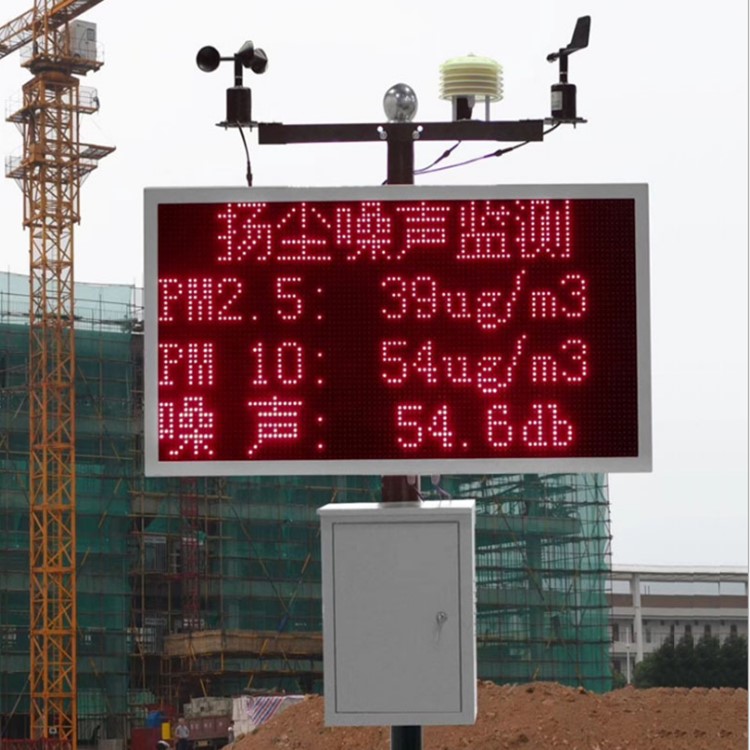
Smart city platforms often receive data from many vendors and device types. Before installation, the integrator should define device ID, pole number, street name, GPS location, parameter unit, upload interval, alarm threshold, and maintenance owner. If these fields are not defined early, the platform may collect data but fail to support city-level comparison.
For pollutant data, units must be consistent across devices. For weather data, the platform should show whether the reading is an instantaneous value, average value, accumulated rainfall, or diagnostic status. This avoids misinterpretation when environmental departments compare different districts.
Do not select parameters only because the sensor can measure them; connect each parameter to a city operation decision.
Confirm whether the pole cabinet has enough power capacity and safe low-voltage conversion for the sensor.
Check whether installation height matches the monitoring purpose, especially for traffic pollution and pedestrian exposure.
Define calibration or module replacement responsibilities for gas and particle sensors.
Require Modbus register documents or platform API mapping documents before batch deployment.
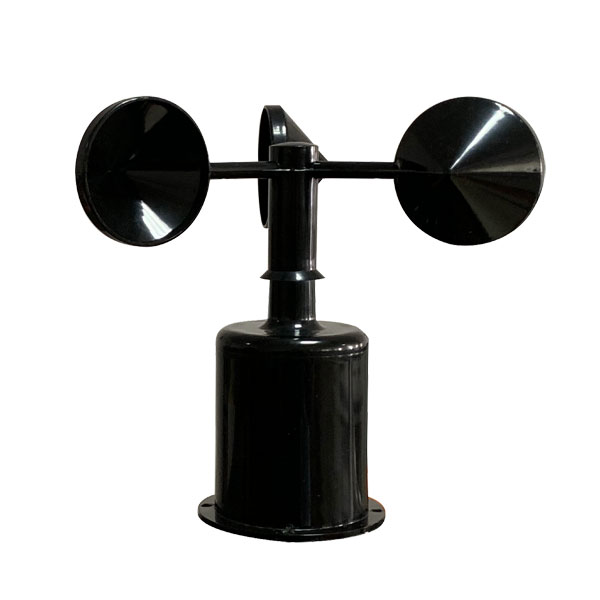
A smart pole weather sensor is valuable when it is selected around a defined city operation decision: air quality mapping, microclimate monitoring, road environment review, or industrial boundary observation. NiuBoL can support compact weather and environmental sensing with RS485 Modbus integration and platform connection for smart lighting and smart city projects. The strongest procurement documents define parameters, pole installation conditions, communication mapping, maintenance access, and acceptance tests before delivery.
Prev:Online Soil Moisture Monitoring Equipment Manufacturer Guide for Irrigation and IoT Projects
Next:Smart Greenhouse Solution for Sensor Monitoring, Modbus Control, and Cloud Management
Related recommendations
Sensors & Weather Stations Catalog
 Agriculture Sensors and Weather Stations Catalog-NiuBoL.pdf
Weather Stations Catalog-NiuBoL.pdf
Agriculture Sensors Catalog-NiuBoL.pdf
Water Quality Sensor Catalog-NiuBoL.pdf
Related products
 Combined air temperature and relative humidity sensor
 TDR Soil Moisture & Temperature Sensor for irrigation| RS485 |4-20mA| NBL-S-THR
 Soil pH sensor RS485 soil Testing instrument soil ph meter for agriculture |NBL-S-PH
 Wind Speed sensor Output Modbus/RS485/Analog/0-5V/4-20mA
 Tipping bucket rain gauge for weather monitoring auto rainfall sensor RS485/Outdoor/stainless steel
 Pyranometer Solar Radiation Sensor 4-20mA/RS485

Screenshot, WhatsApp to identify the QR code
WhatsApp number:+8615367865107
(Click on WhatsApp to copy and add friends)

