





— Blogs —
—Products—
 Consumer hotline +8618073152920
 WhatsApp:+8615367865107
Address:Room 102, District D, Houhu Industrial Park, Yuelu District, Changsha City, Hunan Province, China
Product knowledge
Time:2026-04-03 15:07:55 Popularity:646
Under the dual challenges of global arable land resource contraction and water scarcity, precise control of soil quality has become the core of modern agriculture, ecological restoration, and water conservancy projects. As a system integrator or IoT solution provider, deploying a highly reliable soil moisture monitoring network not only provides decision-making support for agricultural structure adjustment but is also a key technical means to evaluate project investment effectiveness.
NiuBoL focuses on the R&D and manufacturing of perception layer hardware and provides partners with soil environmental monitoring equipment that complies with international standards. By collecting soil moisture, temperature, and salinity data in real time, we assist engineering companies in building a full-chain smart agriculture ecosystem from the field to the cloud.
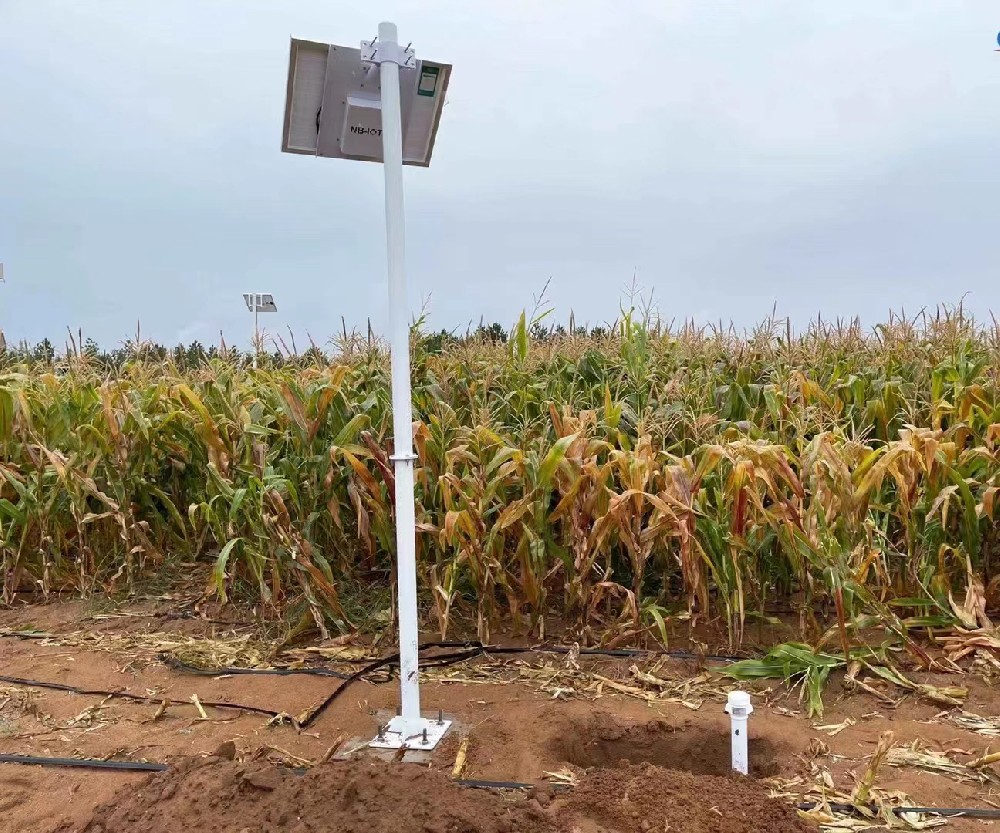
In industrial-grade agricultural projects, real-time dynamic monitoring of soil moisture has multi-dimensional strategic significance:
1. Scientific Guidance for Agricultural Structure Adjustment
Different crops have vastly different water requirements. Long-term monitoring of soil moisture change patterns can guide the optimization of regional planting structures, such as promoting drought-resistant varieties in drought-prone areas or dynamically adjusting water and fertilizer plans based on soil moisture data to maximize resource utilization.
2. Public Welfare and Evaluation of Dryland Agriculture Development
Soil monitoring is an important evaluation basis for national dryland agriculture project construction. It can verify the actual effectiveness of agricultural technology services and prove the integrated application value of water-saving technology and drought-resistant disaster reduction technologies through quantified data, providing a scientific closed loop for subsequent project additional investment.
3. The Cornerstone of Environmental and Ecological Protection
With the prominence of soil erosion, salinization, and desertification issues, real-time monitoring of soil quality has become a necessary means to protect limited arable land resources and maintain soil productivity. Precise soil moisture data directly reflects the sustainable management capacity of the land.
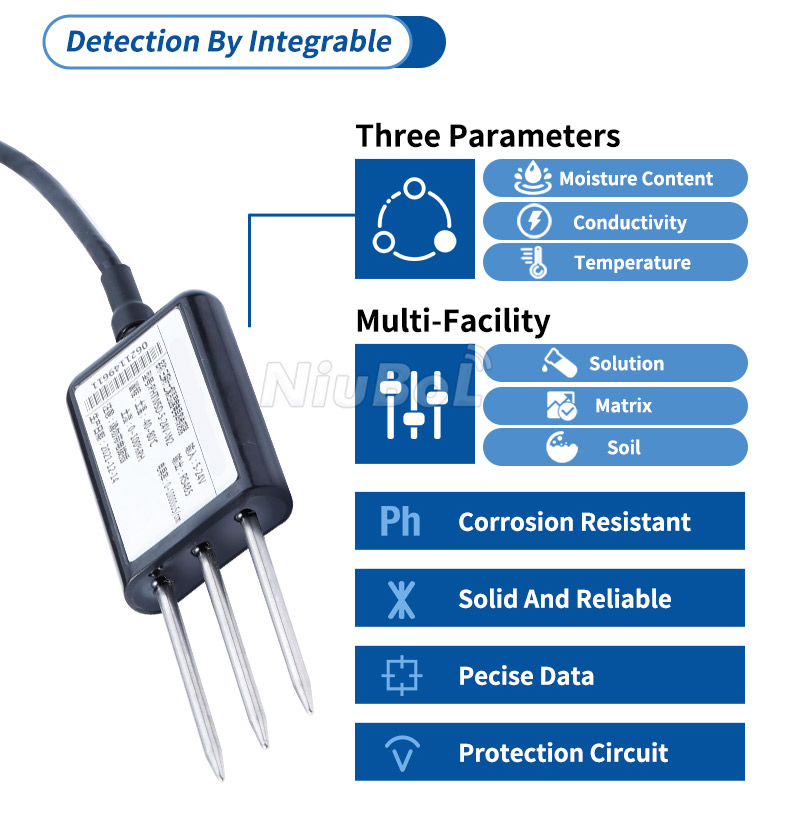
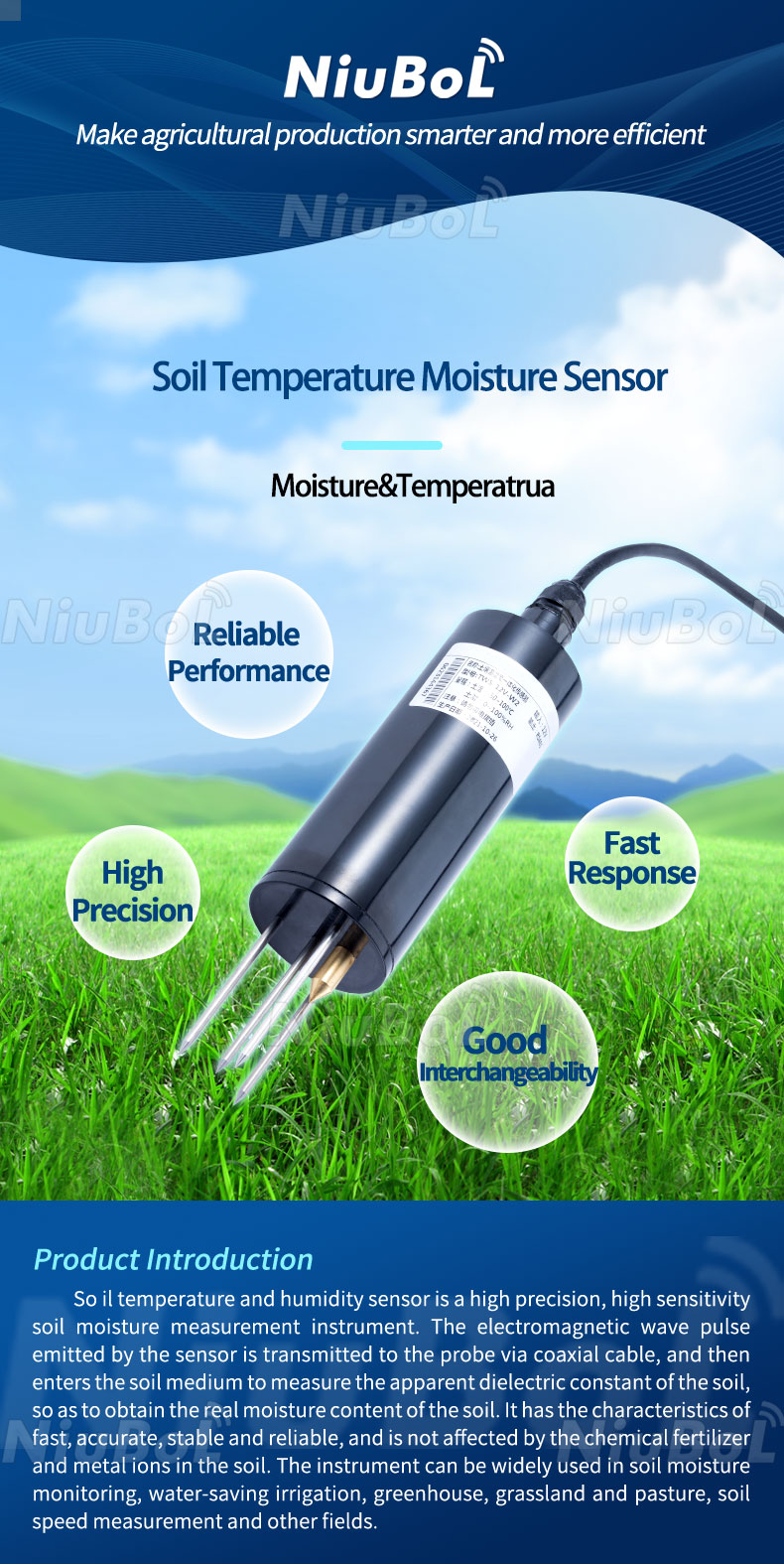
To meet diverse working condition requirements, NiuBoL has developed multiple high-precision sensors based on the FDR (Frequency Domain Reflectometry) principle. These devices are not affected by soil fertilizers and metal ions, ensuring long-term stability in harsh environments.
| Technical Index | NBL-S-TM Industrial-grade Sensor | NBL-S-THR High-precision Sensor |
|---|---|---|
| Measurement Parameters | Soil Temperature, Soil Humidity | Soil Temperature, Soil Humidity |
| Humidity Range | 0 - 100% | 0 - 100% |
| Temperature Range | -40 - 80°C | -50 - 100°C |
| Humidity Accuracy | ±5% | ±3% |
| Temperature Accuracy | ±0.5°C | ±0.5°C |
| Power Supply Voltage | DC 5V - 24V | DC 12V - 24V |
| Signal Output | RS485 (Modbus RTU) | RS485, 4-20mA, 0-5V |
| Measurement Principle | FDR Frequency Domain Reflectometry | Pulse Electromagnetic Wave Dielectric Constant Method |
| Protection Level | IP68 (can be submerged for long-term use) | IP68 |
| Housing Encapsulation | Flame-retardant epoxy resin vacuum sealing | High-strength anti-corrosion material |
| Probe Material | Special stainless steel alloy electrode | Anti-corrosion special electrode |
Fully Sealed Process: Black flame-retardant epoxy resin vacuum encapsulation provides extremely strong acid and alkali corrosion resistance and supports long-term dynamic monitoring when buried deep in soil.
High Response Speed: Probe insertion design ensures full contact with the measured medium and instantaneously responds to changes in soil water content.
Complete Protection Circuit: Built-in reverse connection and surge protection ensures hardware safety during on-site construction wiring.
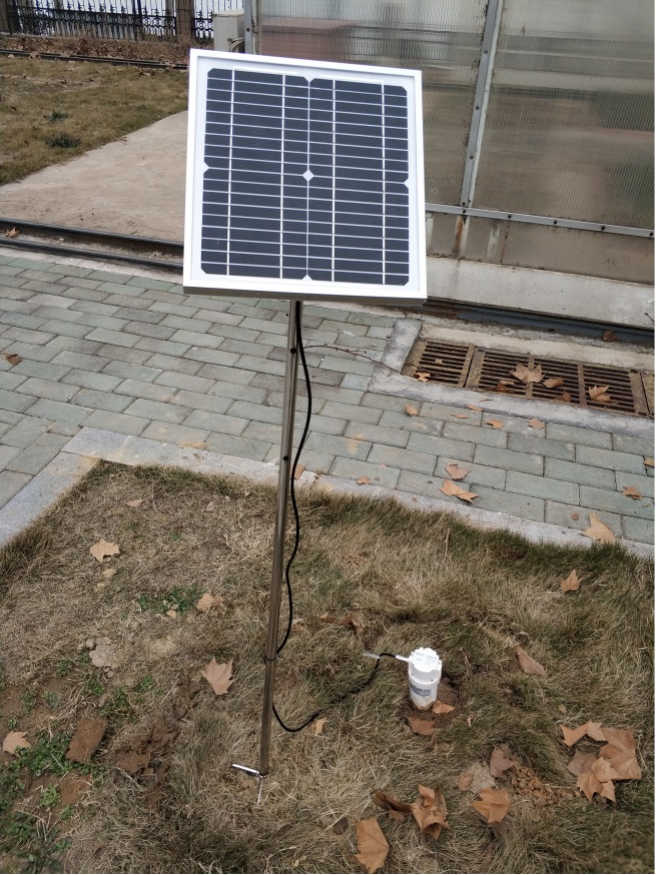
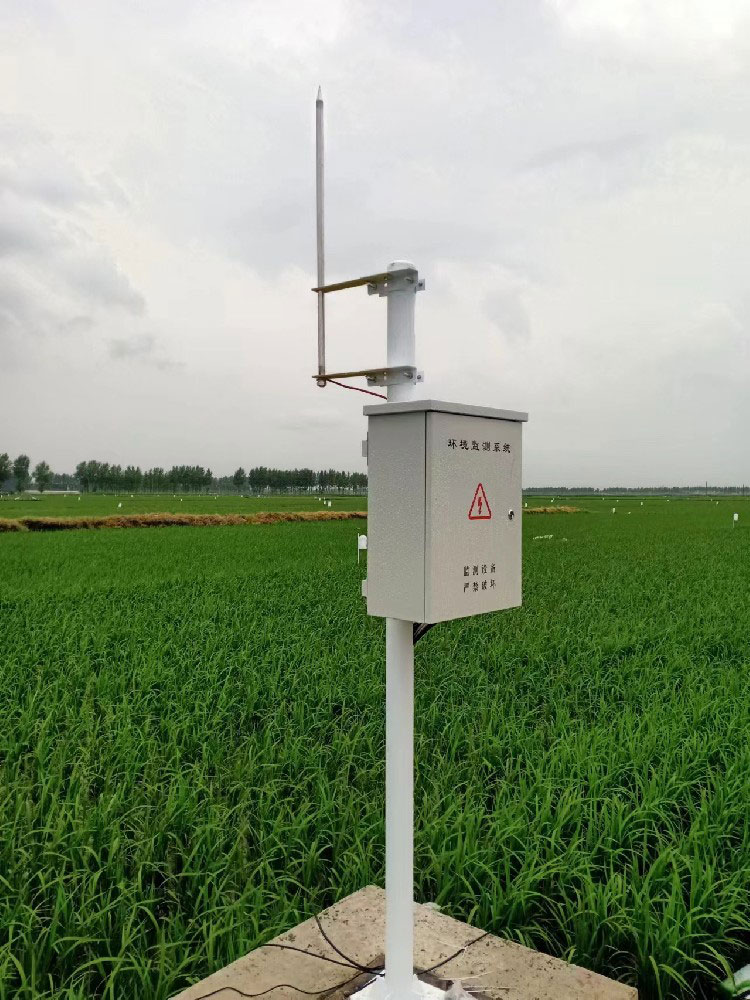
The automatic soil moisture observation station is the terminal antenna of smart agriculture projects and can operate all-weather in unattended harsh environments.
Perception Layer: NiuBoL multi-layer soil temperature and humidity sensors.
Acquisition and Transmission Layer: Industrial-grade 4G/GPRS acquisition box responsible for protocol conversion and timed upload.
Power Supply System: Efficient solar panels and large-capacity lithium iron phosphate battery packs, supporting continuous operation on rainy days.
Cloud Platform: Backend server realizes automated data collection, trend analysis, and abnormal alarms.
To ensure the long-term data validity of automatic monitoring stations, system integrators need to establish the following regular inspection mechanisms:
Energy Maintenance: Regularly clean dust, bird droppings, or fallen leaves on the surface of solar panels to ensure photoelectric conversion efficiency and avoid power loss and shutdown of the acquisition box.
Physical Inspection: Check whether cable protective sleeves are aged or bitten by rodents, and ensure wiring terminals are not loose or oxidized.
Lightning Protection System: Ensure lightning rods and grounding resistance meet engineering standards, especially at outdoor installation points in areas with frequent thunderstorms.
Data Verification: Conduct manual comparison tests quarterly to ensure sensor probes are not in poor contact due to soil voids or settlement.
The NiuBoL soil monitoring solution has been widely applied in multiple vertical industries to provide differentiated project value for engineering companies:
Smart Construction Sites and Landscaping: Automatically trigger sprinkler systems to maintain plant survival rates and reduce water waste.
Water-Saving Irrigation Projects: Linkage with solenoid valve controllers to achieve on-demand irrigation based on crop water requirement models.
Greenhouses and Flower Cultivation: Precisely control microclimate environments and improve agricultural product yield and quality through high-sensitivity feedback.
Grassland Pastures and Scientific Experiments: Provide long-term, high-frequency raw scientific experimental data for agricultural research institutes to support plant cultivation research.
For system integrators, stability, protocol compatibility, and supply cost are core considerations.
Industrial-grade Modbus Communication: Perfectly compatible with mainstream PLC and IoT gateways, greatly shortening project development cycles.
Extremely High Cost-Effectiveness: Factory direct supply leaves sufficient profit margin for engineering bidding.
Customizable: Provides cable length customization of different lengths and pre-installed cold-pressed terminals to simplify on-site installation processes.
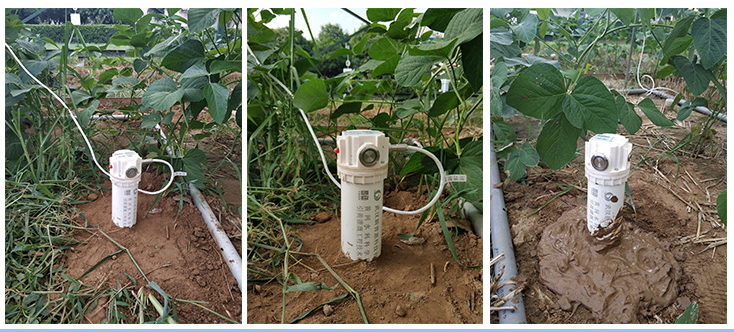
In large-scale irrigation projects or agricultural research institute scientific research projects, single-point depth soil moisture data is often insufficient to reflect the absorption situation of plant roots. NiuBoL recommends that integrators adopt profile layered monitoring technology.
Layered Arrangement Logic
Surface Layer (0-20cm): Monitor infiltration of rainfall and irrigation and the impact of surface evaporation on soil moisture.
Root Active Layer (20-60cm): The main water absorption layer for most crops (such as wheat and corn), the core indicator for triggering automatic irrigation.
Deep Layer (60-100cm): Monitor deep water seepage to evaluate irrigation water utilization efficiency and groundwater recharge.
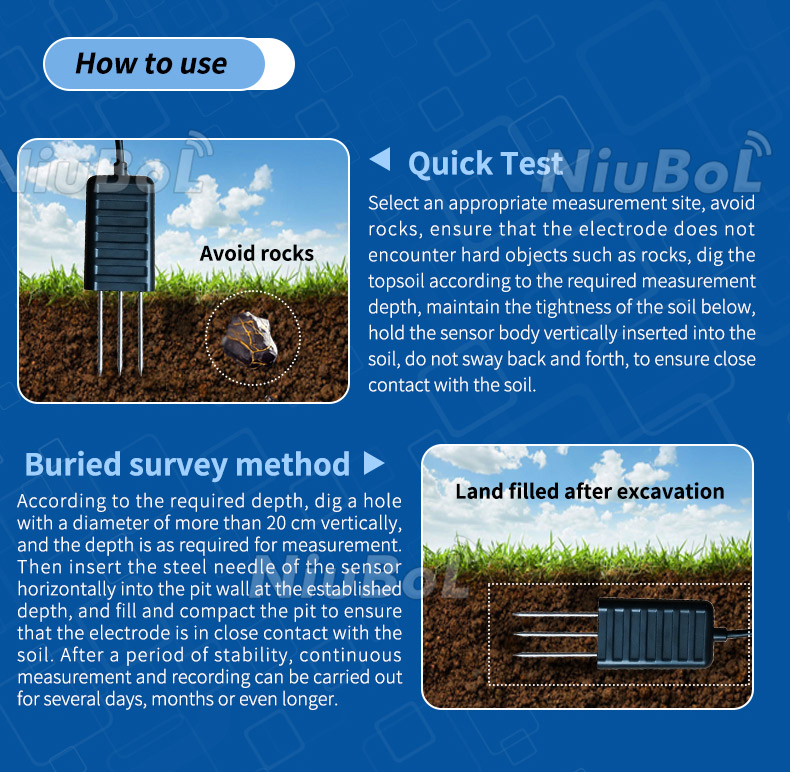
While the accuracy of the sensor itself is important, the installation process directly determines whether the data is representative. In project delivery, NiuBoL emphasizes the following construction details:
1. Eliminate the “Air Gap” Effect
FDR sensors are extremely sensitive to the dielectric constant around the probe. If there is a gap between the soil and the probe during installation, the measured value will be significantly low.
NiuBoL Solution: The probe uses special alloy with high hardness and smooth surface. It is recommended to use a special soil drilling tool to ensure the sensor is pushed in and closely fits the original soil.
2. Prevent “Piping” Interference
If cable backfilling is improper, rainwater will flow directly along cable gaps to the probe position, causing falsely high measurement data.
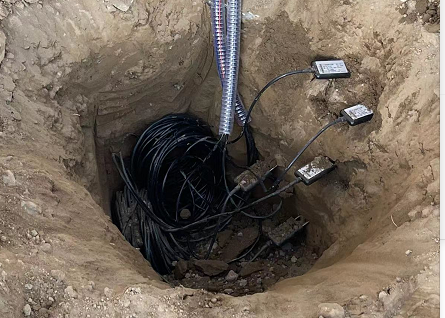
Engineering Suggestion: Cables should be buried in an “S” shape and combined with waterproof protective tubes. Layered backfilling and compaction above the sensor to restore natural soil bulk density.
For IoT solution providers, how to use NiuBoL sensor data to achieve closed-loop control is the key to enhancing project added value.
Irrigation Strategy Based on Soil Three Key Points
System integrators can set logic trigger points in the background according to different soil types (sandy soil, loam, clay):
| Monitoring Status | Moisture Percentage (Reference) | System Linkage Decision |
|---|---|---|
| Field Capacity | 80% - 90% θ | Stop irrigation to prevent root hypoxia or nutrient loss |
| Suitable Moisture Period | 60% - 80% θ | System remains on standby and monitors trends in real time |
| Irrigation Warning Point | 45% - 55% θ | Trigger linkage: automatically open solenoid valve or water pump |
| Wilting Coefficient | < 40% θ | Emergency warning: push alarm to management personnel’s mobile phone |
Q1. What are the advantages of the FDR measurement principle of soil temperature and humidity sensors?
Compared with traditional drying methods or tensiometers, the FDR (Frequency Domain Reflectometry) principle calculates moisture by measuring the dielectric constant of soil. It has the advantages of non-radioactive, non-destructive monitoring, extremely fast response, and minimal interference from soil salinity, making it suitable for long-term online monitoring.
Q2. Can the sensor measure the temperature and humidity of deep soil?
Yes. System integrators can arrange sensors at different depths (such as 20cm, 40cm, 60cm, 100cm) according to project needs to build a three-dimensional soil moisture profile.
Q3. How to handle signal attenuation of RS485 bus during long-distance transmission?
It is recommended to add signal repeaters when the transmission distance exceeds 300 meters and use shielded twisted-pair cables. At the same time, ensure that the power supply voltage at the sensor end is stable above DC 12V to offset voltage drop.
Q4. Is the sensor probe prone to damage?
The NiuBoL probe uses specially treated alloy material with extremely high mechanical strength and can withstand normal soil extrusion and impact. However, during installation, it is strictly prohibited to forcibly strike the sensor housing with hard objects.
Q5. Does the system support docking with third-party cloud platforms of governments or enterprises?
Yes. Our equipment outputs standard Modbus RTU signals. When used with NiuBoL gateways, it supports pushing JSON format data to any third-party API via MQTT or HTTP protocol.
Q6. Does the sensor need to be removed during the freezing period?
No. The sensor’s operating environment upper limit can reach 85°C and lower limit to -40°C. The epoxy resin encapsulation has good freeze-crack resistance. However, in frozen soil layers, moisture data will reflect the dielectric properties of ice, requiring temperature correction at the algorithm end.
Q7. Do you provide relevant engineering installation guidance?
We can provide detailed installation manuals and video tutorials, including how to excavate profiles, how to ensure no air gap contact between the probe and soil, and how to perform cable waterproofing.
Q8. Will soil salinity affect the accuracy of moisture measurement?
NiuBoL models such as NBL-S-THR use specific frequency electromagnetic wave pulses to minimize the impact of fertilizers and metal ions (conductivity) in the soil on dielectric constant measurement. Accuracy is better than conventional products on the market.
Q9. How far can the sensor signal output be transmitted?
RS485 signals can be stably transmitted more than 1000 meters in standard industrial environments. If the project distribution area is large, it is recommended to use NiuBoL’s 4G or LoRa acquisition terminals to wirelessly aggregate data.
Q10. Can this sensor measure saline-alkali land?
Yes. NBL-S-THR adopts high-frequency pulse technology with strong anti-conductivity interference capability. In saline-alkali soil with conductivity below 10000μS/cm, moisture measurement accuracy can still be maintained at industrial-grade standards.
Q11. It is recommended to use a steel needle of the same diameter for pilot hole pre-probing before installation. If hard rock is encountered, avoid that point to protect the probe from physical deformation.
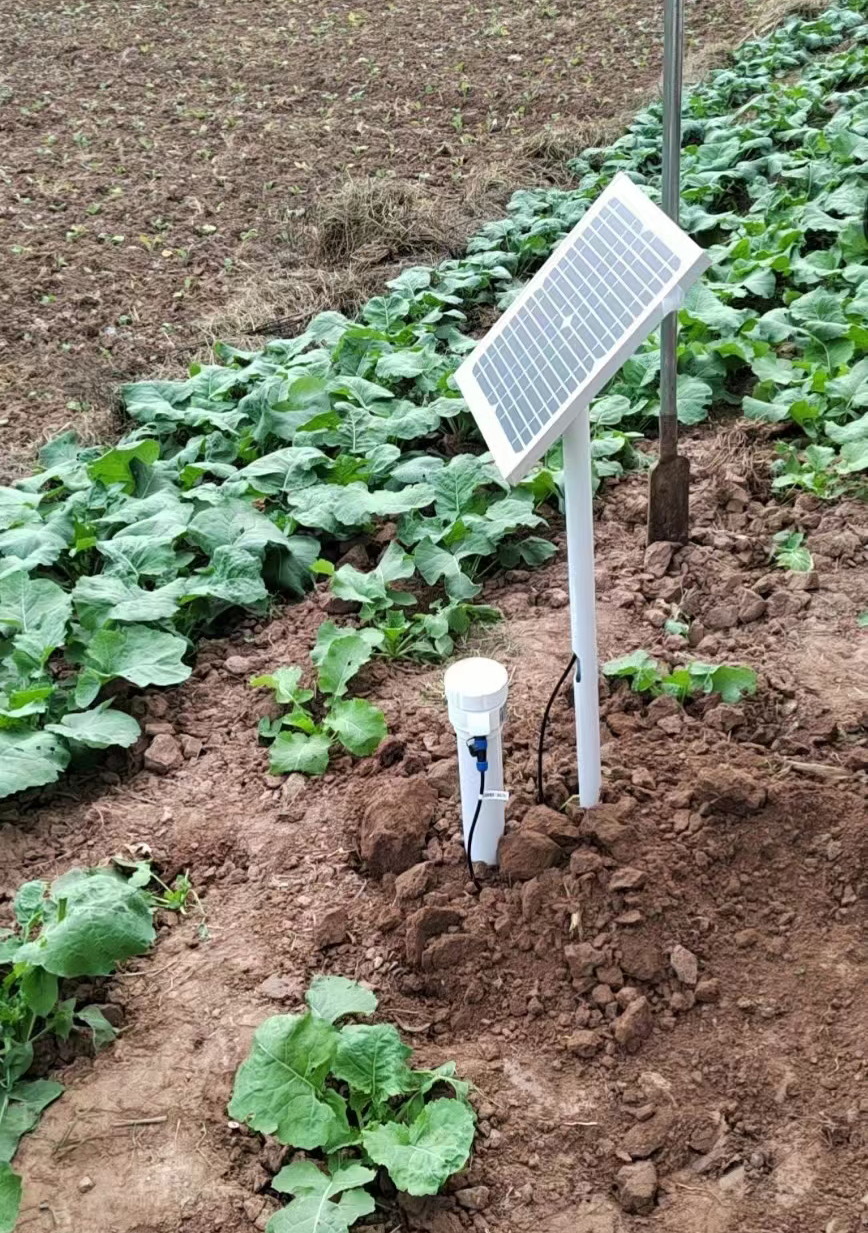
Precise soil moisture monitoring is the premise for achieving agricultural structure adjustment and smart production. Soil moisture monitoring should not be just an “instrument reading” — it is the “central perception” of the entire smart agriculture system. NiuBoL assists system integrators in agricultural structure adjustment, water-saving irrigation, and soil improvement projects by providing highly durable and highly compatible sensors. With industrial-grade sensor manufacturing standards and deep IoT integration experience, NiuBoL is committed to providing global customers with the most robust environmental perception foundation.
 NBL-S-TMSMS-Tubular-Multi-depth-Soil-Moisture-Sensor-Instruction-Manual.pdf
NBL-S-TM-Soil-temperature-and-moisture-sensor-Instruction-Manual-4.0.pdf
NBL-S-THR-Soil-temperature-and-moisture-sensors-Instruction-Manual-V4.0.pdf
Related recommendations
Sensors & Weather Stations Catalog
Agriculture Sensors and Weather Stations Catalog-NiuBoL.pdf
Weather Stations Catalog-NiuBoL.pdf
Agriculture Sensors Catalog-NiuBoL.pdf
Water Quality Sensor Catalog-NiuBoL.pdf
Related products
 Combined air temperature and relative humidity sensor
 TDR Soil Moisture & Temperature Sensor for irrigation| RS485 |4-20mA| NBL-S-THR
 Soil pH sensor RS485 soil Testing instrument soil ph meter for agriculture |NBL-S-PH
 Wind Speed sensor Output Modbus/RS485/Analog/0-5V/4-20mA
 Tipping bucket rain gauge for weather monitoring auto rainfall sensor RS485/Outdoor/stainless steel
 Pyranometer Solar Radiation Sensor 4-20mA/RS485

Screenshot, WhatsApp to identify the QR code
WhatsApp number:+8615367865107
(Click on WhatsApp to copy and add friends)

