





— Blogs —
—Products—
 Consumer hotline +8618073152920
 WhatsApp:+8615367865107
Address:Room 102, District D, Houhu Industrial Park, Yuelu District, Changsha City, Hunan Province, China
Product knowledge
Time:2026-06-09 11:32:00 Popularity:976
Quick Answer: An online total hardness sensor can provide a continuous hardness trend, but selecting it for softener outlet protection requires evidence at the actual low-hardness decision point. The NiuBoL NBL-WQ-TH-4S range is 0-1000 mg/L as CaCO3. Its 0.1 mg/L resolution does not establish the detection capability needed for every boiler or membrane pretreatment specification.
The same water treatment skid can have very different hardness questions. At the inlet, the operator may need to track changes in incoming calcium and magnesium load. At the softener outlet, the question is whether treated water is approaching a breakthrough limit. At a blending point, the objective may be to maintain a specified final hardness. These decisions require different low-end performance and sampling arrangements.
Do not specify one broad-range sensor for all three duties simply because its range includes zero. For a softener outlet, obtain representative low-hardness test results before accepting the probe as the sole protective input. Where the required limit cannot be demonstrated, assess a suitable low-range analyzer or reference testing arrangement instead.
Hardness is commonly reported as mg/L as CaCO3. It is an equivalent reporting basis for the calcium and magnesium contribution, not a direct reading of suspended calcium carbonate. Conductivity and TDS are not substitutes: other dissolved ions affect both, and their relationship to hardness changes with water composition.
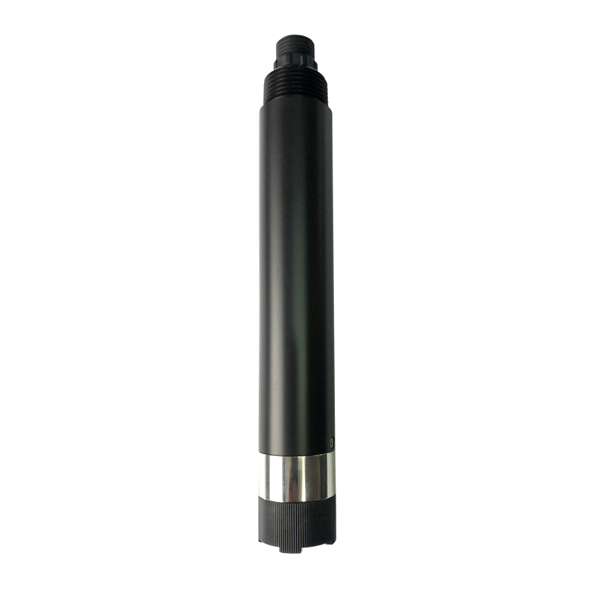
The NiuBoL NBL-WQ-TH-4S total hardness sensor uses a PVC-membrane calcium/magnesium ion-selective electrode. Review the electrode response in the actual water matrix, including treatment chemical carryover. Temperature compensation does not remove every effect of ionic composition or interference.
| Item | TH-4S specification | Selection consequence |
|---|---|---|
| Range and resolution | 0-1000 mg/L as CaCO3; 0.1 mg/L | Verify useful response at the project's low-end threshold separately. |
| Accuracy | +/-10% of reading; temperature +/-0.3 degrees C | At 200 mg/L, the stated percentage term is 20 mg/L; this is not a complete installed uncertainty calculation. |
| Water conditions | 0-40 degrees C; pressure <0.1 MPa; pH 4-10 | A pressurized or hot process line requires a suitable sampling arrangement. |
| Compensation and calibration | Automatic Pt1000 compensation; two-point calibration | Confirm standards, electrode preparation and the reference comparison procedure. |
| Electrical interface | 12-24 V DC; 0.2 W at 12 V; RS485 Modbus RTU; optional 4-20 mA | Request the exact register map and any ordered analog range. |
| Construction and installation | POM and 316L stainless steel; IP68; 3/4 NPT immersion mounting | Check chemical compatibility; the thread does not authorize direct use above the pressure limit. |
| Cable | Standard 5 m; other lengths by agreement | Confirm jacket material and the wet-area connection arrangement before ordering. |
These values apply to the identified TH-4S configuration. Do not combine an alternative housing, a different pressure limit or another model's response time into the same purchase specification. For a threshold close to the low end, request measured performance rather than calculating a detection limit from the decimal places on the output.
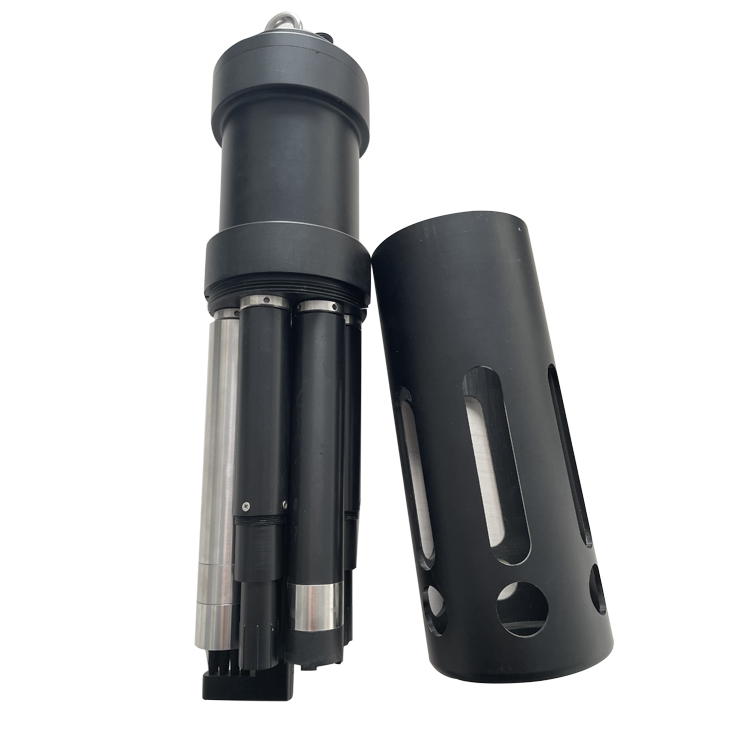
For an industrial line outside the probe's operating envelope, the sampling system becomes part of measurement selection. Reduce pressure with suitable equipment, control temperature where required and provide a safe discharge or return route. Verify conditions at the sensor, not only at the upstream process gauge. A small fitting alone does not establish safe operating pressure.
Take the sample from a point that answers the intended question. Water downstream of a blending junction cannot be assumed to represent the softener outlet before blending. A sample connection upstream of a standby vessel cannot reveal that vessel's breakthrough. Mark each point on the piping drawing and retain a nearby reference sampling provision.
Keep the sample route short enough for the required response. Approximate transport delay as sample-line internal volume divided by actual flow. For example, a 1 L line at 0.5 L/min has about two minutes of nominal transport time before sensor response, mixing and acquisition delays. This calculation is a sampling example, not a specified TH-4S flow rate.
During commissioning, observe sample exchange after opening the branch and after changing the selected source. Do not accept a freshly flushed reference result against an online reading still dominated by water from the previous operating state.
Start with the owner's required hardness limit and a reference method suitable at that concentration. Compare conditioned sensor readings with samples collected at the same point and time. Include normal outlet water and relevant changes near the decision point where practicable; agreement only on hard inlet water does not prove low-end performance.
Separate three conditions in the PLC: a valid low result, a valid rising hardness result and an unavailable or suspect channel. A communication timeout, isolated bypass or sensor being serviced must not become a zero-hardness value. If the probe does not report sample flow, use suitable separate flow evidence or an operating procedure rather than assuming Modbus communications prove a flowing sample.
Test alarm acknowledgment, any transfer to a standby vessel and the return-to-service procedure with the process outputs controlled safely. Automatic regeneration or feed diversion should follow the treatment equipment's engineered sequence. The hardness probe supplies a measurement; it does not establish vessel capacity, regeneration success or boiler-water suitability on its own.
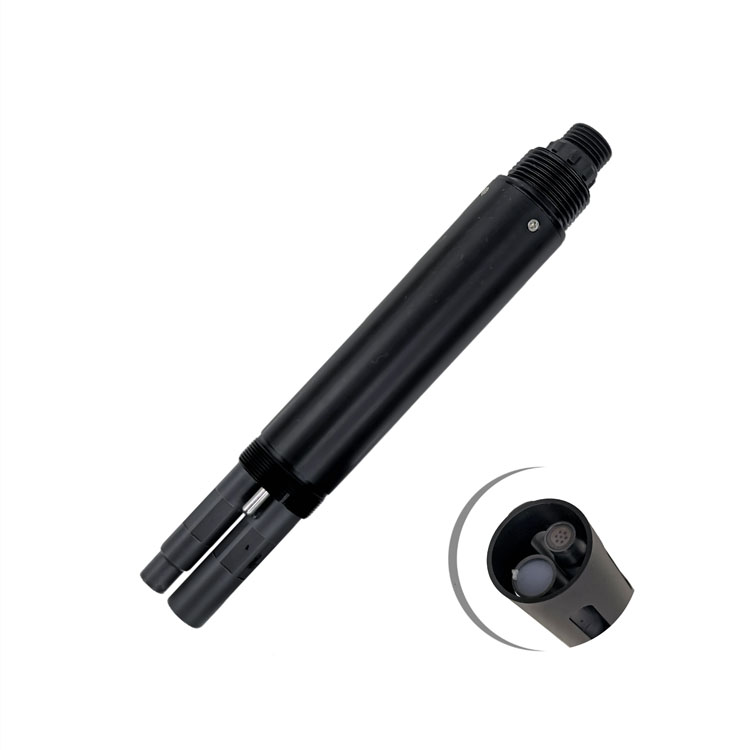
A multiparameter assembly can provide pH or conductivity context at another process point. An ammonium electrode measures a different chemical quantity. Neither should be described as a substitute hardness channel, even if all instruments communicate over RS485. Keep units, device addresses and measurement names distinct in the PLC, RTU or data logger.
For commissioning disagreements, use the hardness sensor sample, electrode and PLC troubleshooting guide. For initial selection, send NiuBoL inlet and outlet hardness, the required action limit, pH, temperature, pressure, treatment chemicals and available reference results. Include the bypass design and controller input so the response addresses a defined monitoring duty.
No. Establish useful low-end performance against the required limit and reference method. The 0-1000 mg/L range and 0.1 mg/L resolution alone do not demonstrate suitability for that protective duty.
Not as a generally valid conversion. Conductivity responds to dissolved ions beyond calcium and magnesium. A local correlation may change when source water, treatment or blending changes, so it cannot be assumed to replace a hardness determination.
The identified configuration specifies immersion mounting and pressure below 0.1 MPa. Confirm an approved installation arrangement that meets this limit. A 3/4 NPT connection does not prove suitability for the line pressure.
Confirm the delivered electrode's preparation and storage instructions, complete the appropriate calibration, then compare representative water with the reference method. Verify the displayed CaCO3 unit and alarm behavior before returning the channel to normal operation.
Pressure reduction, temperature control, sampling fittings, safe drainage, flow confirmation, mounting and reference verification can materially change scope. Request an itemized quotation rather than comparing a bare probe with a complete sampling station.
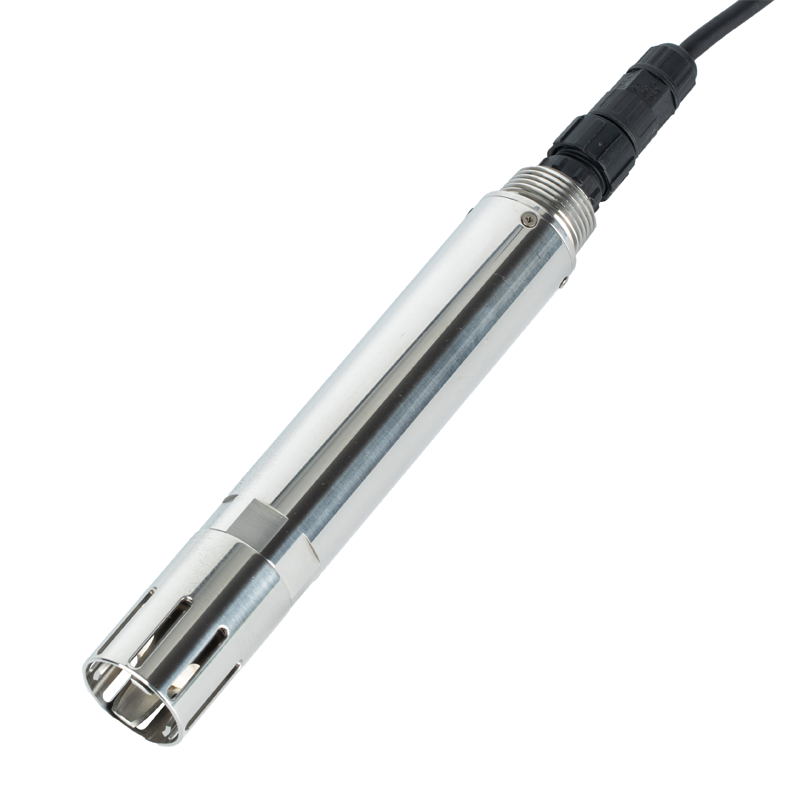
Select an online total hardness sensor around the water point and decision limit. The TH-4S can supply a continuous CaCO3-equivalent trend within its operating envelope; low-hardness protective applications also require demonstrated response, a representative sample and a control system that distinguishes valid low hardness from missing data.
Prev:Electrode Residual Chlorine Sensor for Disinfection Monitoring and Dosing Control
Next:Chlorine Sensor Specification FAQ: Result, Flow Cell and Interface
Related recommendations
Sensors & Weather Stations Catalog
 Agriculture Sensors and Weather Stations Catalog-NiuBoL.pdf
Weather Stations Catalog-NiuBoL.pdf
Agriculture Sensors Catalog-NiuBoL.pdf
Water Quality Sensor Catalog-NiuBoL.pdf
Related products
 Combined air temperature and relative humidity sensor
 TDR Soil Moisture & Temperature Sensor for irrigation| RS485 |4-20mA| NBL-S-THR
 Soil pH sensor RS485 soil Testing instrument soil ph meter for agriculture |NBL-S-PH
 Wind Speed sensor Output Modbus/RS485/Analog/0-5V/4-20mA
 Tipping bucket rain gauge for weather monitoring auto rainfall sensor RS485/Outdoor/stainless steel
 Pyranometer Solar Radiation Sensor 4-20mA/RS485

Screenshot, WhatsApp to identify the QR code
WhatsApp number:+8615367865107
(Click on WhatsApp to copy and add friends)

