





— Blogs —
—Products—
 Consumer hotline +8618073152920
 WhatsApp:+8615367865107
Address:Room 102, District D, Houhu Industrial Park, Yuelu District, Changsha City, Hunan Province, China
Product knowledge
Time:2026-09-12 13:00:00 Popularity:194
Quick Answer: A mechanical NBL-W-HX1 siphon rain gauge records rainfall using a float, pen and clock-driven chart. Rain raises the float and pen; a siphon periodically empties the measuring chamber and returns the trace toward zero. That reset is not negative rainfall. A paper trace is not a native RS485 Modbus RTU output, and remote digital recording requires a separately specified measurement or conversion system.
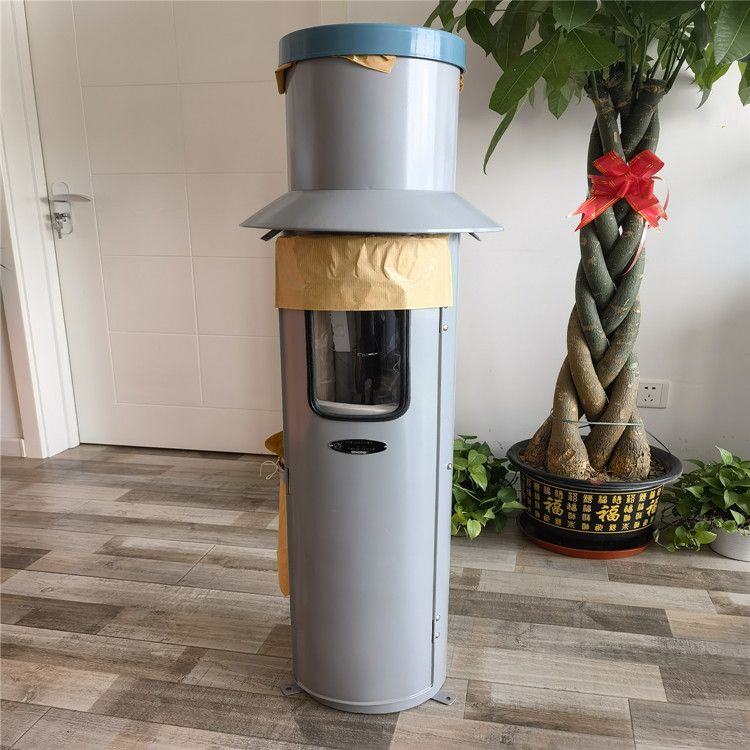
Rain enters the collector, passes through the funnel and inlet, and raises the water level in the float chamber. The float rod carries the recording pen. As the drum turns, the rising pen draws the accumulated-rainfall trace against time.
When the chamber reaches its siphon-trigger level, water drains through the siphon into the collection bottle. The float descends and the pen returns toward the zero line. Continued rain produces another rising section. The instrument therefore preserves a sequence of rising traces and drainage resets rather than one uninterrupted upward total.
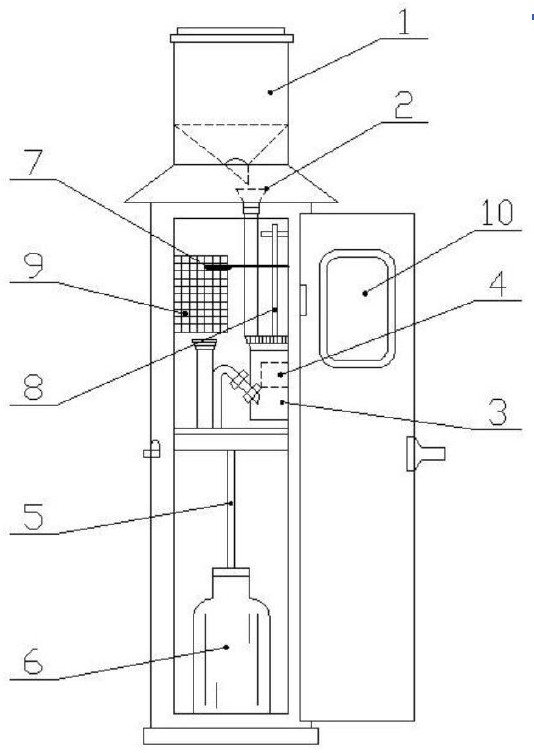
The structure drawing below identifies the principal parts: 1 collector, 2 inlet funnel, 3 float chamber, 4 float, 5 siphon tube, 6 collection bottle, 7 pen, 8 pen-lifting mechanism, 9 recording drum and 10 observation window. These parts need different checks; cleaning the collector alone does not verify the clock or siphon.
| Item | Mechanical chart configuration |
|---|---|
| Collector dimension | 200 mm diameter in the illustrated configuration; not 200 cm2 collection area |
| Chart cycle | The described trace rises to the 10 mm line before siphoning; verify the ordered chart and adjustment |
| Measuring and recording elements | Float chamber, float-linked pen and clock-driven recording drum |
| Record output | Paper rainfall-versus-time trace; no native digital protocol is established by this arrangement |
| Clock drive and recording period | Confirm the supplied movement, chart period and permissible time error together |
| Accuracy and field range | Use the ordered instrument's calibration and operating specification; do not copy tipping-bucket accuracy or resolution |
| Power, cable and environmental protection | Depend on the supplied clock and any separately specified electronics; no sensor DC supply, cable or IP class is implied here |
A circular opening 200 mm in diameter has an area of about 314 cm2. Confusing diameter with an area of 200 cm2 changes the water-volume conversion materially. Determine the effective collector geometry before using a measuring cylinder to check the scale.
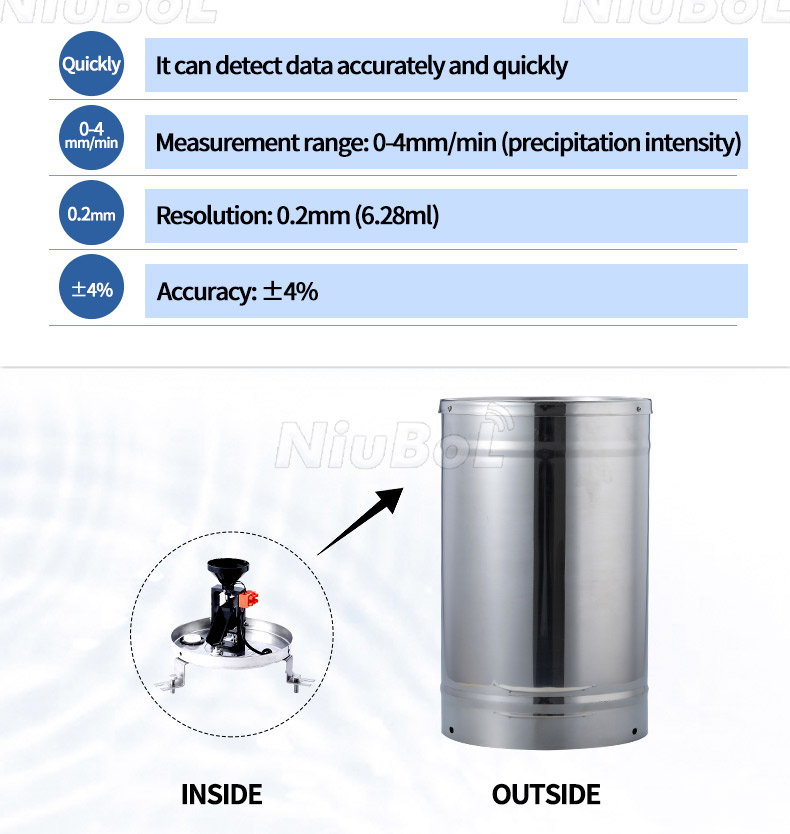
The tipping-bucket arrangement below is a different technology. It creates discrete events that can be counted electronically; the float-and-pen instrument creates a chart trace. Similar outdoor applications do not make their interfaces, adjustment methods or calibration limits interchangeable.
Install the instrument on a stable, level base with the collector horizontal. Secure it against movement while retaining access to the chart and water path. Keep the inlet clear of splash, roof runoff and obstructions according to the selected observation practice.
Use a competent technician and the actual instrument's adjustment procedure for the siphon position and pen linkage. Adjusting a zero before clearing a sticking float can hide a mechanical problem at one point while leaving the rest of the chart wrong.
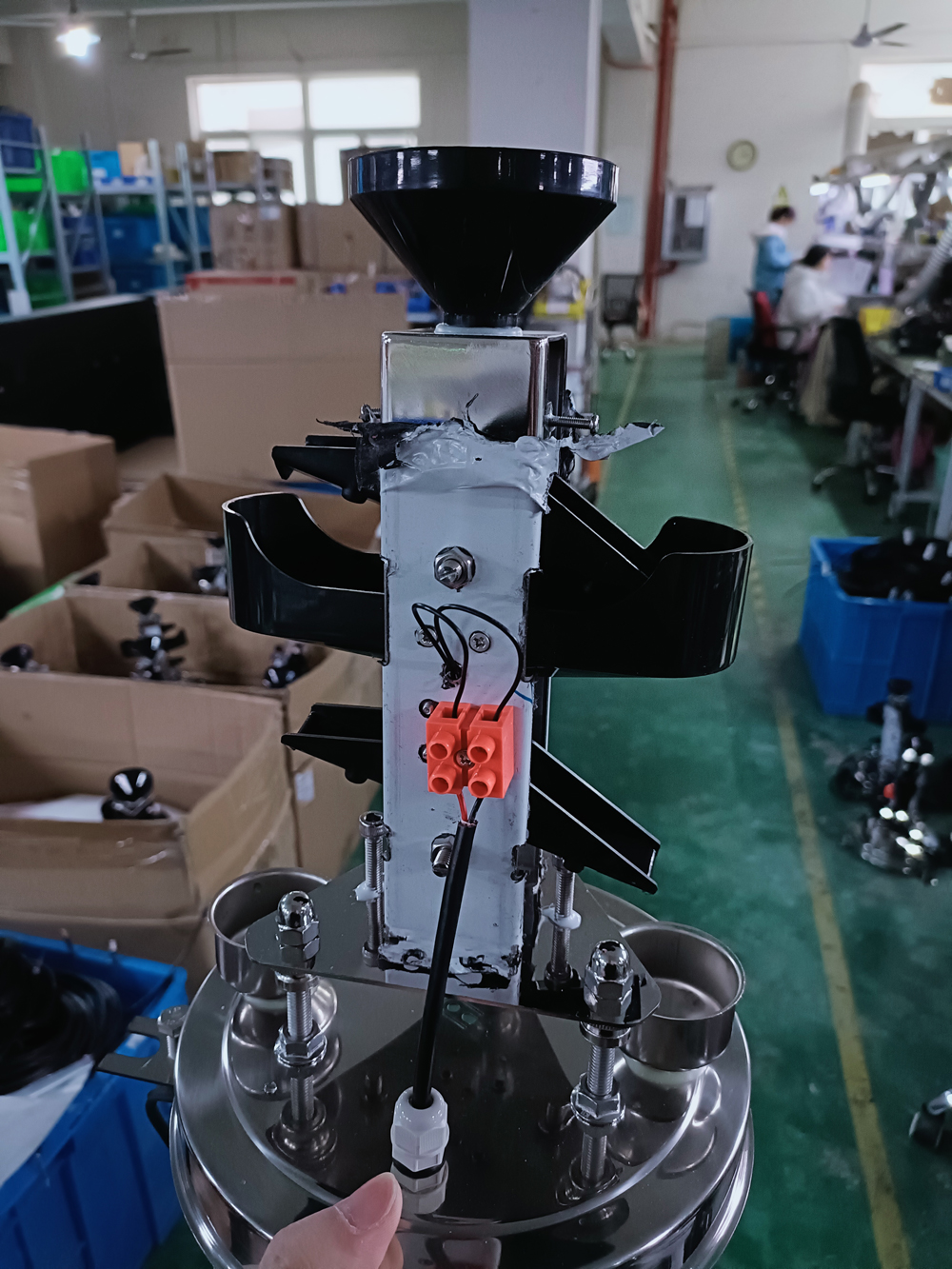
The exposed tipping mechanism below illustrates why the procedures cannot be exchanged. Tipping-bucket stops and pulse checks are not adjustments for a float chamber or chart pen. Identify the mechanism before ordering parts or assigning a technician's test method.
A downward drainage trace marks a measuring-cycle reset. Do not subtract it from rainfall or classify it as a drying event. Add the accumulated rising sections over the reporting interval, accounting for the chart scale, actual reset points and any partial sections at the boundaries.
For a simple illustration with complete 10 mm cycles, a trace beginning at 2.0 mm, passing through two complete resets and ending at 3.0 mm represents (10 - 2) + 10 + 3 = 21 mm. This arithmetic assumes complete cycles at the stated scale; it is not a correction rule for an abnormal or incomplete siphon.
Read an irregular reset from the observed record and the approved interpretation method rather than assuming that every cycle is exactly the nominal span. The JMA precipitation measurement guide explains that siphon behavior and actual trace endpoints need attention when interpreting recording gauges.
Chart slope can describe average rainfall rate over a chosen interval. For example, 2 mm accumulated in 20 minutes corresponds to 6 mm/h over that interval. Pen response, chart timing and drainage limit what can be inferred about a shorter peak; do not label a chart-derived average as instantaneous intensity.
A mechanical record may be useful at a staffed observation site, in teaching or alongside another instrument for a defined comparison. Someone still needs to inspect, change and interpret the chart. It is not a remotely accessible alarm source merely because it records without an observer watching every minute.
A wider weather station such as the installation below can combine digital inputs, local storage and telemetry. If a project needs a PLC or RTU rain channel, specify a compatible digital gauge or an independently documented conversion arrangement. Scanning a chart creates an image archive, not an automatic live Modbus measurement.
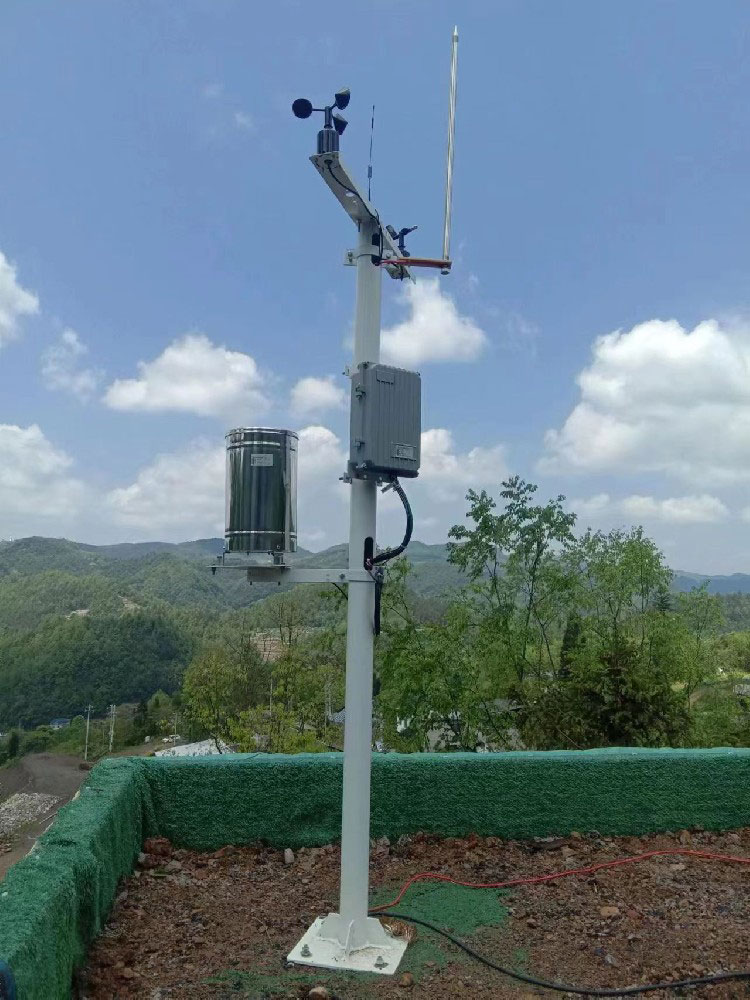
The NiuBoL NBL-W-RS tipping-bucket option is a separate acquisition route. Its reed-switch version needs a suitable count input; its configured RS485 version needs the matching Modbus RTU definition. Do not assign either interface to the NBL-W-HX1 mechanical arrangement without an actual additional system.
Mark chart start and finish times and record any clock adjustment. Align the chart edges correctly so an apparent jump at the join is not mistaken for rain. Keep charts identifiable by site, instrument, date and operator, with test-water and maintenance marks visible.
Inspect the siphon for deposits and restricted discharge, and verify the float and pen after service. A slowly draining trace can indicate a different problem from a stopped clock or a dry pen. Record the condition before cleaning where practical so the affected interval can be reviewed.
The field station below illustrates separate water and weather monitoring hardware. If its electronic records are compared with a chart, use matching observation periods and identify the difference in measurement method. Do not force records to agree by editing away the chart's resets or moving event times.
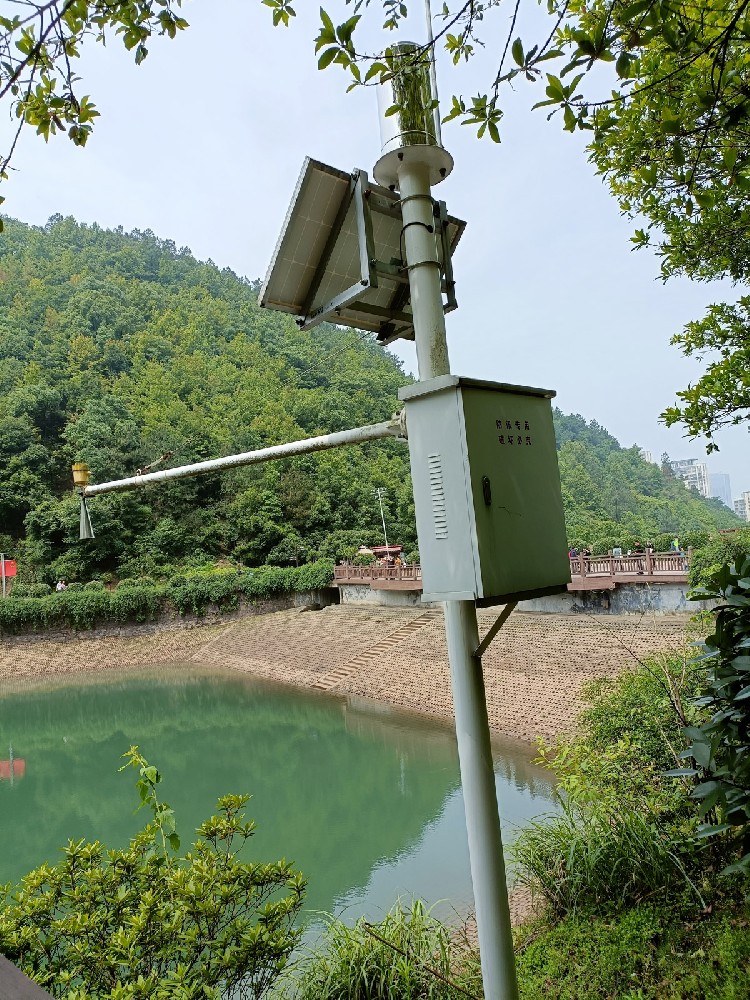
A soil-temperature or moisture sensor, such as the separate probe below, may add context to agricultural rainfall research. It cannot calibrate the collector or chart. Its response depends on depth, irrigation, soil condition and the timing of wetting, so agreement with a rain event is not a mechanical acceptance test.
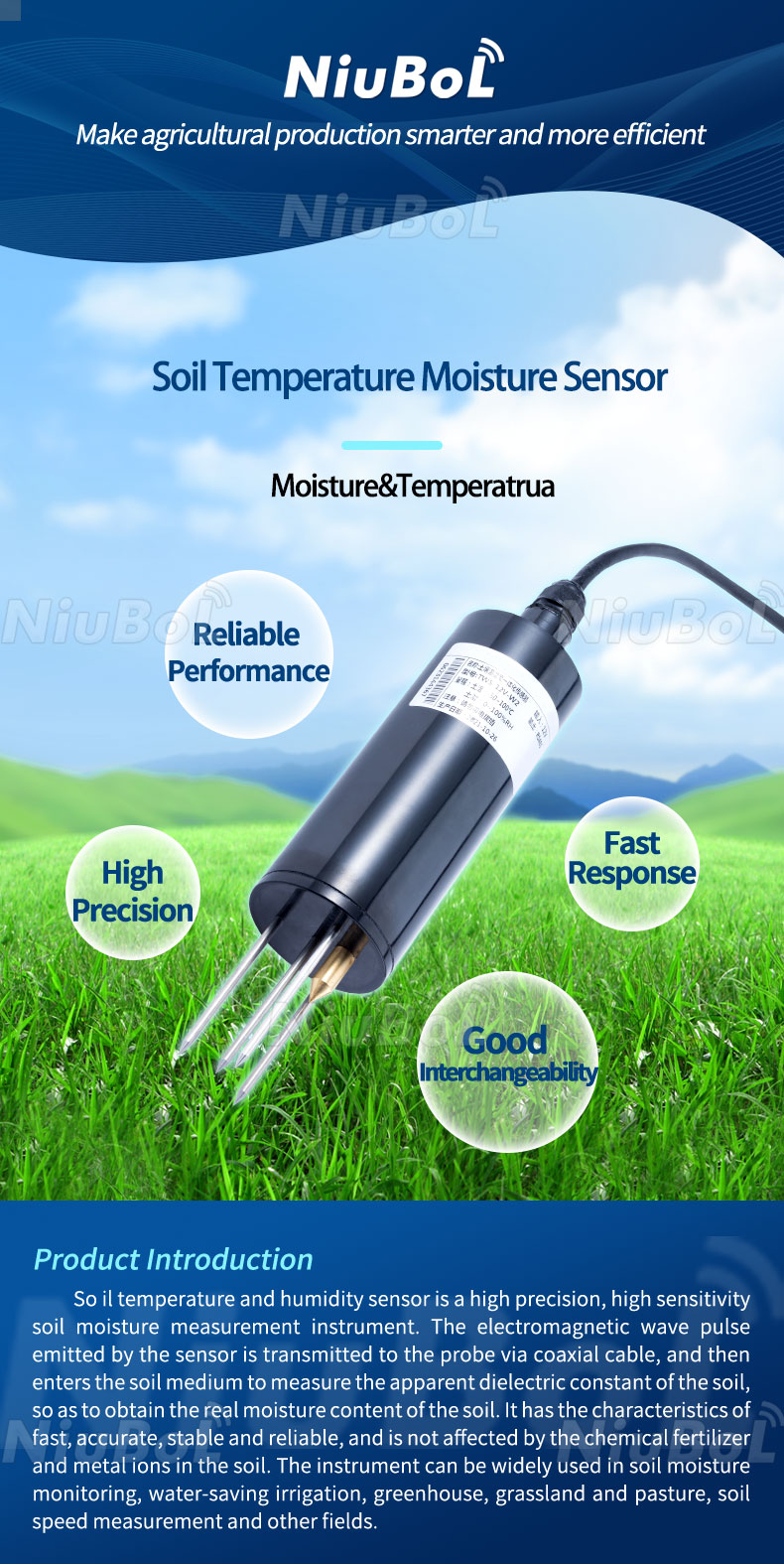
For the siphon instrument, acceptance should instead demonstrate collector geometry, the prescribed water test, full siphon action, zero return and a correctly timed trace. State which tasks are routine operator checks and which adjustments require specialist service. Keep uncertainty in damaged or incomplete charts explicit.
The mechanical float-and-chart arrangement described here does not establish a native RS485 output. Digital acquisition needs a separately specified and verified conversion system or another gauge designed for that interface.
Not for a 200 mm diameter opening. That diameter corresponds to about 314 cm2. Confirm the ordered collector dimension and use the correct area for any water-volume calculation.
No. A siphon discharge lowers the float and resets the pen. Reconstruct the accumulation from the rising sections and actual endpoints using the appropriate chart method.
Not by itself. A paper trace requires collection and interpretation. A real-time warning project needs a suitable electronic measurement, controller, communications and validated alarm process.
Confirm collector geometry, chart span and period, clock drive, calibrated performance, service parts and the required recording method. If the inquiry requires digital output, identify that additional scope explicitly rather than assuming compatibility.
Repeat the prescribed complete water cycle and timing check, including free float movement, siphon discharge and zero return. A clean appearance alone does not prove that the recording mechanism is correct.
Specify the NBL-W-HX1 around its mechanical recording task and verify the actual ordered configuration. Its useful record depends on a clear water path, correct siphon operation and a trustworthy time axis. For a NiuBoL project inquiry, state whether the requirement is a staffed chart record or a digital telemetry system so that the two are not quoted as interchangeable equipment.
Prev:Self-Recording Rain Gauge Installation and Record Verification
Next:Online Ammonia Nitrogen Sensor Probe Supplier: Selection Checks for Water Projects
Related recommendations
Sensors & Weather Stations Catalog
 Agriculture Sensors and Weather Stations Catalog-NiuBoL.pdf
Weather Stations Catalog-NiuBoL.pdf
Agriculture Sensors Catalog-NiuBoL.pdf
Water Quality Sensor Catalog-NiuBoL.pdf
Related products
 Combined air temperature and relative humidity sensor
 TDR Soil Moisture & Temperature Sensor for irrigation| RS485 |4-20mA| NBL-S-THR
 Soil pH sensor RS485 soil Testing instrument soil ph meter for agriculture |NBL-S-PH
 Wind Speed sensor Output Modbus/RS485/Analog/0-5V/4-20mA
 Tipping bucket rain gauge for weather monitoring auto rainfall sensor RS485/Outdoor/stainless steel
 Pyranometer Solar Radiation Sensor 4-20mA/RS485

Screenshot, WhatsApp to identify the QR code
WhatsApp number:+8615367865107
(Click on WhatsApp to copy and add friends)

