





— Blogs —
—Products—
 Consumer hotline +8618073152920
WhatsApp:+8615367865107
Address:Room 102, District D, Houhu Industrial Park, Yuelu District, Changsha City, Hunan Province, China
Product knowledge
Time:2026-09-13 08:00:00 Popularity:175
Quick Answer: Evaluate an online ammonia nitrogen sensor probe supplier against the water matrix, the reporting basis and a practical comparison test. A low concentration range and RS485 output are not enough. For ion-selective probes, ask how potassium interference, pH changes, electrode maintenance and low-level measurement uncertainty will be handled before approving a network of monitoring points.
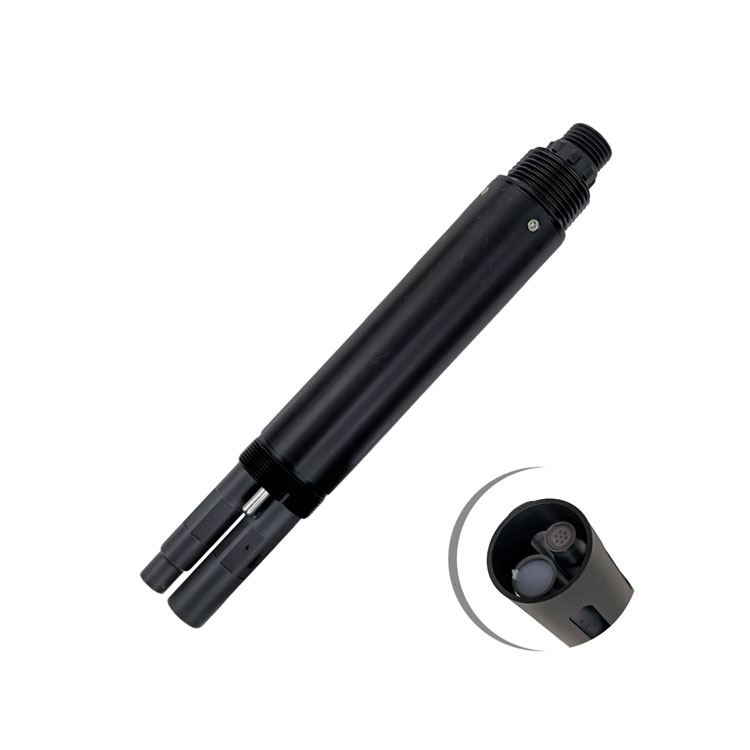
The NiuBoL NBL-WQ-NHN uses an ammonium ion-selective electrode. Its sensing element responds to ammonium ions; it is not a direct gas-phase ammonia detector. The first purchase question is therefore what the displayed result represents: ammonium concentration, ammonium nitrogen, or a calculated total ammonia nitrogen value. The laboratory report and platform tag must use the same basis.
NH4+ in mg/L and NH4-N in mg/L are numerically different. Using approximate molecular masses, 18 mg/L as NH4+ corresponds to 14 mg/L as nitrogen. This conversion only changes the mass basis. It does not add the un-ionized NH3 fraction or correct interference. Do not apply an extra conversion to an output that is already expressed as nitrogen.
Total ammonia nitrogen includes nitrogen present as NH3 and NH4+. Their relative proportions depend on conditions including pH and temperature. In aquaculture, the same total value can therefore imply different un-ionized ammonia exposure. A probe's temperature compensation is not, by itself, a complete toxicity calculation. Define the reported species, compensation method and alarm basis with the process or aquaculture specialist.
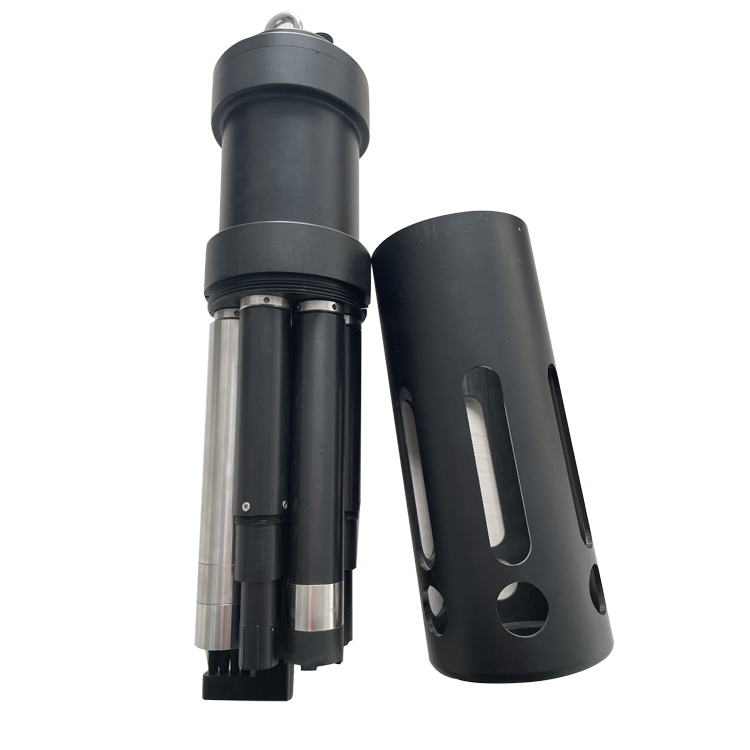
The NBL-WQ-NHN online ammonia nitrogen sensor includes Pt1000 temperature compensation. The separate NBL-WQ-NHN-407C version adds pH and potassium electrodes for compensation. Do not assume those additional measurements are included in the ordinary probe, or that either version is unaffected by all dissolved ions.
| Selection item | NBL-WQ-NHN | NBL-WQ-NHN-407C |
|---|---|---|
| Ammonium measurement range | 0-10.00, 0-100.00 or 0-1000.0 mg/L versions | 0-100.0 mg/L |
| Resolution | 0.01 mg/L for the two lower ranges; 0.1 mg/L for the highest range | 0.1 mg/L |
| Accuracy expression | +/-10% or +/-0.5 mg/L; agree how the alternatives apply | +/-10%; agree the percentage basis and test conditions |
| Compensation | Pt1000 temperature compensation | Temperature, pH and potassium compensation; K+ compensation range 0-100 mg/L |
| Operating water conditions | 0-40 deg C; pH 4-10; pressure below 0.1 MPa | 0-45 deg C; pH 4-9; pressure below 0.1 MPa |
| Power input and consumption | 12-24 V DC; 0.2 W at 12 V | 12-24 V DC; 0.5 W at 12 V |
| Digital output | RS485 Modbus RTU | RS485 Modbus RTU |
| Construction and mounting | PVC/POM wetted materials; IP68; 3/4 NPT immersion mounting | PVC/POM housing; IP68; 3/4 NPT immersion mounting |
| Cable | 5 m standard; other lengths by configuration | 5 m standard; shielded twisted-pair cable |
These are probe specifications, not a whole-station performance guarantee. Neither IP68 nor an immersion fitting establishes suitability for a high-pressure process pipe. The compensated version's pH measurement range also does not extend its permitted operating-water range. For jacket material, chemical exposure and cable extensions, obtain the exact cable construction with the selected configuration.
A 0.01 mg/L display step does not demonstrate that two samples differing by 0.01 mg/L can be distinguished reliably. This matters when the decision threshold is close to the probe's absolute error allowance. As an arithmetic illustration, an allowance of 0.5 mg/L is half of a 1.0 mg/L value. Buying a smaller displayed range does not automatically remove that limitation.
Agree an acceptance criterion at the concentrations that matter to the plant, including near the proposed alarm level. If the required discrimination is substantially tighter than the supported probe performance, evaluate another analytical method rather than adding decimal places in the PLC. A probe may still be useful for process trends even where a laboratory or analyzer method is required for a formal discharge decision.
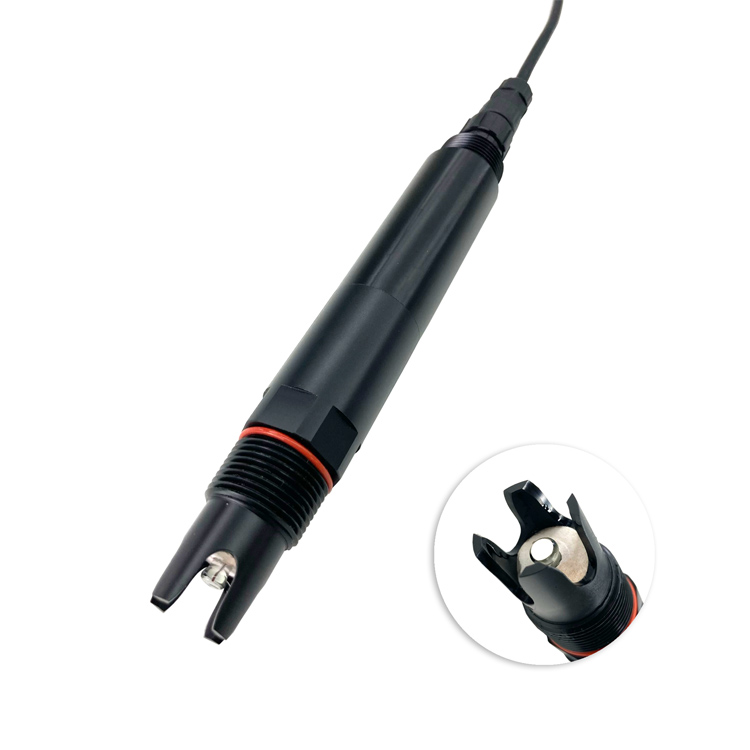
Keep a pH measurement near the ammonia monitoring point when pH variability affects interpretation. The pH sensor below is a separate instrument, not an ammonia probe and not evidence that every NHN configuration includes a pH channel. Independent pH monitoring can add process context without turning the ordinary ammonia probe into the compensated model.
Changing temperature, pH, feed load and salinity can alter both ammonia behavior and the usefulness of an alarm. Check the proposed probe in the actual water, including brackish conditions where relevant. Use ammonia results alongside dissolved oxygen and pH, but do not treat an ammonia number alone as an instruction to start aeration or exchange water. The response must reflect the cultured species and operating procedure.
An outlet or basin trend can help investigate incomplete nitrification, but a rising reading does not identify the cause by itself. Compare it with loading, flow, temperature, pH and dissolved oxygen. Install where the water is representative and the probe can be removed for cleaning; avoid a stagnant pocket chosen only because a railing is convenient.
Low concentrations place greater emphasis on absolute uncertainty, fouling and the comparison method. Trial the instrument across the expected concentration range, not only in a high-concentration standard. Where a reporting program requires an approved analytical method, establish that requirement before procurement. Online trend data should not be presented as regulatory compliance evidence without the necessary acceptance.
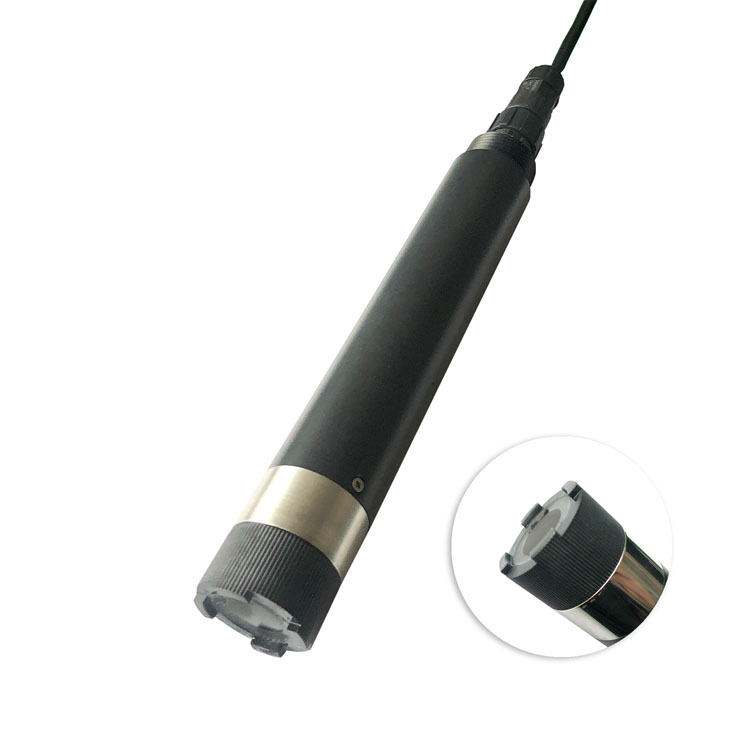
A fluorescence dissolved oxygen probe, shown below, provides a complementary channel for oxygen conditions. It does not measure ammonia. Separate channel names and units in the logger prevent a plausible-looking number from being assigned to the wrong parameter during integration.
For paired comparisons, collect water close to the probe at the recorded measurement time and follow the chosen analytical method's handling requirements. Compare several pairs across the operating range. Report differences and conditions, not only a correlation coefficient: two instruments can correlate closely while maintaining a substantial bias.
Both probe versions use RS485 Modbus RTU with a default 9600 bps, eight data bits, no parity and one stop bit. Allocate an individual address to each device before connecting a shared bus. Do not assume the ordinary and compensated probes share a default address, full register map or output behavior simply because their product names are similar.
The ordinary NHN measurement block includes the concentration value, its decimal-place count, temperature and its decimal-place count. For example, an integer value of 85 with two decimal places represents 0.85 mg/L; the same integer with one decimal place represents 8.5 mg/L. Ignoring this field creates a tenfold error without a communications fault. Verify the decoded value against the exact probe configuration rather than hard-coding one divisor for every model.
A digital probe does not automatically provide a direct analog channel. If the existing plant requires 4-20 mA, select and verify an appropriate instrument or controller output, then test its scaling and fault response. The gateway's cellular connection is a further layer: losing the uplink should raise a data-age warning, not turn the last received ammonia value into a new measurement.
Suspended solids and deposits may influence maintenance access and the interpretation of changing water conditions. A separate turbidity channel can show an event coinciding with an ammonia change, but it cannot correct an ammonium electrode merely by being present. The turbidity instrument below is a companion option, not a substitute analytical method.
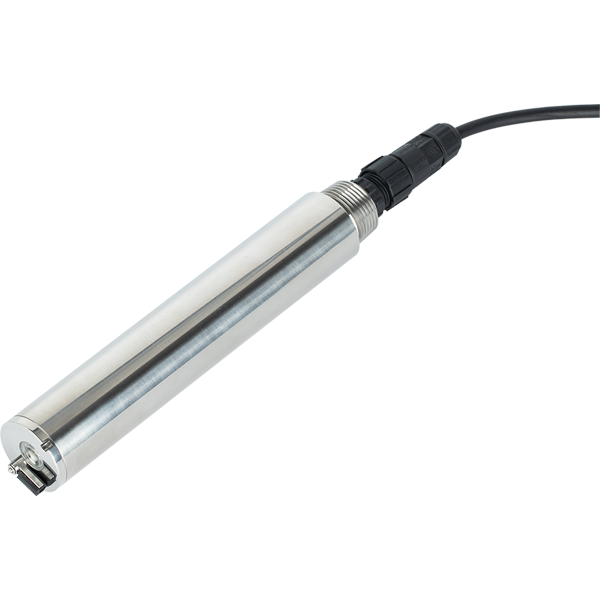
Use a supported immersion arrangement with the sensing end correctly oriented; do not mount these ammonia electrodes horizontally or upside down. Keep the sensing area clear of sediment and arrange removal without pulling on the cable. Waterproof every exposed junction. A sealed probe body does not protect an open terminal block in a wet enclosure.
Electrode activation, cleaning and two-point calibration require trained site access. The ordinary NHN electrode requires conditioning before initial use, and its storage procedure differs from that of many pH electrodes. Do not apply one storage liquid or one maintenance schedule to every sensor in a multi-parameter station. Avoid abrasive cleaning of the sensing membrane and use compatible cleaning methods.
A useful price comparison separates the ammonia probe, any compensation electrodes, mounting assembly, controller, communication hardware, standards and replacement electrode provision. Request delivery and service-part availability for the chosen range and configuration. There is no single defensible installed price without knowing whether the project already has a PLC, power and mounting access.
For a multi-parameter package, check which probes and cleaning functions are actually included. A cleaning brush elsewhere on the assembly does not establish automatic cleaning of an ammonia electrode. Multi-parameter platforms can combine several water-quality channels, but the fitted probes, cleaning coverage and accessories depend on the selected configuration. They are not all included in a standard ammonia probe order.

Consider it when its range and water conditions fit the duty and a site trial shows acceptable interference and comparison performance. Choose the compensated version when its additional pH and potassium measurements address an identified problem. Compensation adds electrodes and service requirements; it is not a reason to skip testing in the actual water.
Do not infer seawater measurement suitability from waterproof construction or cable precautions. High ionic strength and interfering ions need an application review and a comparison trial at the intended salinity and ammonium level. Provide the water chemistry before ordering a fleet of freshwater-oriented monitoring points.
It can provide continuous operational information between samples, but replacement depends on the required analytical method and allowable uncertainty. Keep laboratory comparison where the reporting program requires it or where matrix effects remain unresolved. Matching units alone does not establish equivalent analytical performance.
Set an initial verification schedule around fouling and concentration changes, then adjust it using recorded drift. Clean and inspect first; recalibrating a fouled electrode may conceal the problem temporarily. Recalibrate when a valid check shows unacceptable error, using the correct standards and procedure for that electrode.
Request the selected range, reporting basis, wiring, register map, decimal handling, calibration procedure and replacement electrode details. Include a host read test in the order when integration risk is significant. Temperature compensation and pH or potassium compensation must be identified separately.
Provide water type, typical and alarm concentrations, pH, temperature, salinity, known potassium conditions, installation depth and the receiving controller. Include the number of points and required delivery location. A recent water analysis or comparison dataset is particularly useful when deciding whether the uncompensated or compensated arrangement is suitable.
An online ammonia nitrogen sensor probe supplier should be evaluated on measurement fit and support for the actual water, not on range and interface alone. Resolve concentration units, interference and low-level acceptance before installation. NiuBoL can review the NHN range and compensated options against those conditions, with the probe, mounting, controller and service items priced separately.
Prev:NBL-W-HX1 Siphon Rain Gauge: Structure, Principle and Project Use
Next:Portable Water Quality Meter vs Online Monitor: How Project Buyers Should Choose
Related recommendations
Sensors & Weather Stations Catalog
 Agriculture Sensors and Weather Stations Catalog-NiuBoL.pdf
Weather Stations Catalog-NiuBoL.pdf
Agriculture Sensors Catalog-NiuBoL.pdf
Water Quality Sensor Catalog-NiuBoL.pdf
Related products
 Combined air temperature and relative humidity sensor
 TDR Soil Moisture & Temperature Sensor for irrigation| RS485 |4-20mA| NBL-S-THR
 Soil pH sensor RS485 soil Testing instrument soil ph meter for agriculture |NBL-S-PH
 Wind Speed sensor Output Modbus/RS485/Analog/0-5V/4-20mA
 Tipping bucket rain gauge for weather monitoring auto rainfall sensor RS485/Outdoor/stainless steel
 Pyranometer Solar Radiation Sensor 4-20mA/RS485


Screenshot, WhatsApp to identify the QR code
WhatsApp number:+8615367865107
(Click on WhatsApp to copy and add friends)

