





— Blogs —
—Products—
 Consumer hotline +8618073152920
 WhatsApp:+8615367865107
Address:Room 102, District D, Houhu Industrial Park, Yuelu District, Changsha City, Hunan Province, China
Product knowledge
Time:2026-08-09 09:07:16 Popularity:145
Insect monitoring device features should be evaluated by field workflow, not by a feature list alone. A useful system helps farms and plant protection teams reduce manual inspection, record pest trends and decide when field action is needed.
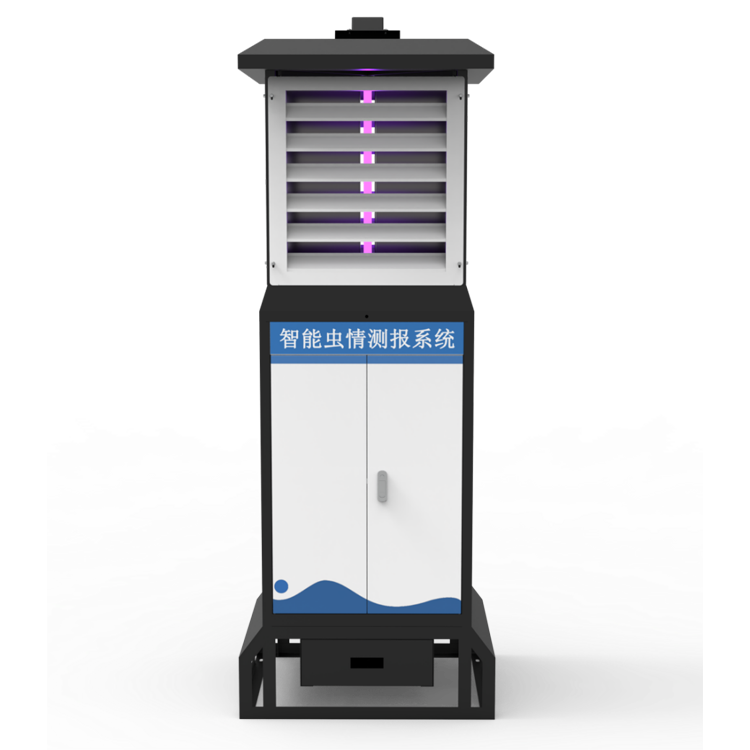
A smart remote insect monitoring device normally combines trapping structure, image capture, power supply, communication, data reporting and field maintenance. The buyer should ask how the device is installed, how often it reports, who checks images, how power is supplied and how the equipment is cleaned after use.
| Feature | What to confirm | Why it matters |
|---|---|---|
| Image capture | Image frequency, clarity and report format | Determines whether remote review is useful. |
| Power | Solar, battery or local power condition | Controls unattended operation. |
| Communication | Wireless upload or local data method | Affects remote management. |
| Field structure | Mounting height, trap design and service access | Controls installation success. |
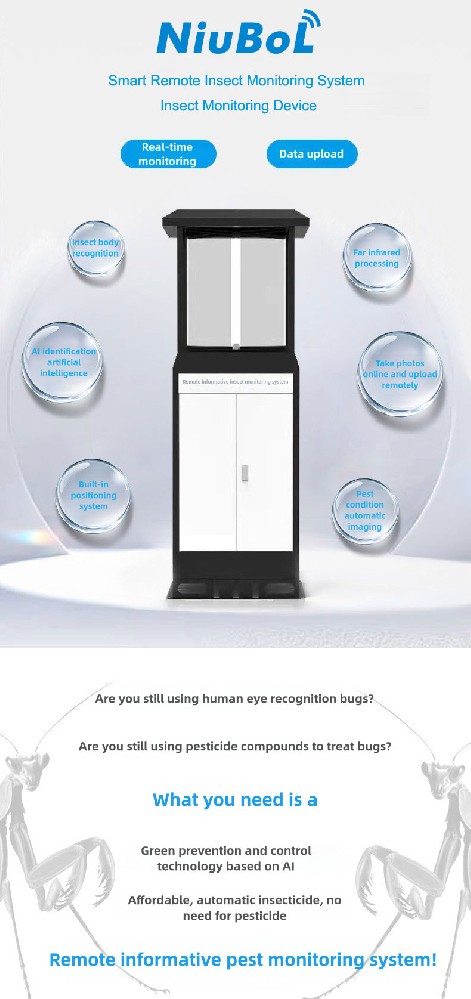
| Parameter | Typical project choice | Why it matters |
|---|---|---|
| Monitoring object | Target crop and pest type defined by project | Prevents poor trap placement. |
| Reporting mode | Image or count report through configured platform | Defines data workflow. |
| Power system | Solar/battery sizing by field condition | Prevents downtime. |
| Installation | Field pole or bracket with maintenance route | Keeps device serviceable. |
| Maintenance | Cleaning, lure replacement or inspection interval | Maintains usable records. |
This product is not a generic sensor bus device. Its value comes from the combination of field trapping, imaging, communication and reporting. Do not add RS485 or gateway requirements unless the selected equipment architecture actually uses them.
| Scenario | Field challenge | System approach | Buyer value |
|---|---|---|---|
| Large farm | Manual trap checking is slow | Deploy devices by crop block and pest pressure | Improves inspection efficiency. |
| Research plot | Pest records need traceability | Use fixed locations and consistent reporting interval | Supports comparable records. |
| Plant protection station | Regional trend needs early warning | Use distributed devices with platform review | Improves response planning. |
| Greenhouse park | Multiple zones need monitoring | Place devices near risk areas and access routes | Reduces missed events. |
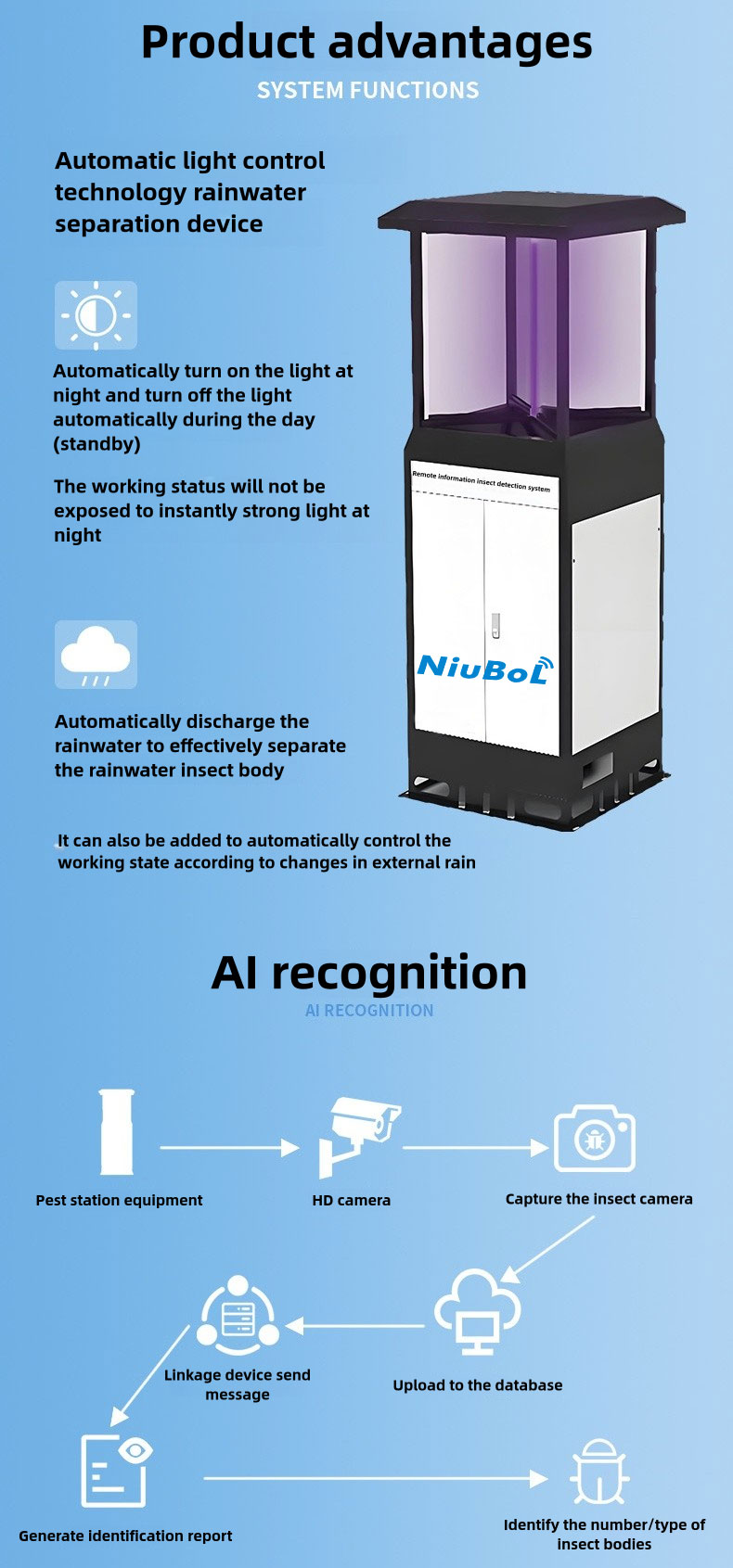
For insect monitoring, the buyer should avoid treating the device like an ordinary industrial sensor. The useful output is not only a number; it is a field record that depends on placement, crop stage, pest season, image quality and review workflow. A device in the wrong crop block may collect images but fail to support plant protection decisions.
| Boundary | What to state | Why the buyer needs it |
|---|---|---|
| Device scope | Model, measuring range, signal output, cable and manual | Defines what is included in the product line. |
| Installation scope | Bracket, flow cell, pole, cabinet, power or mounting accessories | Prevents missing site hardware. |
| Data scope | Register table, platform, logger, display or controller connection | Makes commissioning predictable. |
| Service scope | Cleaning, calibration, comparison and spare part plan | Controls lifecycle cost. |
Device density is also a procurement issue. One device at the farm entrance cannot represent every plot, especially when crops, light, windbreaks and pest pressure vary. Before ordering, divide the field into monitoring zones and decide how many devices can actually be serviced by the field team.
| Mistake | Site result | Better buying practice |
|---|---|---|
| Buying by keyword only | The quoted product does not match the real application | Write parameter, medium, range and decision use. |
| Leaving output undefined | PLC, RTU or platform cannot read the device | State RS485, analog, pulse or reporting method. |
| Ignoring installation conditions | Good hardware gives poor data | Send photos, pipe/tank drawings or field layout. |
| No acceptance method | Disputes appear after delivery | Record first live data, comparison and handover files. |
Send crop type, target pests, field area, device quantity, power condition, network coverage, reporting frequency, installation method, maintenance route and delivery country.
| RFQ item | What to state | Risk if missing |
|---|---|---|
| Crop and pest | Target species and season | Wrong trap configuration. |
| Field layout | Area, blocks and access route | Poor density and placement. |
| Power/network | Solar exposure and signal availability | Device may not upload data. |
| Reporting | Image, count or alert expectation | User cannot act on data. |
The purchase should be judged by whether the system reduces manual work and creates usable records. A device with many functions is not useful if the farm cannot power, connect or maintain it.
| Decision point | Buyer should define | Project value |
|---|---|---|
| Measurement purpose | Alarm, control, reporting, research or trend monitoring | Keeps the product tied to a real action. |
| Site condition | Water type, tank, field exposure, roof, pond or PV site | Controls material and installation choice. |
| Data path | Display, PLC, RTU, gateway or platform | Defines output and documents. |
| Service plan | Cleaning, calibration, inspection and spare parts | Protects lifetime data value. |
For insect monitoring, integration usually means data workflow rather than RS485 wiring. Confirm account access, report format, image review responsibility, device ID naming and maintenance records.
| Integration item | Detail to confirm | Acceptance evidence |
|---|---|---|
| Device ID | Name by farm block or plot | Traceable records. |
| Report interval | Daily or project-defined upload | Usable monitoring rhythm. |
| Maintenance route | Cleaning and inspection schedule | Stable operation record. |
The same product page should help several people make a decision. The distributor needs enough context to quote, the integrator needs signals and documents, the contractor needs installation boundaries, and procurement needs comparable scope. If any one of these roles is missing information, the order can still fail even when the selected device is technically suitable.
| Role | What to check | Why it matters |
|---|---|---|
| Distributor | Clarify whether the buyer needs a single sensor, instrument package or complete station | Filter vague inquiries before quoting. |
| System integrator | Check protocol, power, wiring and register details | Prepare PLC, RTU, logger or gateway mapping. |
| Contractor | Check mounting, cable protection, cleaning access and handover evidence | Avoid field rework after delivery. |
| Procurement manager | Compare model, accessory, documentation and delivery scope | Make supplier offers comparable. |
Before approval, ask whether the farm team can actually place, power, connect and maintain each device during the pest season. A remote insect monitoring device that is not visited, cleaned or reviewed regularly becomes a field decoration rather than a management tool.
| Reviewer | What must be clear | Why it matters |
|---|---|---|
| Installer | Mounting point, bracket, cable and protection are clear | Site can be prepared before shipment. |
| Integrator | Output, register table, address and unit are defined | Controller work can start without guessing. |
| Operator | Cleaning, calibration or inspection interval is known | Data remains usable after commissioning. |
| Procurement | Model, accessories, documents and packing are listed | Supplier comparison is fair. |
For quotation review, separate monitoring function from field operation. The function covers trapping, imaging and reporting. Field operation covers mounting, solar exposure, network coverage, maintenance route and user access. Both sides must be clear before the order.
| Requirement type | Examples | Decision rule |
|---|---|---|
| Mandatory | Parameter, range, output, power, installation, document | Do not order until confirmed. |
| Project-specific | Platform, solar power, cabinet, bracket, display | Include only when the site needs it. |
| Preference | Display format, reporting layout, accessory grouping | Useful, but should not drive sensor choice. |
Outdoor insect monitoring equipment needs cleaning, checking of power parts, trap components and mounting stability. Plan the service route before setting device quantity.
| Lifecycle stage | Check item | Evidence to keep |
|---|---|---|
| Pre-order | Confirm parameter, range, output and installation point | Signed technical confirmation. |
| Installation | Check mounting position, cable sealing and power | Site photos and wiring record. |
| Commissioning | Read live value through controller or platform | Screenshot and register table. |
| Operation | Define cleaning, calibration or comparison interval | Maintenance log. |
For insect monitoring projects, the specification should describe the field workflow. Write crop type, target pest, monitoring area, power condition, network coverage, device spacing, reporting method and maintenance route. This prevents a device purchase from becoming a disconnected hardware order.
| Specification line | Recommended wording purpose | Engineering value |
|---|---|---|
| Project description | Write the water body, field, tank, farm, station or PV site where the device will work | Defines the real environment. |
| Measurement target | State the parameter and how the number will be used | Prevents broad keyword purchasing. |
| Integration requirement | State RS485 Modbus RTU, analog, wireless report, display or platform need | Prevents commissioning delay. |
| Acceptance record | State live data, photo, comparison and handover files | Makes delivery verifiable. |
Acceptance records are not paperwork for decoration. They protect the buyer when several teams are involved: supplier, installer, integrator and end user. Good records make it clear whether a later problem is caused by product selection, wiring, installation position, maintenance or site condition. This is also useful for distributors who need to support customers after delivery.
| Record type | What to keep | Why it helps |
|---|---|---|
| Photo record | Device position, cable route, cabinet or mounting structure | Proves installation condition. |
| Configuration record | Address, baud rate, output scaling, platform field or report interval | Allows future troubleshooting. |
| First data record | Initial readings and reference check where applicable | Confirms working measurement. |
| Maintenance record | Cleaning, calibration, inspection or replacement plan | Protects long-term value. |
It is not suitable when there is no field maintenance access, no reliable power or network plan, or when pest identification must be confirmed only by manual laboratory review. It should not be described as a water or weather sensor system.
Field installation, image/report quality, power reliability, communication coverage and maintenance access matter more than a long feature list.
No. Remote upload is useful for distributed farms and regional stations, but smaller sites may use periodic manual review.
Use crop blocks, pest pressure, terrain and inspection route. One device cannot represent every field condition.
Crop, target pest, field area, power condition, network coverage, reporting frequency and maintenance route.
Not necessarily. Pest monitoring equipment usually depends on imaging, trapping, power and wireless reporting rather than a field sensor bus.
Consistent location, reporting interval, device ID and maintenance notes make trends easier to interpret.
Buying devices before checking network coverage and maintenance access.
Yes. Send crop, pest, field and reporting requirements so the device quantity and setup can be matched to the project.
Insect monitoring device features should be judged by field operation and reporting value. NiuBoL can help buyers match smart remote insect monitoring equipment to farm layout, pest target, power condition and maintenance workflow.
Prev:Dissolved Oxygen Sensor Selection for Aquaculture and Wastewater Monitoring
Next:Total Organic Carbon Sensor Alternatives for Online Organic Pollution Monitoring
Related recommendations
Sensors & Weather Stations Catalog
 Agriculture Sensors and Weather Stations Catalog-NiuBoL.pdf
Weather Stations Catalog-NiuBoL.pdf
Agriculture Sensors Catalog-NiuBoL.pdf
Water Quality Sensor Catalog-NiuBoL.pdf
Related products
 Combined air temperature and relative humidity sensor
 TDR Soil Moisture & Temperature Sensor for irrigation| RS485 |4-20mA| NBL-S-THR
 Soil pH sensor RS485 soil Testing instrument soil ph meter for agriculture |NBL-S-PH
 Wind Speed sensor Output Modbus/RS485/Analog/0-5V/4-20mA
 Tipping bucket rain gauge for weather monitoring auto rainfall sensor RS485/Outdoor/stainless steel
 Pyranometer Solar Radiation Sensor 4-20mA/RS485

Screenshot, WhatsApp to identify the QR code
WhatsApp number:+8615367865107
(Click on WhatsApp to copy and add friends)

