





— Blogs —
—Products—
 Consumer hotline +8618073152920
 WhatsApp:+8615367865107
Address:Room 102, District D, Houhu Industrial Park, Yuelu District, Changsha City, Hunan Province, China
Product knowledge
Time:2026-07-10 16:52:33 Popularity:175
Integrated Online Dust Monitor projects should be planned around data use, not only around sensor purchase. The buyer needs PM2.5, PM10, TSP, noise, temperature, humidity, wind speed and wind direction data only when those values support PM, noise, weather and video linkage. A useful system turns site dust into records, alarms and corrective action.
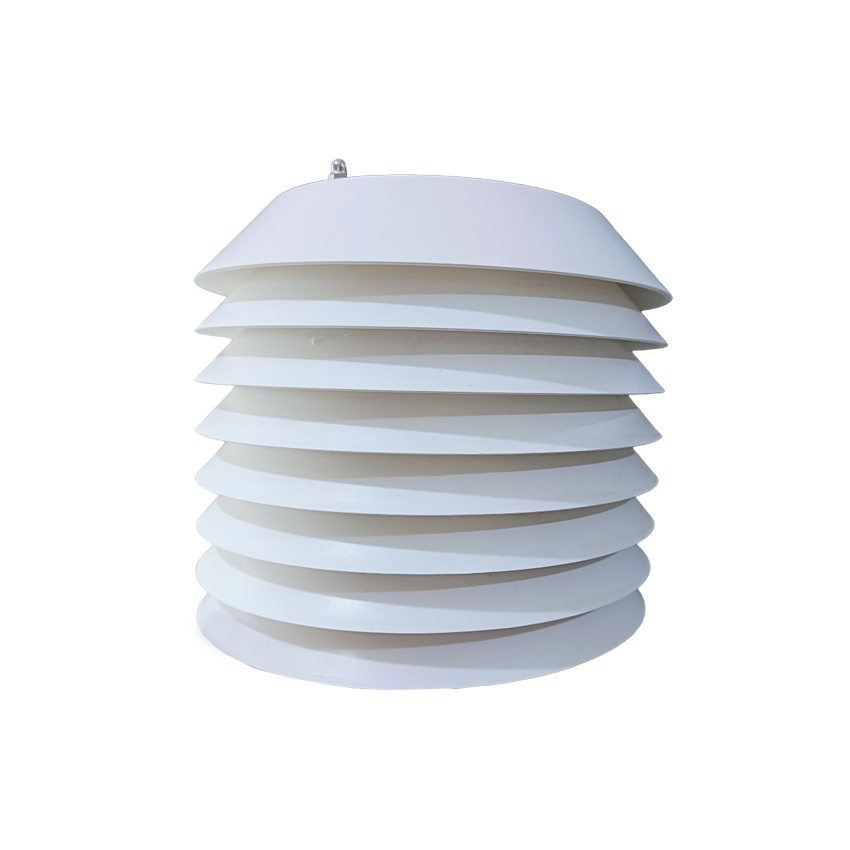
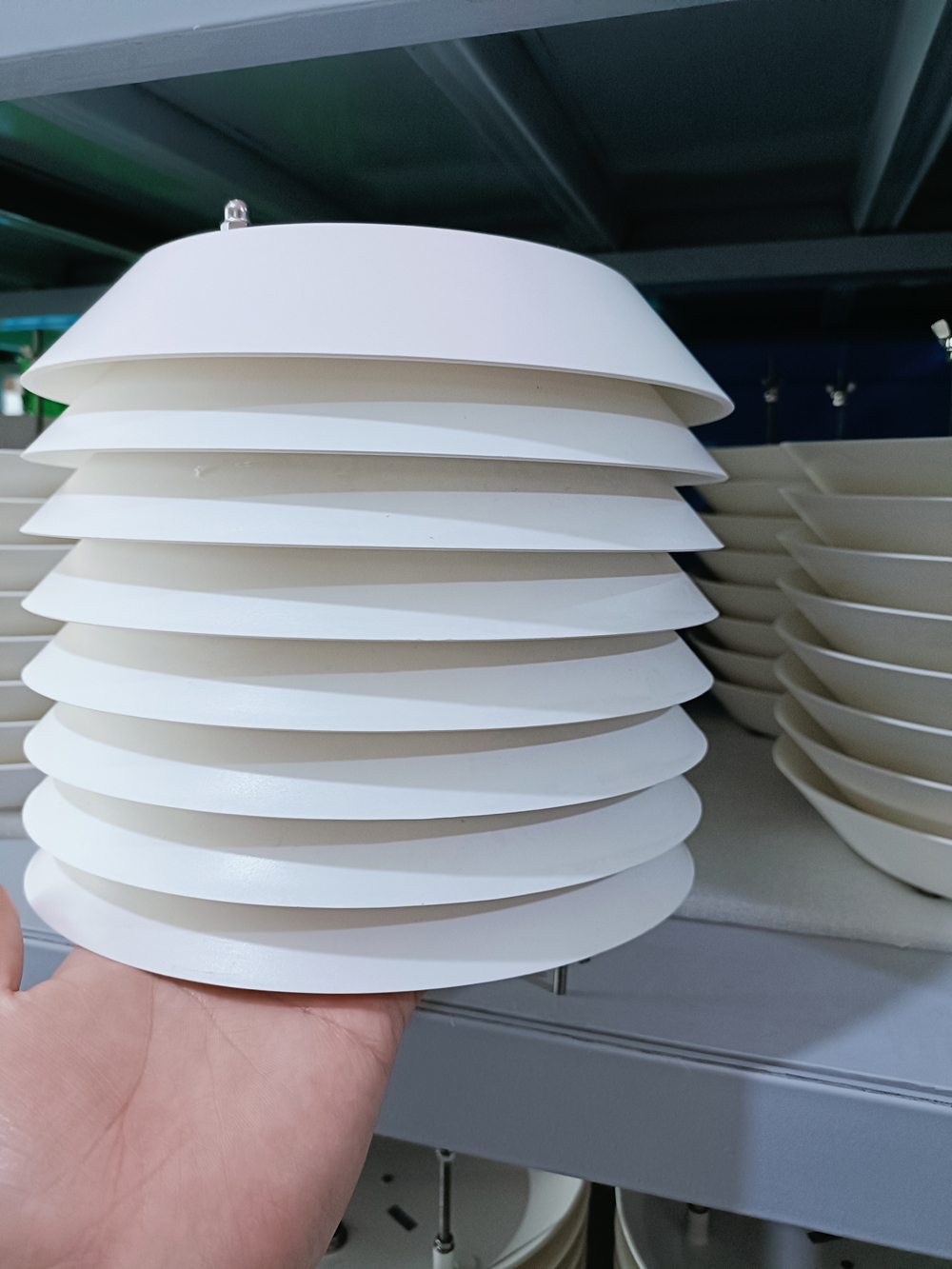
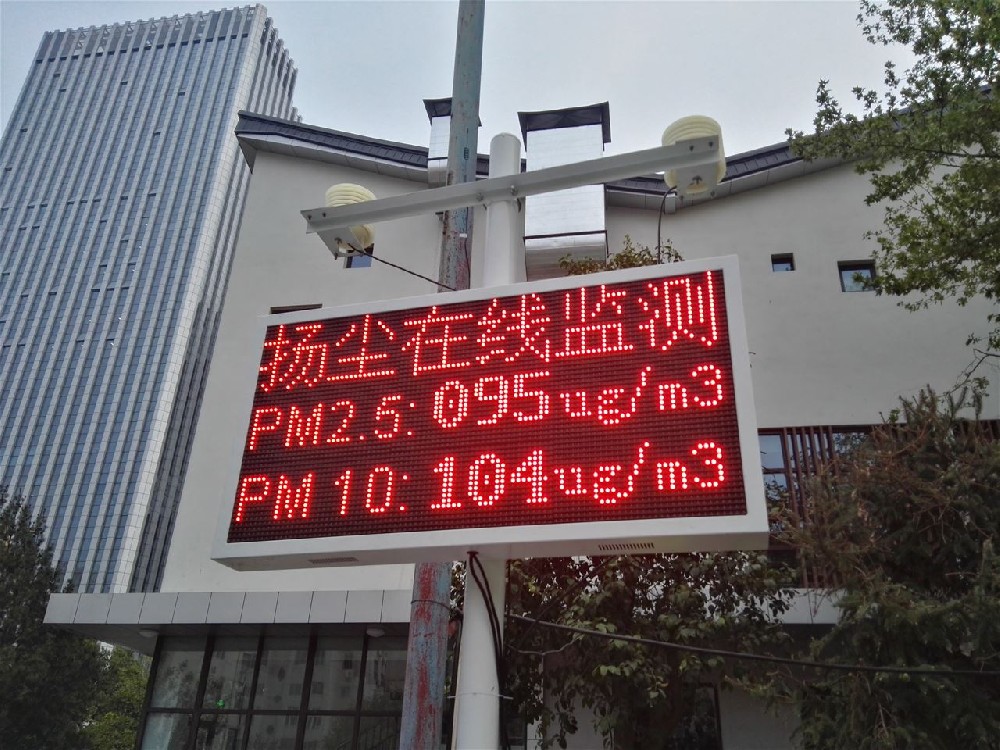
A NiuBoL dust monitoring system can include data collector, sensors, video monitoring, wireless transmission, backend data processing and a management platform. It can support real-time data display, historical query, alarm, statistics, reports, camera evidence and linkage with dust control devices such as fog cannon systems.
A dust monitoring article has practical value when it distinguishes procurement intent. A buyer may need system price, installation requirements, PM sensor parameters, platform alarms, port dust control or construction-site compliance. The article should answer one clear intent instead of repeating the same product description.
| Layer | Typical Content | Project Value |
|---|---|---|
| Sensing layer | PM2.5, PM10, TSP, noise, temperature, humidity, wind speed and direction | Provides quantitative site evidence |
| Data acquisition | Collector and communication module | Converts sensor readings into uploadable records |
| Display layer | Outdoor LED display, optional single or dual color | Shows public or site-level data |
| Platform | Real-time data, history, alarms, reports | Supports management and compliance review |
| Linkage | Fog cannon, tower crane spray or video capture | Turns monitoring into corrective action |
| Element | Range | Resolution | Accuracy |
|---|---|---|---|
| PM2.5 | 0-1000 ug/m3 | 0.1 ug/m3 | ±20% |
| PM10 | 0-2000 ug/m3 | 0.1 ug/m3 | ±20% |
| Noise | 30-130 dB | 0.1 dB | ±5 dB |
| Air temperature | -50 to +100 C | 0.1 C | ±0.5 C |
| Relative humidity | 0-100% RH | 0.1% RH | ±3% RH |
| Wind speed | 0-45 m/s | 0.1 m/s | ±(0.3±0.03V) m/s |
| Wind direction | 0-360 degrees | 1 degree | ±3 degrees |
| Scenario | Field Challenge | Recommended Configuration |
|---|---|---|
| Construction site | Dust varies with earthwork, transport and wind | PM, noise, wind, LED display, 4G platform, camera |
| Sand and gravel yard | Unorganized dust from loading and storage | PM10/TSP, wind data, threshold alarm and spray linkage |
| Coal yard or mine | High particle load and heavy-duty environment | Outdoor enclosure, platform records and maintenance plan |
| Urban road project | Dust and noise close to residential areas | PM, noise, video evidence and public display |
| Port bulk cargo | Wind-driven dust during loading and unloading | PM, wind direction, video and control linkage |
Choose a system when dust data must be recorded, reported or linked to control. Choose a simpler particulate sensor only when the buyer has an existing cabinet, collector and platform. For official or compliance-related projects, ask whether sensors have third-party test reports and whether the platform can export normal and over-limit data separately.
| Option | Advantages | Limitations |
|---|---|---|
| Integrated monitor | Fast deployment, unified enclosure, simpler wiring | Less flexible if every sensor needs custom spacing |
| Separate sensors | Flexible layout and specialized installation | More wiring, cabinet and integration work |
| Integrated with video | Supports over-limit snapshot and evidence | Requires better network and camera position |
| Integrated with fog cannon | Turns warning into action | Needs relay logic and safety check |
Integrated online dust monitors are useful when the buyer wants one outdoor station for PM, noise, weather, display and platform upload. This is common for construction sites, ports, mines and material yards where quick deployment and visible data matter. It is less suitable when the buyer already has a distributed environmental network and only needs one specialized sensor.
Do not select integrated equipment only because it is compact. Select it when the compact format reduces wiring risk, simplifies installation and still gives representative measurements. If the site has several dust sources far apart, multiple smaller stations may provide better management value than one high-configuration device.
Integration should mean fewer cabinets, clearer wiring, unified platform data and easier field deployment. It should not mean that all sensors are placed in a poor measurement position just because one cabinet is convenient. PM sensors need airflow exposure. Wind sensors need open space. Cameras need a useful view. The buyer should check whether the integrated layout still respects these measurement requirements.
For projects that need quick installation and standard parameters, an integrated unit is usually efficient. For complex sites with separate emission sources, several smaller monitoring points may produce better management data than one integrated station with every option installed in one place.
| Function | When It Is Worth Paying For | When to Skip It |
|---|---|---|
| Outdoor LED display | Public site boundary or government inspection point | Private yard with platform-only management |
| Camera | Need evidence for over-limit events | No network bandwidth or no useful camera angle |
| Fog cannon linkage | Site has dust-control equipment ready | No spray system or unclear safety logic |
| TSP monitoring | Bulk material yard, mine or port | Only fine-particle trend is required |
| Multi-station platform | Several sites or monitoring points | Single local display project |
Distributors should ask whether the final customer needs acceptance documents, local-language platform support, custom display content, logo, pole height, solar power or integration with existing systems. Contractors should ask who installs the foundation, who provides power, who configures the SIM card, and who trains the site manager. These are not small details; they decide whether the project finishes cleanly.
For overseas procurement, request photos of the exact configuration, packing method, wiring diagram and platform screenshots before shipment. Integrated equipment is easier to deploy, but only when the delivered configuration matches the quoted configuration.
Before acceptance, check whether all quoted modules are installed: PM sensor, noise sensor, wind sensor, temperature and humidity sensor, LED display, camera, communication module, platform account and linkage output if ordered. Then check whether each module appears correctly on the platform. Integrated equipment hides many parts inside one cabinet, so module-by-module acceptance is necessary.
The buyer should also confirm whether data names match the project language. For example, PM10, TSP, wind speed and wind direction should be clearly labeled on the display and platform. Confusing labels create problems when reports are shared with site managers or inspectors.
A low-cost integrated unit can fail when it saves money on enclosure protection, sensor quality, communication stability or platform functions. The initial quotation may look attractive, but the project cost rises when data is missing, the screen is unreadable, or the platform cannot export over-limit records. Buyers should compare acceptance value, not only cabinet price.
Custom requirements should be written clearly: display language, logo, LED content, platform account quantity, alarm threshold, report format, pole height, solar power, camera angle and linkage output. This matters because integrated equipment is often ordered as one complete station. If custom items are not confirmed before production, changing them after delivery is slower and more expensive.
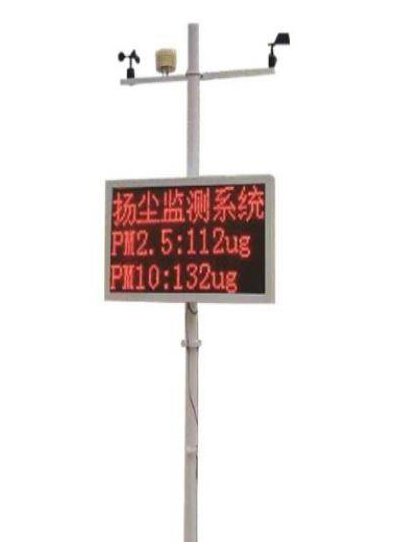
A: An integrated online dust monitor combines particulate monitoring, noise, weather parameters, data acquisition, communication, display and sometimes video in one outdoor station. It is suitable when the project needs faster deployment and unified data, but the installation point still must represent the site.
A: Choose an integrated monitor when wiring simplicity, installation speed, outdoor cabinet protection and unified platform data are more important than custom sensor spacing. Choose separate sensors when PM, wind, noise and video must be installed in different locations for accurate measurement.
A: Typical parameters include PM2.5, PM10, TSP, noise, temperature, humidity, wind speed and wind direction. Camera, pressure, gas sensors or linkage output should be selected according to project purpose, not added automatically.
A: Yes, if the monitor, platform and control output are configured for linkage. Buyers should confirm whether the fog cannon already supports external control and whether the alarm logic uses PM threshold only or also considers wind and operating time.
A: Distributors should confirm final customer requirements for display language, LED content, logo, platform users, alarm thresholds, report export, pole height, power supply, camera angle and packing. Integrated stations are easier to deploy when the configuration is fixed before production.
A: A low-cost unit may reduce enclosure quality, sensor stability, communication reliability or platform functions. The risk appears later as missing data, unreadable display, weak reports or difficult maintenance. Buyers should compare acceptance value rather than cabinet price alone.
A: One monitor can cover only one representative point. Large construction sites, coal yards or ports may need multiple stations because dust sources and wind effects differ by location. A layout drawing should be prepared before deciding the quantity.
A: Send site type, monitoring purpose, parameter list, display requirement, camera need, linkage requirement, communication method, power condition, quantity and destination country. Photos or a site map help determine whether one integrated unit is enough.
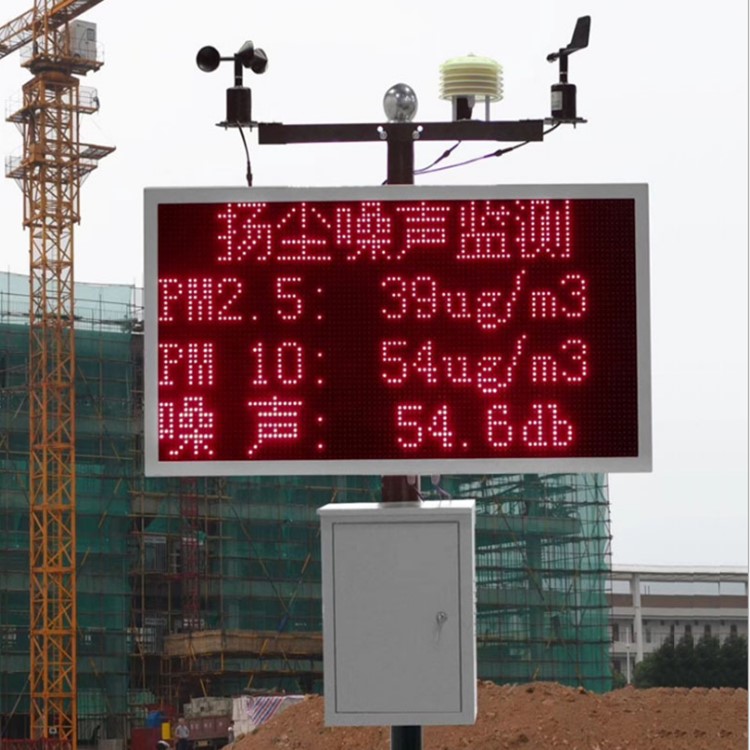
Integrated Online Dust Monitor should be purchased as a management tool. The value is not only measuring particles; it is the ability to record, alarm, verify and support timely dust control action.
If you are not sure which configuration fits your integrated online dust monitor project, send the site type, required parameters, communication method, power condition, installation country and expected quantity. NiuBoL can help match a practical configuration instead of only quoting a sensor list.
Prev:Dust Monitoring System Installation Guide: Site Layout, Data Accuracy and Platform Use
Next:Port Dust Pollution Monitoring Guide for Coal Terminals and Bulk Cargo Yards
Related recommendations
Sensors & Weather Stations Catalog
 Agriculture Sensors and Weather Stations Catalog-NiuBoL.pdf
Weather Stations Catalog-NiuBoL.pdf
Agriculture Sensors Catalog-NiuBoL.pdf
Water Quality Sensor Catalog-NiuBoL.pdf
Related products
 Combined air temperature and relative humidity sensor
 TDR Soil Moisture & Temperature Sensor for irrigation| RS485 |4-20mA| NBL-S-THR
 Soil pH sensor RS485 soil Testing instrument soil ph meter for agriculture |NBL-S-PH
 Wind Speed sensor Output Modbus/RS485/Analog/0-5V/4-20mA
 Tipping bucket rain gauge for weather monitoring auto rainfall sensor RS485/Outdoor/stainless steel
 Pyranometer Solar Radiation Sensor 4-20mA/RS485

Screenshot, WhatsApp to identify the QR code
WhatsApp number:+8615367865107
(Click on WhatsApp to copy and add friends)

