





— Blogs —
—Products—
 Consumer hotline +8618073152920
 WhatsApp:+8615367865107
Address:Room 102, District D, Houhu Industrial Park, Yuelu District, Changsha City, Hunan Province, China
Product knowledge
Time:2026-07-10 16:52:38 Popularity:286
A real-time rainfall monitoring system is purchased to reduce uncertainty. Flood control teams, road operators, reservoirs, agricultural projects and weather stations need to know how much rain is falling, when rainfall starts, how strong the rainfall is and whether the data can be transmitted quickly enough for action.
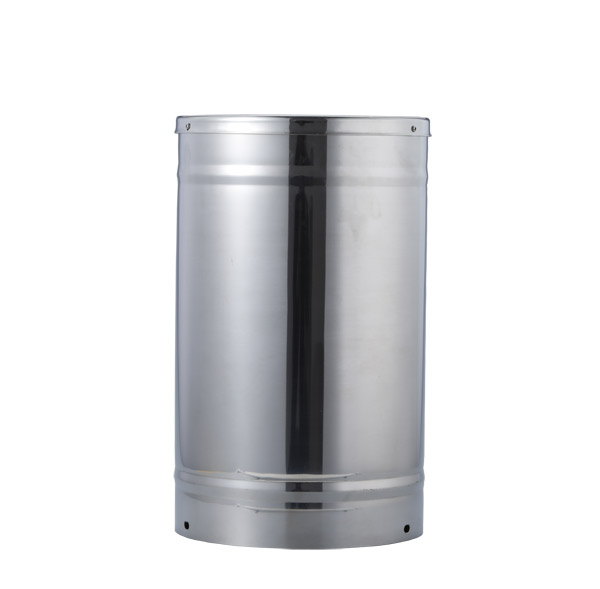
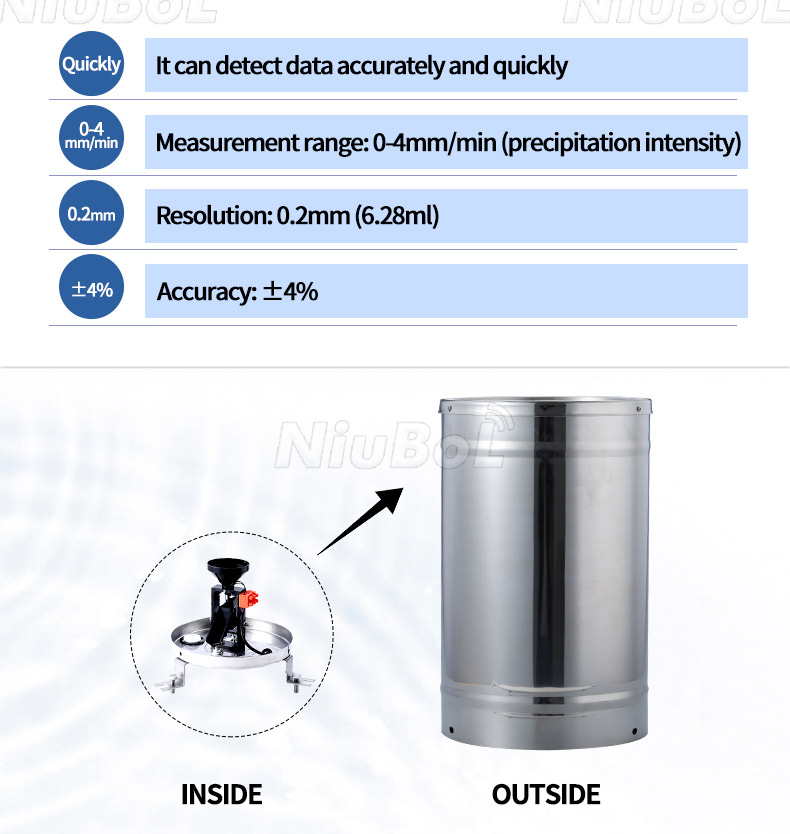
For project buyers, the NBL-W-RS tipping bucket rain gauge is a practical reference because it has measurable parameters: Φ200 ± 0.6 mm receiving diameter, 0-4 mm/min rainfall intensity range, 0.2 mm resolution, ±4% accuracy under the stated test condition and multiple output options including RS485.
Rainfall monitoring content becomes valuable when it connects sensor specifications to field decisions. A buyer wants to know where to install the gauge, how to wire it, how to test it with water, and whether it fits flood control, roads or agriculture. A page that answers those questions is more valuable than a short product note.
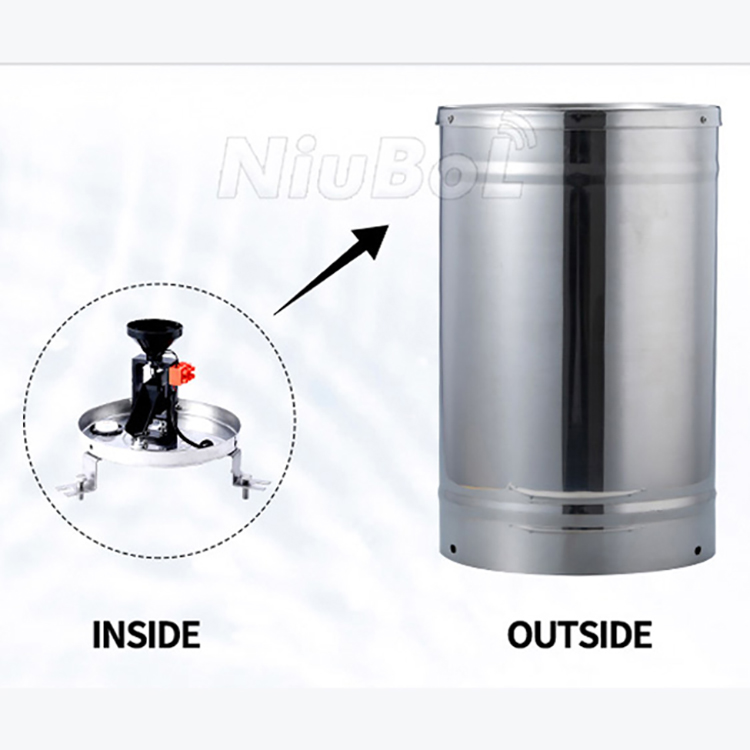
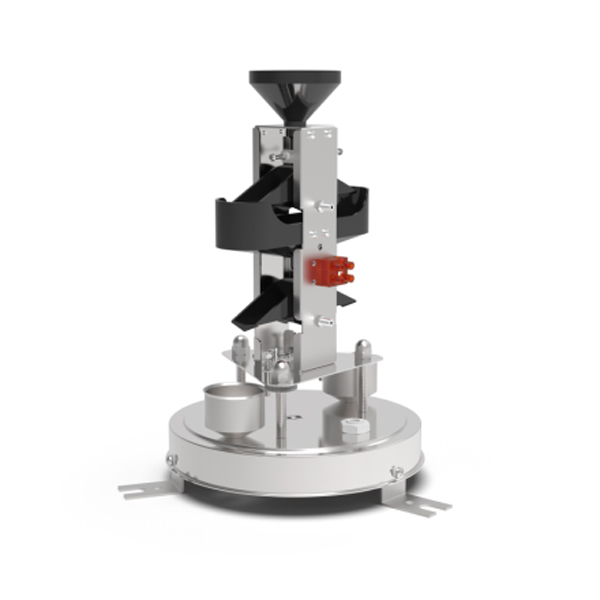
The system normally includes a rainfall sensor, data collector, power supply, communication module, platform and alarm logic. The rain gauge measures precipitation; the collector records pulses or RS485 data; the platform turns the data into rainfall curves, warnings and reports.
| Parameter | NBL-W-RS Reference Value | Buyer Meaning |
|---|---|---|
| Water receiving diameter | Φ200 ± 0.6 mm | Supports standard rainfall collection shape |
| Measuring range | 0-4 mm/min precipitation intensity | Suitable for real-time rainfall process monitoring |
| Resolution | 0.2 mm / 6.28 ml | Useful for hydrology and farm rainfall records |
| Accuracy | ±4% at 2 mm/min indoor static test | Provides a clear acceptance basis |
| Power supply | DC 5 V or DC 12-24 V | Fits weather stations and telemetry terminals |
| Output | Reed switch, 0-2.5 V, 0-5 V, RS485 options | Allows integration with different collectors |
| Operating temperature | 0-50 C | Confirm suitability for local climate |
| Storage temperature | -40 to 80 C | Useful for shipment and seasonal storage |
| Scenario | Monitoring Value | System Requirement |
|---|---|---|
| Flood control | Early rainfall process and intensity data | Reliable telemetry and warning thresholds |
| Highway drainage | Rainfall impact on traffic, drainage and settlement | Roadside station and fast reporting |
| Agriculture | Irrigation planning and disaster reduction | Rainfall data combined with soil moisture |
| Reservoir management | Water condition and scheduling support | Continuous records and hydrological platform |
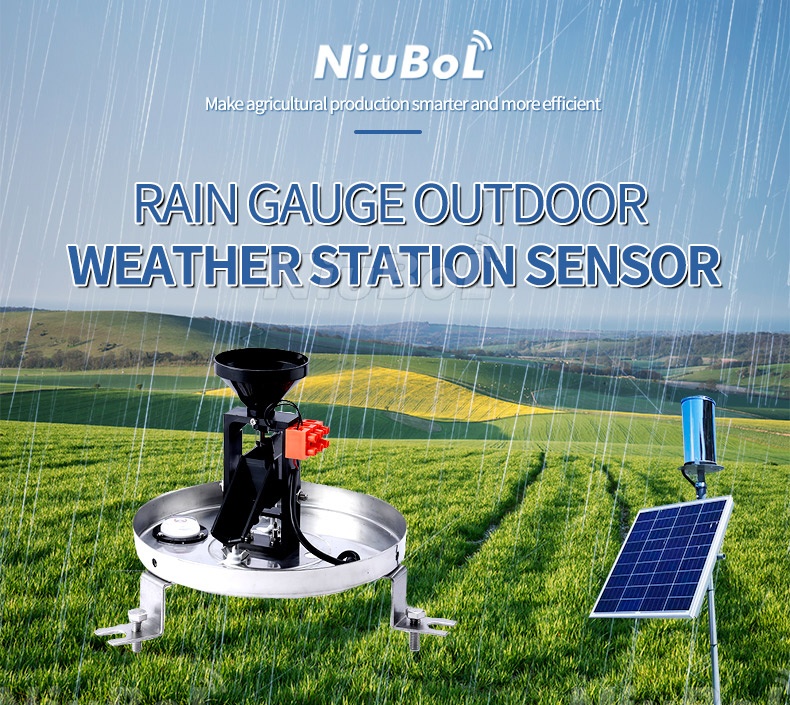
The cost of a rainfall monitoring system depends on the rain gauge model, output signal, collector, telemetry module, pole or foundation, power supply, platform and installation accessories. A simple reed-switch rain gauge connected to an existing weather station costs less than a complete remote telemetry station with solar power, 4G upload and warning platform.
RS485 output is useful when the buyer wants a digital bus, longer cable runs, integration with an automatic weather station or connection to a telemetry terminal. Reed switch output is simple and reliable for many collectors. The correct choice depends on the existing data acquisition system.
Rainfall measurement depends heavily on exposure and leveling. The rain gauge should be placed where rainfall can enter the collector without obstruction from roofs, trees, walls, towers or nearby equipment. Splashing from hard surfaces should be avoided. If installed on a rooftop, the buyer should consider wind disturbance and maintenance access.
Leveling is not a minor step. A tipping bucket gauge measures rainfall by repeated tipping volume. If the instrument is tilted, the bucket may tip too early or too late, and the error will continue for every rainfall event. This is why the bubble level and mounting screws matter as much as the electronic output.
| Output Type | Suitable Use | Buyer Check |
|---|---|---|
| Reed switch | Simple pulse collection by existing logger | Confirm pulse counting and cable distance |
| 0-2.5 V | Analog acquisition systems | Confirm collector input range |
| 0-5 V | Common voltage input systems | Confirm scaling and power supply |
| RS485 | Weather stations and telemetry systems | Confirm protocol, address and baud rate |
After installation, pour clean water slowly into the collector and confirm that the bucket tips and the collector records data. Do not pour water too quickly, because the test should simulate rainfall process rather than flooding the mechanism. Inspect the funnel regularly for leaves, insects, sediment or bird droppings. In cold regions, discuss heating or seasonal operation before ordering.
For projects such as flood control or highway drainage, a missed rainfall event can cause more trouble than a slightly higher initial equipment cost. Buyers should prioritize reliable mounting, correct output, stable telemetry and a clear maintenance plan.
Flood control projects should prioritize telemetry reliability, warning thresholds and stable power. Highway projects should prioritize fast data upload, roadside protection and maintenance access. Agricultural projects should connect rainfall data with irrigation decisions, because rainfall has value only when it changes irrigation timing. Reservoir or hydrological projects should focus on continuous records, platform compatibility and installation stability.
A buyer should avoid treating all rain gauges as the same product. The measuring principle may be similar, but output type, collector compatibility, installation accessories and platform requirements change the final system.
| RFQ Item | Example Information | Why It Helps |
|---|---|---|
| Application | Flood control, highway, farm, reservoir or weather station | Guides system configuration |
| Output | Reed switch, voltage or RS485 | Ensures collector compatibility |
| Power | Existing station power or solar system | Prevents missing power accessories |
| Mounting | Ground, pole flange, rooftop or custom cylinder | Defines installation accessories |
| Data use | Local display, platform upload, alarm or API | Determines collector and communication module |
Choose a complete rainfall monitoring system when rainfall data must trigger action or create records. Choose only a rain gauge sensor when the buyer already has a reliable collector, power supply and platform. This distinction prevents overbuying in simple projects and underbuying in flood warning projects. It also makes quotations easier to compare.
Rainfall projects are often under-specified because the buyer asks only for a rain gauge. If the site is remote, the system may also need solar power, battery, collector, telemetry module, mounting pole, enclosure and platform. If the data will support flood warning, alarm thresholds and communication reliability should be included from the beginning.
For distributors, clarify whether the customer is replacing a sensor in an existing station or building a complete monitoring point. The first case needs output compatibility. The second case needs a full system configuration.
A: It measures rainfall amount, rainfall intensity and rainfall process through a rain gauge connected to a collector or platform. For project use, the value is not only the rainfall number; it is whether the data can support flood warning, road drainage, reservoir scheduling or irrigation decisions.
A: A tipping bucket rain gauge is practical for automatic monitoring because each bucket tip can be counted by a collector or transmitted through a digital system. It is suitable for weather stations, hydrological telemetry, agriculture and flood control when installation and leveling are done correctly.
A: The NBL-W-RS reference range is 0-4 mm/min for precipitation intensity, with 0.2 mm resolution. Buyers should confirm whether this range fits local rainfall intensity and whether the collector or platform can process the selected output signal.
A: Available output options include reed switch, 0-2.5 V, 0-5 V and RS485, depending on configuration. Reed switch is simple for pulse counting; RS485 is useful for automatic weather stations, telemetry terminals and longer system integration.
A: It can be installed on the ground, a custom cylinder, iron pole flange or rooftop if exposure and leveling are suitable. Avoid nearby trees, walls, roofs or equipment that block rainfall, create splash or disturb wind around the collector.
A: Poor leveling is the most common mistake because a tilted tipping bucket changes the tipping behavior and affects every rainfall event. The base should be leveled with the bubble indicator and rechecked after tightening the mounting bolts.
A: Pour clean water slowly into the collector, observe bucket tipping and confirm that the collector records the expected signal. The test should simulate rainfall rather than flood the mechanism. After testing, check that the funnel is clean and the bucket moves freely.
A: Send application, output type, power supply, communication method, mounting method, platform need, alarm requirement, quantity and destination country. Also state whether this is a sensor replacement or a complete monitoring station, because the configuration scope is different.
A rainfall monitoring system should be selected for the action it supports: flood warning, road operation, reservoir scheduling or irrigation management. Sensor parameters, installation quality and data transmission decide whether the system is useful.
If you are not sure which configuration fits your rainfall monitoring project, send the site type, required parameters, communication method, power condition, installation country and expected quantity. NiuBoL can help match a practical configuration instead of only quoting a sensor list.
Prev:Dust Monitoring System Technical Parameters and Application Value for Project Buyers
Next:Why Install an Online Dust Monitoring System at Construction Sites?
Related recommendations
Sensors & Weather Stations Catalog
 Agriculture Sensors and Weather Stations Catalog-NiuBoL.pdf
Weather Stations Catalog-NiuBoL.pdf
Agriculture Sensors Catalog-NiuBoL.pdf
Water Quality Sensor Catalog-NiuBoL.pdf
Related products
 Combined air temperature and relative humidity sensor
 TDR Soil Moisture & Temperature Sensor for irrigation| RS485 |4-20mA| NBL-S-THR
 Soil pH sensor RS485 soil Testing instrument soil ph meter for agriculture |NBL-S-PH
 Wind Speed sensor Output Modbus/RS485/Analog/0-5V/4-20mA
 Tipping bucket rain gauge for weather monitoring auto rainfall sensor RS485/Outdoor/stainless steel
 Pyranometer Solar Radiation Sensor 4-20mA/RS485

Screenshot, WhatsApp to identify the QR code
WhatsApp number:+8615367865107
(Click on WhatsApp to copy and add friends)

