





— Blogs —
—Products—
 Consumer hotline +8618073152920
 WhatsApp:+8615367865107
Address:Room 102, District D, Houhu Industrial Park, Yuelu District, Changsha City, Hunan Province, China
Product knowledge
Time:2026-06-18 09:13:51 Popularity:199
Noise is generated by vibration, airflow, impact, friction, combustion and random environmental sources. In engineering projects, noise monitoring is used to evaluate construction sites, industrial workshops, roads, schools, residential boundaries and environmental stations. A noise sensor gives the project team continuous sound level data that can be stored, alarmed and compared over time.
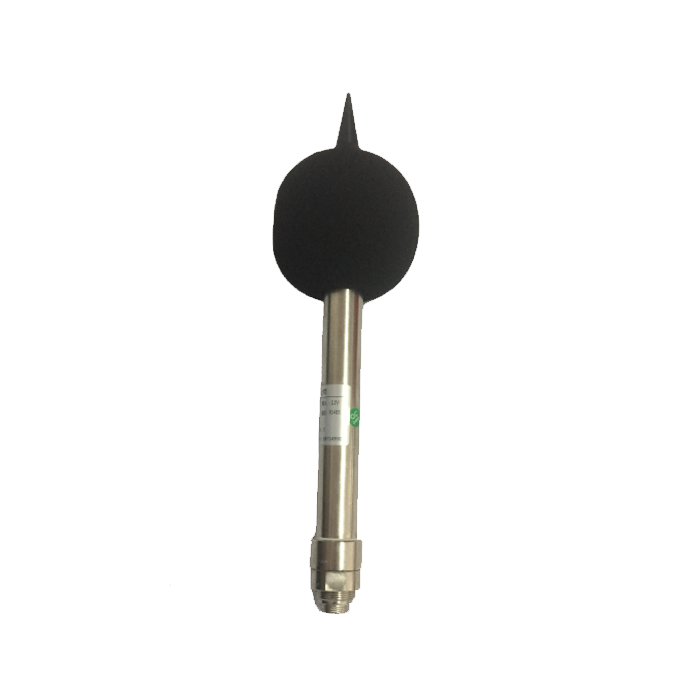
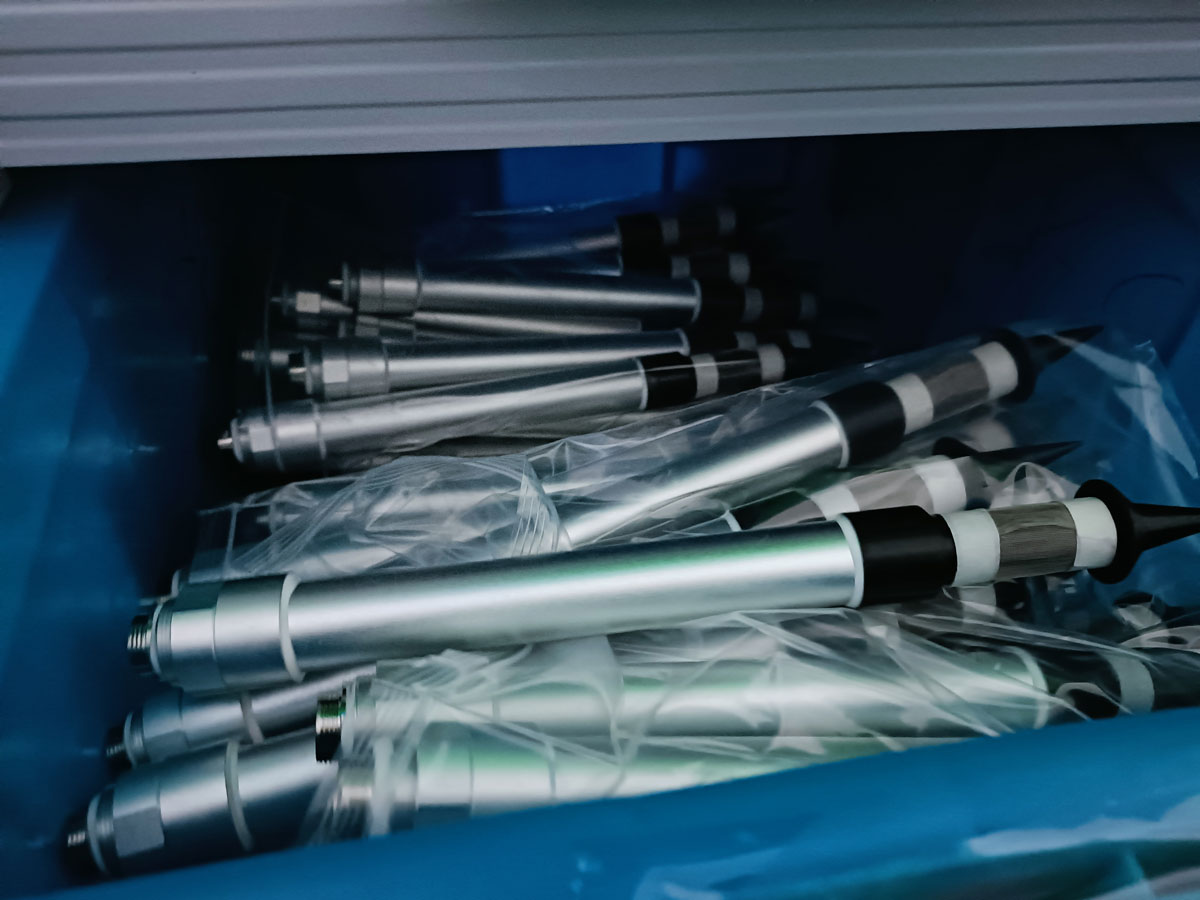
NiuBoL NBL-W-NS noise sensor uses a condenser microphone and RS485 output. It can be integrated into dust and noise monitoring stations, automatic weather stations, industrial environmental monitoring systems and urban supervision platforms.
Rotating machinery can produce noise through imbalance or bearing defects. Impact equipment such as stamping machines and forging equipment produces wide-frequency noise. Resonance increases vibration when excitation frequency overlaps the natural frequency of a system. Friction noise appears in cutting, grinding and sliding contact. Airflow noise comes from turbulence, jets, cavitation and pressure change. Combustion equipment such as engines, boilers and turbines also produces noise.
For general outdoor measurement, the measurement point should be at least 3.5 m away from reflecting objects other than the ground, and at least 1.2 m above ground. For sensitive buildings outdoors, measure 1 m from the wall or window and more than 1.2 m above ground. For indoor sensitive locations, keep at least 1 m from walls and reflecting surfaces, about 1.5 m from windows, and 1.2-1.5 m above the floor.
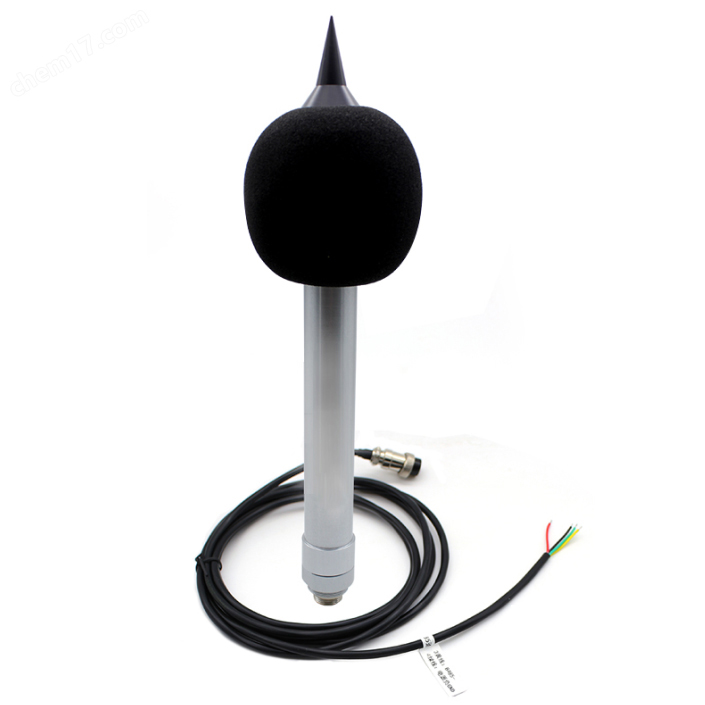
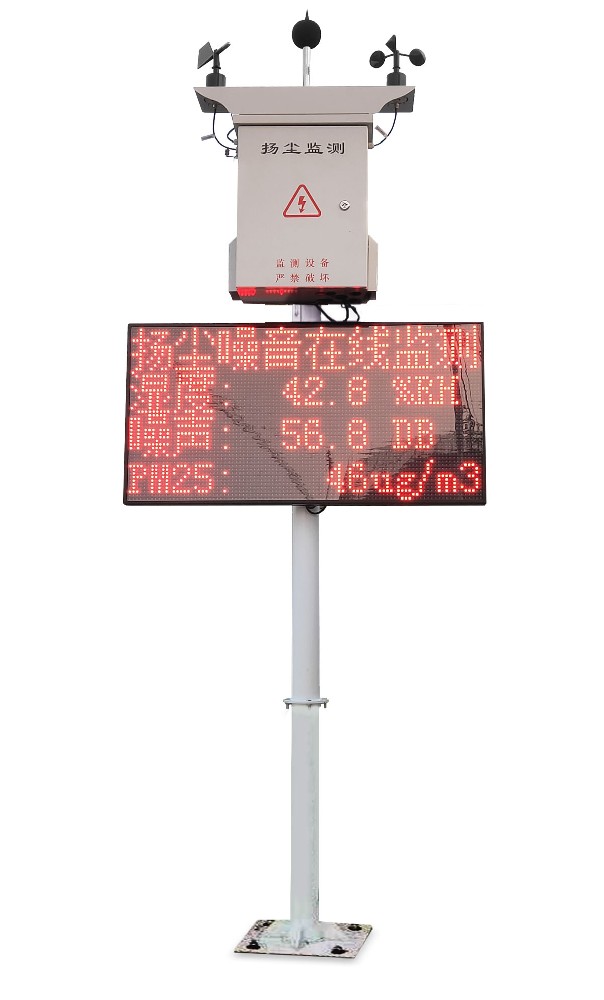
RS485 output allows the noise sensor to connect to an environmental monitoring station, PLC, RTU, data logger or gateway. In construction site projects, noise data is often uploaded with PM2.5, PM10, TSP, wind speed and wind direction. In industrial projects, noise data can be correlated with equipment operation and working periods.
| Item | Technical Reference | Project Note |
|---|---|---|
| Measurement range | 30-130 dB | Suitable for common environmental and industrial noise monitoring |
| Output | RS485 output | Supports monitoring station and gateway integration |
| Accuracy | ±4 dB at 23±5°C | Use project acceptance conditions for verification |
| Frequency weighting | Complies with IEC 61672 Type 2; calibrated at 94 dB, 31.5 Hz-8 kHz | Useful for environmental monitoring requirements |
| Frequency range | 31.5 Hz to 8 kHz | Covers major audible monitoring band |
| Time response | Fast response, T = 200 ms | Simulates human-ear time response |
| Calibrator | B&K multifunction sound calibrator model 4226 reference | Supports calibration traceability |
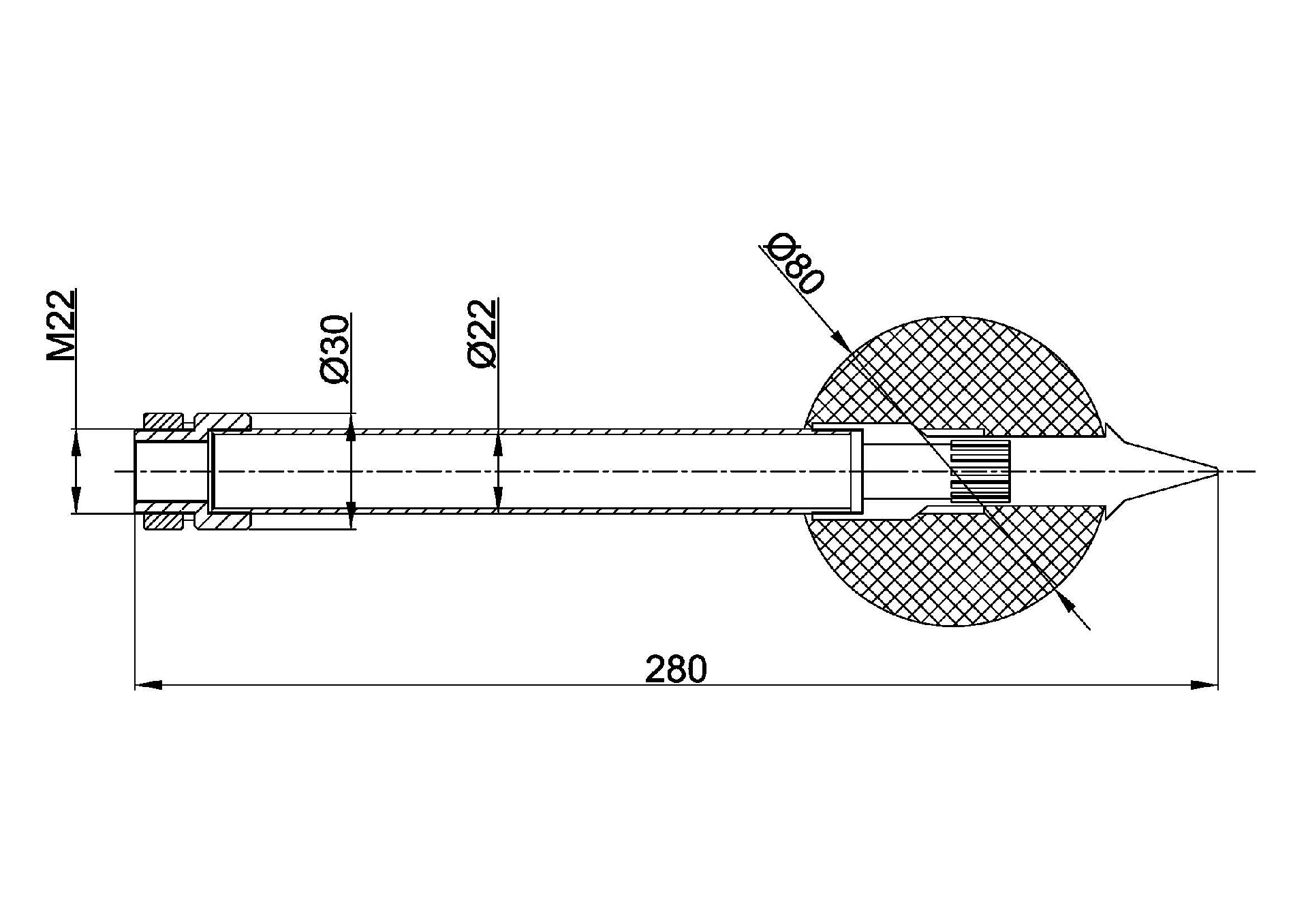
| Microphone | Condenser microphone, 0.5 inch | Protect from direct rain and contamination |
| Power supply | DC 12 V | Use stable field power |
| Power consumption | Approx. 20 mW at DC 12 V | Suitable for low-power stations |
| Working environment | 0-50°C; humidity<80% RH | Avoid condensation and extreme humidity |
| Maximum output impedance | 200 ohm | Consider cable and acquisition compatibility |
Challenge: Machinery, vehicles and night operation can cause complaints.
System integration scheme: Install noise sensors with dust and weather monitoring stations.
User value: The contractor gains continuous evidence for site noise control.
Challenge: Rotating machinery and impact equipment create time-varying noise.
System integration scheme: Connect noise sensors to an RTU and compare readings with operating periods.
User value: Managers can identify abnormal equipment or high-noise work periods.
Challenge: Noise impact needs stable evidence near sensitive buildings.
System integration scheme: Install sensors at standard measurement positions and upload to a platform.
User value: The owner can document changes and manage mitigation.
Challenge: Traffic noise changes by time and vehicle flow.
System integration scheme: Deploy noise sensors with weather and particulate monitoring.
User value: City managers can evaluate time patterns and complaint locations.
Choose a noise sensor by measurement range, accuracy, frequency range, output signal, power supply and installation environment. For outdoor stations, protect the microphone from direct rain and dust while keeping acoustic exposure open. For platform projects, request the RS485 communication protocol, wiring diagram and calibration guidance.
A noise monitoring system should be specified as a field measurement system rather than a single display device. A useful procurement document defines the monitoring target, installation environment, measured parameters, power supply, communication method, data platform, alarm logic, maintenance access and acceptance procedure. This gives distributors, integrators and project owners a common technical baseline before quotation.
During commissioning, test live readings, platform upload, alarm thresholds and historical records. If the sensor is installed in a dust monitoring station, make sure noise and particulate data share the same timestamp for later analysis.
A noise sensor quotation should include measurement range, accuracy, frequency range, time response, output type, power supply, microphone protection, cable length, mounting accessories and communication document. If the sensor will be installed outdoors, ask how the microphone is protected from rain, dust and direct physical damage without blocking sound exposure.
Installation position should match the monitoring purpose. Boundary monitoring focuses on impact outside the site. Indoor monitoring focuses on worker or occupant exposure. Sensitive building monitoring follows distance rules from walls, windows and floor. These positions should be written into the project document so readings can be interpreted correctly later.
Noise data should be reviewed with time, activity and location. A high value during heavy equipment operation may be expected; a high value at night or near a sensitive building may require action. If noise is monitored together with dust and weather, the owner can review whether complaints are related to construction activity, traffic or background environmental conditions.
For industrial equipment, repeated abnormal noise patterns may also indicate mechanical wear, bearing issues, resonance or process problems. In this case, the sensor becomes part of a wider condition and environmental monitoring strategy.
For a construction site, a practical package may include noise, PM2.5, PM10, TSP, wind speed, wind direction, temperature and humidity. For a factory boundary, noise may be combined with weather data and operating time records. For a school or residential boundary, the focus is usually stable location, historical record and alarm threshold management.
If the project requires public reporting, the platform should support charts, exportable records and clear station names. If the project is for internal industrial management, the platform should support time comparison with equipment operation or work shifts.
Do not install the microphone where it is shielded by walls or equipment unless the purpose is to monitor that specific local area. Do not place it where rainwater can directly damage the microphone. Avoid vibration transfer from poles or machines if the sensor is intended to monitor airborne noise. Record the installation height and nearby reflective surfaces for later interpretation.
Acceptance should verify sensor power, RS485 communication, live dB value, platform display, alarm threshold and historical record. If the project has several monitoring points, each point should have a clear name and installation photo. This avoids later confusion when reviewing complaint records or comparing values between stations.
For outdoor projects, inspect microphone protection and cable sealing. For indoor projects, record the distance from walls, windows and major noise sources. These details are not decorative; they explain why one monitoring point may read differently from another.
Before quotation, provide the monitoring environment, expected sound level, indoor or outdoor location, required communication interface, cable distance, platform requirement and whether noise will be monitored with dust or weather data. This allows the supplier to recommend a sensor and installation method that match the project, not just a generic sound meter.
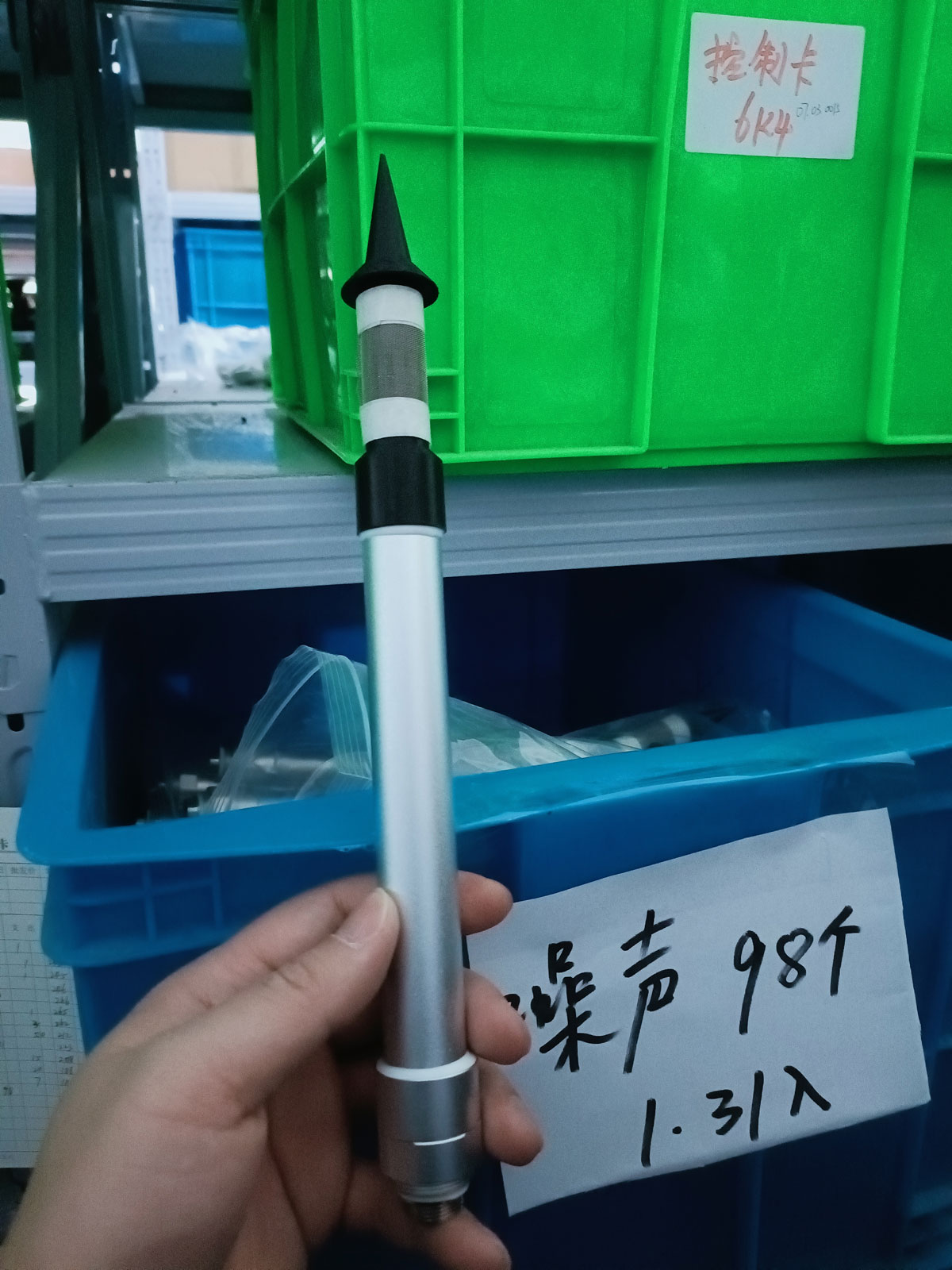
A: A noise sensor is designed for continuous monitoring and system integration. It can send data to a station, RTU or platform through RS485. A handheld sound level meter is useful for inspection, but it does not provide unattended historical records, platform alarms or long-term trend comparison.
A: Continuous monitoring is useful when noise changes by time, activity, equipment status or traffic flow. Construction sites, factory boundaries, schools, residential edges and urban roads often need historical data to understand patterns, verify complaints and evaluate control measures.
A: For general outdoor monitoring, keep the microphone away from large reflecting surfaces and install it at a representative height. For sensitive building monitoring, position should follow the project method, such as near the wall or window at a defined distance. Record the location so later data can be interpreted correctly.
A: Sound can be reflected, blocked or amplified by walls, windows, equipment, poles and nearby structures. If the microphone is shielded or too close to reflective surfaces, the reading may represent a local condition rather than the target environment. Installation notes are therefore part of the measurement record.
A: Important parameters include measurement range, accuracy, frequency range, time response, output signal, power supply, microphone type, working temperature and humidity. For platform integration, RS485 protocol information and wiring documentation should also be requested.
A: Yes. Construction and environmental stations often combine noise, PM2.5, PM10, TSP, temperature, humidity, wind speed and wind direction. This helps explain whether a complaint is related to construction activity, traffic, weather or background conditions.
A: Data should be interpreted with time, activity and location. A high value during heavy machinery operation may have a different meaning from a high value at night near a sensitive building. Comparing data with site schedules and weather improves the value of the monitoring system.
A: Provide indoor or outdoor use, expected noise range, installation location, cable distance, power supply, communication interface, platform requirement and whether the sensor will be part of a dust or weather station. This helps the supplier recommend the correct configuration.
A: Check power, RS485 communication, live dB value, platform upload, alarm thresholds, historical records, installation height, microphone protection and station naming. If several points are installed, each should have a clear photo and location description.
A: In industrial sites, repeated abnormal noise patterns can indicate vibration, bearing wear, resonance or process changes. While a noise sensor is not a full condition monitoring system, its trend data can support maintenance investigation when combined with equipment records.
Noise sensors help environmental projects move from subjective complaint handling to continuous data management. With RS485 output, defined measurement range and clear installation methods, NiuBoL noise sensors can support construction, industrial, urban and sensitive-area monitoring projects.
Prev:Campus Weather Station Procurement Guide for Education, Safety and Meteorological Observation
Next:Negative Oxygen Ion Monitoring System for Scenic Areas, Parks and Smart Environmental Projects
Related recommendations
Sensors & Weather Stations Catalog
 Agriculture Sensors and Weather Stations Catalog-NiuBoL.pdf
Weather Stations Catalog-NiuBoL.pdf
Agriculture Sensors Catalog-NiuBoL.pdf
Water Quality Sensor Catalog-NiuBoL.pdf
Related products
 Combined air temperature and relative humidity sensor
 Soil Moisture Temperature sensor for irrigation|NBL-S-THR
 Soil pH sensor RS485 soil Testing instrument soil ph meter for agriculture |NBL-S-PH
 Wind Speed sensor Output Modbus/RS485/Analog/0-5V/4-20mA
 Tipping bucket rain gauge for weather monitoring auto rainfall sensor RS485/Outdoor/stainless steel
 Pyranometer Solar Radiation Sensor 4-20mA/RS485

Screenshot, WhatsApp to identify the QR code
WhatsApp number:+8615367865107
(Click on WhatsApp to copy and add friends)

