





— Blogs —
—Products—
 Consumer hotline +8618073152920
 WhatsApp:+8615367865107
Address:Room 102, District D, Houhu Industrial Park, Yuelu District, Changsha City, Hunan Province, China
Product knowledge
Time:2026-06-15 10:48:12 Popularity:673
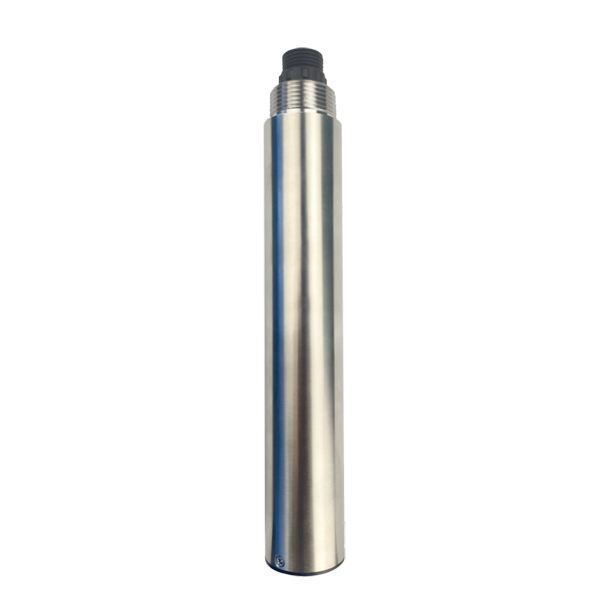
Suspended solids are a direct operating concern in wastewater plants, waterworks, industrial slurry processes and natural water monitoring. An online TSS sensor helps operators see solids movement continuously instead of waiting for manual sampling.
Suspended solids include insoluble inorganic matter, organic matter, silt, clay, microorganisms and other particles that remain in water. They make water turbid, reduce transparency, affect aquatic organisms and may settle to create anaerobic fermentation or odor.
In engineering terms, suspended solids are not only a pollution indicator. They are also a process-control value for sludge removal, clarification, filtration, sludge return, thickening and dewatering chemical dosing.
The NBL-WQ-TSS online suspended solids sensor uses scattered light measurement. Infrared light enters the sample, particles scatter the light, and the sensor calculates suspended solids concentration after internal calibration and linearization.
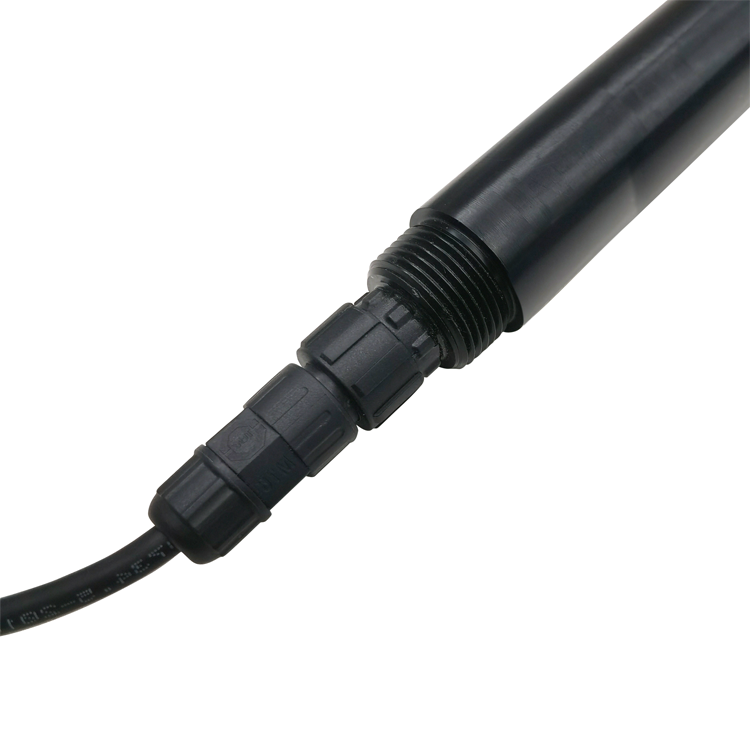
RS485 Modbus RTU output allows the sensor to connect to PLC, SCADA, RTU or IoT systems. Optional 4-20 mA can support older cabinets where needed. For field projects, IP68 protection, 12 to 24 VDC power and 3/4 NPT installation help simplify integration.
The sensor should keep distance from the side wall and bottom so that particles and vessel surfaces do not distort the optical path. A practical installation keeps more than 5 cm from the side wall and more than 10 cm from the bottom.
Zero calibration uses a zero or known low-concentration suspension, and slope calibration uses a known suspension in the higher range. The probe front should not have bubbles because bubbles can be read as optical disturbance.
| Item | Engineering Reference |
|---|---|
| Turbidity model reference | NBL-WQ-TS-4A |
| Turbidity principle | 90-degree scattered light method with infrared LED source |
| Turbidity range | 0 to 20.00 NTU / 0 to 200.0 NTU / 0 to 1000.0 NTU |
| Turbidity accuracy | +/-3% or +/-1.5 NTU for low range; +/-3% or +/-2 NTU for mid range; +/-5% or +/-3 NTU for high range |
| Suspended solids model reference | NBL-WQ-TSS-4A |
| Suspended solids principle | Backscattered light measurement of suspended solids concentration |
| Suspended solids range | 0 to 2000.0 mg/L |
| Suspended solids accuracy | +/-5% depending on sludge homogeneity; temperature +/-0.3 degC |
| Output signal | RS485 Modbus RTU; optional 4-20 mA |
| Power supply | 12 to 24 VDC |
| Protection rating | IP68, submerged use within rated depth |
| Installation | Immersion installation, 3/4 NPT thread |
| Cable material / length | Waterproof shielded cable, standard 5 m, customizable |
Site environment challenge: Primary and secondary sludge movement affects treatment efficiency.
System integration scheme: Install TSS sensors in sludge discharge, return sludge or clarification stages.
User value delivered: Operators can automate sludge discharge and improve process stability.
Site environment challenge: Sludge blanket height and settled solids affect effluent clarity.
System integration scheme: Use suspended solids monitoring for sludge removal control.
User value delivered: The plant reduces unnecessary discharge and prevents solids carryover.
Site environment challenge: Solids concentration may be high and variable.
System integration scheme: Use TSS monitoring with cleaning access and reference checks.
User value delivered: The site gains continuous solids trend for process control.
Site environment challenge: Rainfall and upstream activity can change sediment concentration.
System integration scheme: Deploy online monitoring at representative river sections.
User value delivered: Managers obtain trend data for sediment and ecological assessment.
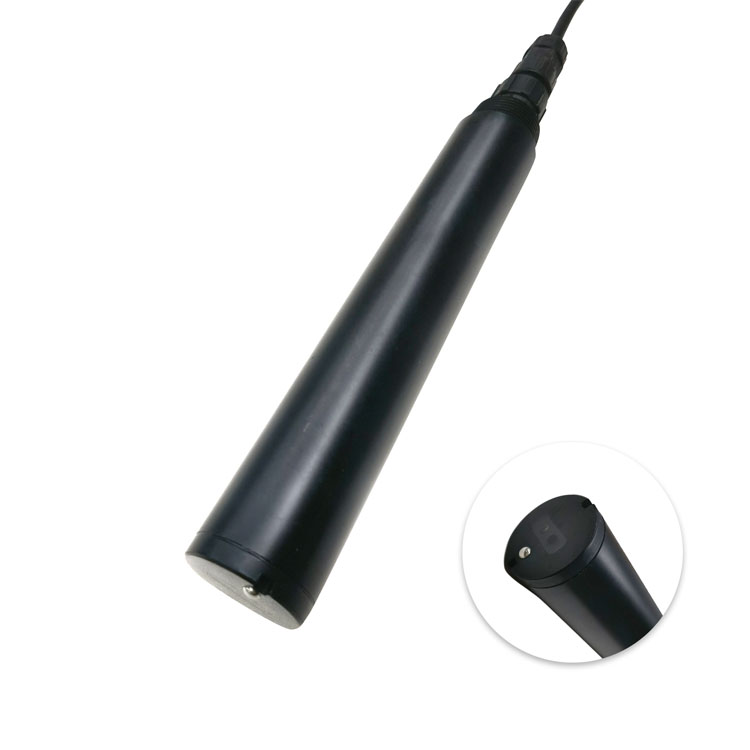
In wastewater treatment plants, TSS data becomes valuable when it is connected to sludge movement. A clarifier may look stable at the surface while solids concentration changes below the water line. Online monitoring gives operators a continuous view that manual sampling may miss.
Return sludge control, excess sludge discharge and dewatering chemical dosing all benefit from trend data. The system does not need to make every decision automatically at the beginning; even alarm-based monitoring can reduce late response to sludge blanket movement or abnormal solids carryover.
Wastewater installations usually focus on process stability, cleaning access and sludge concentration. Natural water installations focus more on representative location, rainfall response, sediment events and protection against debris. The same sensor type can be used, but the engineering questions are different.
For rivers or canals, the installation point should avoid dead zones and local turbulence that does not represent the main flow. For sludge channels, the probe should avoid burial and should be accessible for cleaning. These site details often decide whether the data remains usable after the first month.
Before quoting a suspended solids sensor, distributors should ask where the sensor will be installed, whether the water contains fibrous solids or heavy sludge, how often cleaning is possible, what range is expected and whether the control cabinet accepts RS485 Modbus RTU.
This short technical conversation helps prevent mismatched products and gives the buyer confidence that the supplier understands process monitoring, not only catalog selection.
Suspended solids data may be used for process control, compliance support or equipment protection, and each purpose changes the specification. Process control emphasizes trend stability and response speed. Compliance support emphasizes reference comparison and documented sampling. Equipment protection focuses on alarms before filters, membranes, pumps or reinjection lines are damaged.
Before ordering, the buyer should write the primary purpose in the technical requirement. A sensor installed for sludge return control may need a different location and cleaning plan than a sensor installed at final effluent for discharge supervision.
At a municipal wastewater plant, TSS trend can indicate poor settling, abnormal sludge blanket movement or carryover from secondary clarification. In a waterworks sedimentation tank, TSS can support timed sludge discharge rather than fixed-period discharge. In industrial wastewater, it can identify production batches that release more solids than expected.
The most useful projects connect TSS readings with an action: open a sludge discharge valve, adjust polymer dosing, inspect a clarifier, start a filter backwash, or trigger a laboratory sample. Without a defined action, continuous monitoring may become a display value rather than an operating tool.
For multi-point TSS projects, acceptance should include installation photos, cable routing, Modbus communication test, baseline comparison and cleaning demonstration. The buyer should not accept only a powered display, because many TSS problems appear after the sensor is exposed to sludge, bubbles or fouling.
A short trial trend under normal and disturbed conditions helps confirm whether the selected range is appropriate. If the plant has both low-concentration effluent and high-concentration sludge, one sensor range may not be ideal for every point.
After commissioning, TSS trend data should be reviewed together with pump status, sludge discharge time, rainfall, production batch and chemical dosing records. This combined view helps operators distinguish a real process change from a temporary hydraulic disturbance.
For contractors and distributors, providing this operating logic makes the sensor easier to justify. The end user can see how continuous solids data will reduce blind sludge operation, improve response time and support more stable treatment performance.
A plant may need TSS monitoring at both process and outlet locations. The process point helps operators react, while the outlet point helps confirm treatment result. These two points should not be treated as interchangeable.
If budget allows only one point, the buyer should choose the location that changes operator behavior most directly, not simply the easiest place to install the probe.
This decision should be made with the process engineer, electrical integrator and plant operator together, and the chosen point should be recorded in the commissioning document.
It measures the concentration of insoluble particles suspended in water, typically reported in mg/L for process and wastewater control.
They are used in sludge discharge, return sludge, clarifier monitoring, thickening, dewatering and final effluent supervision.
TSS is a solids concentration value in mg/L, while turbidity is an optical clarity value usually expressed in NTU.
Online TSS shows solids concentration changes continuously, helping operators adjust sludge discharge, return sludge flow and polymer dosing.
Yes. They can monitor sediment changes in rivers, canals and surface water, provided the installation point represents the main water flow.
RS485 Modbus RTU is preferred because it supports digital integration with PLC, RTU, SCADA and IoT gateway systems.
Bubbles, wall reflection, sediment burial, heavy fouling, non-representative flow and loose wiring can affect accuracy and stability.
The buyer should estimate normal and peak solids concentration at the installation point and avoid using one range for both clear effluent and dense sludge if performance requirements differ.
Acceptance should include communication test, installation inspection, reference comparison, cleaning demonstration and trend stability review.
NiuBoL provides online TSS sensors with RS485 Modbus RTU and engineering support for wastewater, waterworks, industrial slurry and surface water monitoring.
Online suspended solids monitoring helps convert particle concentration into process action. NiuBoL TSS sensors support wastewater, waterworks, industrial slurry and river sediment monitoring projects that need stable RS485 data.
Prev:Residual Chlorine in Drinking Water: Sensor Selection for Safe Disinfection Monitoring
Next:Suspended Solids in Water: Engineering Meaning, Sensor Installation and Maintenance Guide
Related recommendations
Sensors & Weather Stations Catalog
 Agriculture Sensors and Weather Stations Catalog-NiuBoL.pdf
Weather Stations Catalog-NiuBoL.pdf
Agriculture Sensors Catalog-NiuBoL.pdf
Water Quality Sensor Catalog-NiuBoL.pdf
Related products
 Combined air temperature and relative humidity sensor
 Soil Moisture Temperature sensor for irrigation|NBL-S-THR
 Soil pH sensor RS485 soil Testing instrument soil ph meter for agriculture |NBL-S-PH
 Wind Speed sensor Output Modbus/RS485/Analog/0-5V/4-20mA
 Tipping bucket rain gauge for weather monitoring auto rainfall sensor RS485/Outdoor/stainless steel
 Pyranometer Solar Radiation Sensor 4-20mA/RS485

Screenshot, WhatsApp to identify the QR code
WhatsApp number:+8615367865107
(Click on WhatsApp to copy and add friends)

