





— Blogs —
—Products—
 Consumer hotline +8618073152920
 WhatsApp:+8615367865107
Address:Room 102, District D, Houhu Industrial Park, Yuelu District, Changsha City, Hunan Province, China
Product knowledge
Time:2026-06-15 10:48:13 Popularity:248
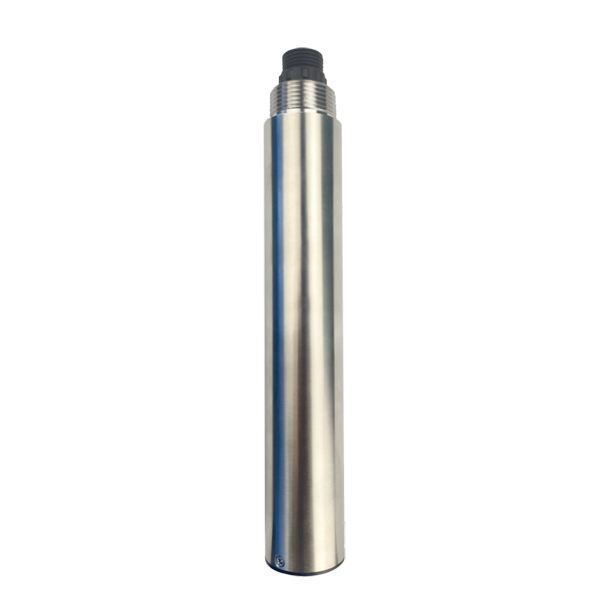
Suspended solids are a practical indicator of water pollution, treatment efficiency and solids control. For procurement teams, the key question is how to measure them reliably in a real plant, not only how to define them in a laboratory.
Suspended solids are particles that do not dissolve in water and cannot pass through a defined filter, commonly including inorganic solids, organic solids, sand, clay and microorganisms. They reduce transparency and can damage aquatic respiration and metabolism.
Organic suspended matter can settle and ferment under anaerobic conditions, making water quality worse. In rivers, high suspended solids may also contribute to channel blockage or sediment transport problems.
Manual suspended solids testing is important, but it cannot show short-term changes in sludge discharge, clarifier performance or industrial slurry concentration. Online measurement provides continuous trend data that operators can connect with pumps, valves, dosing systems and alarms.
A system integrator should specify the sensor with its measurement range, output signal, installation distance, cable wiring and cleaning method. These details decide whether the instrument can work steadily after handover.
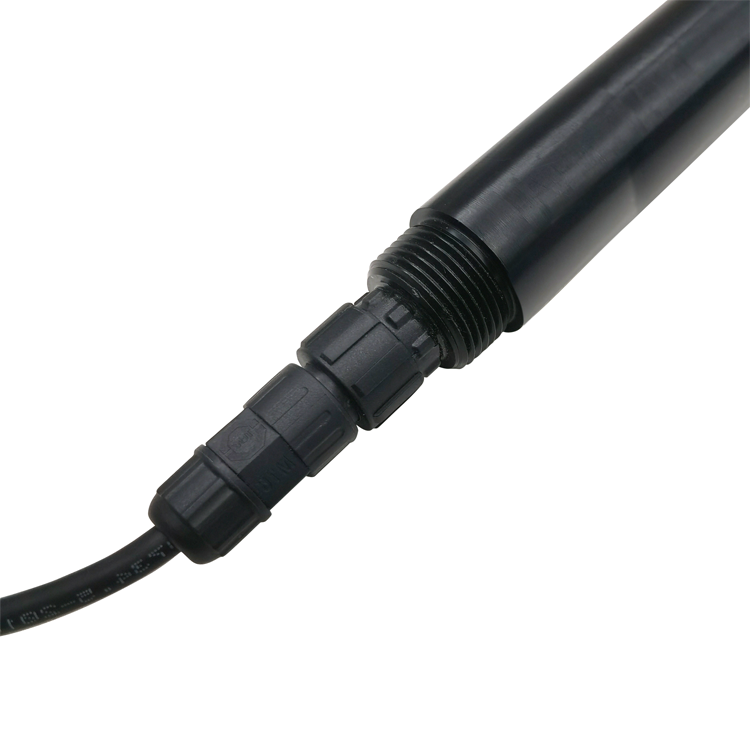
A typical four-core shielded twisted cable can use red for 12 to 24 VDC power, black for GND, blue for 485A and white for 485B. Wiring should be checked carefully before power-on to prevent avoidable damage.
Because the cable may be immersed in water or exposed to air for a long time, every cable joint needs waterproof treatment and corrosion resistance. This is especially important for seawater, industrial wastewater and outdoor monitoring points.
| Item | Engineering Reference |
|---|---|
| Turbidity model reference | NBL-WQ-TS-4A |
| Turbidity principle | 90-degree scattered light method with infrared LED source |
| Turbidity range | 0 to 20.00 NTU / 0 to 200.0 NTU / 0 to 1000.0 NTU |
| Turbidity accuracy | +/-3% or +/-1.5 NTU for low range; +/-3% or +/-2 NTU for mid range; +/-5% or +/-3 NTU for high range |
| Suspended solids model reference | NBL-WQ-TSS-4A |
| Suspended solids principle | Backscattered light measurement of suspended solids concentration |
| Suspended solids range | 0 to 2000.0 mg/L |
| Suspended solids accuracy | +/-5% depending on sludge homogeneity; temperature +/-0.3 degC |
| Output signal | RS485 Modbus RTU; optional 4-20 mA |
| Power supply | 12 to 24 VDC |
| Protection rating | IP68, submerged use within rated depth |
| Installation | Immersion installation, 3/4 NPT thread |
| Cable material / length | Waterproof shielded cable, standard 5 m, customizable |
Site environment challenge: Solids escape affects downstream water quality.
System integration scheme: Install TSS monitoring at clarifier outlet or sludge discharge point.
User value delivered: Operators can adjust sludge removal based on trend.
Site environment challenge: Chemical dosing and pump operation depend on sludge concentration.
System integration scheme: Use online TSS data for concentration monitoring.
User value delivered: The plant improves dewatering and reduces chemical waste.
Site environment challenge: Paper, leather, mineral processing and dust-scrubbing wastewater can contain high particles.
System integration scheme: Use TSS sensors with protected installation and maintenance access.
User value delivered: The site gains continuous process evidence.
Site environment challenge: Suspended sediment changes after rainfall or upstream disturbance.
System integration scheme: Deploy online sensors at representative monitoring sections.
User value delivered: Managers can observe sediment events without constant manual sampling.
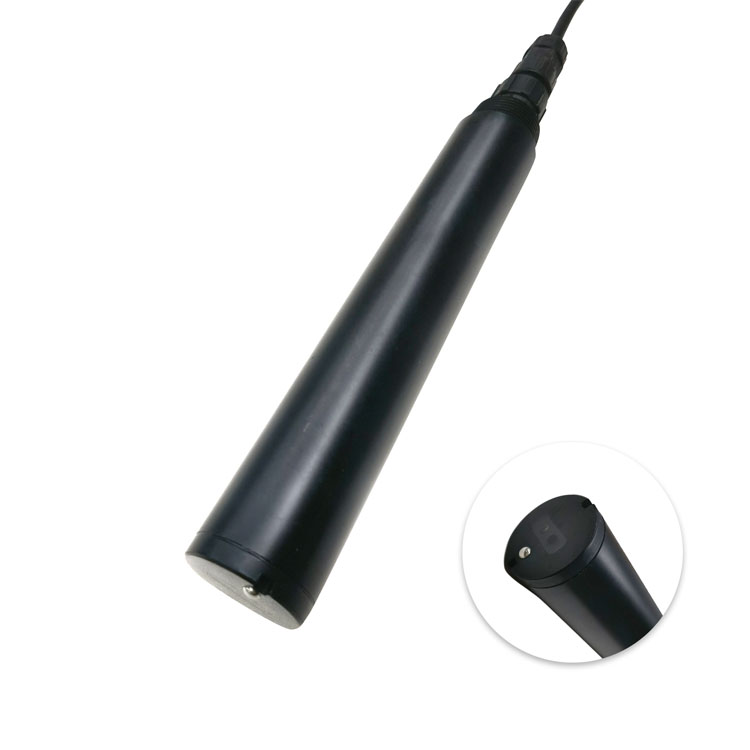
A suspended solids sensor can meet its stated specification and still perform poorly if it is installed at a non-representative point. Dead corners, strong bubbles, direct pump discharge turbulence and sediment burial can all create readings that do not reflect the process.
The recommended clearance from side wall and bottom should be treated as a minimum installation principle. In high-solids tanks, integrators should also consider whether rags, fibers or floating debris may hit the probe and whether a mounting bracket allows safe removal for cleaning.
Optical sensors depend on a clean measurement window. The maintenance plan should define who cleans the probe, how often the probe is inspected, what reference sample is used and how abnormal readings are handled. This is better than waiting until the operator distrusts the data.
In industrial wastewater, oil film, chemical scaling and biological growth can appear at different rates. A site with heavy fouling may need more frequent cleaning or a bypass installation where flow and access are easier to control.
Contractors should test power supply, RS485 polarity, Modbus address, register scaling and data stability before handover. Photos of installation position and cable junctions are useful because many later faults are caused by wiring, water ingress or accidental mechanical strain.
A short reference comparison with a known site method gives the end user a baseline. It also clarifies that online data is used for trend and control, while laboratory gravimetric tests may still be used for formal reporting where required.
The measurement point should represent the water or sludge stream being controlled. A calm corner may under-report solids, while a point near pump discharge may over-report because of bubbles and turbulence. The installer should observe flow direction, sediment behavior and maintenance access before fixing the bracket.
For open channels, the probe should be protected from debris while still seeing representative flow. For tanks, the probe should avoid wall reflections, bottom sediment and floating scum. For pipes or bypass lines, flow velocity should be stable enough to avoid deposition around the optical window.
There is no single cleaning interval that fits every suspended solids application. Clear river water, municipal effluent, high-sludge wastewater and oily industrial wastewater foul the optical window at different speeds. A commissioning period should record drift, cleaning interval and reference comparison.
A maintenance SOP should define how the probe is removed, how the optical window is cleaned, what cloth or water quality is allowed, who records the work and when recalibration is required. This prevents the sensor from becoming a neglected device after installation.
If readings jump rapidly, check for bubbles, turbulent flow, loose wiring and unstable power. If readings drift upward, inspect the optical window for fouling or biological growth. If readings remain unexpectedly low, confirm that the probe is not installed in a dead zone and that the selected range is suitable.
For RS485 systems, communication faults should be checked separately from measurement faults. Address conflict, reversed A/B wiring, register scaling and grounding issues can make a good sensor appear unreliable.
For plants that depend on continuous suspended solids data, the project should include a simple maintenance record and spare-part plan. Cable connectors, mounting brackets, cleaning tools and calibration references are small items, but they often decide whether the system can be maintained without long downtime.
Operator training should cover normal trend behavior, cleaning steps, zero and slope calibration, Modbus fault checks and when to request laboratory comparison. This turns the sensor from an installed device into a maintained measurement point.
A clear requirement should state measurement range, installation method, cable length, power supply, communication protocol, cleaning access and acceptance comparison. This prevents the supplier from quoting only a sensor body without the field details needed for operation.
For outdoor or wet locations, the requirement should also mention waterproof junctions, corrosion resistance and how the cable will be protected against pulling, abrasion or accidental damage.
The requirement should define whether the sensor will be installed by immersion, bracket mounting, open-channel mounting or bypass sampling. It should also state whether the control cabinet provides 12 to 24 VDC power and whether the PLC already has an available RS485 port, because these details directly affect installation cost, commissioning time and handover quality. A clearer requirement also reduces repeated technical clarification before purchase.
Suspended solids are insoluble particles such as silt, clay, organic matter, microorganisms and industrial particles that remain dispersed in water.
Continuous monitoring helps operators see short-term changes in clarifier performance, sludge movement, industrial discharge and sediment events.
It should be installed at a representative flow point with enough clearance from walls and bottom, while avoiding bubbles, scum and sediment burial.
A typical four-core cable uses power positive, ground, RS485 A and RS485 B; exact color coding should follow the product documentation.
Cleaning frequency depends on fouling conditions. Industrial wastewater and sludge points usually need more frequent inspection than clear surface water.
Unstable readings can be caused by bubbles, turbulent flow, fouled optical window, loose cable, unstable power supply or incorrect Modbus settings.
Zero calibration is performed with zero or known low-concentration suspension while keeping the probe face free of bubbles and away from the container bottom.
Slope calibration uses a known suspension in the working range, with stable liquid conditions and enough distance from walls and bottom.
Contractors should document installation position, cable routing, power supply, Modbus address, calibration record and cleaning method.
Turbidity is often more suitable when the project needs water clarity or low-particle optical monitoring rather than solids concentration in mg/L.
Suspended solids monitoring becomes valuable when definition, installation, wiring, calibration and maintenance are considered together. NiuBoL online TSS sensors provide an integrable measurement layer for water and wastewater projects.
Prev:Online Suspended Solids Sensor Applications: From Wastewater Sludge to River Sediment Monitoring
Next:Wastewater Station Odor and VOC Control: Monitoring Logic for H2S, Ammonia and Process Risk
Related recommendations
Sensors & Weather Stations Catalog
 Agriculture Sensors and Weather Stations Catalog-NiuBoL.pdf
Weather Stations Catalog-NiuBoL.pdf
Agriculture Sensors Catalog-NiuBoL.pdf
Water Quality Sensor Catalog-NiuBoL.pdf
Related products
 Combined air temperature and relative humidity sensor
 Soil Moisture Temperature sensor for irrigation|NBL-S-THR
 Soil pH sensor RS485 soil Testing instrument soil ph meter for agriculture |NBL-S-PH
 Wind Speed sensor Output Modbus/RS485/Analog/0-5V/4-20mA
 Tipping bucket rain gauge for weather monitoring auto rainfall sensor RS485/Outdoor/stainless steel
 Pyranometer Solar Radiation Sensor 4-20mA/RS485

Screenshot, WhatsApp to identify the QR code
WhatsApp number:+8615367865107
(Click on WhatsApp to copy and add friends)

