





— Blogs —
—Products—
 Consumer hotline +8618073152920
 WhatsApp:+8615367865107
Address:Room 102, District D, Houhu Industrial Park, Yuelu District, Changsha City, Hunan Province, China
Product knowledge
Time:2026-06-15 10:48:11 Popularity:715
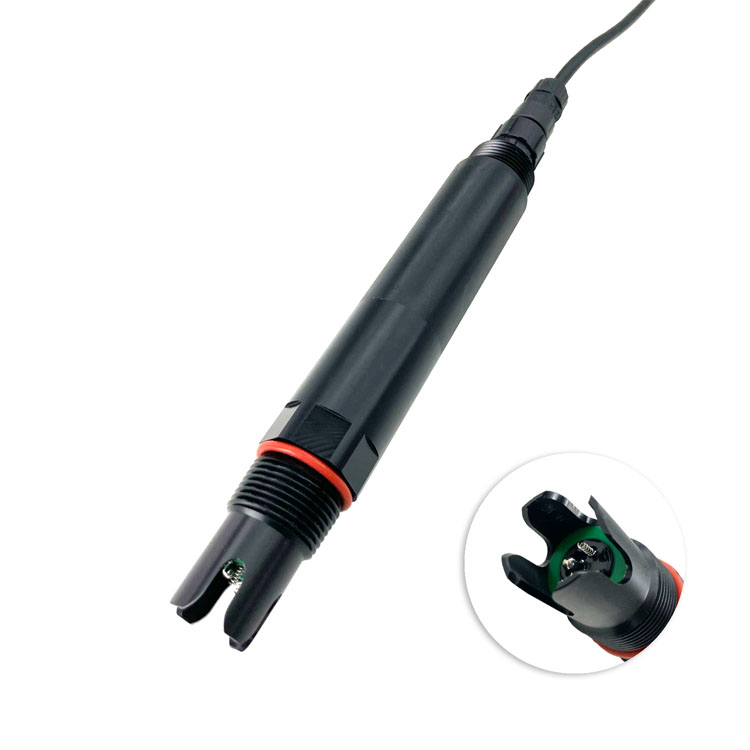
Residual chlorine is kept in drinking water to maintain disinfection through treatment plants and distribution networks. The engineering challenge is not to remove chlorine completely, but to keep it within a controlled range that protects microbiological safety without excessive dosing.
Chlorine is widely used because it is effective and economical for killing pathogenic microorganisms. After chlorine reacts with bacteria, organic matter and reducing substances, the remaining amount is called residual chlorine.
A residual level in the network helps prevent re-contamination during transport through municipal pipes, community networks and storage tanks. If residual chlorine is too low, microbial safety risk rises. If it is too high, taste, odor, irritation and by-product concerns increase.
Free chlorine includes HOCl, OCl- and dissolved chlorine forms. Combined chlorine includes chloramine compounds such as NH2Cl, NHCl2 and NCl3. Total residual chlorine is the sum of free and combined chlorine.
Procurement documents should state which value is required. Many drinking water control points focus on free residual chlorine, while some projects ask for total chlorine. Selecting the wrong measurement target can create acceptance disputes.
Online residual chlorine sensors are useful at plant outlets, distribution network points, bottled water facilities, swimming pools, cooling circulating water and water treatment projects. The sensor value can be sent to PLC, SCADA, recorder or IoT gateway through RS485 Modbus RTU.
Because chlorine behavior is affected by pH, temperature, contact time and water demand, the chlorine sensor is often integrated with pH and turbidity monitoring. This gives operators better context than a chlorine number alone.
| Item | Engineering Reference |
|---|---|
| Model | NBL-WQ-CL |
| Measurement principle | Constant-voltage method |
| Measurement range | 0 to 2.000 mg/L HClO or 0 to 20.00 mg/L HClO |
| Resolution | 0.001 mg/L or 0.01 mg/L depending on range |
| Accuracy | +/-5% of reading for 0 to 2.000 mg/L; +/-0.05 for 0 to 20.00 mg/L; temperature +/-0.3 degC |
| Response time | T90 < 90 s |
| Minimum detection limit | 0.05 mg/L |
| Temperature compensation | Automatic temperature compensation, Pt1000 |
| Output signal | RS485 Modbus RTU; optional 4-20 mA |
| Working condition | 5 to 50 degC, <=0.2 MPa, pH 4 to 9 |
| Installation | Flow cell installation, 3/4 NPT |
| Power supply | 12 to 24 VDC |
| Protection rating | IP68 |
| Cable | 5 m cable, customizable; M16-5 waterproof connector |
Site environment challenge: The plant must maintain disinfection residual after treatment.
System integration scheme: Install online residual chlorine with pH and flow data.
User value delivered: Operators can control dosing and maintain evidence for water safety.
Site environment challenge: Residual chlorine may decay before water reaches end users.
System integration scheme: Deploy monitoring at terminal points or storage tanks.
User value delivered: The utility receives early warning of low residual risk.
Site environment challenge: Disinfection control must be stable without excessive residual.
System integration scheme: Use online monitoring before filling and during process verification.
User value delivered: Quality teams gain continuous records for process control.
Site environment challenge: Too much chlorine irritates users, while too little raises hygiene risk.
System integration scheme: Integrate chlorine and pH monitoring with alarms.
User value delivered: Operators can balance sanitation and comfort.
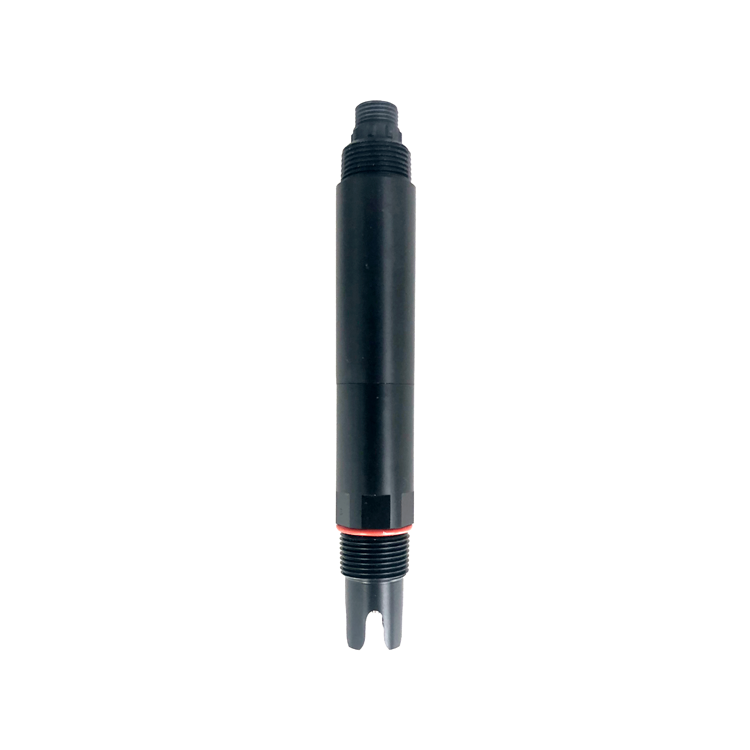
Residual chlorine control should be designed around the location of the measurement point. At the outlet of a water plant, the sensor helps verify dosing stability after mixing and contact time. At the end of a distribution network, the same value becomes an early warning for chlorine decay, pipe contamination, long retention time or excessive water age.
A practical system usually separates alarm levels into low residual, high residual and sensor maintenance conditions. Low residual alarms protect microbiological safety, high residual alarms prevent over-dosing, and maintenance alarms remind the operator to inspect sample flow, electrode condition and calibration records.
Free chlorine performance changes with pH because the balance between hypochlorous acid and hypochlorite ion changes. Temperature also affects reaction speed and sensor response. A chlorine reading without pH and temperature context may be technically correct but operationally incomplete.
For this reason, many B2B projects combine residual chlorine with pH, turbidity and flow monitoring. This gives system integrators a stronger basis for dosing control and gives operators better evidence when water quality complaints or abnormal disinfection demand appear.
The most common procurement error is asking for a chlorine sensor without specifying free chlorine, total chlorine, sample pressure, pH range and output interface. Another frequent problem is installing the sensor at a stagnant point where water does not represent the real process.
Before ordering, buyers should confirm whether a flow cell is required, whether the cabinet has RS485 or 4-20 mA input, whether the monitoring platform needs Modbus register details and how calibration will be performed after installation.
Residual chlorine control should start with the regulatory target, but the engineering setpoint must also consider pipe length, water age, temperature, pH and demand from organic or inorganic substances. A value that is sufficient at the plant outlet may become too low at the network terminal after long residence time.
In projects where the sensor is linked to dosing equipment, the control strategy should include upper and lower alarm limits, sensor fault handling and a manual verification procedure. This prevents the controller from over-dosing because of a blocked sample line, air bubbles or a maintenance issue.
A good measurement point has representative flow, stable pressure, adequate mixing and enough contact time after dosing. The sensor should not be installed in a dead leg or at a point where freshly dosed chlorine has not mixed evenly. For terminal monitoring, the location should represent actual network risk rather than only convenience.
Flow-cell installation is often preferred for online residual chlorine because it helps control sample conditions and makes maintenance easier. The buyer should confirm whether the site can provide stable sample flow within the sensor's working condition.
For a utility, residual chlorine data supports disinfection assurance and distribution network supervision. For an equipment OEM, it can be integrated into packaged water treatment skids. For an IoT integrator, RS485 Modbus RTU output makes it possible to build multi-point remote monitoring with time-stamped alarms.
Useful project documentation should include the chlorine species being measured, range, unit, Modbus address, register map, calibration interval, sample-flow requirement and the relationship between chlorine, pH and temperature readings.
A residual chlorine project should not finish with only a successful signal test. The handover file should record the sample point, flow-cell arrangement, calibration liquid or reference method, alarm settings, Modbus communication settings and routine maintenance responsibility.
For long-term operation, the buyer should compare online data with a trusted field or laboratory method during the first operating period. Once the local relationship is confirmed, the sensor data becomes more useful for dosing review, network supervision and abnormal event investigation.
Reading disputes usually come from unclear measurement targets, unstable sample flow, incorrect pH interpretation or comparing online data with a manual test taken at a different point. The project should define the comparison method before acceptance.
When the sensor, sample point and manual reference are aligned, chlorine data becomes easier to defend in daily operation and easier for remote supervisors to understand.
This is also why project drawings should mark the exact sampling point, not only the instrument cabinet location.
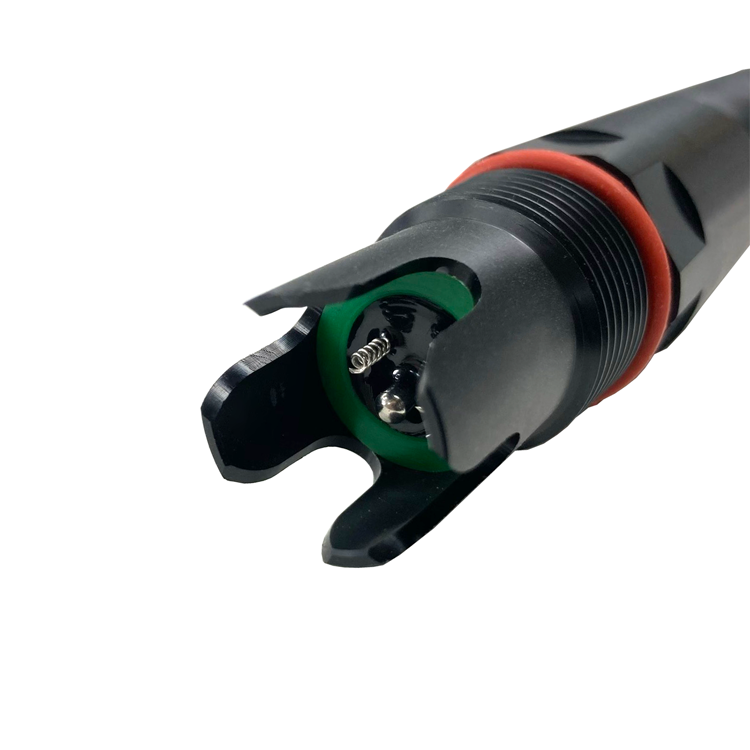
Residual chlorine is the chlorine remaining after disinfection reactions, used to maintain microbial protection through storage tanks and distribution networks.
A zero residual can indicate loss of disinfection protection and increased risk of microbial regrowth or contamination in the pipe network.
Free chlorine includes active chlorine species such as HOCl and OCl-. Total chlorine includes free chlorine plus combined chlorine such as chloramines.
It should be installed at representative points such as plant outlet, distribution terminal, storage tank outlet or process line after adequate mixing and contact time.
pH affects the balance between hypochlorous acid and hypochlorite ion, which changes disinfection effectiveness and interpretation of the chlorine reading.
Low-range monitoring such as 0 to 2.000 mg/L is commonly suitable for drinking water residual control, while higher ranges fit process applications.
RS485 Modbus RTU allows the chlorine sensor to connect with PLC, SCADA, RTU or cloud gateways for alarms, records and remote dosing supervision.
Confirm chlorine species, pH range, pressure, temperature, sample flow, installation method, output signal and calibration requirements.
It can support dosing control when the system includes stable sampling, verified setpoints, fault handling and manual safety logic.
The supplier should provide range, accuracy, wiring, Modbus register information, calibration steps, installation notes and maintenance schedule.
Residual chlorine monitoring supports safe drinking water and controlled disinfection. NiuBoL NBL-WQ-CL sensors provide digital integration for water plants, networks and process systems that need stable chlorine data.
Prev:Why BOD Matters in Wastewater Treatment: Procurement Guide for Organic Load Monitoring
Next:Online Suspended Solids Sensor Applications: From Wastewater Sludge to River Sediment Monitoring
Related recommendations
Sensors & Weather Stations Catalog
 Agriculture Sensors and Weather Stations Catalog-NiuBoL.pdf
Weather Stations Catalog-NiuBoL.pdf
Agriculture Sensors Catalog-NiuBoL.pdf
Water Quality Sensor Catalog-NiuBoL.pdf
Related products
 Combined air temperature and relative humidity sensor
 Soil Moisture Temperature sensor for irrigation|NBL-S-THR
 Soil pH sensor RS485 soil Testing instrument soil ph meter for agriculture |NBL-S-PH
 Wind Speed sensor Output Modbus/RS485/Analog/0-5V/4-20mA
 Tipping bucket rain gauge for weather monitoring auto rainfall sensor RS485/Outdoor/stainless steel
 Pyranometer Solar Radiation Sensor 4-20mA/RS485

Screenshot, WhatsApp to identify the QR code
WhatsApp number:+8615367865107
(Click on WhatsApp to copy and add friends)

