





— Blogs —
—Products—
 Consumer hotline +8618073152920
 WhatsApp:+8615367865107
Address:Room 102, District D, Houhu Industrial Park, Yuelu District, Changsha City, Hunan Province, China
Product knowledge
Time:2026-06-15 10:48:11 Popularity:220

BOD is one of the most practical indicators for understanding biodegradable organic pollution in wastewater. For treatment plants, hotels, restaurants, food factories and industrial manufacturers, it helps decide whether biological treatment, chemical pretreatment or polishing is required.
Biochemical Oxygen Demand measures the oxygen used by microorganisms while degrading organic matter. When BOD is high, the wastewater can consume dissolved oxygen quickly and create stress for receiving water or biological treatment systems.
For procurement teams, BOD is useful because it connects pollution strength with treatment route. If wastewater is mainly biodegradable, biological treatment can be effective. If the organic load is too concentrated or difficult to degrade, chemical pretreatment or process equalization may be needed before biological units receive the water.
BOD should not be read alone. Dissolved oxygen shows whether aerobic microorganisms have enough oxygen, COD gives a faster chemical oxygen demand reference, and pH affects biological activity. Together these parameters help operators understand why a treatment unit is stable or overloaded.
A system integrator can use online COD, DO, pH, temperature and flow data to support a BOD management strategy. BOD5 remains a laboratory or analyzer-based reference, but online supporting parameters give operators the trend between formal tests.
Several BOD measurement approaches are used in engineering projects, including dilution-seeding, microbial electrode, pressure differential, respirometric methods, activated sludge degradation comparison and coulometric methods. The classic BOD5 method incubates a diluted sample at 20 degC for five days and calculates oxygen consumption.
For a buyer, method choice depends on whether the project needs formal compliance testing, process screening, fast operational feedback or research-level evaluation. Online monitoring systems should be specified with the expected use of data, not only with the parameter name.
| Item | Engineering Reference |
|---|---|
| Measured indicator | Biochemical Oxygen Demand, commonly BOD5 for wastewater biodegradability evaluation |
| Typical reference condition | 5-day incubation at 20 degC for BOD5 laboratory method |
| Engineering meaning | Oxygen required by microorganisms to oxidize biodegradable organic matter |
| Online project role | Organic-load trend, biological treatment assessment and pretreatment decision support |
| Related online parameters | COD, DO, pH, temperature, ammonia nitrogen, turbidity and flow |
| Communication for online systems | RS485 Modbus RTU where supported by selected sensor or station configuration |
| Common methods mentioned | Dilution-seeding, microbial electrode, pressure differential, respirometric and coulometric approaches |
Site environment challenge: Influent organic load changes by time of day and rainfall.
System integration scheme: Use COD, DO, pH, flow and periodic BOD testing to evaluate biological treatment load.
User value delivered: Operators can adjust aeration and sludge operation with better context.
Site environment challenge: High biodegradable organic load can overload biological units.
System integration scheme: Use BOD/COD relationship with equalization and pretreatment monitoring.
User value delivered: The plant reduces shock loading and improves discharge stability.
Site environment challenge: Grease and organic waste may raise oxygen demand.
System integration scheme: Monitor organic load trend and use pretreatment before municipal discharge.
User value delivered: The owner reduces odor, blockage and compliance risk.
Site environment challenge: Some wastewater has biodegradable and non-biodegradable fractions.
System integration scheme: Compare BOD with COD and treatment performance data.
User value delivered: Engineers can decide whether biology, chemistry or combined treatment is more realistic.

A good BOD monitoring strategy reduces unnecessary chemical spending, helps size biological treatment capacity and provides a stronger basis for discharge discussions. It also helps buyers avoid buying an instrument that cannot answer the operational question.
For distributors and contractors, the useful deliverable is not just a sensor quotation. It is a monitoring plan that explains what data will be collected, how it will be verified and how the operator will act on it.
In a working wastewater project, BOD is rarely used as a single instantaneous control signal. The more reliable practice is to use BOD testing as a benchmark and connect it with faster online values such as COD, DO, pH, temperature and flow. This lets the control room see whether the biological system is being overloaded before a formal BOD result is available.
For example, if COD rises sharply while DO falls and aeration demand increases, the operator can suspect a higher biodegradable load or a shock load from production discharge. If COD is high but BOD is relatively low, the water may contain less biodegradable organic matter and may need chemical or physical treatment instead of simply increasing aeration.
During commissioning, the buyer should require a comparison period between laboratory BOD results and online supporting parameters. The goal is not to force all values to match, because they measure different things, but to establish a local relationship that operators can use for daily decisions.
Acceptance documents should include sampling location, sample preservation method, measurement interval, units, alarm thresholds and the role of each parameter in the process. This is especially important for hotels, restaurants, food plants and industrial parks where wastewater strength changes by shift, meal period or production batch.
A BOD monitoring plan helps procurement teams evaluate more than instrument price. It shows whether the supplier understands biological treatment capacity, discharge risk, oxygen demand and the practical limits of online measurement.
For NiuBoL water quality projects, BOD-related monitoring can be built as a parameter package instead of a single isolated item, allowing distributors and contractors to offer a more complete solution to wastewater operators.
A purchaser should read BOD as a process-design indicator rather than a decorative water-quality number. High BOD means the plant must provide enough biological capacity, oxygen transfer and sludge management. Low BOD with high COD may indicate that part of the organic matter is not readily biodegradable, so a biological-only process may not solve the discharge problem.
For a retrofit project, BOD data should be compared with flow, COD, DO, pH and the operating condition of aeration tanks. If the flow is small but the BOD load is high, equalization and pretreatment may be more important than adding another simple monitoring point. If BOD fluctuates by production shift, the monitoring plan should include time-based sampling and online trend values.
A practical BOD-related monitoring system normally includes laboratory BOD5 records, online COD or organic-load indicators, dissolved oxygen in aerobic units, pH, temperature and flow. RS485 Modbus RTU sensors can send supporting values to a PLC, RTU or cloud gateway, while formal BOD values are used for verification and trend interpretation.
This architecture is easier to maintain than expecting one instrument to answer every question. The laboratory result provides reference credibility. The online sensors provide continuity. The control system connects those values to aeration, equalization, dosing or alarm decisions.
When preparing a tender, buyers can require the supplier to define the measurement purpose, sampling location, communication protocol, calibration method, data logging interval and operator response logic. These clauses make the project easier to compare than a price list with only model names.
For B2B distributors, this is also where technical value is created. The end user often knows the plant has a wastewater problem but may not know which parameter combination should be monitored. A clear BOD decision framework helps move the discussion from instrument price to treatment reliability.
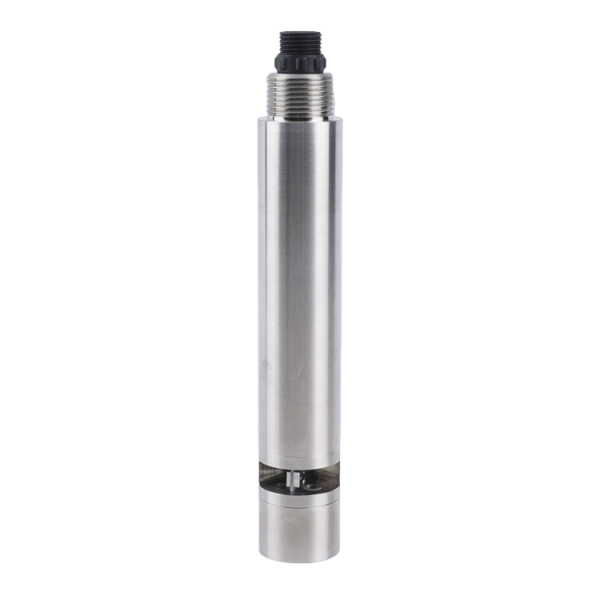
BOD is the amount of dissolved oxygen microorganisms need to biodegrade organic matter in wastewater, usually reported as BOD5 for a five-day test at 20 degC.
High BOD increases oxygen demand, can overload biological treatment, lowers dissolved oxygen and may cause poor effluent quality if aeration and sludge capacity are insufficient.
BOD reflects biodegradable oxygen demand, while COD measures chemical oxygen demand. COD is faster, but BOD gives better information about biological treatability.
Municipal plants, food factories, restaurants, hotels, industrial parks and manufacturing sites with organic wastewater should evaluate BOD or BOD-related parameters.
Online COD can provide continuous trend data, but formal BOD5 testing may still be needed for compliance, process verification or biodegradability assessment.
COD, DO, pH, temperature, flow, ammonia nitrogen and turbidity are commonly integrated to understand organic load and biological treatment condition.
Chemical pretreatment should be considered when organic load is too high, poorly biodegradable, toxic to biology or causes shock loading before the biological unit.
The integrator should define sampling points, supporting online sensors, Modbus data mapping, laboratory comparison and operator response rules.
Acceptance should include communication tests, trend review, laboratory comparison, sampling procedure and confirmation that operators can use the data for process decisions.
A package approach connects BOD interpretation with COD, DO, pH and flow data, making the system more useful for operation than a single isolated value.
BOD is valuable because it links wastewater composition with treatment strategy. A procurement-focused monitoring plan should combine BOD with COD, DO, pH, flow and process knowledge so that the buyer receives actionable wastewater data.
Prev:Ultrasonic Weather Station for Unattended Meteorological and Industrial IoT Monitoring Projects
Next:Residual Chlorine in Drinking Water: Sensor Selection for Safe Disinfection Monitoring
Related recommendations
Sensors & Weather Stations Catalog
 Agriculture Sensors and Weather Stations Catalog-NiuBoL.pdf
Weather Stations Catalog-NiuBoL.pdf
Agriculture Sensors Catalog-NiuBoL.pdf
Water Quality Sensor Catalog-NiuBoL.pdf
Related products
 Combined air temperature and relative humidity sensor
 Soil Moisture Temperature sensor for irrigation|NBL-S-THR
 Soil pH sensor RS485 soil Testing instrument soil ph meter for agriculture |NBL-S-PH
 Wind Speed sensor Output Modbus/RS485/Analog/0-5V/4-20mA
 Tipping bucket rain gauge for weather monitoring auto rainfall sensor RS485/Outdoor/stainless steel
 Pyranometer Solar Radiation Sensor 4-20mA/RS485

Screenshot, WhatsApp to identify the QR code
WhatsApp number:+8615367865107
(Click on WhatsApp to copy and add friends)

