





— Blogs —
—Products—
 Consumer hotline +8618073152920
 WhatsApp:+8615367865107
Address:Room 102, District D, Houhu Industrial Park, Yuelu District, Changsha City, Hunan Province, China
Product knowledge
Time:2026-09-11 13:00:00 Popularity:182
For plant growth sensor, buyers should verify site fit, the signal path into the control or data system, routine maintenance responsibilities and the evidence required for accepting the first records. Mounting pressure, thermal expansion, growth range and a stable reference point must be controlled before small stem changes are interpreted.
Mounting pressure, thermal expansion, growth range and a stable reference point must be controlled before small stem changes are interpreted. Within the plant growth sensor supply scope, in an installation-focused procurement review, that judgement has to be carried through the equipment list, drawings and test record. That plant growth sensor decision changes the field-survey observations, the accessory scope in the quotation and the evidence required at handover. Without this plant growth sensor check, a plausible reading may not represent the intended location or be reproducible by another commissioning crew.
The starting point for plant growth sensor is the decision the record must support, the location it represents and the field conditions under which it is collected. Mounting pressure, thermal expansion, growth range and a stable reference point must be controlled before small stem changes are interpreted. For plant growth sensor, that definition determines the sensing principle, mounting arrangement, acquisition interval and acceptance method. It also prevents the selected plant growth sensor field device from being compared commercially with a complete station that carries different power, logging and communication responsibilities.
| Decision field | Engineering requirement | Evidence for acceptance |
|---|---|---|
| Measurement purpose | State what action plant growth sensor should support | Approved monitoring objective |
| Location for plant growth sensor | Coordinates, depth or height, orientation and exposure | Drawing and installation photos |
| Data path for plant growth sensor | Sensor to logger, controller, gateway and platform | Online reading with correct unit and timestamp |
| Maintenance for plant growth sensor | Safe access and responsible person | Inspection and service record |
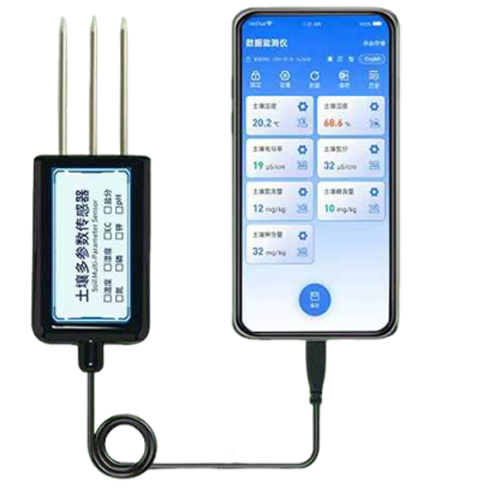
In the system, field and plant sensors provide evidence to a logger, irrigation controller or farm platform; they do not replace the crop model, operating threshold or agronomic decision rule. The system integrator is expected to draw this path before the order is placed: measurement point, cable, surge protection or junction, logger channel, communication network, database field and alarm destination. For plant growth sensor, a live number on a display is merely the first check. For plant growth sensor, the project requires the value must carry the correct unit, timestamp, Modbus address and status through the entire data path.
| Parameter | Reference requirement | Why it matters |
|---|---|---|
| Measurement range for plant growth sensor | Model-dependent; state normal, peak and required resolution | Do not select by parameter name alone |
| Measurement accuracy for plant growth sensor | Use the proposed model datasheet and define field acceptance separately | Catalogue accuracy is not the whole system uncertainty |
| Supply voltage for plant growth sensor | Confirm sensor, logger and remote power configuration | Check cable voltage drop and battery autonomy |
| Output signal for plant growth sensor | RS485 Modbus RTU is useful for distributed fixed sensors, while handheld devices support scouting, commissioning and reference surveys | Request wiring and protocol documents before panel work |
| Power consumption for plant growth sensor | Use maximum current for power budgeting, not only typical draw | Include modem and heater duty where applicable |
| Protection and temperature for plant growth sensor | Match enclosure, probe and connector ratings to the site | The lowest-rated exposed part controls field suitability |
| Cable and wetted material for plant growth sensor | Specify length, sheath, connector and exposed material by medium | Confirm chemical, UV and mechanical compatibility |
A key limitation is that representative coverage across varieties, growth stages, soil zones and management blocks is more useful than one convenient point. The plant growth sensor acceptance plan should assess instrument verification separately from site representativeness. The plant growth sensor commissioning record should capture mounting geometry, initial readings, comparison method, configuration and environmental conditions. If a plant growth sensor result changes later, the handover file should help distinguish a real event from movement, fouling, configuration drift or communication loss.
| Application | Field challenge | System integration approach | User value |
|---|---|---|---|
| Smart Irrigation | Spatial variation and limited maintenance access | Deploy plant growth sensor at a representative point and document the location | Produces data that can support an operating decision |
| Crop Microclimate for plant growth sensor | Existing PLC or RTU must accept the signal | Confirm output, register map, cable route and grounding before wiring | Reduces commissioning rework |
| Fertigation for plant growth sensor | Seasonal exposure changes the measurement condition | Use inspection records and seasonal comparison checks | Protects continuity and makes drift visible |
| Plant Growth And Stress Observation for plant growth sensor | Procurement scope is split between supplier and contractor | Issue a bill of materials with explicit inclusions and exclusions | Makes quotations comparable and limits site additions |
For ongoing operation, describe plant growth sensor as a measuring point with an operating purpose. The plant growth sensor responsibility matrix should identify the supplier of the field device, logger, power system, mounting parts and communication service, plus ownership of platform configuration and commissioning. NiuBoL can confirm the plant growth sensor interface and documents after receiving the site conditions, expected range, cable distance and data destination. A defined plant growth sensor supply boundary is more useful than a general claim that the equipment is easy to install.
| RFQ item | Information to provide | Cost or risk controlled |
|---|---|---|
| Application | Purpose and site for plant growth sensor | Prevents wrong product family |
| Measurement for plant growth sensor | Normal, alarm and peak range; required interval | Avoids under-range or needless overspecification |
| Integration for plant growth sensor | PLC/RTU/logger model, signal and protocol | Reduces panel rework |
| Mechanical for plant growth sensor | Mounting, depth or height, cable route and material exposure | Defines accessories and serviceability |
| Supply scope for plant growth sensor | Sensor only or complete station; documents and spares | Makes prices comparable |
| Commercial for plant growth sensor | Quantity, destination, delivery target and packing | Supports a realistic quotation |
Do not specify plant growth sensor solely because a similar device appeared in a tender or an earlier project. A plant growth sensor configuration is unsuitable when the point is unrepresentative, service access is unsafe or the owner has no defined response to the result. For plant growth sensor, representative coverage across varieties, growth stages, soil zones and management blocks is more useful than one convenient point. If the proposed plant growth sensor point is not representative or serviceable, relocate it, revise the method, add justified conditioning or complete a portable survey before permanent installation.
For plant growth sensor, choosing the output interface after the control cabinet is built creates avoidable converter, rewiring and programming work. The plant growth sensor model, power demand and output must be frozen early enough for the integrator to allocate terminals, protection, addresses and data fields. Where the plant growth sensor host has only analog inputs, confirm the exact 4-20 mA scaling for the selected model. Where plant growth sensor uses RS485 Modbus RTU, obtain the register addresses, data types, scaling and engineering units before controller programming. For plant growth sensor, a protocol label alone does not establish plug-and-play interoperability.
Before deployment, verify the selected sensor with its logger and confirm resolution, direction of change, time synchronization and export. In the field, record plant identity, mounting pressure, reference point, initial reading and available travel. Acceptance should show that a controlled mechanical change is recorded consistently without restricting natural growth.
For plant growth sensor, do not close acceptance with a screenshot alone. The plant growth sensor handover record should capture serial and configuration details, field position, cable and terminal information, Modbus settings, the first comparison result, platform tag and the routine-inspection owner. Recording these plant growth sensor details during commissioning avoids reconstructing device identity, wiring and configuration after a fault.
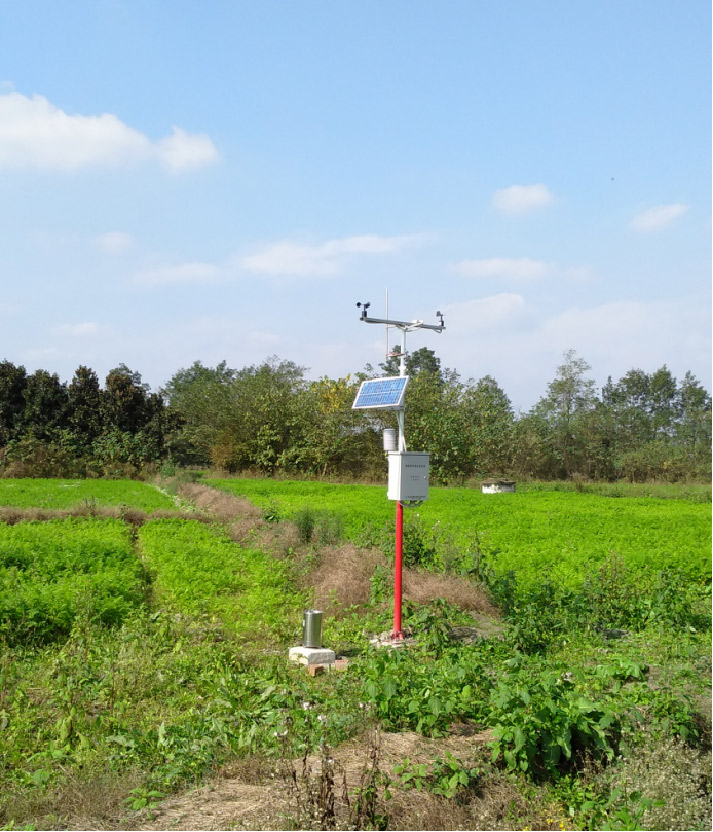
A1: Before specifying plant growth sensor, establish the operating decision, normal and peak conditions, installation point, data interval, required output, cable distance and acceptance method. For plant growth sensor, the completed RFQ fields distinguish a field sensor, a portable verification instrument and a complete monitoring station.
A2: The selected plant growth sensor can connect when the selected product provides the required interface. For plant growth sensor, RS485 Modbus RTU suits distributed fixed points, while handheld instruments serve scouting, commissioning and reference surveys. Before commissioning plant growth sensor, obtain the wiring definition, communication settings, register map, data type, scaling and engineering units.
A3: For plant growth sensor, representative coverage across varieties, growth stages, soil zones and management blocks is more useful than one convenient point. For the plant growth sensor measuring point, buyers should treat installation and field representativeness as part of measurement quality instead of assuming the sensor specification covers the whole station.
A4: For plant growth sensor, when comparing plant growth sensor quotations, normalize the scope first: model, range, accuracy statement, output, cable, mounting, logger, gateway, platform, power, documents, spare parts, packing and delivery terms. For plant growth sensor, compare a probe-only offer separately from a system price that includes mounting, power, logging, communication and commissioning.
A5: A comparable quotation should state the number of plants and replicates, sensor range, mounting fixtures, cable, logger channels, power, time synchronization, data export and commissioning. List replacement mounts, reference tools and field installation separately from the sensing element.
A6: For plant growth sensor, check installation photos, mechanical stability, power, online reading, unit, timestamp, output signal, platform record and a defined comparison or functional test. Archive the plant growth sensor configuration and first complete day of data with the handover file as the operating baseline.
A7: For a plant growth sensor inquiry, provide species, organ or stem being measured, initial dimension, expected growth range and rate, study duration, sampling interval, mounting geometry, logger interface, cable, power, number of replicates, site photographs and required export format.
A8: When integrating plant growth sensor, name the party responsible for inspection, cleaning, calibration or comparison, consumables, communication service and data review. Set an initial plant growth sensor service interval and revise it when site records justify a change.

A defensible plant growth sensor specification connects the measuring environment, measurement principle, system interface, installation method, maintenance plan and acceptance evidence. Mounting pressure, thermal expansion, growth range and a stable reference point must be controlled before small stem changes are interpreted. A complete plant growth sensor brief lets buyers compare equivalent supply scopes and gives NiuBoL enough site information to confirm a suitable device or station configuration without assigning unsupported functions to one instrument.
Prev:Illuminance Sensor Commissioning: PLC Acceptance Test Procedure
Next:Smart Fertigation System: Control Architecture and Installation Guide
Related recommendations
Sensors & Weather Stations Catalog
 Agriculture Sensors and Weather Stations Catalog-NiuBoL.pdf
Weather Stations Catalog-NiuBoL.pdf
Agriculture Sensors Catalog-NiuBoL.pdf
Water Quality Sensor Catalog-NiuBoL.pdf
Related products
Combined air temperature and relative humidity sensor TDR Soil Moisture & Temperature Sensor for irrigation| RS485 |4-20mA| NBL-S-THR
 Soil pH sensor RS485 soil Testing instrument soil ph meter for agriculture |NBL-S-PH
 Wind Speed sensor Output Modbus/RS485/Analog/0-5V/4-20mA
 Tipping bucket rain gauge for weather monitoring auto rainfall sensor RS485/Outdoor/stainless steel
 Pyranometer Solar Radiation Sensor 4-20mA/RS485

Screenshot, WhatsApp to identify the QR code
WhatsApp number:+8615367865107
(Click on WhatsApp to copy and add friends)

