





— Blogs —
—Products—
 Consumer hotline +8618073152920
 WhatsApp:+8615367865107
Address:Room 102, District D, Houhu Industrial Park, Yuelu District, Changsha City, Hunan Province, China
Product knowledge
Time:2026-06-26 10:15:20 Popularity:179
A portable soil tester is used when agronomists, farm managers or researchers need fast soil condition measurements without building a fixed station at every point. It can measure soil temperature, moisture, pH, salinity and electrical conductivity depending on the selected probe configuration, display values on screen and store records for later export.
For buyers, the main advantage is field flexibility. A handheld tester can be carried across plots, greenhouses, nurseries, forestry sites and research areas. It supports spot checks, sampling campaigns, troubleshooting and comparison between different locations.
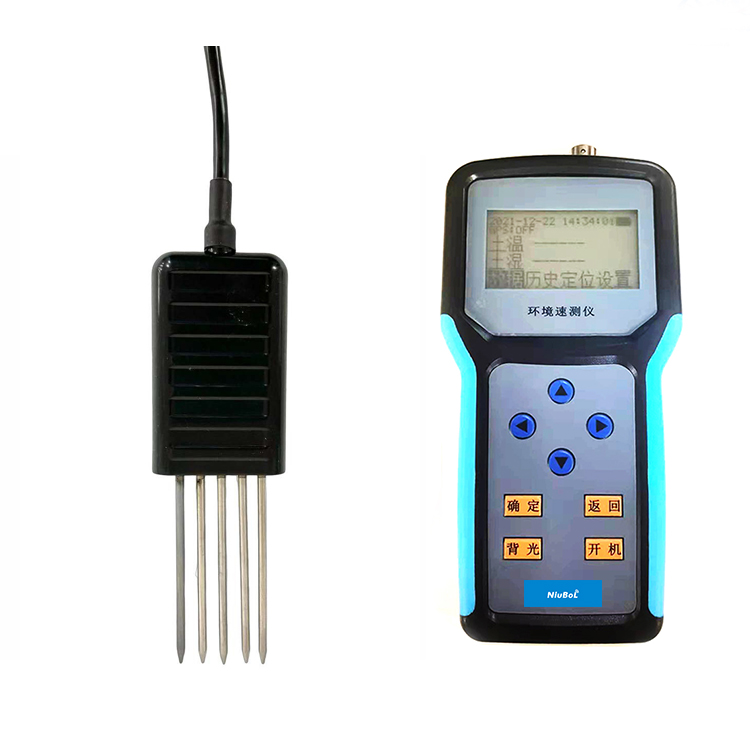
Fixed monitoring stations are useful for continuous data, but many projects also need mobile measurement. A buyer may need to compare several fields before installation, check whether a greenhouse bed has abnormal salinity, verify irrigation effect after a field visit, or collect soil data for research. A portable soil tester is useful in those situations because it is not tied to one station point.
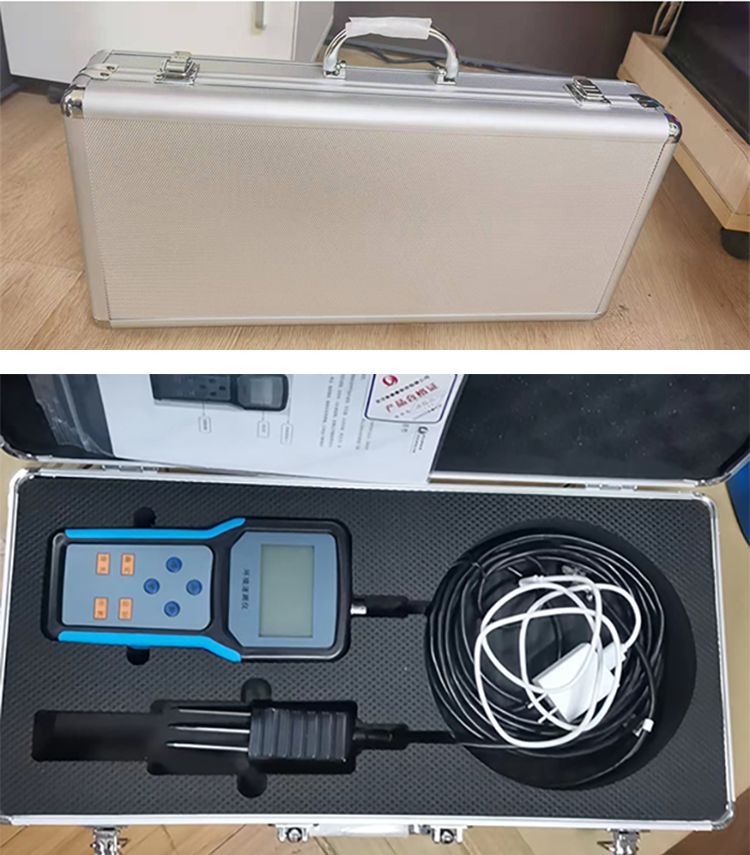
The instrument described in the material includes a handheld host, soil temperature and moisture sensor, salinity sensor, pH meter, USB data cable and portable case. It can record data internally and download records to computer software for curve generation, printing or Excel storage.
The portable tester belongs to the mobile inspection layer. It does not replace online monitoring, but it complements it. A station gives continuous data at fixed points; a handheld tester helps technicians investigate more points during a site visit. In many projects, both are useful: stations for trend monitoring, handheld testers for verification and diagnosis.
For distributors, the tester can be offered to farms, forestry projects, geology surveys, plant cultivation sites and research teams. Buyers should define which parameters are required before ordering because probe configuration affects price and use method.
USB export is useful when the buyer needs computer-based data backup and analysis. Some configurations can use GPRS or 4G modules for wireless transmission to a phone or computer network. The purchase decision should be based on whether the user needs offline field records, office analysis or remote data upload.
Manual and automatic recording modes serve different tasks. Manual mode is suitable for point-by-point inspection. Automatic interval recording is suitable for leaving the instrument at a position for a defined observation period.
| Parameter | Reference Value | Engineering Note |
|---|---|---|
| Measured parameters | Soil temperature, moisture, salinity, conductivity and pH by configuration | Select probe set according to crop and soil decision |
| Soil temperature | -50 to 80℃, resolution 0.1℃, accuracy ±0.5℃ | Field root-zone temperature and environmental reference |
| Soil moisture | 0 to 100%, resolution 0.1%RH, accuracy ±3%RH | Irrigation and soil water status check |
| Soil salinity | 0 to 8000 mg/L, resolution 1 mg/L, accuracy ±50 mg/L | Salinity risk and soil amendment reference |
| Soil conductivity | 0 to 10 mS/cm, resolution 0.01 mS/cm, accuracy ±5% | Nutrient/salinity trend reference |
| Soil pH | 0 to 14 pH, resolution 0.01 pH, accuracy ±0.02 pH | Acidity and crop suitability evaluation |
| Power supply | 4000 mAh lithium battery | Portable field use |
| Communication | USB; wireless GPRS/4G optional by configuration | Data export and remote transfer |
| Storage | Material lists 20,000 records; selected series may support larger storage by model | Confirm storage capacity on final model quotation |
| Working environment | -20 to 80℃; 5%RH to 95%RH | Field use and storage planning |
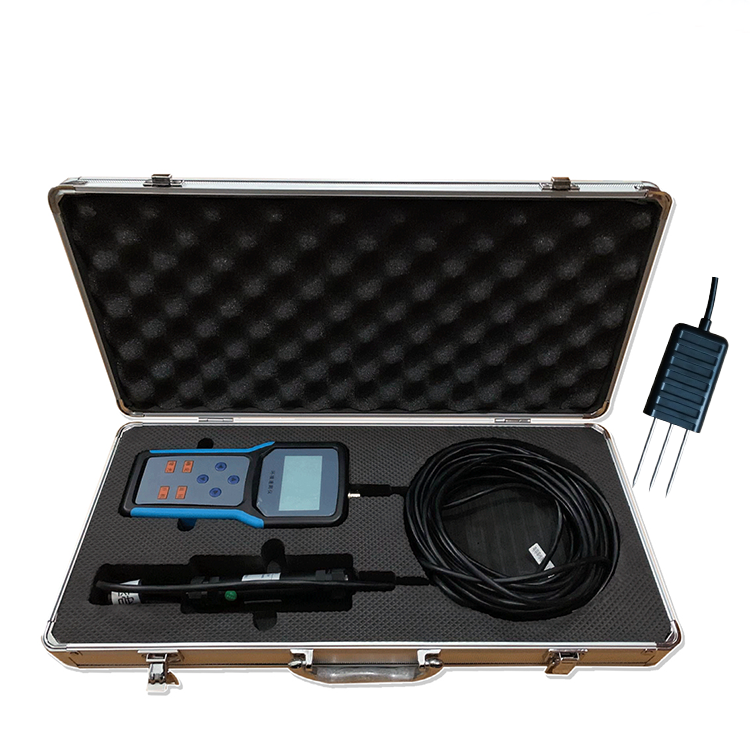
Site challenge: Several plots may have different moisture, salinity and pH conditions.
System integration scheme: Use a handheld tester to collect point measurements during agronomic inspection.
User value: Managers can identify abnormal blocks before selecting irrigation or amendment actions.
Site challenge: One bed may show poor crop performance while fixed sensors are installed elsewhere.
System integration scheme: Measure moisture, pH and conductivity at suspected positions.
User value: Technicians can quickly check whether root-zone condition differs from normal beds.
Site challenge: Researchers need repeated measurements at multiple sampling points.
System integration scheme: Use manual recording, GPS-enabled configurations and USB export.
User value: Data can be analyzed, graphed and stored with sampling notes.
Site challenge: The project owner may not know where representative monitoring points should be placed.
System integration scheme: Use the portable tester to survey soil variation before station installation.
User value: The later fixed station layout becomes more defensible.
Choose parameters based on the field decision: moisture for irrigation, pH for acidity, EC/salinity for salt or nutrient concerns.
Confirm whether the user needs manual records, automatic interval records or wireless upload.
Check battery capacity, storage capacity and data export software before purchase.
Ask whether probes are interchangeable and whether different parameter probes affect accuracy.
For field teams, include a portable case, USB cable, software and operation training in the package.
A portable tester does not normally act as a permanent control sensor. It provides inspection data. If the buyer needs automatic irrigation control, fixed soil sensors and a controller should be selected. If the buyer needs field research or quick soil diagnosis, a portable tester is often more efficient.
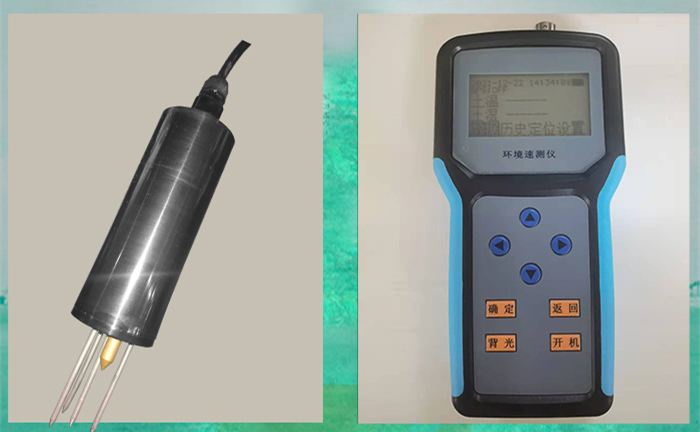
A portable soil tester is most valuable before a fixed system is designed, during field inspection, or when a crop problem needs diagnosis. It allows technicians to compare several positions quickly. If one greenhouse bed has poor growth, or one field block shows salinity stress, the tester helps confirm whether soil condition is different from nearby normal areas.
The instrument should be used with a sampling method. Random readings without position notes are difficult to interpret. A practical workflow records field name, depth, crop, date, weather condition and measurement point. When records are exported through USB software, the data becomes useful for reports and later comparison.
For distributors and project engineers, the portable tester can also be used before a fixed sensor network is proposed. A short field survey with moisture, pH, salinity and conductivity readings helps identify whether the future project needs only irrigation monitoring or also soil amendment, salinity control and fertigation review. This reduces the risk of specifying a permanent system with missing parameters.
Choose moisture and temperature for irrigation inspection.
Add pH when crop suitability or soil amendment is part of the decision.
Add salinity and conductivity for greenhouse, coastal, fertigation or saline soil projects.
Confirm whether the buyer needs manual recording, automatic interval recording or wireless upload.
Check whether software can export Excel data and generate curves for reporting.
Measuring only one point and assuming it represents the whole field.
Comparing pH or EC values from different depths without recording depth.
Using a portable tester as if it were a permanent control sensor.
Forgetting to back up records after field work.
For procurement, the supplier should know the required parameters, expected number of field users, whether English menu operation is needed, and whether GPS or wireless upload is required. This avoids choosing a low-cost device that cannot support the buyer reporting workflow.
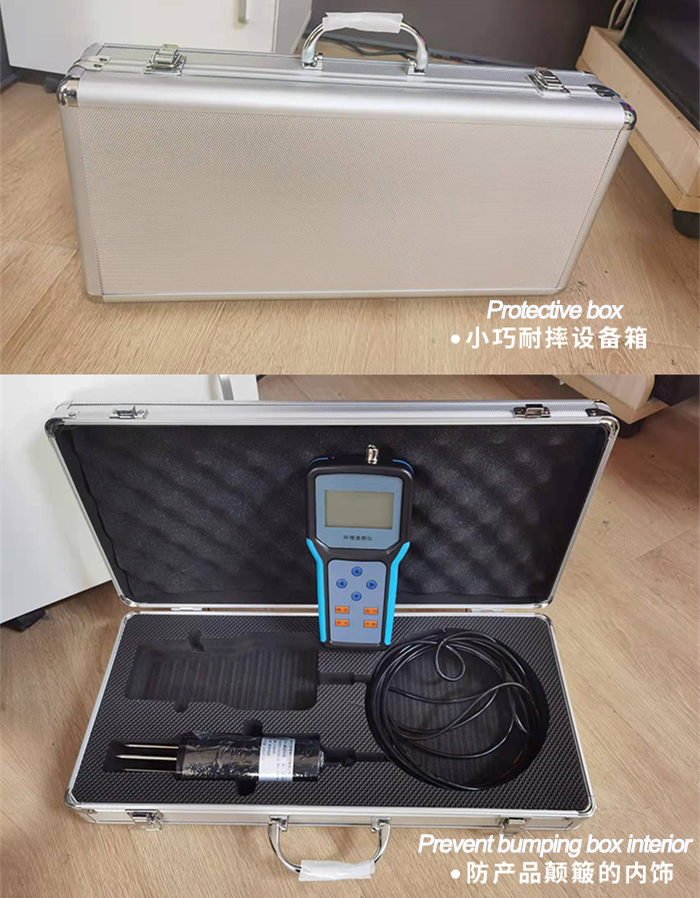
A portable soil tester should be checked with the actual probe set ordered by the buyer. The field team should confirm that temperature, moisture, pH, salinity or conductivity values display correctly, that records can be saved, and that the USB export software can read the stored data. If the instrument has automatic interval recording, that mode should be tested before field delivery.
Because portable testing is often used by several technicians, operation training is part of acceptance. Users should understand how to name sampling points, clean probes, avoid cross-contamination and export records. Otherwise, the instrument may collect data that cannot be compared later.
Required parameters and expected measurement environment.
Number of field users and whether English menu operation is required.
Whether GPS, wireless upload or only USB export is needed.
Whether the tester is for farm inspection, research sampling or dealer demonstration.
A: It is used for rapid field measurement of soil temperature, moisture, pH, salinity and conductivity, helping users compare soil conditions across different locations.
A: Yes. A handheld tester is mobile and inspection-oriented, while a fixed station provides continuous data from installed points.
A: Yes. It can store measurement records internally and export data through computer software for curves, reports or Excel files.
A: Include pH when crop suitability, acidity correction or soil amendment decisions are part of the project.
A: Use salinity or conductivity measurement when salt accumulation, fertilizer residue or nutrient trend is a management concern.
A: Yes. Portable soil testers are suitable for agriculture, forestry, geology, plant cultivation, environmental investigation and scientific research.
A: Confirm parameter set, probe type, storage capacity, export method, software language, battery capacity and carrying case requirements.
A: Some configurations can use GPRS or 4G modules. Buyers should confirm the required communication option before purchase.
A: It provides point or interval inspection data. For automatic control or long-term unattended monitoring, fixed sensors and collectors are more suitable.
A: NiuBoL provides portable soil testers and soil sensors for field inspection, research and agricultural management applications.
A portable soil tester is most useful when buyers need flexible, multi-point soil measurement. It helps field teams diagnose soil moisture, pH, salinity and conductivity conditions before making irrigation, planting or amendment decisions. The right configuration depends on the parameters, data handling method and field workflow.
Related recommendations
Sensors & Weather Stations Catalog
 Agriculture Sensors and Weather Stations Catalog-NiuBoL.pdf
Weather Stations Catalog-NiuBoL.pdf
Agriculture Sensors Catalog-NiuBoL.pdf
Water Quality Sensor Catalog-NiuBoL.pdf
Related products
 Combined air temperature and relative humidity sensor
 TDR Soil Moisture & Temperature Sensor for irrigation| RS485 |4-20mA| NBL-S-THR
 Soil pH sensor RS485 soil Testing instrument soil ph meter for agriculture |NBL-S-PH
 Wind Speed sensor Output Modbus/RS485/Analog/0-5V/4-20mA
 Tipping bucket rain gauge for weather monitoring auto rainfall sensor RS485/Outdoor/stainless steel
 Pyranometer Solar Radiation Sensor 4-20mA/RS485

Screenshot, WhatsApp to identify the QR code
WhatsApp number:+8615367865107
(Click on WhatsApp to copy and add friends)

