





— Blogs —
—Products—
 Consumer hotline +8618073152920
 WhatsApp:+8615367865107
Address:Room 102, District D, Houhu Industrial Park, Yuelu District, Changsha City, Hunan Province, China
Product knowledge
Time:2026-06-26 10:15:19 Popularity:201
A soil moisture monitoring station is a field tool for making irrigation and drought decisions from measured root-zone data. For large agricultural bases, pastures, forestry sites and greenhouse projects, visual inspection is not enough. Soil may look dry at the surface while deeper soil still contains usable water, or it may look wet after rain while the crop root zone remains short of water.
NiuBoL soil moisture monitoring stations can collect soil temperature, soil moisture, conductivity and pH values according to configuration, then upload data to a platform or mobile application. The value for buyers is not a single sensor reading; it is a continuous record that helps decide when to irrigate, where drought is developing and whether the soil condition still supports crop growth.
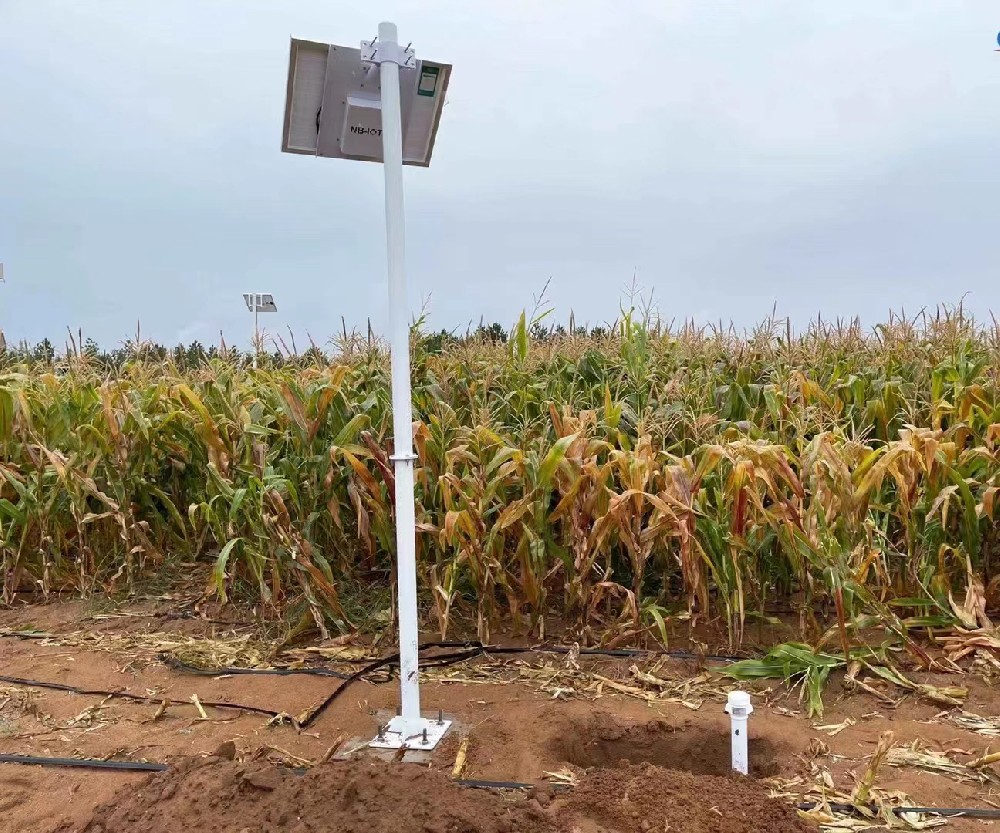
Modern agriculture needs irrigation decisions that are more accurate than a fixed calendar. Spring sowing, drought relief, greenhouse production and pasture management all depend on soil water status. If moisture is insufficient during sowing, emergence can be poor. If irrigation is excessive, water and fertilizer may be wasted and root-zone aeration can decline.
For agricultural integrators and project buyers, the station should be planned as a small monitoring system: buried probes, collector, communication, power supply, platform and alert logic. This is why system compatibility and installation records matter as much as the probe itself.
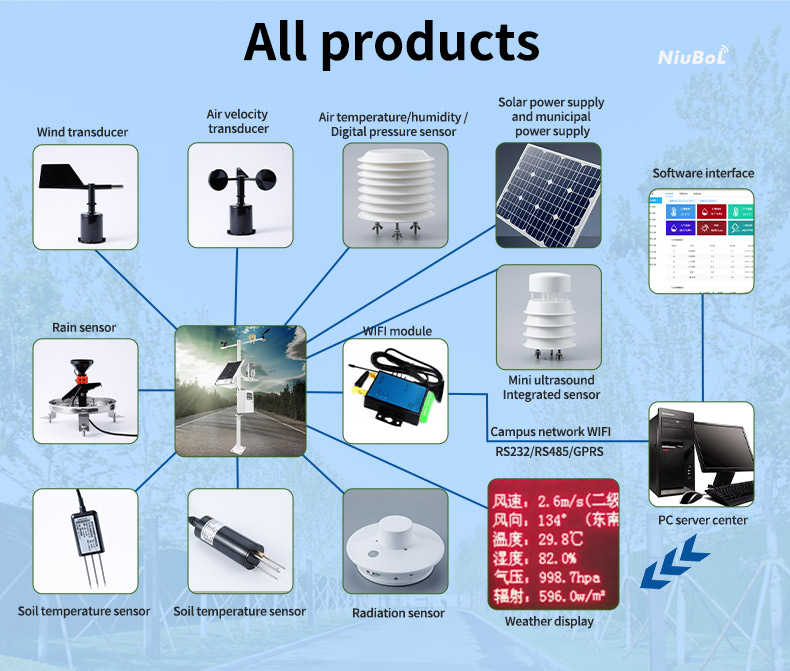
The sensor layer measures soil water and temperature. The collector reads values and uploads them through wired or wireless communication. The platform stores curves, sends alerts and supports comparison between monitoring points. In a farm IoT project, the soil moisture station may also provide input for irrigation control, fertigation scheduling or drought reporting.
Soil temperature and moisture sensors are normally installed at representative crop root depths. In large fields, several stations may be required because soil texture, slope, irrigation block and crop stage can vary. A good project records sensor depth, field block, soil type and crop name during commissioning.
RS485 and Modbus RTU output are useful because soil stations often need to connect to data collectors, gateways, irrigation controllers or third-party platforms. For analog control cabinets, 4-20mA or 0-5V output may be selected on compatible models. The integrator should confirm address, baud rate, register map and scaling before wiring the station.
Wireless upload and SMS reminders are valuable for farms where staff cannot inspect every field. The alert should be tied to crop stage and soil type, not only to a generic moisture number.
| Parameter | NiuBoL Reference Value | Engineering Note |
|---|---|---|
| Measured parameters | Soil temperature and soil moisture; optional EC, pH and salinity by configuration | Select according to irrigation, drought or soil condition objective |
| Soil temperature range | NBL-S-TM: -40 to 80℃; NBL-S-THR: -50 to 100℃ | Root-zone temperature trend and seasonal analysis |
| Soil moisture range | 0 to 100% | Volumetric water content reference for irrigation and drought response |
| Resolution | Temperature 0.1℃; soil moisture 0.1% | Suitable for trend analysis and threshold setting |
| Accuracy | Temperature ±0.5℃; moisture ±5% for NBL-S-TM or ±3% for NBL-S-THR | Confirm model accuracy before tender or project purchase |
| Supply voltage | DC 5-24V for NBL-S-TM; DC 12-24V for NBL-S-THR | Match collector or field cabinet power supply |
| Output signal | RS485 / Modbus; NBL-S-THR also supports 4-20mA and 0-5V options | Choose according to gateway, PLC or data logger |
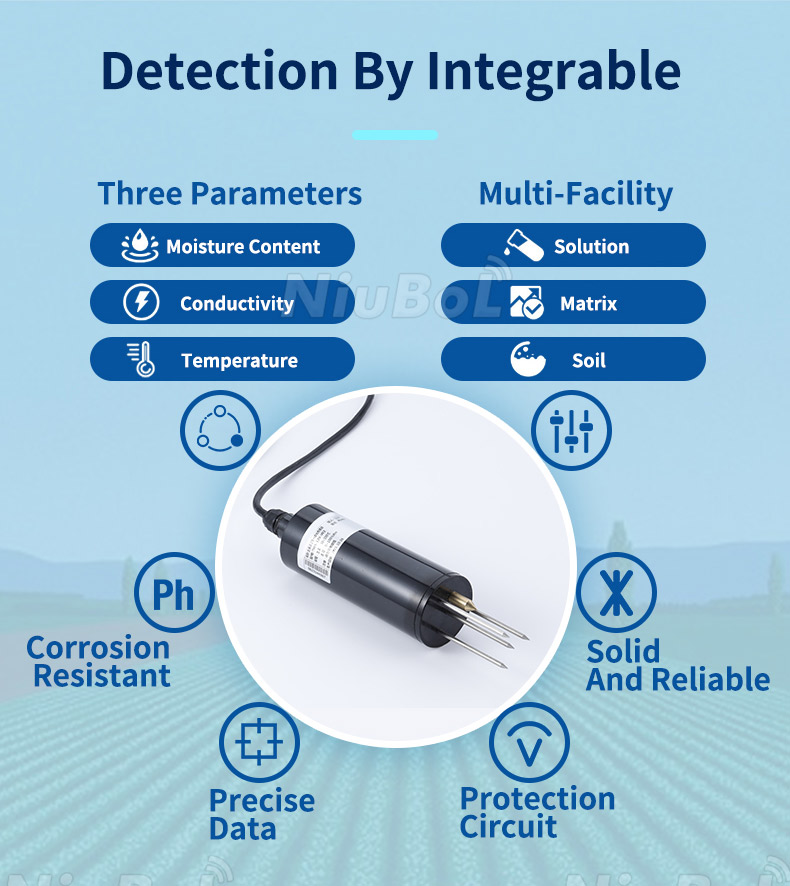
| Measurement principle | FDR method / dielectric constant measurement | Reflects soil water content through soil dielectric response |
| Protection level | IP68 | Suitable for buried soil installation and long-term field monitoring |
| Cable length | 5 m default for NBL-S-TM; custom cable length available by requirement | Define installation depth and cabinet distance before ordering |
Site challenge: A single visual inspection cannot represent several fields with different irrigation blocks.
System integration scheme: Install soil moisture stations by representative crop block and upload data to a platform.
User value: Managers can compare fields and irrigate where water deficit is actually developing.
Site challenge: Low soil moisture during sowing may delay emergence or reduce seedling uniformity.
System integration scheme: Use soil moisture and temperature records before sowing and after rainfall.
User value: Growers can choose better sowing windows and avoid unnecessary irrigation.
Site challenge: Drought response needs evidence of soil water deficit across monitored areas.
System integration scheme: Deploy solar-powered monitoring points and review moisture trends by location.
User value: Decision teams can prioritize irrigation resources instead of reacting only to visible crop stress.
Site challenge: Controlled air climate can hide substrate or soil water stress.
System integration scheme: Install sensors in representative beds or pots and connect data to irrigation decisions.
User value: Operators maintain root-zone stability and reduce manual checking.
Select sensor depth by crop root zone and management objective.
Use multi-point monitoring when fields differ by soil type, slope or irrigation block.
Choose RS485 Modbus when data must enter a collector, platform or irrigation controller.
Protect cables from machinery, rodents and long-term water exposure.
After installation, compare soil response after irrigation or rainfall before finalizing thresholds.
Record sensor position, depth, soil type, crop and cable route in the handover document.
A soil moisture station should not be accepted only by seeing numbers on a screen. The commissioning test should confirm sensor address, units, platform field names and whether values respond reasonably after soil wetting. If data will control irrigation, manual override and hydraulic safety checks are still required.
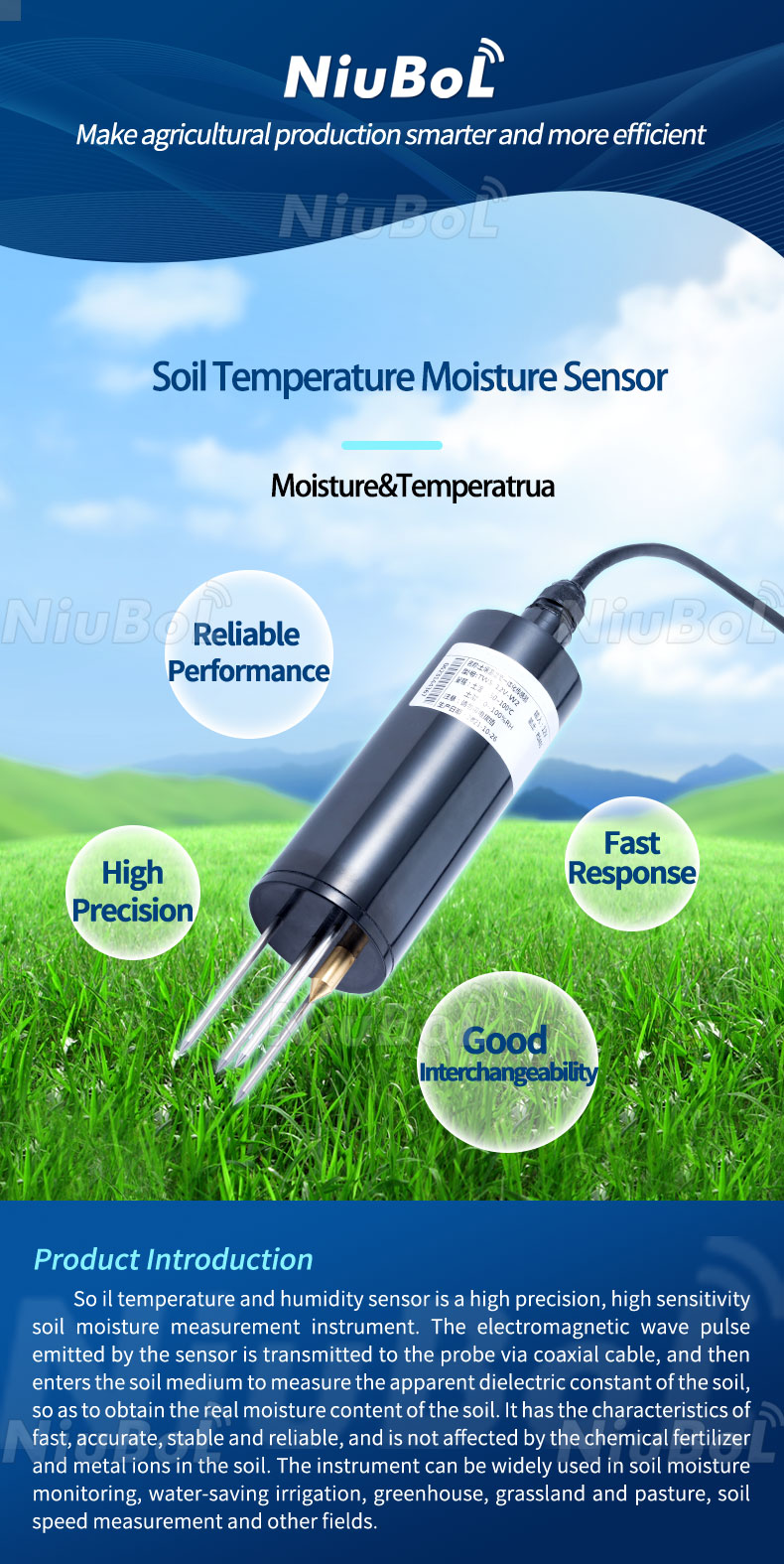
A soil moisture monitoring station should be configured around the decision it supports. For irrigation scheduling, the key value is the change in root-zone moisture before and after irrigation. For drought response, the key value is the trend across monitoring points and depths. For greenhouse management, the key value is whether substrate or bed moisture stays within the crop working range.
The buyer should not use one moisture threshold for every crop and soil. Sandy soil drains faster than clay soil, and young crops have a different effective root zone than mature crops. During commissioning, the first irrigation or rainfall event should be used to check whether the sensor depth and threshold are reasonable.
Define crop type, root depth and irrigation method before choosing sensor depth.
Use multi-point monitoring when soil type, slope or irrigation block changes.
Confirm whether moisture alone is enough or temperature, EC and pH are also needed.
Choose RS485 Modbus if data must enter an irrigation controller or third-party platform.
Record station coordinates, cable route and probe depth for later maintenance.
Buying one station for a large non-uniform farm and treating it as representative.
Installing probes without documenting depth and soil type.
Using online data for control before checking field hydraulic response.
Ignoring cable protection in areas with machinery, rodents or long-term water accumulation.
For a useful quotation, the buyer should provide field size, crop type, soil texture, irrigation block layout, power availability, platform requirement and whether the station must send alerts. These details help the supplier select probe quantity, cable length, collector type and communication method.
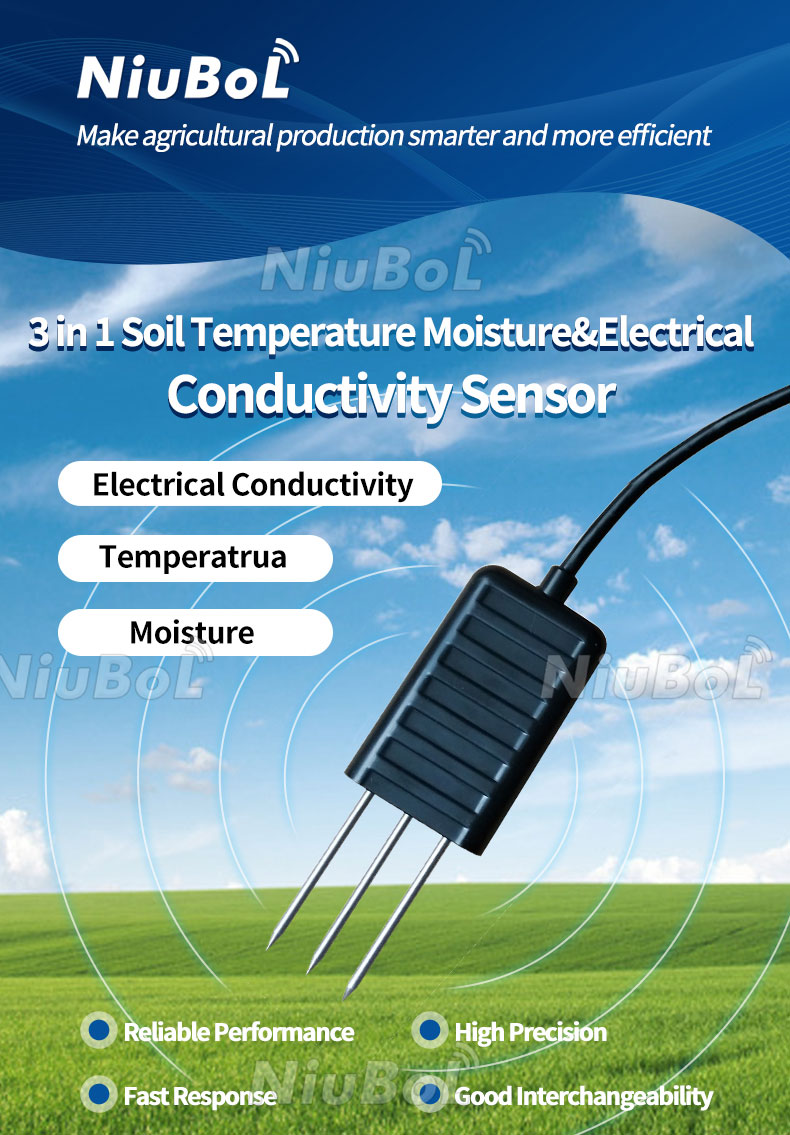
Acceptance should include more than a login screenshot. The project team should verify that each probe appears under the correct station name, that the unit is clear, and that values change reasonably after irrigation or rainfall. If the station will support irrigation control, the irrigation event should be recorded together with the moisture response.
For long-term use, the owner should build a simple maintenance file. It should include installation depth, field block, crop type, cable route, sensor address, collector ID and platform login. When a value becomes abnormal months later, these records help determine whether the cause is soil change, cable damage, probe movement or communication failure.
Crop type and expected root depth.
Field size, number of irrigation blocks and soil texture.
Whether the station needs solar power, mobile alerts or platform map display.
Whether data will be used only for monitoring or also for irrigation control.
A: It measures soil water status and usually soil temperature. Depending on configuration, it can also include soil EC, salinity or pH for a broader soil condition view.
A: RS485 Modbus allows several sensors or stations to connect with data collectors, gateways and irrigation controllers using a defined register map and stable field communication.
A: The number depends on field size, soil type, crop distribution and irrigation zones. One station is suitable only when the area is representative and relatively uniform.
A: Multi-depth installation is useful for deeper-root crops and drought analysis because surface wetting does not always mean root-zone recharge.
A: Yes, if connected to a compatible controller, but thresholds, hydraulic design, valve grouping and manual override must be reviewed before automatic control.
A: Compare measurement range, accuracy, output signal, supply voltage, protection level, cable length, probe material and supported protocol.
A: Loose soil contact around the probe, wrong depth, unprotected cable and unrecorded station position can all reduce data credibility.
A: It provides continuous soil moisture trends so managers can identify water deficit earlier and allocate irrigation resources more rationally.
A: A quotation should include sensors, collector, power supply, communication method, platform function, mounting accessories, cable length and installation guidance.
A: NiuBoL provides soil moisture and temperature sensors, soil monitoring station components and integration options for irrigation, drought response and smart agriculture projects.
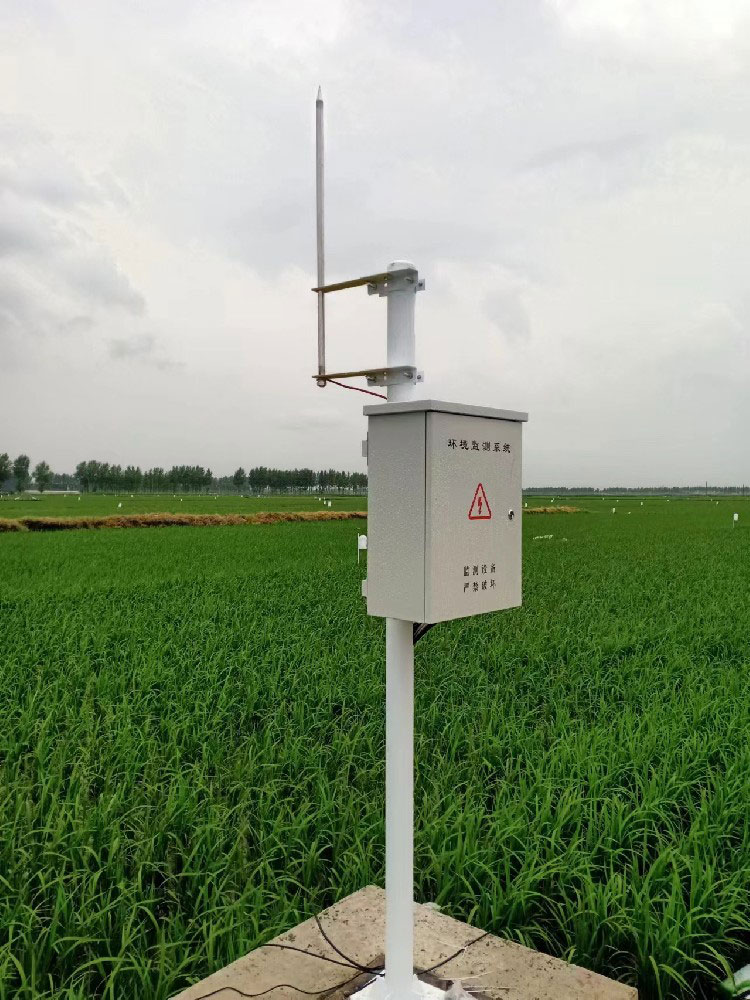
A soil moisture monitoring station is valuable when it connects sensor readings with irrigation and drought decisions. Buyers should select sensor depth, communication method and platform functions according to crop and field conditions. NiuBoL soil monitoring products such as NBL-S-TM and NBL-S-THR provide practical options for RS485-based agricultural monitoring systems.
Prev:Automatic Weather Station Monitoring Range: How to Select Station Spacing for Different Sites
Next:Portable Soil Tester Performance Features: Field Measurement, Data Storage and Procurement Guide
Related recommendations
Sensors & Weather Stations Catalog
 Agriculture Sensors and Weather Stations Catalog-NiuBoL.pdf
Weather Stations Catalog-NiuBoL.pdf
Agriculture Sensors Catalog-NiuBoL.pdf
Water Quality Sensor Catalog-NiuBoL.pdf
Related products
 Combined air temperature and relative humidity sensor
 TDR Soil Moisture & Temperature Sensor for irrigation| RS485 |4-20mA| NBL-S-THR
 Soil pH sensor RS485 soil Testing instrument soil ph meter for agriculture |NBL-S-PH
 Wind Speed sensor Output Modbus/RS485/Analog/0-5V/4-20mA
 Tipping bucket rain gauge for weather monitoring auto rainfall sensor RS485/Outdoor/stainless steel
 Pyranometer Solar Radiation Sensor 4-20mA/RS485

Screenshot, WhatsApp to identify the QR code
WhatsApp number:+8615367865107
(Click on WhatsApp to copy and add friends)

