





— Blogs —
—Products—
 Consumer hotline +8618073152920
WhatsApp:+8615367865107
Address:Room 102, District D, Houhu Industrial Park, Yuelu District, Changsha City, Hunan Province, China
Product knowledge
Time:2026-08-11 09:02:00 Popularity:223
Quick Answer: A pyranometer price is meaningful only when the offer identifies the sensing method, performance specification, calibration, output and installed accessories. Compare a raw thermopile instrument, a powered transmitter and a complete radiation monitoring point separately. NiuBoL quotations should be matched to the required measurement plane and logger input; a low sensor-only price can omit items needed to obtain usable irradiance data.

A buyer may need global horizontal irradiance for a weather station, plane-of-array irradiance beside photovoltaic modules, or a radiation input for an agricultural calculation. These uses can share an instrument family but not necessarily the same mounting or project acceptance requirements. Establish the measured quantity before asking suppliers to compare models.
The sensor technology matters because detectors do not all respond to the solar spectrum in the same way. A thermopile pyranometer and a silicon reference device should not be treated as identical merely because both report W/m2. Compare the intended use, spectral response, angular response, temperature behavior and uncertainty requirement, not only the displayed unit.
Performance classification, when a project requires it, should be supported for the actual offered model and version. Do not infer an ISO 9060 class from a double dome, metal housing or a product name containing “precision.” Ask for the applicable classification and calibration information, then check that they satisfy the project's procurement specification.
| Quotation item | What to identify | Why offers can differ |
|---|---|---|
| Detector and body | Model, sensing principle, range and relevant performance characteristics | Similar-looking instruments may have different response and stability. |
| Signal conditioning | Raw thermopile, voltage, current or digital version | A raw signal may need a different logger input or additional conditioning. |
| Calibration | Individual sensitivity, certificate content, uncertainty and date as required | A generic test statement is not necessarily an individual calibration record. |
| Field installation | Leveling or tilted mount, cable, connector and mechanical support | Sensor-only offers may exclude usable mounting and outdoor cable routing. |
| Acquisition | Logger input, power supply, storage and communication if required | An RS485 sensor does not include a remote monitoring station. |

The NBL-W-HPRS thermopile option provides a specific set of characteristics for an equipment comparison. The values below apply to that option; they do not establish one specification for every radiation instrument in the NiuBoL range or prove a particular project classification.
| NBL-W-HPRS characteristic | Value | Effect on selection |
|---|---|---|
| Irradiance range | 0-2000 W/m2 | Check the expected measurement and the logger's engineering scale. |
| Spectral range | 0.3-3 micrometers | This is broadband shortwave solar measurement, not a separate UV or longwave channel. |
| Response | 99% response within 35 seconds | Do not price it as a fast-response instrument solely because a logger polls rapidly. |
| Nonlinearity and stability | Nonlinearity no more than 2%; annual stability within +/-2% | Neither figure alone is a complete installed measurement uncertainty. |
| Temperature | Operating -40 to +50 degrees C; temperature characteristic +/-2% over -10 to +40 degrees C | Separate operating limits from the range of a stated performance characteristic. |
| Powered versions | 12 V DC or 24 V DC; ordered 4-20 mA, 0-5 V or RS485 output | Specify the version; do not assume all outputs are simultaneously available. |
| Raw sensitivity | Individual sensitivity within 7-14 microvolts per W/m2 | Use the individual coefficient and suitable low-level signal acquisition. |
| Cable, consumption and protection | Standard cable length 2.5 m; jacket, powered-version consumption and enclosure rating to be confirmed for the offer | Do not substitute assumed cable materials or a generic IP rating for ordered details. |
For an illustrative raw-signal calculation, a sensitivity of 10 microvolts per W/m2 at 800 W/m2 produces 8000 microvolts, or 8 mV. The sensitivity in this example is an assumption, not the coefficient of a particular instrument. A logger expecting a 0-5 V transmitter cannot simply interpret that raw signal using the same scale.
For a correctly configured 4-20 mA version scaled to 0-2000 W/m2, 12 mA corresponds to 1000 W/m2. Verify the purchased version and scale before using this relationship. An input simulation checks current acquisition, not the optical response or calibration of the pyranometer.
A horizontal pyranometer and one aligned with photovoltaic modules measure radiation on different planes. A single horizontal value should not be relabeled as plane-of-array irradiance. If the project requires both, include two appropriate measurement points or a separately validated calculation, rather than silently removing a channel to lower the quotation.
Direct normal irradiance and diffuse horizontal irradiance also require appropriate instrument arrangements. A conventional unshaded horizontal pyranometer does not report all radiation components separately. A tracker, shading arrangement or other instrument changes both the equipment and maintenance requirement.
For agricultural use, confirm that the receiving calculation uses the radiation quantity being measured. Solar irradiance in W/m2, accumulated solar energy and photosynthetically active radiation are different quantities. Conversion or integration requires a defined method; a renamed channel does not change the detector's measurement.
Choose a logging interval and averaging method that suit the analysis. A display of current irradiance is not the same deliverable as an accumulated daily energy record. Specify timestamp convention, units and handling of missing observations so the data package being priced is clear.
A raw thermopile channel requires suitable low-level measurement and the individual sensitivity coefficient. A powered analog version needs the correct supply and receiving input. A digital version requires supported serial settings, register definitions and scaling. RS485 Modbus RTU compatibility should be checked for the offered version, rather than inferred from the connector.
If a PLC already has a suitable analog input, a transmitter may fit the existing architecture. If multiple radiation and weather channels share a logger, serial acquisition may be practical. The economical choice depends on the installed inputs, wiring distances and maintenance skills, not a universal rule that digital or analog always costs less.
Remote access adds a logger or gateway, coverage, receiving software and ongoing connectivity where applicable. Separate these from the pyranometer itself. Also specify whether installation, configuration, calibration documentation and any required replacement cable are included in the commercial offer.
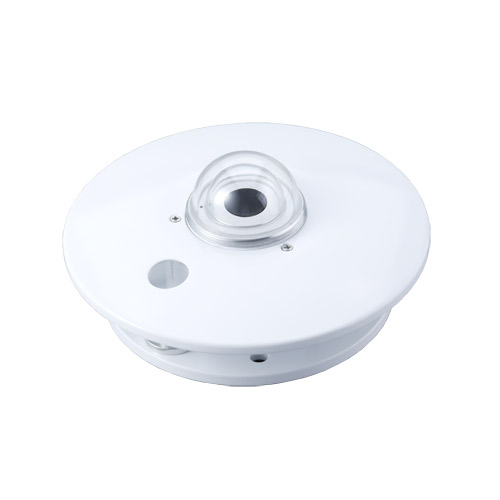
Ask what the proposed calibration record identifies: the instrument serial number, output or sensitivity, calibration conditions, traceability and uncertainty relevant to the contract. Do not assume that a calibration certificate and a model classification describe the same property. One characterizes a particular calibration; the other concerns specified instrument performance.
Check whether a powered output can be configured differently from the detector's raw sensitivity. If a transmitter or logger is replaced, the correct transfer relationship still has to be maintained. Retain the coefficient and configuration with the instrument identity so a replacement component does not silently change the irradiance scale.
For an installed comparison, two instruments need suitable exposure, alignment and sampling. A brief difference under changing cloud does not isolate calibration error, particularly if their response times or averaging methods differ. Define the comparison procedure before using a percentage difference as a rejection criterion.
Inspect the dome and leveling arrangement, and establish access for cleaning without disturbing alignment. A soiled optical surface can reduce a useful measurement even when its electronics remain connected. Ask which cleaning method is appropriate to the selected instrument and which parts can be serviced without changing calibration.
If continuous records are important, discuss how an instrument will be handled during calibration or repair. A spare instrument is useful only if its output, mount and coefficient can be managed correctly. Do not assume a universal recalibration interval or guaranteed lifetime from the purchase price; agree the project requirement and operating procedure.
Send NiuBoL the application, required radiation quantity, measurement plane, expected irradiance, project performance requirement, available supply and logger input. Include cable length, mounting arrangement, site temperature and cleaning access. For repeat installations, identify whether identical mechanical and electrical configurations are required.
Review the offered calibration scope and accessory list line by line. A low headline price may reflect a sensor without a transmitter, a shorter cable, a different detector or omitted mounting. Conversely, an expensive package can contain communication and display functions that the existing acquisition system does not need.
No numerical pyranometer price is quoted here because there is no single verified current price covering those alternatives. Request a dated quotation for the named configuration and compare equivalent items. Agree any calibration or service requirements before placing the order rather than assuming they are part of a generic product description.
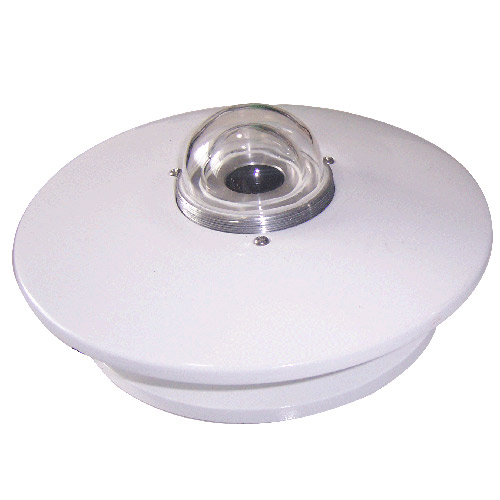
Range does not describe spectral, angular, thermal or stability performance, calibration scope or output electronics. Compare those characteristics and included installation items before treating the offers as equivalent.
Not necessarily. Its acquisition needs a suitable low-level input and the individual sensitivity coefficient. Any required conditioning, cable arrangements and configuration belong in the installed cost comparison.
No. Obtain classification evidence for the exact offered model and assess the calibration and uncertainty requirements separately. Appearance is not a classification record.
One sensor measures its installed plane at that time. Projects needing simultaneous horizontal and module-plane observations generally need appropriate separate points or a defined validated alternative.
Identify the customer's application, required detector performance, output, supply, mounting plane, cable and calibration scope. Include whether a logger is already available; this avoids quoting a complete station when only a compatible instrument is needed.
Compare the instrument's stated output and individual coefficient or scale with the receiving logger configuration. Then inspect exposure, leveling or intended tilt, and record a real observation. Correct electrical scaling does not remove shading or mounting errors.
Compare pyranometer quotations by the radiation measurement and installed configuration. Separate detector performance, calibration, output and acquisition costs, then include the mounting and cable needed at the site. A clear equipment schedule makes the quotation useful without relying on an invented universal price.
Prev:Multiparameter Water Quality Meter: Verify Each Channel Independently
Next:Smart App Soil Moisture Sensor: Phone Testing or Unattended Records?
Related recommendations
Sensors & Weather Stations Catalog
 Agriculture Sensors and Weather Stations Catalog-NiuBoL.pdf
Weather Stations Catalog-NiuBoL.pdf
Agriculture Sensors Catalog-NiuBoL.pdf
Water Quality Sensor Catalog-NiuBoL.pdf
Related products
 Combined air temperature and relative humidity sensor
 TDR Soil Moisture & Temperature Sensor for irrigation| RS485 |4-20mA| NBL-S-THR
 Soil pH sensor RS485 soil Testing instrument soil ph meter for agriculture |NBL-S-PH
 Wind Speed sensor Output Modbus/RS485/Analog/0-5V/4-20mA
 Tipping bucket rain gauge for weather monitoring auto rainfall sensor RS485/Outdoor/stainless steel
 Pyranometer Solar Radiation Sensor 4-20mA/RS485


Screenshot, WhatsApp to identify the QR code
WhatsApp number:+8615367865107
(Click on WhatsApp to copy and add friends)

