





— Blogs —
—Products—
 Consumer hotline +8618073152920
 WhatsApp:+8615367865107
Address:Room 102, District D, Houhu Industrial Park, Yuelu District, Changsha City, Hunan Province, China
Product knowledge
Time:2026-09-08 15:00:00 Popularity:234
Rainfall explains input while soil probes show storage by depth; the procurement value comes from time-aligned records and representative zones.
| Decision field | Engineering requirement | Evidence for acceptance |
|---|---|---|
| Measurement purpose | State what action rainfall and soil moisture monitoring system should support | Approved monitoring objective |
| Location for rainfall and soil moisture monitoring system | Coordinates, depth or height, orientation and exposure | Drawing and installation photos |
| Data path for rainfall and soil moisture monitoring system | Sensor to logger, controller, gateway and platform | Live measurement with correct unit and timestamp |
| Maintenance for rainfall and soil moisture monitoring system | Safe access and responsible person | Inspection and service record |
A key limitation is that representative coverage across varieties, growth stages, soil zones and management blocks is more useful than one convenient point. If the reported result later changes, the retained files let the owner distinguish a real field event from installation movement, fouling, configuration changes or communication loss.
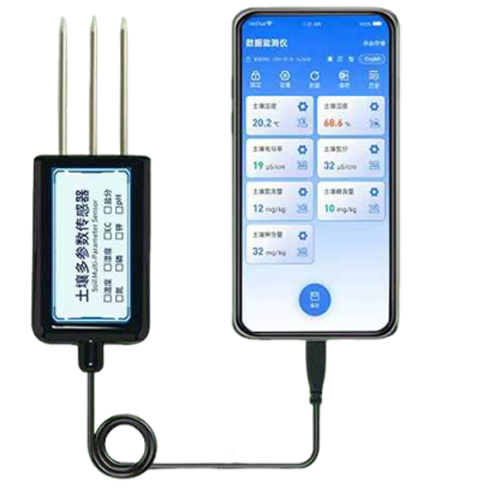
In the system, field and plant sensors provide evidence to a logger, irrigation controller or farm platform; they do not replace the crop model, operating threshold or agronomic decision rule. The integration team should draw this path during pre-order review: measurement point, cable, surge protection or junction, logger channel, communication network, database field and alarm destination. For rainfall and soil moisture monitoring system, a live number on a display is merely the first check. Commission the full rainfall and soil-moisture monitoring signal route by checking engineering unit, timestamp, Modbus address and device status at the receiving system.
For distributor and contractor quotations, describe rainfall and soil moisture monitoring system as a measuring point with an operating purpose. NiuBoL can check the product-side interface and documentation after the buyer provides the site, expected range, cable distance and data destination.
For rainfall and soil moisture monitoring system, communication compatibility must be checked at model level. RS485 Modbus RTU is useful for distributed fixed sensors, while handheld devices support scouting, commissioning and reference surveys. RS485 is merely the physical layer; the project record is also expected to state Modbus RTU address, baud rate, parity, stop bits, function code, register address, data type, scaling and engineering unit. On a shared bus serving soil monitoring system, allocate a unique address to every instrument, use a planned trunk, terminate only at the required ends and separate signal wiring from high-current switching conductors.
| RFQ item | Information to provide | Cost or risk controlled |
|---|---|---|
| Application | Purpose and site for rainfall and soil moisture monitoring system | Prevents wrong product family |
| Measurement for rainfall and soil moisture monitoring system | Normal, alarm and peak range; required interval | Avoids under-range or needless overspecification |
| Integration for rainfall and soil moisture monitoring system | PLC/RTU/logger model, signal and protocol | Reduces panel rework |
| Mechanical for rainfall and soil moisture monitoring system | Mounting, depth or height, cable route and material exposure | Defines accessories and serviceability |
| Supply scope for rainfall and soil moisture monitoring system | Sensor only or complete station; documents and spares | Makes prices comparable |
| Commercial for rainfall and soil moisture monitoring system | Quantity, destination, delivery target and packing | Supports a realistic quotation |
Before shipment, bench-test the selected rainfall and soil moisture monitoring system with the intended power supply and host interface where practical. At the measuring location, verify mounting, cable protection, grounding or bonding, address assignment, logger clock, upload interval and alarm destination.
For rainfall and soil moisture monitoring system, do not close acceptance with a screenshot alone. Handover records for soil monitoring system should identify the serial number, installed position, cable and terminal, communication settings, initial comparison, platform tag and routine-inspection owner; include firmware or configuration references where available. Capturing this evidence while commissioning soil monitoring system is far easier than reconstructing it during a fault investigation.
Distributed rainfall and soil measurements can use RS485 Modbus RTU, pulse inputs or compatible 4-20 mA channels according to the selected devices. Record each interface and scaling rule in the logger configuration and acceptance file.
A1: Rainfall measured above ground does not show infiltration, runoff or root-zone storage. Soil moisture confirms whether useful water reached the crop.
A2: Use an open, level location with suitable clearance from obstructions and splash sources. Keep the rim horizontal and the funnel accessible for cleaning.
A3: Place probes in representative irrigation zones and at depths that reflect active roots and deeper drainage. Label each depth clearly in the platform.
A4: Compare rainfall timing and amount with moisture response at each depth. A delayed or absent response may indicate runoff, interception, shallow wetting or a sensor-location issue.
A5: Yes, when thresholds, delays, weather rules and manual override are defined. The control system should also confirm pump, valve or flow status.
A6: Sensors can connect by RS485 to a field logger or gateway, which stores data locally and uploads it through 4G or Ethernet to the platform.
A7: Perform a controlled rain-gauge test, observe soil response to irrigation, verify timestamps and units, and confirm alarms, storage and communication recovery.
A8: Review them by crop stage, soil type and seasonal conditions. Do not treat the first configured values as permanent without comparing them with field observations.

Rainfall and soil moisture answer different parts of the water balance. Combining them helps determine whether precipitation reached the root zone and whether irrigation should start, continue or be delayed.
Prev:Environmental Water Quality Buoy Installation and Commissioning Guide
Next:Air Temperature and Humidity Monitoring Station: Measurement and Use
Related recommendations
Sensors & Weather Stations Catalog
 Agriculture Sensors and Weather Stations Catalog-NiuBoL.pdf
Weather Stations Catalog-NiuBoL.pdf
Agriculture Sensors Catalog-NiuBoL.pdf
Water Quality Sensor Catalog-NiuBoL.pdf
Related products
Combined air temperature and relative humidity sensor TDR Soil Moisture & Temperature Sensor for irrigation| RS485 |4-20mA| NBL-S-THR
 Soil pH sensor RS485 soil Testing instrument soil ph meter for agriculture |NBL-S-PH
 Wind Speed sensor Output Modbus/RS485/Analog/0-5V/4-20mA
 Tipping bucket rain gauge for weather monitoring auto rainfall sensor RS485/Outdoor/stainless steel
 Pyranometer Solar Radiation Sensor 4-20mA/RS485

Screenshot, WhatsApp to identify the QR code
WhatsApp number:+8615367865107
(Click on WhatsApp to copy and add friends)

