





— Blogs —
—Products—
 Consumer hotline +8618073152920
 WhatsApp:+8615367865107
Address:Room 102, District D, Houhu Industrial Park, Yuelu District, Changsha City, Hunan Province, China
Product knowledge
Time:2026-07-23 16:05:01 Popularity:345
Most water monitoring quotes look comparable because they list similar products. Real differences are in scope and integration details. A stronger RFQ is not about longer requirement lists, but about measurable acceptance checkpoints.
This guide gives an operations-first way to request offers so the winning supplier can deliver complete integration, not only a sensor list.
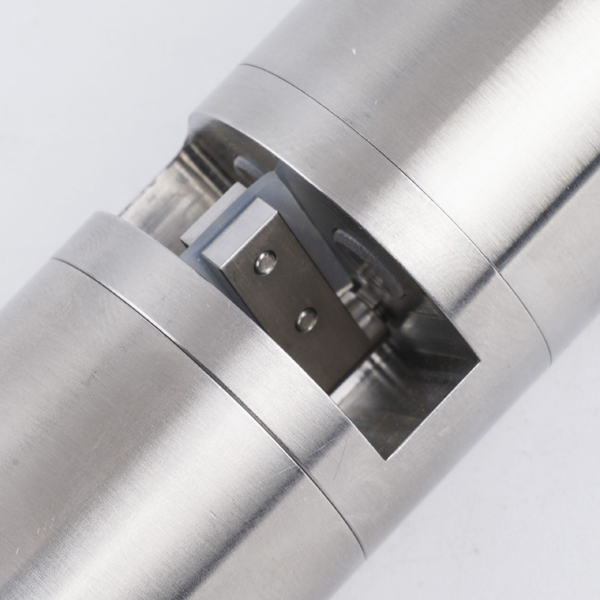
Include installation depth, sampling method, maintenance windows, and acceptance references in the first version. Without these, vendor proposals will drift toward different interpretation.
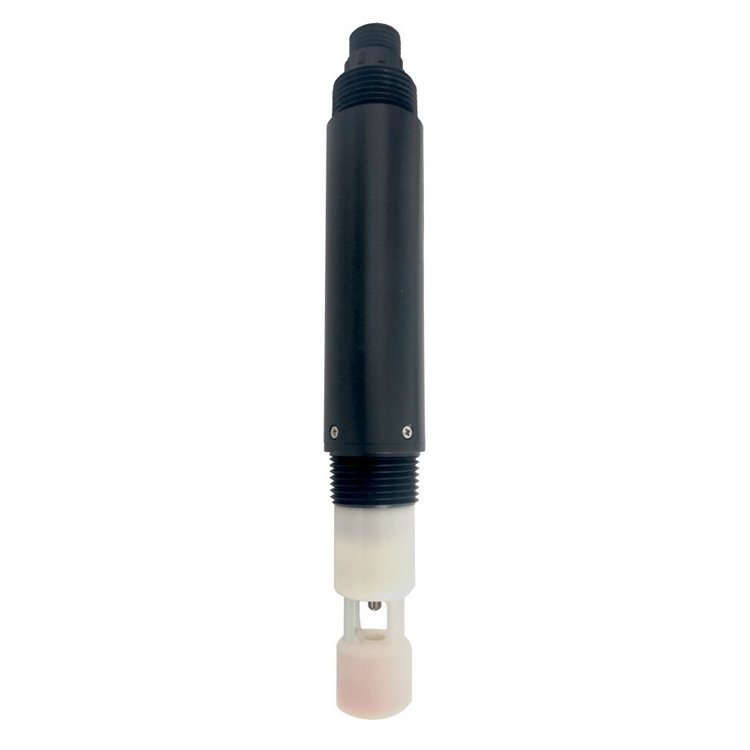
The matrix should include hardware, software mapping, communication, training, and support response.
This removes ambiguity and lets procurement teams compare bids quickly.
Ask for preloading, register mapping and alarm validation before full commissioning date.
If this is not clear, the project will pause at the first integration check.
Require versioned documentation and one single point of contact for technical clarifications.
This improves execution consistency and avoids silent scope movement.
| Specification | Value | Project meaning |
|---|---|---|
| RFQ backbone | RS485/Modbus RTU bus and mapping details required | Ensures integration readiness |
| Channel scope | Sampling points, depth, mounting style | Avoids missing-site variation |
| Acceptance | Manual sample verification and historical trend | Clear evidence for sign-off |
| Support | Spare, calibration, replacement lead time | Controls long-term risk |
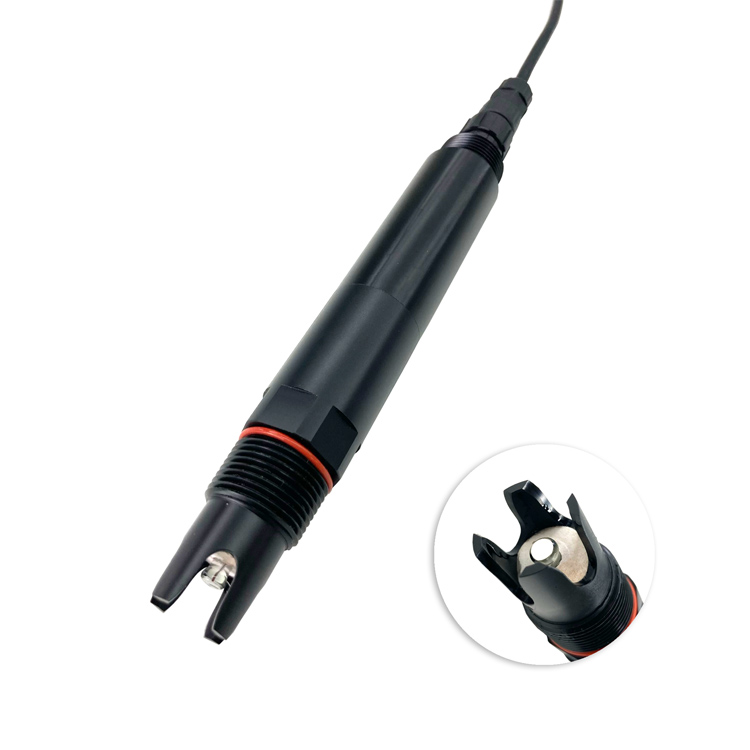
Field environment challenge: Clear owner but mixed suppliers.
System integration plan: Set one matrix with hardware, installation and maintenance scope by owner.
User value: Quicker sign-off and clear project accountability.
Field environment challenge: Different local execution quality.
System integration plan: Add uniform installation and acceptance checklist, then require photos with parameters at every stage.
User value: Higher consistency across sites.
Field environment challenge: Need clear scale path.
System integration plan: Issue first-order RFQ for core channels, and include expansion terms in follow-up add-ons.
User value: No hidden cost shock when deployment grows.
In an RFQ context, integration risk is usually around acceptance interpretation, so make register naming and protocol mapping mandatory bid items.
Flag register conflict, cable routing constraints and maintenance timing during bid evaluation; these should be reviewed before final technical comparison.
At handover, keep one register dictionary and one wiring map per channel owner, plus versioned correction records for future adjustments.
| Decision point | Practical recommendation |
|---|---|
| Scope depth | Define what is excluded, not only included |
| Integration points | Fix addresses, register map and retention period |
| Service terms | Set support response and maintenance cycle explicitly |
| Acceptance scope | Tie to manual sample + trend log and signed sign-off |
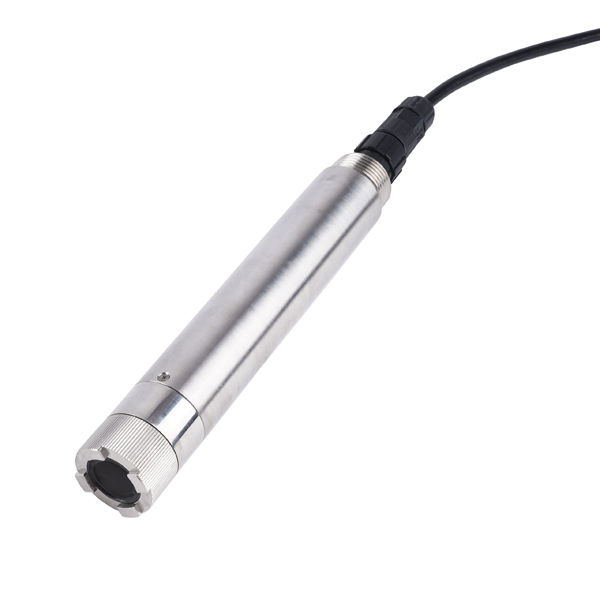
Attach parameter count, channel depth, cable route, enclosure rating, and integration endpoint list in a single table. This prevents bid comparisons from becoming anecdotal.
Separate hardware, communication interfaces, commissioning service, training, and spares into four bid lines. Hidden scope leakage usually comes from mixed pricing buckets.
Specify sampling verification method, trend validation period, and firmware/logic freeze version. Sign-off should depend on these data points.
Move from descriptive text to controlled fields: scope, protocol, installation, acceptance, and service. Each field should map to a decision owner.
If a field is vague, bids become incomparable. Clarify whether output uses RS485 only, RS485 + gateway, or hybrid architecture.
Add communication map requirements before supplier ranking. This is the largest source of rework after award.
| Scope block | Checklist | Impact |
|---|---|---|
| Technical scope | Output, interface, environment | Limits hidden assumptions |
| Commercial scope | Lead time, spare, service | Protects procurement certainty |
| Handover scope | Training, alarms, documents | Supports long-term operations |
Ask each supplier for implementation assumptions. If assumptions are different, normalize them before comparison or ask for revised scope.
Keep one appendix for unresolved issues and close them in writing before PO.
For water monitoring RFQ workflow, clarify how this affects implementation scope before award. In the first 30 days, teams often lose time on retests. In RFQ execution, verify communication assumptions and acceptance criteria before PO issuance..
Define a pre-award acceptance protocol now: who confirms RFQ interpretation, who approves sample and calibration plans, who checks network and power constraints, and who confirms commissioning criteria.
For RFQ-driven projects, make one team owner for schedule and scope so protocol updates are not distributed across fragmented email approvals.
| Check item | Owner |
|---|---|
| Reference method | Project quality lead |
| RS485 mapping | Integrator |
| Installation constraints | Site contractor |
| Data handover | Purchasing or PM |
Now evaluate water monitoring RFQ workflow by risk and recurrence rather than headline model price. Track three gates: installation progress, data continuity, and support SLA adherence..
Apply a scorecard with equal weight on integration complexity, operation risk, and service process.. If price is lower but escalation path is weak, keep implementation risk out of the shortlist..
Keep a written decision log. It reduces procurement ambiguity when support scope, replacement policy, or acceptance timing changes in later rounds.
| Decision line | What to reject | What to accept |
|---|---|---|
| Protocol certainty | No Modbus/RS485 examples | Working map in annex |
| Maintenance clarity | No cleaning cycle | Explicit intervals |
| Acceptance | Only sample value | Acceptance and report method |
| Support | No service boundary | Defined scope and scope-out items |
For water monitoring RFQ workflow, finalize a commissioning playbook that maps action by timeline, not only by deliverable list. Set review points at commissioning, first-week monitoring, and first-month stability check..
Use this plan to confirm measurable outcomes, not assumptions, during commissioning.. If one index cannot be measured within a typical operation window, this proposal should be rejected before acceptance..
After this stage, add a 30-day trial review and a 90-day stability review with acceptance thresholds and replacement strategy evidence.
This stage should also lock expansion readiness and approval sequence to prevent scope drift in early operation changes.
| Review interval | Main output |
|---|---|
| Commissioning | Baseline acceptance and threshold verification |
| 30-day | Cleaning/drift trend and false alarm rate |
| 90-day | Operational stability and spare utilization |
| Handover | Final close decision and optimization list |
For water monitoring RFQ workflow, run a pre-commissioning simulation in parallel with contract signing. alarm response, escalation routing and threshold update flow before final approval.
This simulation step is often skipped in smaller projects. For RFQ handover, this simulation usually reduces late-stage change because acceptance assumptions are corrected before freeze.
Ask for a change-control template and a practical on-site training plan.. This lowers post-warranty handover confusion by making maintenance steps explicit.
| Milestone | Evidence | Decision owner |
|---|---|---|
| Dry test | Wiring and register continuity | PM |
| Wet test | Trend stability and alarm logic | Project lead |
| Post-startup | Service call count and false alarm rate | Site owner |
After the deployment plan is fixed for water monitoring RFQ workflow, make extension logic explicit in the same bid package. Separate quote revision scope from routine support scope before project acceptance..
With clear extension logic, support follow-ups are processed faster and less likely to generate scope disputes after project handover.
Define six-month data quality checkpoints in this stage and keep them part of acceptance terms.. Without this, teams cannot verify acceptance performance after short-term operation.
| Six-month review item | Acceptance sign | Owner |
|---|---|---|
| Maintenance trend | Threshold within expected range | Operations owner |
| Spare and consumables | Usage and lead time trend | Purchasing |
| Model drift | Calibration record analysis | Integrator |
| System health | Missing data and alert latency | PM |
At this stage, the risk is mismatch between procurement terms and handover evidence. Ask the supplier to attach a short completion gate plan with three milestones and evidence owners.
If any milestone cannot be independently verified in your factory test room or plant test point, convert this clause into a commercial condition instead of a technical feature description.
| Milestone | Owner evidence | Contract consequence |
|---|---|---|
| Acceptance acceptance | Signed register list and deviation list | Delay of commercial handover |
| 30-day tune-up | Commissioning and trend stability report | Additional work scope approval required |
| 90-day stability check | Alarm accuracy and missing data metrics | Support SLA review |
| Year-one expansion | Extension path and budget statement | Optional amendment only |
A: Include points, signal type, communication mode, acceptance logic, and commissioning schedule. For one-month procurement, remove non-required channel complexity in the first draft.
A: RS485/Modbus RTU can be staged, but include interface strategy and migration path. A clear staged plan is better than a deferred ambiguity.
A: Create a scoring sheet before opening bids. Weight technical delivery, integration quality, calibration scope, and support; then compare only bids that pass this scoring map.
A: After-sales should define response SLA, replacement lead time, and remote support scope. Vague wording should be treated as non-compliant. These support terms should also include on-site response window under power recovery events and clear compensation conditions.
A: Three to five quotes are enough for benchmark if scope is strict. More quotes reduce quality when comparison criteria drift. Keep all quote comparisons in one scope matrix to avoid changing decision criteria when communication costs are revealed later.
A: Transport and customs should be explicit in the same file for lead-time commitments, otherwise delivery risk remains unbounded. For customs and logistics, request commercial invoices and HS/packing classification in advance so customs lead time can be modeled.
A: Use test plan + acceptance checklist with thresholds in advance. Handover should include signed trend file, wiring diagram, and alarm action ownership.
A: Include firmware version control and post-acceptance change management terms, including rollback conditions and testing window. Use version control on firmware and threshold logic as a contractual deliverable. If it is missing, treat the quote as non-compliant.
Use fixed scoring rules and reject missing required fields before opening price. Use fixed scoring rules before opening and refuse proposals that miss required fields, because revisions after opening add hidden risk.
Bundle only if ownership and support responsibilities are explicitly split. Otherwise one side carries hidden costs. Bundle by ownership only when maintenance, data ownership and service response are explicitly split in the scope and pricing sheet.
A water monitoring RFQ should convert engineering assumptions into deliverables: scope, RS485 mapping, installation depth, maintenance windows and acceptance evidence.
Before bid submission, require fixed register naming, protocol profile and responsibility boundaries in the quotation template.
This removes the most common source of delays: suppliers quoting hardware while treating integration as a later adjustment.
Prev:Smart Water Quality Monitoring System: What Makes a Deployment Practical
Next:4-20 mA pH Sensor or RS485 pH Sensor: Which Interface Fits Your System?
Related recommendations
Sensors & Weather Stations Catalog
 Agriculture Sensors and Weather Stations Catalog-NiuBoL.pdf
Weather Stations Catalog-NiuBoL.pdf
Agriculture Sensors Catalog-NiuBoL.pdf
Water Quality Sensor Catalog-NiuBoL.pdf
Related products
 Combined air temperature and relative humidity sensor
 TDR Soil Moisture & Temperature Sensor for irrigation| RS485 |4-20mA| NBL-S-THR
 Soil pH sensor RS485 soil Testing instrument soil ph meter for agriculture |NBL-S-PH
 Wind Speed sensor Output Modbus/RS485/Analog/0-5V/4-20mA
 Tipping bucket rain gauge for weather monitoring auto rainfall sensor RS485/Outdoor/stainless steel
 Pyranometer Solar Radiation Sensor 4-20mA/RS485

Screenshot, WhatsApp to identify the QR code
WhatsApp number:+8615367865107
(Click on WhatsApp to copy and add friends)

