





— Blogs —
—Products—
 Consumer hotline +8618073152920
 WhatsApp:+8615367865107
Address:Room 102, District D, Houhu Industrial Park, Yuelu District, Changsha City, Hunan Province, China
Product knowledge
Time:2026-09-09 16:00:00 Popularity:241
Water potential describes how tightly water is held, while volumetric moisture describes how much water is present; irrigation projects may need one or both.
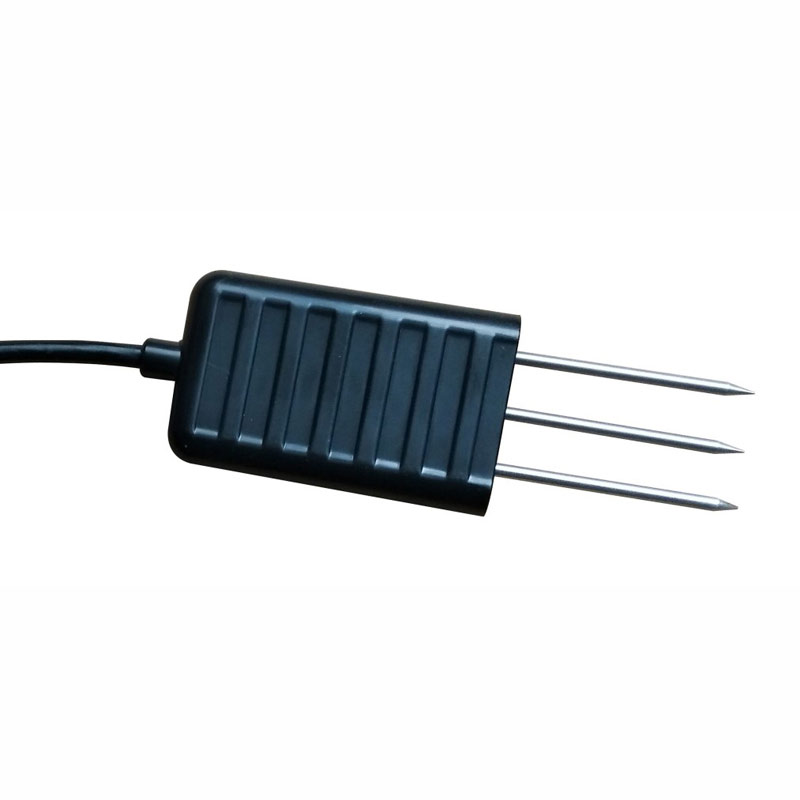
In the system, the probe is installed in a representative root-zone profile and sends data to a field logger, irrigation controller, RTU or agricultural IoT gateway. The panel engineer needs to draw this path before model approval: measurement point, cable, surge protection or junction, logger channel, communication network, database field and alarm destination. For soil water potential sensor, a live number on a display by itself is only the first check. Across the end-to-end What Is a Soil Water Potential Sensor and When Should Projects Use One? data path, preserve engineering units, timestamps, Modbus addresses and device status.
| Decision field | Engineering requirement | Evidence for acceptance |
|---|---|---|
| Measurement purpose | State what action soil water potential sensor should support | Approved monitoring objective |
| Location — application: What Is a Soil Water Potential Sensor and When Should Projects Use One | Coordinates, depth or height, orientation and exposure | Drawing and installation photos |
| Data path — application: What Is a Soil Water Potential Sensor and When Should Projects Use One | Sensor to logger, controller, gateway and platform | Live measurement with correct unit and timestamp |
| Maintenance — application: What Is a Soil Water Potential Sensor and When Should Projects Use One | Safe access and responsible person | Inspection and service record |
| Parameter | Reference requirement | Why it matters |
|---|---|---|
| Reference model — application: What Is a Soil Water Potential Sensor and When Should Projects Use One - Compare the Available Configurations | NBL-S-WPS | Match model, cable and address in the procurement file |
| Measurement range — application: What Is a Soil Water Potential Sensor and When Should Projects Use One - Compare the Available Configurations | -1500.0 to -10.0 kPa | Covers wet-to-dry conditions for irrigation and drought work |
| Supply voltage — application: What Is a Soil Water Potential Sensor and When Should Projects Use One - Compare the Available Configurations | DC 5-24 V; 12 VDC typical | Check field voltage and polarity |
| Output — application: What Is a Soil Water Potential Sensor and When Should Projects Use One - Compare the Available Configurations | RS485, Modbus RTU; 9600 bps default | Confirm address, signed data and divide-by-10 scaling |
| Operating temperature — application: What Is a Soil Water Potential Sensor and When Should Projects Use One - Compare the Available Configurations | 0 to 60 deg C; frozen-soil readings require caution | Do not apply normal thresholds to frozen conditions |
| Housing material — application: What Is a Soil Water Potential Sensor and When Should Projects Use One - Compare the Available Configurations | Black epoxy resin | Protect all above-ground joints and cable exits |
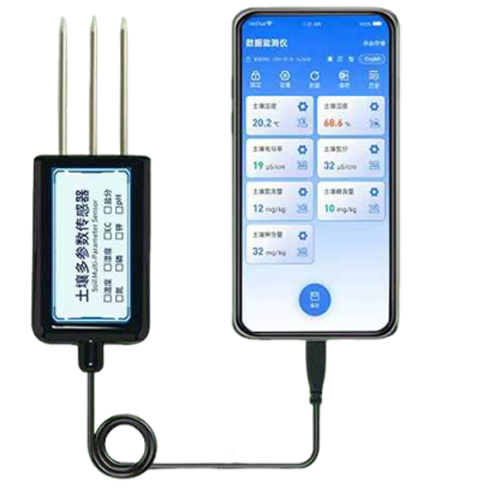
For ongoing operation, describe soil water potential sensor as a measuring point with an operating purpose. NiuBoL can check the product-side interface and documentation after the buyer provides the site, expected range, cable distance and data destination.
The important limitation is that soil texture, bulk density, stones, air gaps, salinity, installation disturbance and spatial variability must be considered when interpreting readings. If the instrument result later changes, the resulting records let the owner distinguish a real field event from installation movement, fouling, configuration changes or communication loss.
For soil water potential sensor, communication compatibility must be checked at model level. RS485 Modbus RTU supports multi-point digital networks; portable USB or handheld arrangements are better suited to surveys than unattended control. RS485 by itself is only the physical layer; the engineering file also needs to state Modbus RTU address, baud rate, parity, stop bits, function code, register address, data type, scaling and engineering unit. On a shared bus serving soil monitoring system, allocate a unique address to every instrument, use a planned trunk, terminate only at the required ends and separate signal wiring from high-current switching conductors.
| RFQ item | Information to provide | Cost or risk controlled |
|---|---|---|
| Application | Purpose and site for soil water potential sensor | Prevents wrong product family |
| Measurement — application: What Is a Soil Water Potential Sensor and When Should Projects Use One | Normal, alarm and peak range; required interval | Avoids under-range or needless overspecification |
| Integration — application: What Is a Soil Water Potential Sensor and When Should Projects Use One | PLC/RTU/logger model, signal and protocol | Reduces panel rework |
| Mechanical — application: What Is a Soil Water Potential Sensor and When Should Projects Use One | Mounting, depth or height, cable route and material exposure | Defines accessories and serviceability |
| Supply scope — application: What Is a Soil Water Potential Sensor and When Should Projects Use One | Sensor only or complete station; documents and spares | Makes prices comparable |
| Commercial — application: What Is a Soil Water Potential Sensor and When Should Projects Use One | Quantity, destination, delivery target and packing | Supports a realistic quotation |
Select soil water potential sensor only when its measurement function, operating limits and interface match the documented project requirements. Soil texture, bulk density, stones, air gaps, salinity, installation disturbance and spatial variability must be considered when interpreting readings.
Do not postpone the interface choice for soil monitoring system until after the control cabinet has been built. The soil water potential sensor model, power demand and output must be frozen early enough for the integrator to allocate terminals, protection, addresses and data fields. If the host system has only analog inputs, check the exact 4-20 mA scaling on a suitable model. For an RS485 Modbus RTU version of soil monitoring system, obtain the register map before controller programming begins. A protocol name by itself does not prove plug-and-play compatibility.
A1: It measures the energy state of soil water, usually expressed as kPa or MPa. More negative values generally indicate that water is held more tightly and is harder for roots to extract.
A2: No. Moisture content describes how much water is present, while water potential describes its availability. The relationship varies with soil texture and structure.
A3: Use both when irrigation decisions must distinguish water quantity from plant availability, especially in research plots, orchards, greenhouses and variable soils.
A4: Install it in representative root-zone soil with complete contact and minimal disturbance. Select depths according to crop roots, irrigation method and the decision the data will support.
A5: Poor soil contact, incomplete equilibration, installation damage and rapid wetting fronts can cause unstable or delayed response. Installation notes are essential when interpreting changes.
A6: Do not copy one universal threshold. Use crop stage, soil type, sensor range and local field observations to establish operating limits, then review them after several irrigation cycles.
A7: Models with a compatible RS485 or analog output can connect to a data logger, RTU or gateway. Confirm power, wiring, output scaling and the register map before commissioning.
A8: Record the installed depth and soil condition, confirm stable communication, observe response during wetting or drying, and verify that the platform shows the correct unit and sign convention.
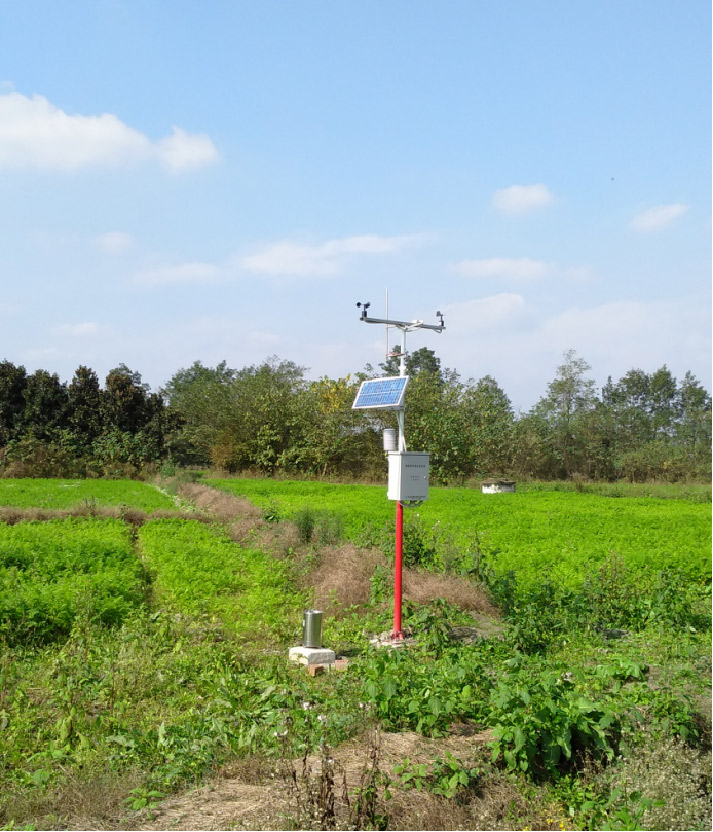
A soil water potential sensor answers a different question from a volumetric moisture sensor: it indicates how tightly water is held and therefore how difficult it is for roots to extract. Use it when irrigation or plant-stress decisions require that distinction.
Prev:Automatic Soil Moisture Data Station: Architecture and System Scope
Next:Handheld Environmental Test Instrument: Selection and Field QA
Related recommendations
Sensors & Weather Stations Catalog
 Agriculture Sensors and Weather Stations Catalog-NiuBoL.pdf
Weather Stations Catalog-NiuBoL.pdf
Agriculture Sensors Catalog-NiuBoL.pdf
Water Quality Sensor Catalog-NiuBoL.pdf
Related products
 Combined air temperature and relative humidity sensor
 TDR Soil Moisture & Temperature Sensor for irrigation| RS485 |4-20mA| NBL-S-THR
 Soil pH sensor RS485 soil Testing instrument soil ph meter for agriculture |NBL-S-PH
 Wind Speed sensor Output Modbus/RS485/Analog/0-5V/4-20mA
 Tipping bucket rain gauge for weather monitoring auto rainfall sensor RS485/Outdoor/stainless steel
 Pyranometer Solar Radiation Sensor 4-20mA/RS485

Screenshot, WhatsApp to identify the QR code
WhatsApp number:+8615367865107
(Click on WhatsApp to copy and add friends)

