





— Products —
 Consumer hotline +8618073152920
WhatsApp:+8615367865107
Address:Room 102, District D, Houhu Industrial Park, Yuelu District, Changsha City, Hunan Province, China
Water Quality Sensors
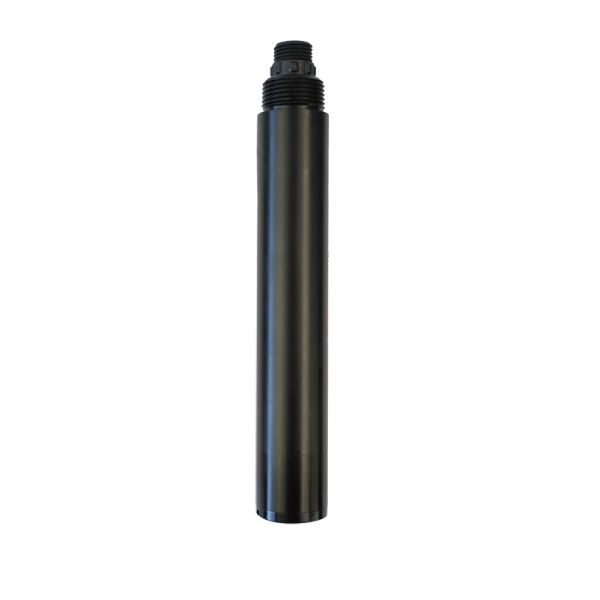
NBL-WQ-TS-4A online turbidity sensor using 90° light scattering. 0–20, 0–100 or 0–1000 NTU ranges, RS485 Modbus RTU, optional 4–20 mA and IP68.
Tel/WhatsApp:+8615367865107
Email:Arvin@niubol.com +Nearly 100 partner companies in more than 75 countries. We are committed to providing high-quality, practical products to meet your needs and help you solve problems. Our products comply with international standards and are certified with ISO, CE and RoHS.Product Details
Product Overview: The NiuBoL NBL-WQ-TS-4A is an online optical turbidity sensor using the 90-degree scattered light measurement principle. Available measurement configurations include 0–20.00 NTU, 0–100.0 NTU and 0–1000.0 NTU. The sensor features an infrared LED light source, automatic Pt1000 temperature compensation, RS485 Modbus RTU communication, a configurable 4–20 mA output option and IP68 protection for suitable immersion applications.
The NBL-WQ-TS-4A is designed for continuous turbidity monitoring in water treatment, industrial process water, wastewater and environmental water quality monitoring systems.
The sensor measures turbidity using the 90-degree scattered light method. When infrared light enters the water sample, suspended particles scatter part of the light. The sensor detects scattered light perpendicular to the incident beam and processes the signal to calculate turbidity in Nephelometric Turbidity Units (NTU).
An integrated optical fiber structure is designed to reduce interference from external light. The sensor also incorporates temperature measurement and automatic Pt1000 temperature compensation.
The standard digital interface uses RS485 Modbus RTU, enabling connection to compatible PLCs, RTUs, data loggers and water quality monitoring equipment.
A 4–20 mA current output is also described in the manufacturer manual. Its availability and wiring arrangement must be confirmed for the selected output configuration.

90-degree scattered light method: Optical measurement of water turbidity in NTU.
Infrared LED light source: Provides illumination for the optical measurement system.
Multiple measurement configurations: 0–20.00, 0–100.0 and 0–1000.0 NTU.
RS485 Modbus RTU: Digital communication with compatible industrial monitoring equipment.
4–20 mA output option: Current output described in the manual; confirm the ordered configuration.
Temperature compensation: Built-in Pt1000 temperature element.
Optical fiber construction: Designed to reduce the effect of external light interference.
IP68 protection: Suitable for immersion within the manufacturer's specified limits.
Two-point calibration: Supports zero and slope calibration using appropriate turbidity standards.
Immersion installation: 3/4-inch NPT threaded mounting connection.
Standard 5-meter cable: Other cable lengths can be customized.
The NBL-WQ-TS-4A is available in three measurement range configurations. The required range should be specified according to expected turbidity conditions.
| Measurement Range | Resolution | Accuracy |
|---|---|---|
| 0–20.00 NTU | 0.01 NTU | ±3% or ±1.5 NTU |
| 0–100.0 NTU | 0.1 NTU | ±3% or ±2 NTU |
| 0–1000.0 NTU | 0.1 NTU | ±5% or ±3 NTU |
Measurement range note: These are available range configurations and should not be assumed to be three independently switchable ranges on every delivered sensor.
Accuracy note: The accuracy expressions follow the manufacturer manual. The manual does not clearly define the percentage basis or the rule for selecting between the percentage and absolute accuracy limits. The applicable acceptance criterion should be confirmed for projects requiring formal accuracy verification.
The measurement resolution indicates the smallest displayed measurement increment. It should not be interpreted as the sensor's measurement accuracy or detection limit.
| Parameter | Specification |
|---|---|
| Brand | NiuBoL |
| Model | NBL-WQ-TS-4A |
| Product Type | Online Optical Turbidity Sensor |
| Measurement Principle | 90° Scattered Light Method |
| Light Source | Infrared LED |
| Measurement Ranges | 0–20.00 / 0–100.0 / 0–1000.0 NTU |
| Temperature Resolution | 0.1°C |
| Temperature Accuracy | ±0.3°C |
| Temperature Compensation | Automatic, Pt1000 |
| Calibration | Two-point calibration |
| Digital Output | RS485 Modbus RTU |
| Current Output | 4–20 mA configuration; confirm before ordering |
| Power Supply | 12–24 VDC ±10% |
| Power Consumption | <0.3 W @ 12 V |
| Operating Temperature | 0–50°C |
| Operating Pressure | <0.2 MPa |
| Storage Temperature | -5 to 65°C |
| Wetted Materials | POM and ABS |
| Installation | Immersion Installation |
| Mounting Thread | 3/4-inch NPT |
| Sensor Dimensions | Approximately Ø30 × 185 mm |
| Connector | M16, 5-core waterproof male connector |
| Standard Cable Length | 5 m; customizable |
| Protection Rating | IP68 |
| Immersion Depth | Within 20 m, subject to pressure and installation limits |
Important: The manufacturer's manual specifies IP68 protection, immersion within 20 meters and operating pressure below 0.2 MPa. These conditions must be considered together. Confirm the actual hydrostatic pressure and suitability of the complete cable and connector assembly before deep-water installation.
The NBL-WQ-TS-4A measures water turbidity using the scattered light principle.
When light from the internal infrared LED enters water, suspended particles scatter the light in different directions.
The optical measurement system detects scattered light at an angle of approximately 90 degrees relative to the incident beam.
The intensity of the detected signal is compared with calibration information and processed to calculate a turbidity reading expressed in NTU.
The sensor's optical fiber design is intended to reduce external light interference. However, optical interference is not completely eliminated under all installation conditions.
The optical measurement may also be affected by particle size, particle composition, water color, bubbles, sediment deposits and contamination of the measurement window.
For reliable monitoring, the sensor should be installed at a representative location and inspected regularly.
Turbidity and total suspended solids are related water quality indicators, but they represent different quantities.
| Parameter | Meaning |
|---|---|
| Turbidity (NTU) | Optical measurement associated with light scattering by particles in water. |
| Total Suspended Solids (mg/L) | Mass concentration of suspended solids determined by an appropriate measurement method. |
The NBL-WQ-TS-4A measures turbidity in NTU. It does not directly measure the mass concentration of suspended solids in mg/L.
The relationship between turbidity and suspended solids varies with particle size, shape, composition and other characteristics of the water sample.
When a project requires suspended solids concentration, a suitable TSS measurement method or site-specific correlation may be necessary.
For more information, see Turbidity and Suspended Solids Sensor Selection.
The sensor can be considered for monitoring water clarity at appropriate points within drinking water treatment processes.
Applications may include raw water monitoring, clarification processes and other measurement locations where the selected range and accuracy are suitable.
Selection note: For very low-turbidity treated water or regulatory measurement applications, verify that the sensor's specified accuracy, reference method and performance meet the required standard. The 0.01 NTU resolution of the low-range version does not establish laboratory-grade accuracy.
Online turbidity measurements can help operators observe changes in water clarity at suitable points in municipal wastewater treatment systems.
The sensor may be installed in compatible treatment tanks, clarification processes or effluent monitoring arrangements.
Selection should consider the expected turbidity range, fouling conditions, installation position and measurement requirements.
The NBL-WQ-TS-4A can be integrated into industrial monitoring systems where turbidity measurement is required.
Potential applications include compatible process water and industrial wastewater from food processing, paper production and other industries.
Water chemistry and material compatibility must be evaluated before installation. The sensor's optical turbidity reading should not be represented as a direct suspended solids measurement or a guarantee of discharge compliance.
In natural water bodies, turbidity can change due to rainfall, sediment movement, runoff and other environmental conditions.
The NBL-WQ-TS-4A can supply turbidity data to a compatible environmental monitoring system for observation of water quality trends.
The installation location should reflect the intended monitoring objective and avoid unnecessary interference from sediment accumulation or air bubbles.
In compatible circulating cooling water systems, turbidity measurements can provide information about changes in suspended-particle conditions.
The sensor can provide measurement data to an external data logger or industrial controller. Automatic filtration, blowdown or chemical dosing requires separate control equipment.
The sensor may be considered for observing water clarity in compatible pools or landscape water systems.
It does not independently measure disinfectant concentration, microbial contamination or overall water safety. Additional measurements may be required according to the application.
Choosing the appropriate measurement range is important for obtaining useful turbidity data.
| Available Range | Selection Consideration |
|---|---|
| 0–20 NTU | Consider for relatively low turbidity conditions where finer displayed resolution is required. |
| 0–100 NTU | Consider for applications with moderate turbidity variation. |
| 0–1000 NTU | Consider where substantially higher turbidity levels or larger variations are expected. |
Choose a measurement range that covers both normal conditions and expected variations.
A broader measurement range does not automatically provide better measurement performance at very low turbidity.
The 0–20 NTU version has a resolution of 0.01 NTU, while the 0–100 and 0–1000 NTU versions have a resolution of 0.1 NTU.
The NBL-WQ-TS-4A is designed for immersion installation with a 3/4-inch NPT threaded connection.
According to the manufacturer manual, the following minimum distances should be maintained:
Distance from side walls: more than 5 cm.
Distance from the sensor measuring end to the bottom: more than 10 cm.
These clearances help reduce unwanted optical effects from nearby surfaces and prevent the measuring end from being positioned directly against sediment.
Choose a representative water monitoring location.
Keep the optical measurement window submerged during normal operation.
Avoid locations with excessive air bubbles or sediment accumulation.
Secure the sensor to prevent unnecessary movement.
Protect the housing from severe mechanical impact.
Avoid excessive tension on the sensor cable.
Maintain operating temperature within 0–50°C.
Keep operating pressure below 0.2 MPa.
Protect external cable joints from moisture.
Verify compatibility of POM and ABS with the monitored liquid.
The sensor is specified with IP68 protection. Long-term immersion must remain within the documented depth and pressure limits.
The NBL-WQ-TS-4A uses a five-core cable arrangement, with RS485 communication and a current output connection described in the current user manual.
| Wire Color | Function |
|---|---|
| Red | 12–24 VDC Positive |
| Black | Power Ground (GND) |
| Blue | RS485 A |
| White | RS485 B |
| Yellow | Current Output Connection |
The manual specifies that the yellow current output wire should be left unconnected when it is not used.
Output configuration note: The current manual describes RS485 Modbus RTU and 4–20 mA outputs. Confirm whether the delivered version supports one selected output or both interfaces before preparing the electrical design. Do not assume simultaneous operation solely from the cable description.
Before powering the sensor, check the supply polarity, RS485 wiring and cable connections.
All cable connections exposed to water or long-term outdoor conditions should use suitable waterproof treatment and corrosion-resistant materials.
The NBL-WQ-TS-4A supports Modbus RTU over an RS485 interface.
| Communication Parameter | Default Setting |
|---|---|
| Interface | RS485 |
| Protocol | Modbus RTU |
| Baud Rate | 9600 bps |
| Data Bits | 8 |
| Parity | None |
| Stop Bits | 1 |
| Default Device Address | 6 (0x06) |
| Configurable Address Range | 1–127 |
| Read Function | 03 |
| Write Function | 06 |
The communication settings must match those of the connected PLC, data logger, RTU or Modbus master.
Where multiple sensors share an RS485 bus, each device must use a suitable unique Modbus address.
The user manual provides the following register addresses for measurement data, calibration and device configuration.
| Register Address | Function |
|---|---|
| 0x0000 | Turbidity and temperature measurement block, 4 registers |
| 0x1000 | Zero-point calibration |
| 0x1004 | Slope calibration |
| 0x1010 | Temperature correction |
| 0x2002 | Device address configuration |
| 0x2020 | Restore default calibration values |
The measurement block contains four consecutive 16-bit registers:
Turbidity measurement value.
Turbidity decimal-place scaling.
Temperature measurement value.
Temperature decimal-place scaling.
The manufacturer manual provides the following request for reading four measurement registers from a sensor with default device address 6.
Request frame:
06 03 00 00 00 04 45 BE
Response frame:
06 03 08 01 02 00 01 00 B0 00 01 90 48
In this example, the turbidity raw value is hexadecimal 0x0102, equivalent to decimal 258. With one decimal place, the turbidity reading is 25.8 NTU.
The temperature raw value is hexadecimal 0x00B0, equivalent to decimal 176. With one decimal place, the temperature reading is 17.6°C.
These values demonstrate how the communication data is decoded. They are not actual site measurement results.
The user manual contains additional commands for calibration, temperature correction and device address configuration.
Important: Do not write calibration or reset registers without following the procedure for the actual sensor range. Restoring the default calibration settings requires recalibration before returning the sensor to normal measurement service.
The NBL-WQ-TS-4A can supply turbidity and temperature data to compatible equipment using RS485 Modbus RTU.
A typical monitoring architecture is:
Turbidity Sensor → RS485 Modbus RTU → Data Logger / PLC / RTU → Monitoring Software
For remote monitoring, a compatible data acquisition device or communication gateway is required.
The sensor itself does not provide built-in cellular communication, cloud storage or automatic control of water treatment equipment.
Integration requirements should include power supply, cable length, device address, register scaling and suitable waterproof installation.
Routine maintenance is important because deposits on the optical measurement window can affect turbidity readings.
The required inspection and cleaning frequency depends on water quality, suspended particles, biological growth and operating conditions.
Clean the sensor exterior with clean tap water.
If deposits remain, gently wipe the surface using a soft, wet cloth. For persistent dirt, a small amount of suitable mild cleaning liquid may be added to the water.
Inspect the optical measurement window regularly for sediment, dirt, biological deposits or damage.
Remove contamination carefully without scratching the optical surface.
Inspect the cable and waterproof connections for damage, cuts, corrosion and excessive tension.
Ensure the cable is securely supported during normal operation.
The sensor contains sensitive optical and electronic components.
Avoid severe mechanical impact and do not attempt to disassemble internal components that are not intended for user maintenance.
The manufacturer manual also refers to inspection of a cleaning brush. The presence of this reference does not independently confirm that every NBL-WQ-TS-4A configuration includes an automatic cleaning mechanism.
The sensor supports zero-point and slope calibration using appropriate turbidity reference solutions.
Calibration should follow the manufacturer's procedure for the selected measurement range.
Prepare a suitable zero-turbidity or low-turbidity reference solution in a sufficiently large container.
Place the sensor vertically into the solution and keep the measuring end at least 10 cm above the bottom of the container.
Allow approximately 3–5 minutes for the reading to stabilize before performing the zero-point calibration procedure.
Place the sensor into an appropriate turbidity calibration standard for the ordered measurement range.
Keep the measuring end at least 10 cm away from the bottom of the container and allow approximately 3–5 minutes for stabilization.
Perform slope calibration using the corresponding Modbus command and scaling specified in the user manual.
The calibration reference concentration and required register scaling depend on the measurement range.
Calibration caution: The manufacturer manual includes some calibration examples that require careful interpretation against the selected range. Verify the actual standard solution and calibration value before writing the slope calibration register.
Calibration and verification frequency should be established according to the monitoring project's requirements and the operating environment.
| Problem | Recommended Check |
|---|---|
| No RS485 Communication | Check power, RS485 A/B wiring, device address, baud rate and cable condition. |
| Unstable Turbidity Reading | Inspect for bubbles, sediment movement, optical window fouling and unstable measurement conditions. |
| Unexpected High Reading | Check for deposits on the optical window, nearby reflections and actual changes in suspended particles. |
| Unexpected Low Reading | Verify calibration, measurement range, sensor position and optical window condition. |
| Incorrect Displayed Value | Confirm Modbus register order and decimal-place scaling. |
| Communication After Address Change | Verify the new device address and update the Modbus master configuration. |
NiuBoL provides different online turbidity sensor configurations for water monitoring projects.
The NBL-WQ-TS-4A described on this page uses 90-degree scattered light measurement and provides 0–20, 0–100 or 0–1000 NTU configurations.
For other configurations, see:
Measurement ranges, accuracy, output configurations, housing materials and installation requirements should be checked separately for each model.
Do not apply the specifications of one model to another without confirming the corresponding product manual.
A1. The NBL-WQ-TS-4A measures water turbidity in NTU using the 90-degree scattered light principle. It also incorporates temperature measurement and automatic temperature compensation.
A2. The current manufacturer manual specifies 0–20.00 NTU, 0–100.0 NTU and 0–1000.0 NTU configurations.
A3. The manual specifies ±3% or ±1.5 NTU for the 0–20 NTU range, ±3% or ±2 NTU for the 0–100 NTU range, and ±5% or ±3 NTU for the 0–1000 NTU range. The applicable interpretation of these limits should be confirmed for formal acceptance testing.
A4. Yes. The standard digital communication interface is RS485 Modbus RTU, with a default device address of 6 and baud rate of 9600 bps.
A5. A 4–20 mA output is described in the manufacturer manual. Confirm the required output configuration before ordering and do not assume simultaneous operation with RS485 unless verified.
A6. No. It measures optical turbidity in NTU. Determining suspended solids concentration in mg/L requires an appropriate measurement method or validated site-specific correlation.
A7. Yes. It is designed for immersion and has an IP68 protection rating. The manual specifies immersion within 20 meters and an operating pressure below 0.2 MPa. Both conditions must be respected.
A8. Routine optical turbidity measurement does not consume chemical reagents. Appropriate calibration solutions and regular cleaning may still be required.
A9. The optical fiber structure is designed to reduce external light interference, but complete immunity to all lighting and installation conditions is not guaranteed.
A10. It supports immersion installation with a 3/4-inch NPT connection. Maintain more than 5 cm clearance from side walls and more than 10 cm clearance from the bottom.
A11. Yes. Deposits on the optical measurement window can affect accuracy. Cleaning and inspection frequency depend on water quality and operating conditions.
A12. Yes. The RS485 Modbus RTU interface can connect to compatible PLCs, data loggers and RTUs configured with the correct communication parameters and register map.
A13. It may be considered for suitable drinking water treatment monitoring points. However, projects requiring very low turbidity accuracy or a specific regulatory reference method must verify that the sensor meets those requirements.
A14. The sensor provides turbidity measurement data. Automatic filtration, pumping, dosing or process control requires separate compatible controllers and actuators.
The manufacturer manual describes factory inspection procedures, including a 72-hour aging and stability inspection before product release.
Product documentation includes the user manual and manufacturer-provided product information.
Project-specific calibration certificates, test reports and third-party certifications should be separately confirmed when required.
The current product manual includes technical specifications, dimensional drawings, installation and wiring information, maintenance instructions, calibration procedures and Modbus RTU communication details.
 NBL-WQ-TS-4A Online Turbidity Sensor.pdf
For a quotation or technical selection, please provide the expected turbidity range, water type, installation conditions, output requirements, cable length and quantity.
Please specify whether the project requires RS485 Modbus RTU or a 4–20 mA output configuration.
For system integration projects, the model of the receiving PLC, RTU or data logger can help verify communication compatibility.
Contact NiuBoL for technical documentation, product configuration confirmation and quotations.
Explore our range of Online Water Quality Sensors for turbidity, suspended solids, dissolved oxygen, conductivity, pH and other water monitoring applications.
Prev:Online Turbidity Sensor RS485 | NBL-WQ-TS-4S| NiuBoL
Next:Online Total Hardness Sensor RS485 | NBL-WQ-TH-4S |NiuBoL
Sensors & Weather Stations Catalog
 Agriculture Sensors and Weather Stations Catalog-NiuBoL.pdf
Weather Stations Catalog-NiuBoL.pdf
Agriculture Sensors Catalog-NiuBoL.pdf
Water Quality Sensor Catalog-NiuBoL.pdf
Related recommendations
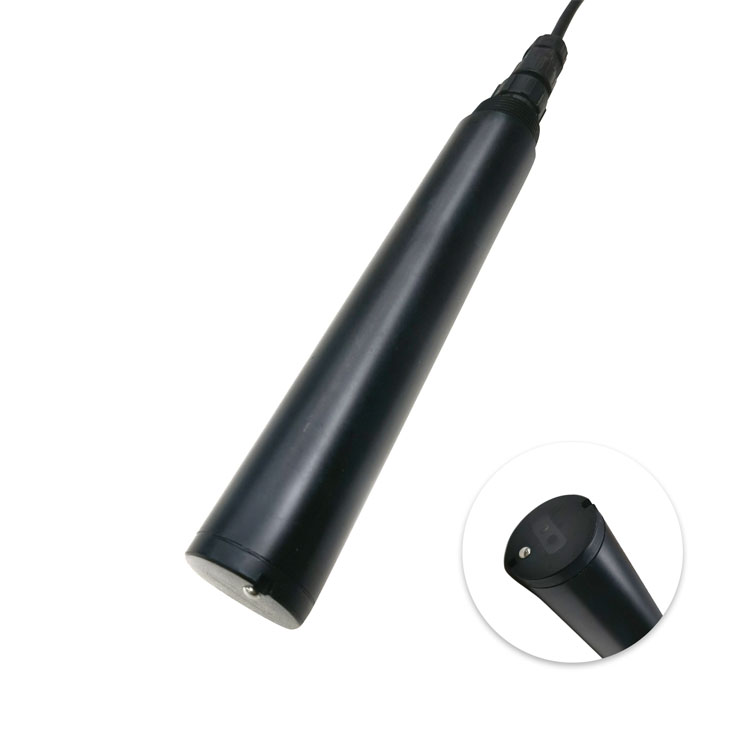 Online Turbidity Sensor RS485 Modbus | NBL-WQ-TS
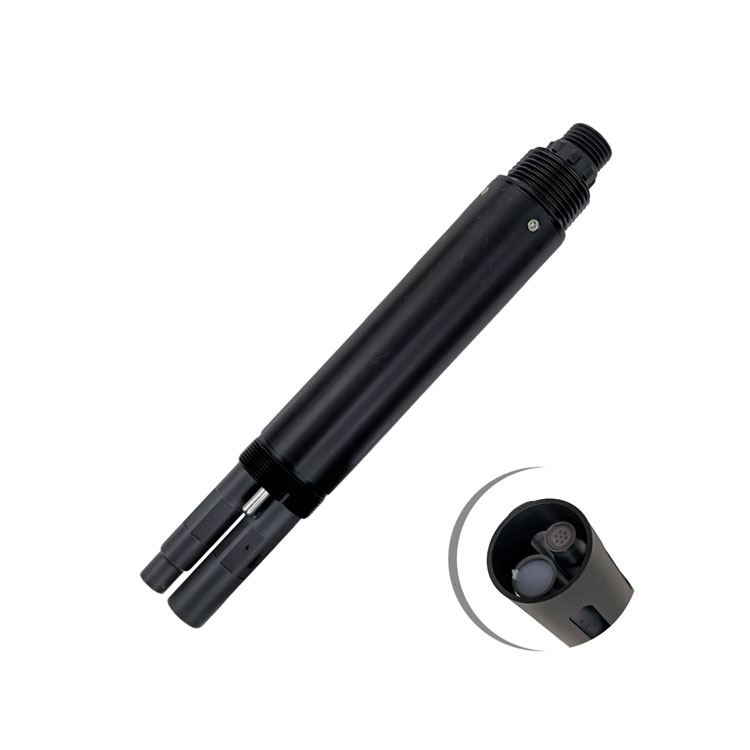 Online Ammonia Nitrogen Sensor (Ammonium ISE) | NBL-WQ-NHN
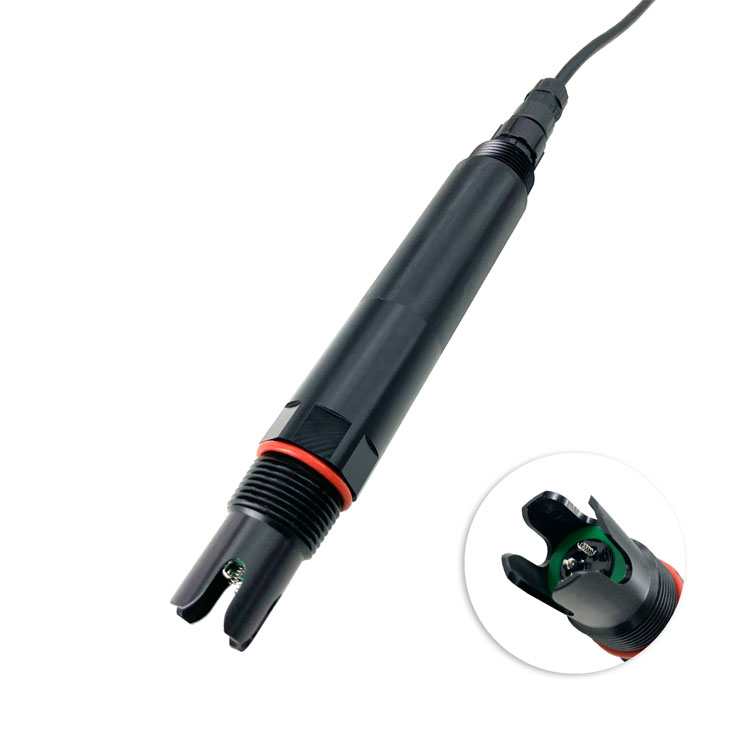 Online Residual Chlorine Sensor (HOCl) RS485 | Water Quality Sensor| NBL-WQ-CL
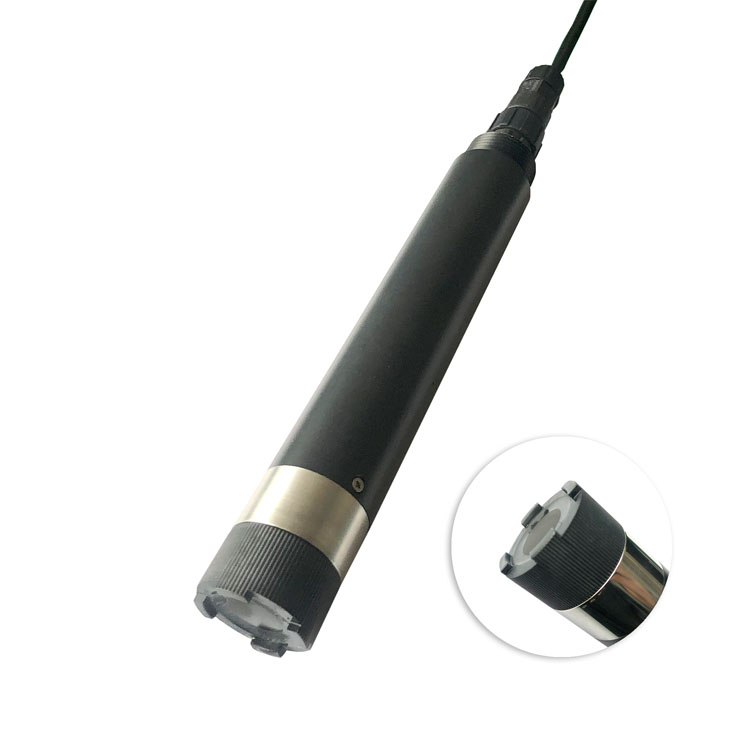 NBL-WQ-DO Online Fluorescence Dissolved Oxygen Sensor
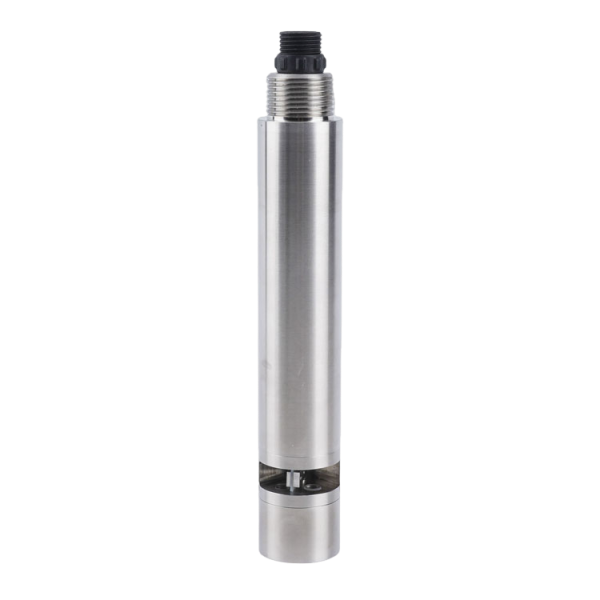 NBL-WQ-COD Online COD Water Quality Sensor
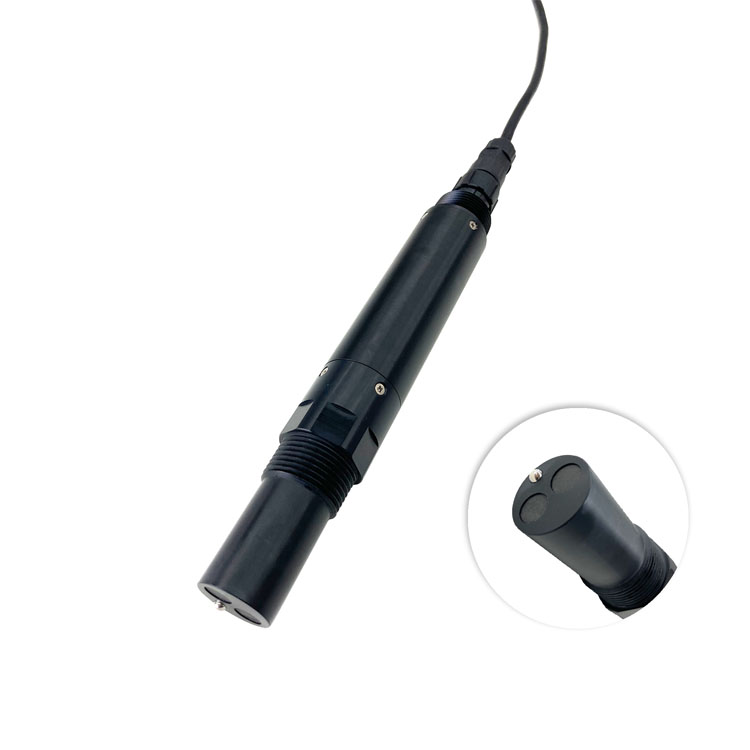 Water Conductivity EC Sensor RS485 Modbus IP68 | NBL-WQ-EC


Screenshot, WhatsApp to identify the QR code
WhatsApp number:+8615367865107
(Click on WhatsApp to copy and add friends)

