





— Blogs —
—Products—
 Consumer hotline +8618073152920
 WhatsApp:+8615367865107
Address:Room 102, District D, Houhu Industrial Park, Yuelu District, Changsha City, Hunan Province, China
Product knowledge
Time:2026-06-13 10:04:40 Popularity:310
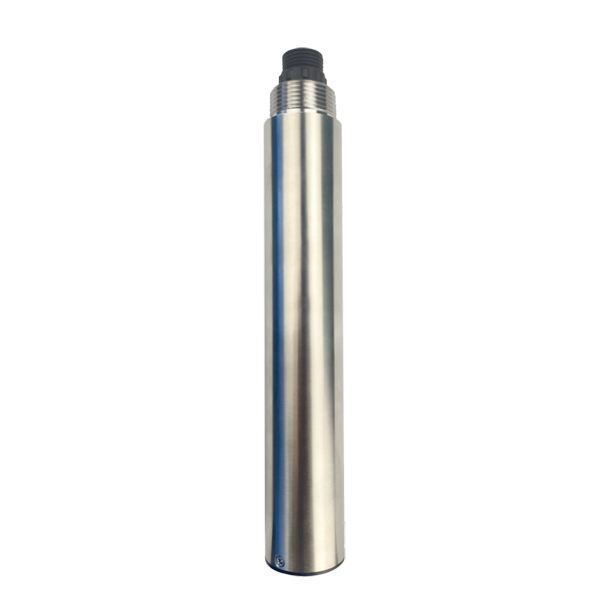
Turbidity and suspended solids are related, but they are not the same measurement. Turbidity describes optical scattering in NTU, while suspended solids describe solid concentration, often in mg/L.
This article is written for distributors, system integrators, engineering contractors and industrial procurement teams that need water quality data to become usable control, alarm or compliance information. Key terms include turbidity and suspended solids sensor, online TSS sensor RS485 Modbus, NTU turbidity sensor selection, suspended solids wastewater monitoring, turbidity vs TSS measurement, municipal wastewater treatment, industrial effluent monitoring, sludge concentration monitoring.
The material explains that turbidity is generally measured by optical methods. At low concentration, scattered light intensity can be proportional to suspended particle concentration, but at high turbidity multiple scattering can cause the turbidity value to be lower than the actual solids condition.
Suspended solids include inorganic particles, organic particles, clay, silt, microorganisms and other insoluble matter. In wastewater and metallurgy, suspended solids can range from low values to very high concentrations, depending on the process stream.
NiuBoL turbidity and suspended solids sensors can be installed in influent channels, clarification outlets, filtration outlets, aeration basins, sludge return lines and final effluent points. The correct sensor depends on whether the project needs water clarity trend or solids concentration.
Both online turbidity and TSS sensors can support RS485 Modbus RTU, allowing values to be integrated into PLC, SCADA, RTU or IoT monitoring systems. Optional 4-20 mA can support legacy systems where required.
For engineering delivery, RS485 Modbus RTU should be treated as part of the measurement architecture. Address planning, register scaling, grounding, shielding and waterproof junctions should be documented before the system is handed over. This helps the buyer expand the project later without replacing the original measurement layer.
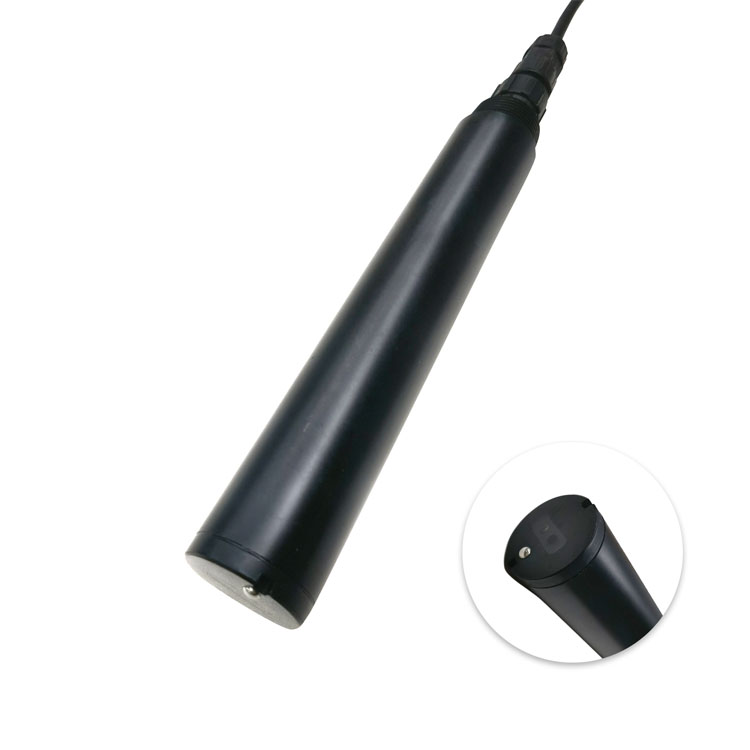
Turbidity is useful when the project cares about clarity, filtration breakthrough, source-water change or final effluent appearance. Low NTU ranges need good optical sensitivity and stable sampling.
Water plants, intake stations and low-solids discharge points often use turbidity because it reacts quickly to particle movement.
TSS measurement is better when the project cares about concentration of suspended solids or sludge. Aeration basins, sludge return, industrial wastewater and high-solids streams often need TSS rather than NTU.
Using turbidity as a substitute for TSS without site correlation can mislead the operator, especially when particle size, color or composition changes.
The table compares NiuBoL turbidity and suspended solids sensor references for wastewater and process monitoring projects.
| Parameter | Specification |
|---|---|
| Turbidity model reference | NBL-WQ-TS-4A |
| Turbidity principle | 90-degree scattered light method with infrared LED source |
| Turbidity range | 0 to 20.00 NTU / 0 to 200.0 NTU / 0 to 1000.0 NTU |
| Turbidity accuracy | +/-3% or +/-1.5 NTU for low range; +/-3% or +/-2 NTU for mid range; +/-5% or +/-3 NTU for high range |
| Suspended solids model reference | NBL-WQ-TSS-4A |
| Suspended solids principle | Backscattered light measurement of suspended solids concentration |
| Suspended solids range | 0 to 2000.0 mg/L |
| Suspended solids accuracy | +/-5% depending on sludge homogeneity; temperature +/-0.3 degC |
| Output signal | RS485 Modbus RTU; optional 4-20 mA |
| Power supply | 12 to 24 VDC |
| Protection rating | IP68, submerged use within rated depth |
| Installation | Immersion installation, 3/4 NPT thread |
| Cable material / length | Waterproof shielded cable, standard 5 m, customizable |
Optical sensors can be affected by particle size, color absorption, bubbles, window fouling and multiple scattering. These effects do not make the method unsuitable, but they mean installation and cleaning must be part of the engineering scope.
A good commissioning process compares online trend data with reference tests and sets alarm thresholds based on site behavior, not only on catalogue ranges.
In some processes, turbidity and suspended solids trend together. In others, the relationship changes when particle size, color, biological floc or sludge composition changes. A site correlation test helps decide whether NTU can be used as a proxy or whether direct TSS measurement is required.
For commissioning, the integrator can collect online readings and laboratory suspended solids results over several operating conditions. This creates a practical reference curve for the site instead of relying on a generic assumption.
Optical particle sensors should be placed where flow is representative and the optical window is not constantly buried, exposed to air or hit by large debris. In channels, a bracket should keep the probe stable but removable.
If the project involves high solids, the mounting should allow frequent cleaning. If the water is clean and low turbidity, a flow cell can provide better stability and reduce bubbles.
Turbidity after filtration or clarification can act as an early warning for solids carryover. TSS in aeration or sludge lines can support biomass and sludge-return decisions.
These two data types serve different staff needs. Process engineers may care about sludge concentration, while compliance or filtration teams may care about final clarity. The purchase package should reflect both roles.
One common mistake is selecting a turbidity sensor for sludge concentration because both involve particles. Another is selecting a high-range TSS sensor for low-NTU filtered water where clarity changes matter. These mistakes usually come from specifying the pollutant name instead of the process decision.
The buyer should write the required output unit directly in the inquiry: NTU for turbidity trend, mg/L for suspended solids concentration, or both if the plant needs clarity and solids process control. The expected concentration range and sample condition should be included.
For system integrators, this clarity reduces rework in SCADA screens, alarm thresholds and acceptance testing. It also helps the customer understand why two optical-looking sensors may have different engineering purposes.
Acceptance should include clean-water response, site-water response, communication stability and at least one reference comparison. For TSS, the reference comparison should use the method agreed by the owner, because sludge homogeneity affects repeatability.
The project should also define cleaning condition before testing. A dirty optical window can make a good sensor look inaccurate, while an unrealistic clean sample may hide the real maintenance burden.
For wastewater plants, it is useful to record a short trend during normal process operation before final handover. The trend helps the owner understand normal fluctuation and set realistic alarm limits.
If the customer plans to use the signal for automatic control, alarm delay and maintenance alarms should be configured separately from process alarms. This avoids stopping equipment because the probe needs cleaning rather than because the process has failed. It also gives operators clearer instructions during abnormal readings and scheduled maintenance. The measuring range should be confirmed before the cabinet is built and labeled clearly.
Site environment challenge: Low turbidity breakthrough must be detected quickly.
System integration scheme: Use a turbidity sensor in a controlled flow or stable outlet point.
User value delivered: Operators can identify filter loading or breakthrough earlier.
Site environment challenge: Solids carryover can affect final discharge.
System integration scheme: Install turbidity or TSS monitoring depending on expected concentration.
User value delivered: The plant can adjust sludge removal or coagulant dosing.
Site environment challenge: Biological treatment requires stable sludge concentration.
System integration scheme: Use suspended solids monitoring in the mixed liquor zone.
User value delivered: Operators gain continuous biomass trend data.
Site environment challenge: Particle type and concentration may change by production batch.
System integration scheme: Use TSS monitoring with site correlation and cleaning access.
User value delivered: The contractor can manage solids removal with fewer blind spots.
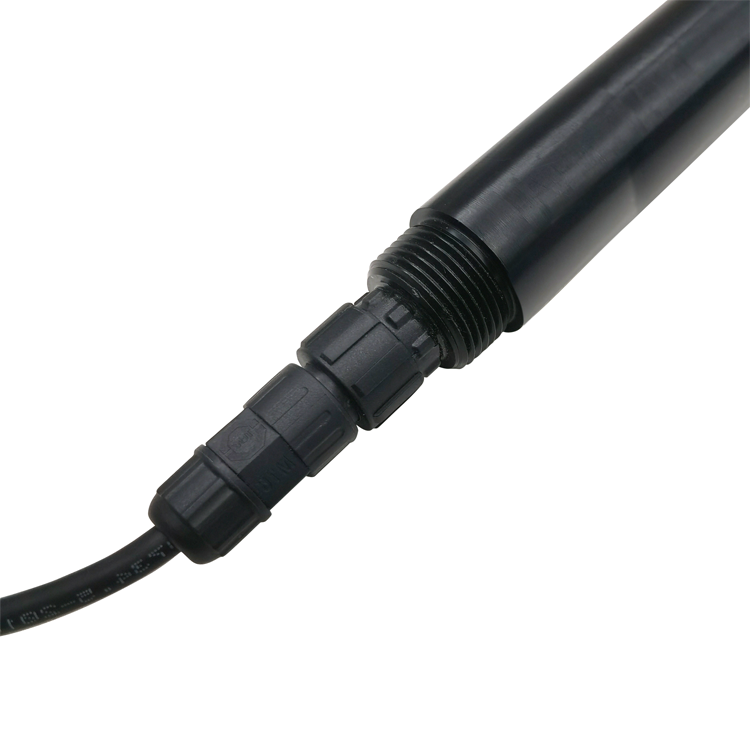
The selection question is not which sensor is generally better, but which physical value the process needs.
The material recommends cleaning the sensor surface with water, using a wet soft cloth for remaining debris and checking the measurement window for dirt. Cable tension should be avoided because internal conductors can break.
For high-solids streams, cleaning frequency should be increased and alarm rules should account for short hydraulic disturbances.
Optical particle measurements depend on representative flow and a clean measurement window.
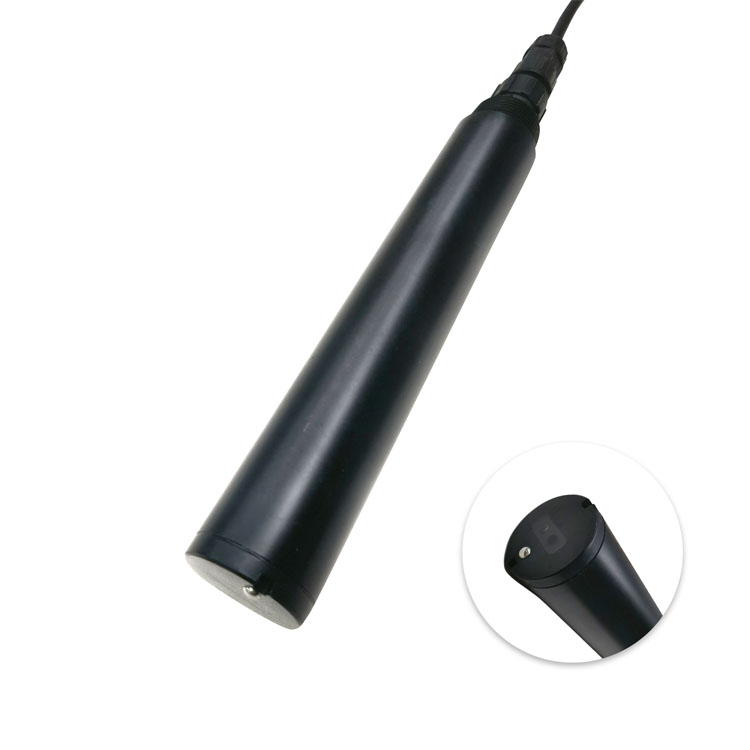
No. Turbidity measures optical scattering, while TSS measures suspended solid concentration.
Sometimes, but only after site correlation. Particle type and high concentration can break the relationship.
Yes. The recommended engineering interface is RS485 Modbus RTU, so values can be read by PLC, DCS, RTU, SCADA, industrial computer, recorder or IoT gateway.
Yes. The field device should be assigned a Modbus address, register scaling should be confirmed, and the power supply and cable route should be checked before commissioning.
Temperature changes can affect electrochemical, optical and conductivity measurements. Automatic compensation helps reduce drift when the water temperature changes.
The NBL-WQ-TSS-4A reference range is 0 to 2000 mg/L.
Fouling changes the optical path and can create drift or noisy readings.
The selected range should cover normal operation, expected alarm values and abnormal events without losing resolution in the working range.
A single sensor is enough when one decision is required. A station is better when several parameters must be interpreted together for discharge, process control or aquaculture management.
Confirm water type, expected concentration, installation method, cable length, output interface, power supply, controller type, cleaning access and required documentation.
Turbidity and suspended solids sensors answer different engineering questions. NiuBoL online NTU and TSS sensors support RS485 Modbus RTU integration for filtration, clarification, sludge and industrial wastewater projects where particle data must become usable process information.
Prev:Conductivity Factors in Water Quality Monitoring: Temperature, Ions and Sensor Selection
Next:Turbidity Testing Methods, Chloride Risk and Online Monitoring for Water Projects
Related recommendations
Sensors & Weather Stations Catalog
 Agriculture Sensors and Weather Stations Catalog-NiuBoL.pdf
Weather Stations Catalog-NiuBoL.pdf
Agriculture Sensors Catalog-NiuBoL.pdf
Water Quality Sensor Catalog-NiuBoL.pdf
Related products
 Combined air temperature and relative humidity sensor
 TDR Soil Moisture & Temperature Sensor for irrigation| RS485 |4-20mA| NBL-S-THR
 Soil pH sensor RS485 soil Testing instrument soil ph meter for agriculture |NBL-S-PH
 Wind Speed sensor Output Modbus/RS485/Analog/0-5V/4-20mA
 Tipping bucket rain gauge for weather monitoring auto rainfall sensor RS485/Outdoor/stainless steel
 Pyranometer Solar Radiation Sensor 4-20mA/RS485

Screenshot, WhatsApp to identify the QR code
WhatsApp number:+8615367865107
(Click on WhatsApp to copy and add friends)

