





— Blogs —
—Products—
 Consumer hotline +8618073152920
 WhatsApp:+8615367865107
Address:Room 102, District D, Houhu Industrial Park, Yuelu District, Changsha City, Hunan Province, China
Product knowledge
Time:2026-06-13 09:23:31 Popularity:266
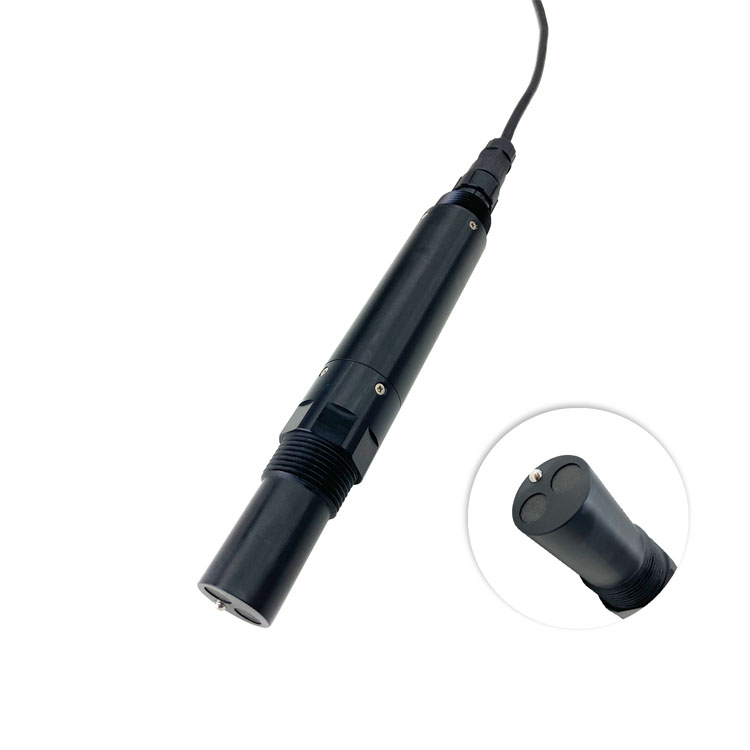
Conductivity is a fast indicator of ionic concentration, salinity change, chemical contamination and process-water stability. It is simple to display, but it needs correct temperature compensation and range selection to be useful in engineering systems.
This article is written for distributors, system integrators, engineering contractors and industrial procurement teams that need water quality data to become usable control, alarm or compliance information. Key terms include conductivity sensor for water quality, online EC sensor RS485 Modbus, water conductivity temperature compensation, TDS conductivity monitoring, industrial conductivity sensor selection, drinking water monitoring, surface water monitoring, industrial process water.
Conductivity describes how easily a medium carries electric current. In water quality monitoring, it is related to dissolved salts and other electrolyte substances. For drinking water, surface water, supply water and wastewater, conductivity can show abnormal ionic changes earlier than many laboratory indicators.
The material highlights temperature, dissolved electrolyte concentration and material behavior as factors that influence conductivity. For water projects, temperature compensation is the most common practical concern because readings from different temperatures need a common reference basis.
The NiuBoL NBL-WQ-EC online conductivity sensor can be installed in tanks, channels, pipelines or monitoring stations. It can output conductivity and TDS values to a PLC, DCS, industrial computer, recorder, touch screen or IoT gateway.
RS485 Modbus RTU allows the EC sensor to work as part of a larger water quality system. Conductivity can be stored together with pH, turbidity, residual chlorine, ammonia nitrogen and flow data for process interpretation.
For engineering delivery, RS485 Modbus RTU should be treated as part of the measurement architecture. Address planning, register scaling, grounding, shielding and waterproof junctions should be documented before the system is handed over. This helps the buyer expand the project later without replacing the original measurement layer.
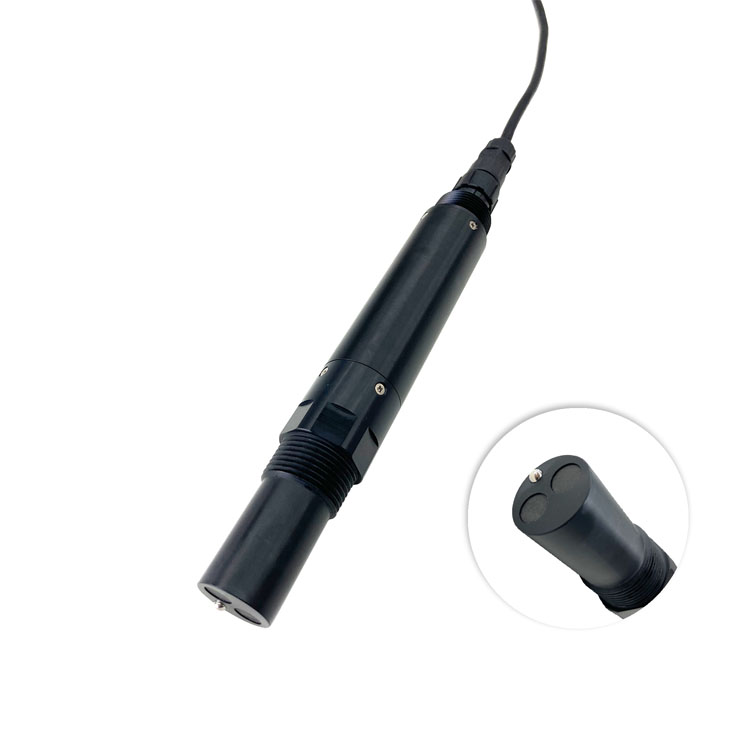
Conductivity changes with temperature. Without compensation, a change in water temperature may be misread as a change in ionic concentration.
Automatic Pt1000 temperature compensation helps the system compare data more consistently across day-night changes, seasonal changes and different process conditions.
In water solutions, conductivity generally increases when dissolved salts or electrolyte impurities increase. This makes EC useful for source water change, membrane process monitoring, industrial rinse water, cooling water concentration and abnormal discharge screening.
TDS output can be useful for operators, but procurement teams should understand that TDS is derived from conductivity and depends on conversion assumptions.
The table summarizes NBL-WQ-EC online conductivity sensor parameters for procurement and system integration.
| Parameter | Specification |
|---|---|
| Model | NBL-WQ-EC |
| Measurement principle | Electrode conductivity measurement with automatic temperature compensation |
| Measurement range | 0 to 5000 uS/cm; TDS 0 to 3000 mg/L |
| Resolution | 1 uS/cm; temperature 0.1 degC |
| Measurement accuracy | +/-1.5% of reading; temperature +/-0.3 degC |
| Response time | T90 < 30 s |
| Minimum detection limit | 2 uS/cm |
| Calibration | Two-point calibration |
| Temperature compensation | Automatic temperature compensation, Pt1000 |
| Output signal | RS485, Modbus RTU |
| Power supply | 12 to 24 VDC |
| Power consumption | 0.1 W at 12 V |
| Working condition | 0 to 50 degC, pressure <=0.6 MPa |
| Installation | Immersion installation, 3/4 NPT thread |
| Protection rating | IP68 |
| Cable material / length | Waterproof shielded cable, standard 5 m, customizable |
Conventional electrodes need periodic cleaning and calibration. Deposits should be removed carefully with a soft brush and distilled water. Inductive electrodes can tolerate dirtier environments, but the housing still needs inspection when scaling is heavy.
The correct maintenance method depends on the probe type and water matrix. A clean-water station and a scaling industrial wastewater point should not have the same service plan.
A conductivity value without temperature context can be difficult to compare. Procurement documents should state whether the sensor has automatic temperature compensation, what temperature element is used and how the platform displays compensated values.
This matters for outdoor stations, cooling systems and water networks where daily and seasonal temperature variation is normal. Stable compensation helps operators avoid interpreting temperature-driven movement as real salinity or contamination change.
Conductivity is not a complete water quality analysis, but it is an effective screening signal. A sudden EC change may indicate saltwater intrusion, chemical leakage, concentrated wastewater, poor rinsing or cooling-water concentration change.
When conductivity is combined with pH, turbidity and flow, the operator gains a stronger basis for deciding whether to sample, alarm or adjust treatment. This makes EC valuable in both low-cost stations and industrial control loops.
Conductivity may be displayed as uS/cm or mS/cm, while TDS may be displayed in mg/L. A unit mismatch in a SCADA or cloud platform can make a normal value look abnormal by a factor of 1000.
The system integrator should verify units during commissioning, document register scaling and keep a screenshot or acceptance record. This small step prevents many later data disputes.
Range is important, but it is not the only decision. The buyer should confirm whether the process needs conductivity only, conductivity plus TDS, temperature output, alarm output, Modbus register documentation, cable customization or a display controller.
For OEM cabinet builders, RS485 communication reduces analog scaling work, but only if the register map and unit conversion are clear. For replacement projects, optional analog output or controller compatibility may still matter.
A good conductivity inquiry includes water type, expected normal value, maximum possible value, installation method, pipe or tank material, controller model and required data display unit. These details help prevent selecting a sensor that works electrically but does not match the customer's workflow.
Commissioning should confirm that conductivity and TDS values are displayed in the correct units and that temperature compensation is enabled as specified. The team should test the sensor in a standard solution and record the value before installing it in the process.
For remote monitoring projects, the platform should store conductivity, temperature and alarm events separately. If only a converted TDS value is stored, later troubleshooting becomes harder because the original EC trend is lost.
Where conductivity is used for blowdown, rinse control or source-water alarm, the acceptance test should include the relay, PLC or platform action connected to the value. This proves that the data is not only visible, but operational.
For multi-site projects, using the same EC range and display unit across stations makes reporting cleaner and reduces operator training errors. The quotation should also state whether the customer needs a local display or only gateway data. This small clarification helps distributors avoid supplying unnecessary display hardware and extra cabinet work.
Site environment challenge: Source changes or treatment problems may change ion concentration.
System integration scheme: Install EC monitoring with pH and turbidity at plant or network points.
User value delivered: Operators gain fast indication of abnormal water chemistry.
Site environment challenge: Conductivity indicates carryover, contamination or rinse efficiency.
System integration scheme: Connect EC sensor to PLC and use alarms or process interlocks.
User value delivered: The plant can reduce water waste and protect product quality.
Site environment challenge: Concentration cycles affect scaling and corrosion risk.
System integration scheme: Use conductivity trend with blowdown control strategy.
User value delivered: Maintenance teams can manage water use and scaling risk.
Site environment challenge: Rainfall, saltwater intrusion or industrial inflow can change ionic load.
System integration scheme: Deploy EC with temperature, pH and turbidity in a field station.
User value delivered: Environmental managers receive early warning of water-quality change.
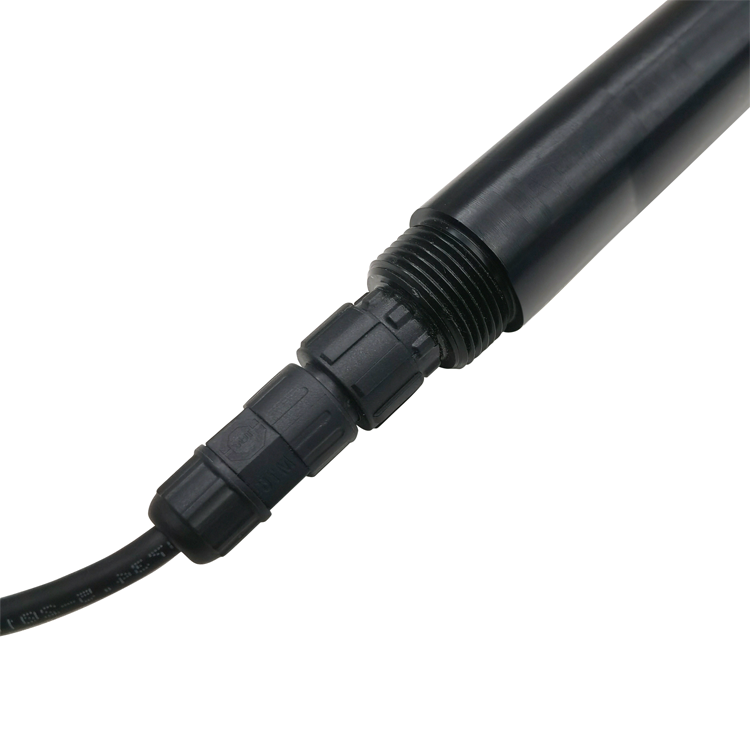
Conductivity selection should match water type, expected range and maintenance environment.
Zero calibration can be performed after cleaning and drying the probe, with the sensor powered and placed vertically in air until stable. Slope calibration uses a standard solution within the required range, with clearance from the vessel bottom and side wall.
For pipelines and tanks, the 3/4 NPT installation should be sealed correctly and the cable should be protected from long-term tension.
Conductivity is often reliable, but poor installation can still create misleading data.
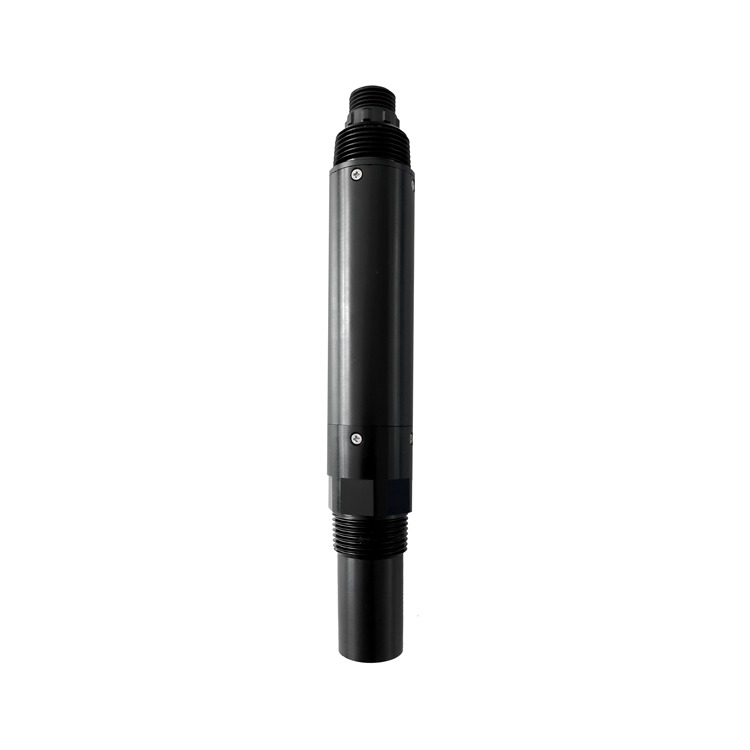
Temperature, dissolved electrolyte concentration, water chemistry and sensor condition affect conductivity readings.
It can indicate ionic changes or abnormal inflow, but it does not identify every pollutant by itself.
Yes. The recommended engineering interface is RS485 Modbus RTU, so values can be read by PLC, DCS, RTU, SCADA, industrial computer, recorder or IoT gateway.
Yes. The field device should be assigned a Modbus address, register scaling should be confirmed, and the power supply and cable route should be checked before commissioning.
Temperature changes can affect electrochemical, optical and conductivity measurements. Automatic compensation helps reduce drift when the water temperature changes.
The reference range is 0 to 5000 uS/cm, with TDS 0 to 3000 mg/L.
A platform configured for mS/cm while the sensor reports uS/cm can create a large interpretation error.
The selected range should cover normal operation, expected alarm values and abnormal events without losing resolution in the working range.
A single sensor is enough when one decision is required. A station is better when several parameters must be interpreted together for discharge, process control or aquaculture management.
Confirm water type, expected concentration, installation method, cable length, output interface, power supply, controller type, cleaning access and required documentation.
Conductivity monitoring is valuable because it gives fast insight into ionic change and process-water stability. NiuBoL NBL-WQ-EC sensors provide RS485 Modbus RTU output, temperature compensation and online EC/TDS data for drinking water, surface water and industrial systems.
Prev:Free Chlorine and Total Chlorine Monitoring: What Water Treatment Buyers Should Specify
Next:Turbidity and Suspended Solids: How to Select NTU or TSS Sensors for Wastewater Projects
Related recommendations
Sensors & Weather Stations Catalog
 Agriculture Sensors and Weather Stations Catalog-NiuBoL.pdf
Weather Stations Catalog-NiuBoL.pdf
Agriculture Sensors Catalog-NiuBoL.pdf
Water Quality Sensor Catalog-NiuBoL.pdf
Related products
 Combined air temperature and relative humidity sensor
 TDR Soil Moisture & Temperature Sensor for irrigation| RS485 |4-20mA| NBL-S-THR
 Soil pH sensor RS485 soil Testing instrument soil ph meter for agriculture |NBL-S-PH
 Wind Speed sensor Output Modbus/RS485/Analog/0-5V/4-20mA
 Tipping bucket rain gauge for weather monitoring auto rainfall sensor RS485/Outdoor/stainless steel
 Pyranometer Solar Radiation Sensor 4-20mA/RS485

Screenshot, WhatsApp to identify the QR code
WhatsApp number:+8615367865107
(Click on WhatsApp to copy and add friends)

