





— Blogs —
—Products—
 Consumer hotline +8618073152920
 WhatsApp:+8615367865107
Address:Room 102, District D, Houhu Industrial Park, Yuelu District, Changsha City, Hunan Province, China
Product knowledge
Time:2026-06-13 09:23:30 Popularity:804
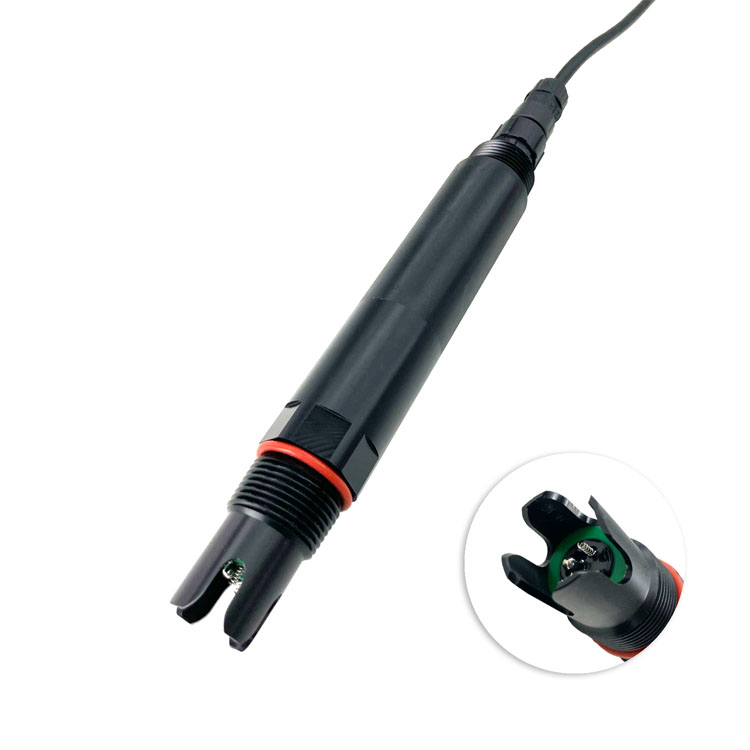
Free chlorine and total chlorine are related, but they should not be specified as the same measurement. For water treatment projects, the difference affects disinfection control, contact time, monitoring point selection and procurement documents.
This article is written for distributors, system integrators, engineering contractors and industrial procurement teams that need water quality data to become usable control, alarm or compliance information. Key terms include free chlorine and total chlorine monitoring, online residual chlorine analyzer, free chlorine sensor for drinking water, total chlorine monitoring in water treatment, RS485 Modbus chlorine sensor, drinking water disinfection, pool water monitoring, water distribution network.
After chlorine is dosed into water, part of it reacts with bacteria, microorganisms, organic matter and inorganic reducing substances. The remaining chlorine is residual chlorine. Free residual chlorine includes Cl2, HClO and ClO-. Combined chlorine includes chloramine forms such as NH2Cl, NHCl2 and NCl3.
Total chlorine is the sum of free chlorine and combined chlorine. In common water plant language, residual chlorine often refers to free chlorine, but procurement documents should state the required parameter clearly to avoid selecting the wrong instrument.
NiuBoL online residual chlorine sensors can be integrated at water plant outlet points, disinfection contact tanks, distribution network monitoring points, swimming pool systems and industrial water disinfection loops.
RS485 Modbus RTU allows chlorine values to be collected by PLC, DCS, SCADA, recorder or IoT gateway. In water plants, chlorine data is often reviewed together with pH, turbidity, flow and temperature because disinfection performance depends on operating context.
For engineering delivery, RS485 Modbus RTU should be treated as part of the measurement architecture. Address planning, register scaling, grounding, shielding and waterproof junctions should be documented before the system is handed over. This helps the buyer expand the project later without replacing the original measurement layer.
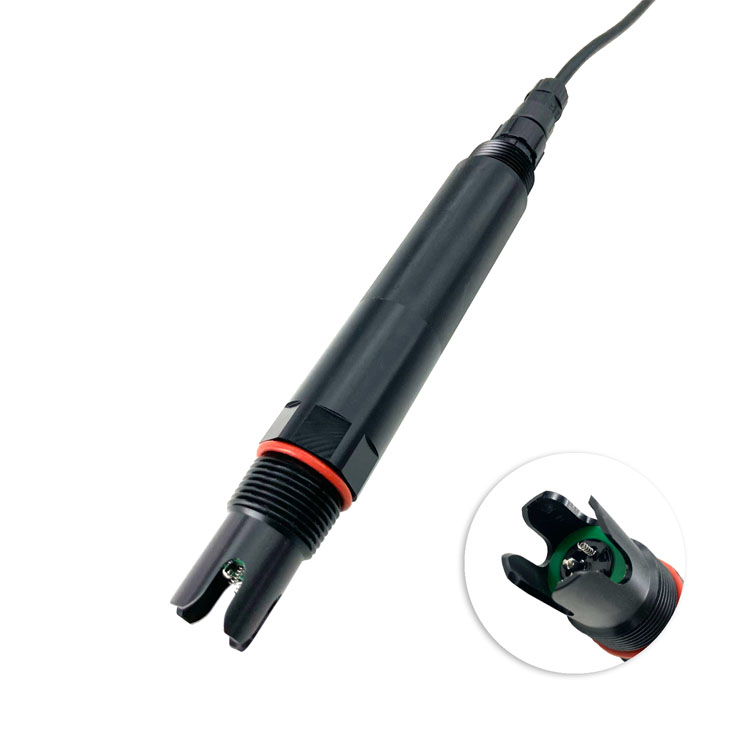
For drinking water, the material notes typical requirements: free chlorine should have at least 30 minutes contact time, factory outlet residual should be no less than 0.3 mg/L, outlet limit is 4 mg/L, and terminal network residual should be no less than 0.05 mg/L.
For total chlorine, at least 120 minutes contact time is noted, with factory outlet total chlorine no less than 0.5 mg/L, outlet limit 3 mg/L and terminal residual no less than 0.05 mg/L. Project teams should always confirm the current local standard before final acceptance.
Free chlorine reacts quickly because HClO and ClO- have strong oxidizing ability. Combined chlorine is weaker and slower, but sufficient concentration and contact time can still achieve disinfection targets.
This is why chlorine monitoring should not be separated from flow path and contact time. A sensor at the wrong point may show a value before the water has achieved the intended disinfection condition.
The table summarizes chlorine-monitoring concepts and integration points used in water treatment procurement. Final instrument selection should confirm whether free chlorine, total chlorine or both are required.
| Parameter | Specification |
|---|---|
| Model | NBL-WQ-CL |
| Measured parameter | Free residual chlorine for disinfection monitoring |
| Typical drinking water control reference | Factory outlet free chlorine >=0.3 mg/L after at least 30 min contact; network terminal >=0.05 mg/L |
| Free chlorine forms | Cl2, HClO and ClO- |
| Total chlorine concept | Free chlorine plus combined chlorine such as NH2Cl, NHCl2 and NCl3 |
| Output signal | RS485 Modbus RTU; 4-20 mA available in selected configurations |
| Power supply | 12 to 24 VDC |
| Installation | Flow cell or pipeline sampling installation according to water plant design |
| Protection / cabinet | Industrial online installation with waterproof field wiring |
| Associated parameters | pH, temperature, turbidity and conductivity are commonly integrated |
| System interface | PLC, DCS, SCADA, recorder, controller or IoT gateway |
| Maintenance | Regular cleaning, calibration and reagent/electrode inspection according to configuration |
A common purchasing problem is writing residual chlorine in the inquiry without saying whether free chlorine, total chlorine or both are required. This can create wrong sensor selection, wrong calibration materials and wrong acceptance tests.
The buyer should specify water type, disinfectant, expected range, monitoring point, regulatory reference and whether the value is used for dosing control or reporting.
The purchase document should state whether the project requires free chlorine, total chlorine or both. It should also state the disinfectant type, sample point, expected range, local standard, contact time and whether the signal will be used for dosing control.
This level of clarity prevents a common mismatch: the buyer expects a disinfection-control value, while the supplied system measures a different chlorine species or is installed at a point that does not match the required contact time.
Disinfection is not only a concentration value. The product of concentration and time, often described as CT, explains why contact time matters. Free chlorine may act faster, while combined chlorine may require longer exposure.
When engineers discuss chlorine monitoring with plant operators, they should connect sensor location with the hydraulic path. A sensor installed too soon after dosing may not represent the water that has completed the required disinfection time.
Low chlorine residual creates microbial risk, while excessive residual can irritate users, increase chemical cost and create downstream concerns. Online monitoring helps narrow the control window.
For pool systems and water plants, the chlorine value should be reviewed with pH because pH affects chlorine form and disinfection behavior. This is why chlorine and pH are often paired in integrated monitoring projects.
When chlorine data is used for automatic dosing, the control loop must consider delay between chemical injection and measurement. If the sensor is too close to the dosing point, the controller may react to unmixed water. If it is too far away, response may be slow. The correct position depends on contact tank design, flow rate and control objective.
A practical system often combines local chlorine measurement, pH monitoring, flow signal and dosing pump status. The operator can then judge whether a low chlorine value comes from insufficient dosage, high demand, poor mixing, sample-line issue or sensor maintenance need.
For buyers, this means the chlorine analyzer should not be purchased as an isolated device. It should be specified with sample condition, control strategy and reporting requirement.
Acceptance should compare online readings with a recognized field or laboratory method at the same sampling point. The test should also confirm sample flow, response after concentration change, alarm output, communication value and platform unit.
For water plants, the acceptance document should state whether the value represents free chlorine or total chlorine. This avoids later confusion when operators compare the online value with handheld tests or regulatory reports.
Site environment challenge: Water must keep residual disinfectant after treatment while avoiding excessive chlorine.
System integration scheme: Install online free chlorine monitoring with pH and turbidity context.
User value delivered: Operators can maintain disinfection stability and support compliance records.
Site environment challenge: Residual chlorine may decay during transport.
System integration scheme: Use terminal monitoring points connected to a remote platform.
User value delivered: The utility can detect low residual risk earlier.
Site environment challenge: Excess chlorine irritates eyes, skin and respiratory system, while low chlorine raises hygiene risk.
System integration scheme: Monitor free chlorine and pH with alarm thresholds.
User value delivered: Operators can balance sanitation and user safety.
Site environment challenge: Disinfection and biofouling control depend on stable residual.
System integration scheme: Integrate chlorine values into PLC or DCS with flow data.
User value delivered: The site can control dosing and reduce unnecessary chemical use.
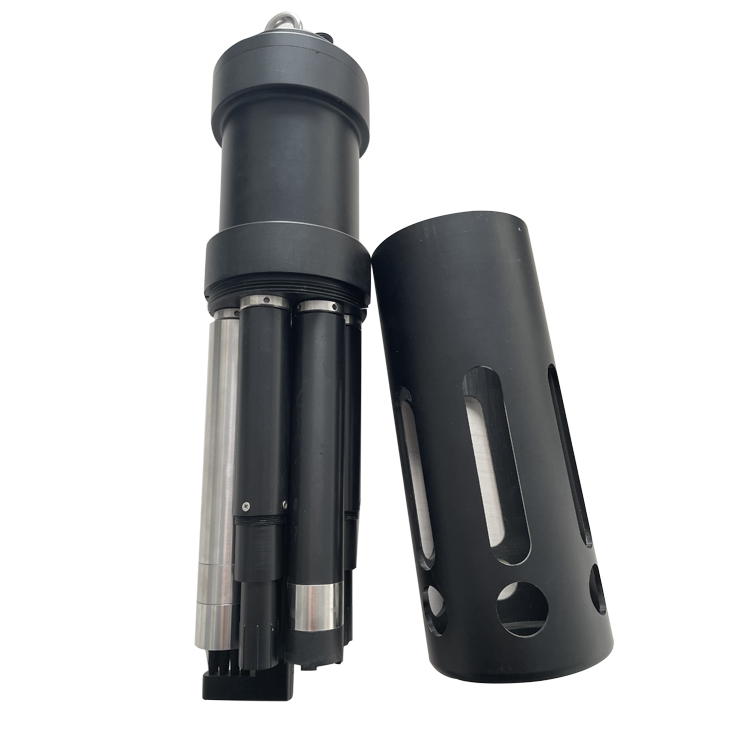
Chlorine monitoring should start with the required chlorine species and the control purpose.
The material notes that excessive residual chlorine can irritate eyes, skin and respiratory systems, react with organic matter and damage hair or skin. In industrial terms, excessive dosing also increases chemical cost and may create downstream corrosion or by-product concerns.
Good monitoring helps avoid both under-disinfection and over-dosing.
Chlorine data is sensitive to sampling location, flow, pH and maintenance condition.
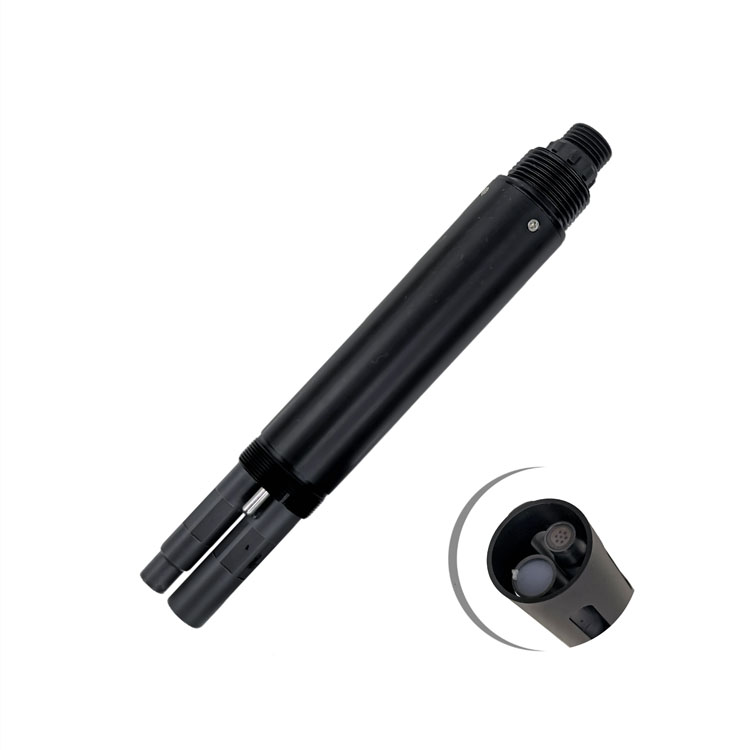
Free chlorine includes Cl2, HClO and ClO-. Total chlorine equals free chlorine plus combined chlorine such as chloramines.
Disinfection depends on concentration and exposure time, so sensor location should match the intended control point.
Yes. The recommended engineering interface is RS485 Modbus RTU, so values can be read by PLC, DCS, RTU, SCADA, industrial computer, recorder or IoT gateway.
Yes. The field device should be assigned a Modbus address, register scaling should be confirmed, and the power supply and cable route should be checked before commissioning.
Temperature changes can affect electrochemical, optical and conductivity measurements. Automatic compensation helps reduce drift when the water temperature changes.
Yes. Excess chlorine can irritate skin, eyes and respiratory systems and may react with organic substances.
Often yes, because pH affects chlorine species and disinfection performance.
The selected range should cover normal operation, expected alarm values and abnormal events without losing resolution in the working range.
A single sensor is enough when one decision is required. A station is better when several parameters must be interpreted together for discharge, process control or aquaculture management.
Confirm water type, expected concentration, installation method, cable length, output interface, power supply, controller type, cleaning access and required documentation.
Free chlorine and total chlorine should be specified clearly in water treatment projects. NiuBoL online chlorine monitoring solutions support RS485 Modbus RTU integration for water plants, distribution networks, pool systems and industrial disinfection control.
Prev:Online pH Meter Installation and Maintenance Guide for Industrial Water Quality Systems
Next:Conductivity Factors in Water Quality Monitoring: Temperature, Ions and Sensor Selection
Related recommendations
Sensors & Weather Stations Catalog
 Agriculture Sensors and Weather Stations Catalog-NiuBoL.pdf
Weather Stations Catalog-NiuBoL.pdf
Agriculture Sensors Catalog-NiuBoL.pdf
Water Quality Sensor Catalog-NiuBoL.pdf
Related products
 Combined air temperature and relative humidity sensor
 TDR Soil Moisture & Temperature Sensor for irrigation| RS485 |4-20mA| NBL-S-THR
 Soil pH sensor RS485 soil Testing instrument soil ph meter for agriculture |NBL-S-PH
 Wind Speed sensor Output Modbus/RS485/Analog/0-5V/4-20mA
 Tipping bucket rain gauge for weather monitoring auto rainfall sensor RS485/Outdoor/stainless steel
 Pyranometer Solar Radiation Sensor 4-20mA/RS485

Screenshot, WhatsApp to identify the QR code
WhatsApp number:+8615367865107
(Click on WhatsApp to copy and add friends)

