





— Blogs —
—Products—
 Consumer hotline +8618073152920
 WhatsApp:+8615367865107
Address:Room 102, District D, Houhu Industrial Park, Yuelu District, Changsha City, Hunan Province, China
Product knowledge
Time:2026-06-13 09:23:28 Popularity:331
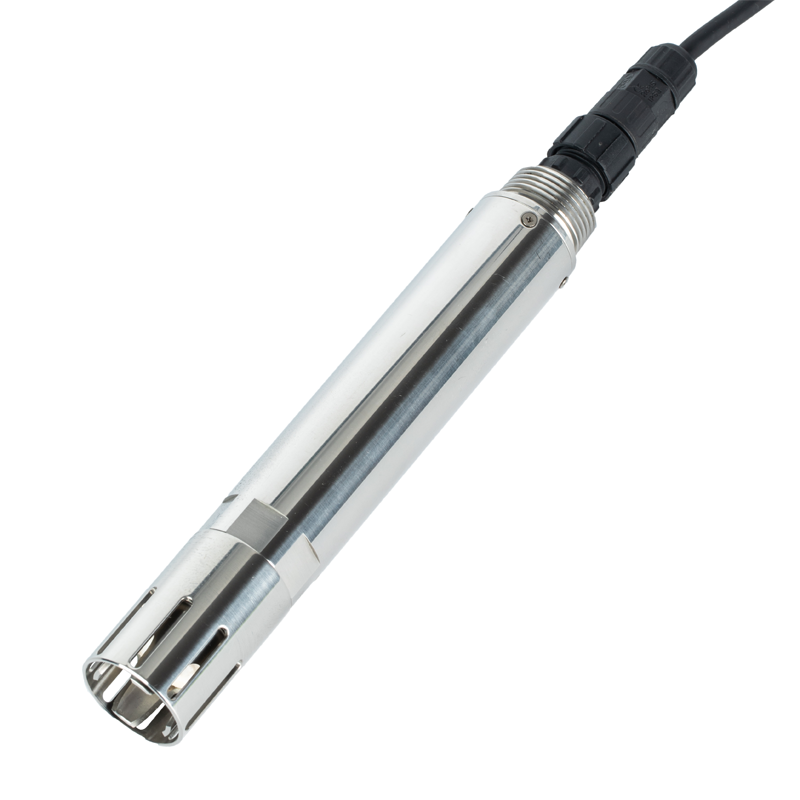
An online pH meter is often installed as a control instrument, not just a measuring instrument. Its value depends on where the electrode is installed, how the cable is protected, how calibration is performed and whether the reference system remains stable.
This article is written for distributors, system integrators, engineering contractors and industrial procurement teams that need water quality data to become usable control, alarm or compliance information. Key terms include online pH meter installation, RS485 Modbus pH sensor, industrial pH electrode maintenance, online pH sensor calibration, pH probe installation in wastewater, wastewater neutralization, chemical reaction monitoring, industrial process water.
The pH measurement principle is based on the potential relationship between the electrode system and hydrogen ion activity. In online service, the glass membrane, internal reference, high-impedance signal, cable insulation and transmitter all influence stability.
Flow-through and immersion installation should be selected by process hydraulics. Wastewater plants often choose immersion installation at representative points such as a grit chamber outlet or overflow channel, where the flow is stable and the electrode is not exposed to strong mechanical impact.
The NiuBoL online pH sensor is the field measurement element in neutralization, coagulation, biological treatment, chemical reaction and environmental monitoring systems. It connects to PLC, DCS, recorder, industrial computer or gateway through RS485 Modbus RTU.
RS485 Modbus RTU reduces analog scaling mistakes and allows the pH value, temperature compensation and device data to be integrated into control or reporting systems. Optional 4-20 mA can support legacy cabinets where required.
For engineering delivery, RS485 Modbus RTU should be treated as part of the measurement architecture. Address planning, register scaling, grounding, shielding and waterproof junctions should be documented before the system is handed over. This helps the buyer expand the project later without replacing the original measurement layer.
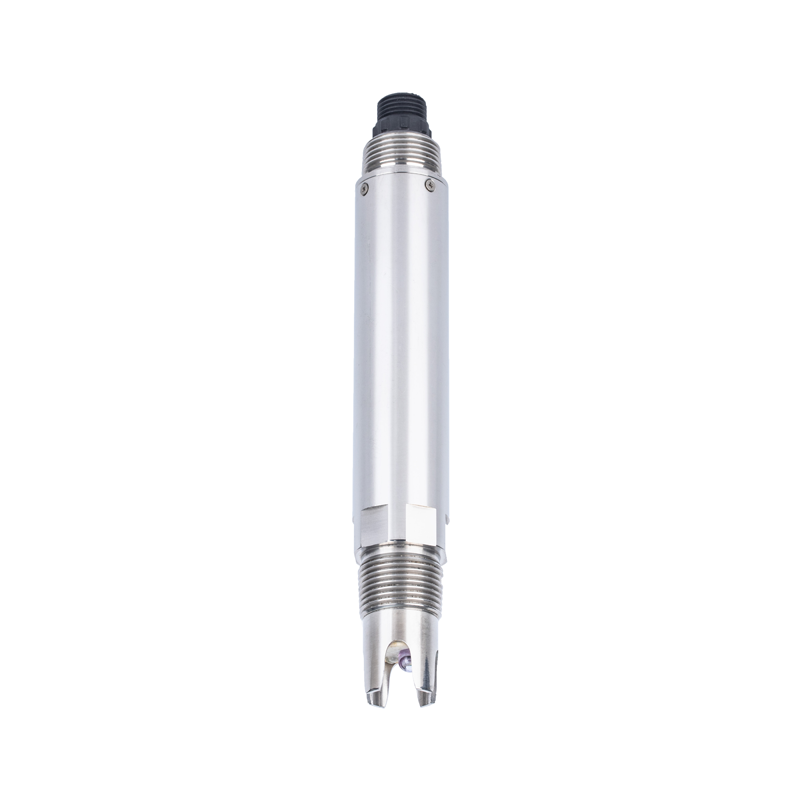
Immersion installation is suitable for tanks, channels and basins where the water is representative and the probe can be removed for cleaning. Flow-through installation is useful when sample flow can be controlled and the sensor needs protection from turbulence or debris.
The 3/4 NPT threaded structure supports tank, pipe or immersion mounting. The project should confirm installation depth, bracket strength, cable route and maintenance clearance before ordering.
When the electrode is not measuring, the protective cap should keep it moist. Dry storage damages the hydration layer and affects response. Long-term soaking in distilled water, protein solution or contact with silicone oil should be avoided.
Cleaning normally starts with gentle water rinsing. Deposits can be removed with suitable cleaning solution, followed by pure water rinse and buffer calibration. If calibration cannot restore response, the electrode should be replaced.
The table summarizes NiuBoL online pH sensor parameters for industrial installation and maintenance planning.
| Parameter | Specification |
|---|---|
| Model | NBL-WQ-PH |
| Measurement principle | Glass electrode method |
| Measurement range | 0 to 14.00 pH |
| Resolution | 0.01 pH, 0.1 degC |
| Measurement accuracy | +/-0.1 pH; temperature +/-0.3 degC |
| Response time | T90 < 30 s |
| Power supply | 12 to 24 VDC |
| Output signal | RS485, Modbus RTU |
| Power consumption | 0.2 W at 12 V |
| Protection rating | IP68 |
| Working conditions | 0 to 50 degC, <=0.2 MPa |
| Temperature compensation | Automatic Pt1000 temperature compensation |
| Installation | Immersion installation, 3/4 NPT thread |
| Cable material / length | Shielded waterproof cable, standard 5 m, customizable |
| Housing material | ABS/PC alloy |
Zero calibration is commonly performed with a near-neutral buffer such as pH 6.86 or pH 7.00. Slope calibration uses acidic pH 4.00 or alkaline pH 9.18 depending on the working range.
During commissioning, the sensor should remain in buffer for several minutes until the value is stable. The calibration record should be stored with date, buffer value and operator name.
A pH probe should not be installed directly beside a chemical dosing point unless the control design intentionally requires that measurement. Local acid or alkali concentration can create unstable readings that do not represent the mixed water.
A better point is usually after sufficient mixing, with stable flow and enough depth to keep the glass membrane wetted. In channels and basins, brackets should allow probe removal without shutting down the process.
pH drift is often blamed on the sensor, but the root cause may be dry storage, dirty membrane, contaminated junction, wet terminals or expired buffer solution. Recording cleaning, buffer calibration and electrode replacement history helps separate normal maintenance from instrument fault.
For industrial buyers, this record is valuable because pH values are often used for dosing, compliance or batch quality. Without maintenance history, it is difficult to defend whether a reading was reliable during a process event.
A pH project should include buffer powder or solution, cleaning procedure, protective cap use, cable waterproofing requirements and operator training. These items are small compared with the sensor price, but they decide whether the system remains stable after installation.
For distributors and integrators, providing a concise maintenance card with each pH sensor can reduce after-sales calls and help the customer use the product correctly.
Slow response usually points to membrane fouling, dehydration or aging. Noisy readings may come from wet terminals, cable damage, electrical interference or poor grounding. Constant offset after calibration may indicate contaminated buffer, reference junction problems or an electrode near the end of life.
The service sequence should be simple: inspect installation, clean the membrane, check cable and terminals, verify with fresh buffer, recalibrate, and then decide whether replacement is needed. Replacing sensors before checking these items can raise maintenance cost without solving the root cause.
For procurement teams, asking for troubleshooting guidance and calibration instructions is practical. It reduces dependence on emergency support and helps plant staff keep the measurement loop stable.
A complete pH purchase package should include the sensor, cable length confirmation, mounting accessory, buffer solution or calibration powder, Modbus register information and storage guidance. If the site uses automatic dosing, the control logic and mixing distance should also be reviewed.
This prevents the common situation where the sensor arrives but the site lacks brackets, buffer, waterproof connectors or calibration knowledge. For project delivery, these small accessories often decide whether the first installation day is successful.
For repeat orders, the buyer should keep the same electrode type, thread size and cable definition unless the process condition has changed. This keeps spare parts simple and avoids unnecessary cabinet changes.
Site environment challenge: Influent acid or alkali load may change quickly.
System integration scheme: Install pH sensors at a well-mixed point and connect to dosing control.
User value delivered: Chemical dosing becomes more stable and discharge pH risk is reduced.
Site environment challenge: Process yield or safety may depend on pH window.
System integration scheme: Use online pH with PLC records and alarm thresholds.
User value delivered: Operators can detect reaction drift in real time.
Site environment challenge: Coagulant performance changes with pH.
System integration scheme: Monitor pH before or during dosing and compare with turbidity trend.
User value delivered: The plant can tune chemical dosage more precisely.
Site environment challenge: Field probes must operate with limited maintenance visits.
System integration scheme: Use IP68 pH sensor, waterproof cable treatment and digital communication.
User value delivered: The project gains continuous pH trend data with manageable service work.
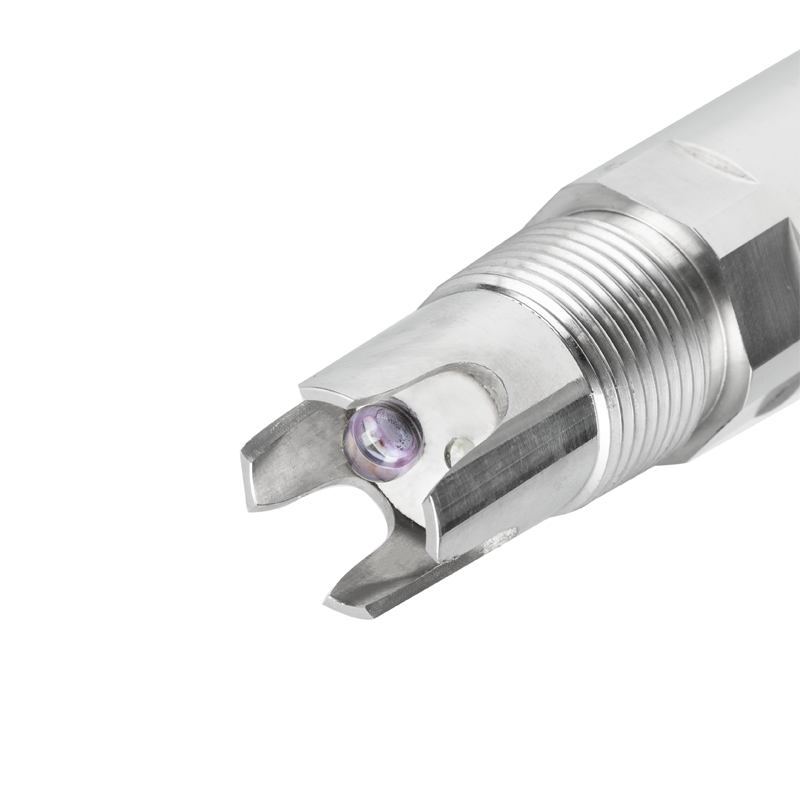
pH procurement should consider electrode life, installation structure and maintenance ability as much as range and accuracy.
The pH electrode signal is high impedance and low voltage. Moisture at cable connections or terminals can create unstable readings. Waterproof treatment and dry terminals are therefore important.
A stable reference system is also critical. The material notes slow reference-liquid leakage under pressure and long-term stability as a design advantage of the industrial pH electrode.
Most pH measurement issues come from installation, storage, cable moisture or insufficient cleaning.
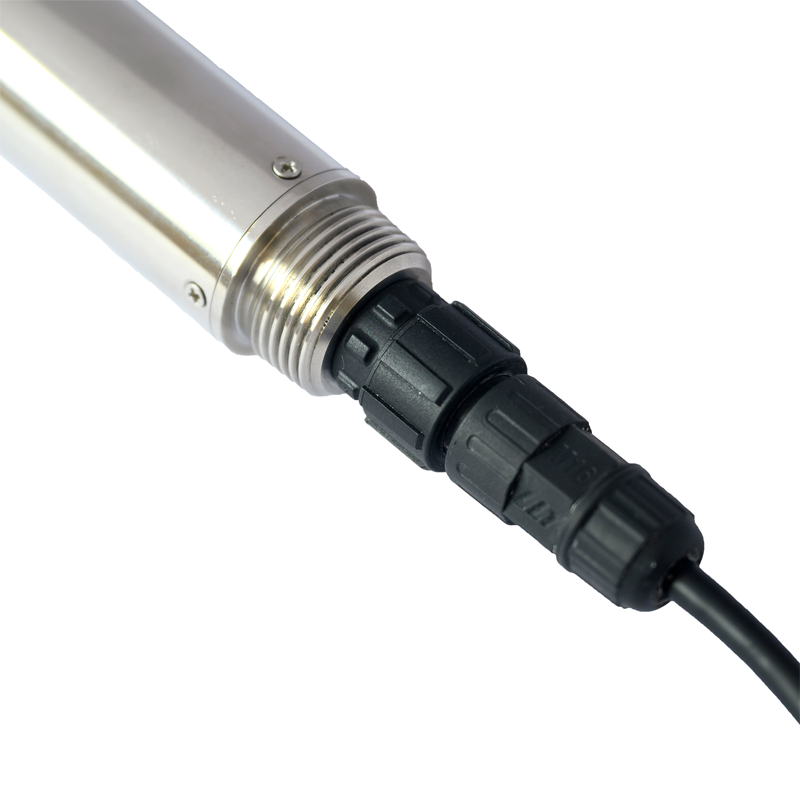
Immersion places the probe directly in the tank or channel, while flow-through installation brings sample water through a controlled chamber.
The hydrated glass membrane is part of the measurement interface. Dry storage can slow response and cause calibration problems.
Yes. The recommended engineering interface is RS485 Modbus RTU, so values can be read by PLC, DCS, RTU, SCADA, industrial computer, recorder or IoT gateway.
Yes. The field device should be assigned a Modbus address, register scaling should be confirmed, and the power supply and cable route should be checked before commissioning.
Temperature changes can affect electrochemical, optical and conductivity measurements. Automatic compensation helps reduce drift when the water temperature changes.
The interval depends on water quality and control risk. Wastewater and chemical processes usually need more frequent checks than clean water.
Yes, but the installation point, mixing condition, alarm delay and control logic must be designed carefully.
The selected range should cover normal operation, expected alarm values and abnormal events without losing resolution in the working range.
A single sensor is enough when one decision is required. A station is better when several parameters must be interpreted together for discharge, process control or aquaculture management.
Confirm water type, expected concentration, installation method, cable length, output interface, power supply, controller type, cleaning access and required documentation.
Online pH measurement is reliable when installation, hydration, cleaning and calibration are managed as part of the project. NiuBoL RS485 Modbus RTU pH sensors support industrial water, wastewater and process applications where stable pH data is required.
Prev:Industrial and Metallurgical Wastewater Monitoring: Sensor Selection for Complex Treatment Processes
Next:Free Chlorine and Total Chlorine Monitoring: What Water Treatment Buyers Should Specify
Related recommendations
Sensors & Weather Stations Catalog
 Agriculture Sensors and Weather Stations Catalog-NiuBoL.pdf
Weather Stations Catalog-NiuBoL.pdf
Agriculture Sensors Catalog-NiuBoL.pdf
Water Quality Sensor Catalog-NiuBoL.pdf
Related products
 Combined air temperature and relative humidity sensor
 TDR Soil Moisture & Temperature Sensor for irrigation| RS485 |4-20mA| NBL-S-THR
 Soil pH sensor RS485 soil Testing instrument soil ph meter for agriculture |NBL-S-PH
 Wind Speed sensor Output Modbus/RS485/Analog/0-5V/4-20mA
 Tipping bucket rain gauge for weather monitoring auto rainfall sensor RS485/Outdoor/stainless steel
 Pyranometer Solar Radiation Sensor 4-20mA/RS485

Screenshot, WhatsApp to identify the QR code
WhatsApp number:+8615367865107
(Click on WhatsApp to copy and add friends)

