





— Blogs —
—Products—
 Consumer hotline +8618073152920
 WhatsApp:+8615367865107
Address:Room 102, District D, Houhu Industrial Park, Yuelu District, Changsha City, Hunan Province, China
Product knowledge
Time:2026-06-13 09:23:27 Popularity:814
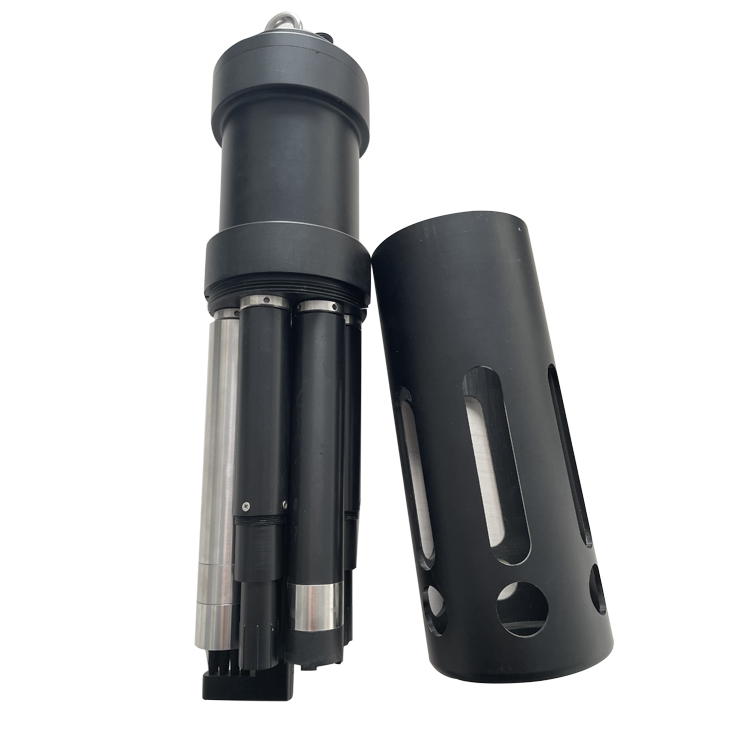
Industrial wastewater is rarely a single-parameter problem. Metallurgy, desulfurization, dyeing, chemical production, paper making, food processing and pesticide production all create different combinations of pH, conductivity, suspended solids, COD, toxicity and corrosion risk.
This article is written for distributors, system integrators, engineering contractors and industrial procurement teams that need water quality data to become usable control, alarm or compliance information. Key terms include industrial wastewater monitoring, metallurgical wastewater monitoring sensors, RS485 Modbus industrial water quality sensors, desulfurization wastewater monitoring, heavy metal wastewater treatment monitoring, metallurgy wastewater, power plant desulfurization wastewater, dyeing and chemical wastewater.
The material describes many wastewater sources: power plant wet desulfurization wastewater rich in chloride and heavy metals, chemical wastewater with difficult organic compounds, dyeing wastewater with color and salts, paper wastewater with high BOD, and metallurgical wastewater with cooling, acid pickling, dust washing, slag flushing and coking streams.
A useful monitoring plan must therefore start with the treatment process. Neutralization, coagulation, clarification, biological treatment, adsorption, oxidation, ion exchange and membrane separation all depend on different control values.
NiuBoL sensors can be installed in equalization tanks, pH neutralization tanks, flocculation and clarification units, final discharge channels, cooling-water loops, desulfurization wastewater systems and industrial park monitoring stations.
RS485 Modbus RTU helps standardize the measurement layer across different treatment units. A PLC or DCS can collect pH, ORP, conductivity, turbidity, TSS, COD and ammonia nitrogen values while keeping each sensor address and unit clear.
For engineering delivery, RS485 Modbus RTU should be treated as part of the measurement architecture. Address planning, register scaling, grounding, shielding and waterproof junctions should be documented before the system is handed over. This helps the buyer expand the project later without replacing the original measurement layer.
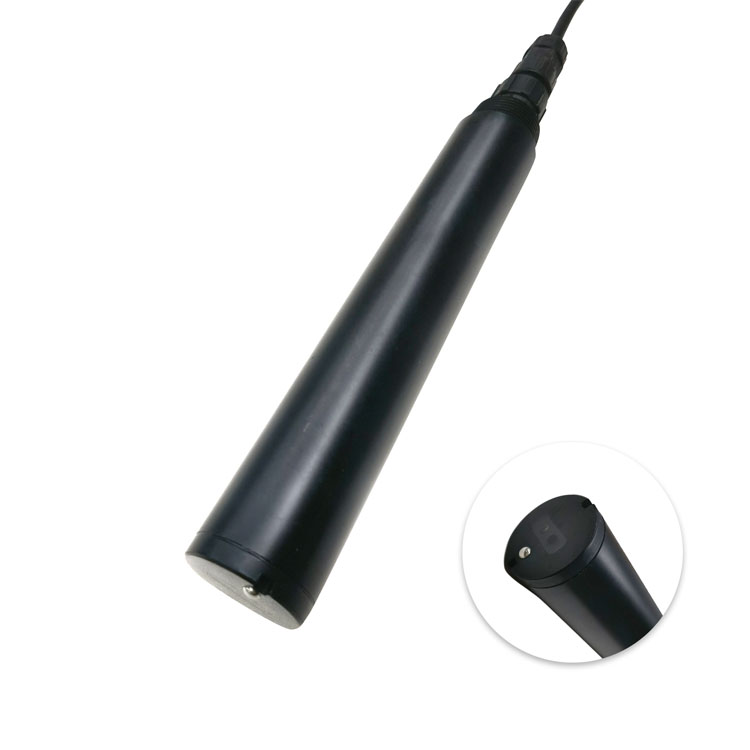
pH is usually required for neutralization and precipitation. ORP may support oxidation-reduction control. Conductivity indicates salt concentration and concentration cycles. Turbidity and TSS show suspended particles and clarification performance. COD and BOD-related monitoring describe organic load and biodegradability.
In metallurgy and mining-related water, suspended solids and heavy metal precipitation are often central. In dyeing or chemical wastewater, color, COD and refractory organics may drive treatment decisions.
Desulfurization wastewater may contain chloride, fluoride, nitrite and heavy metals. Acid-base wastewater requires corrosion-aware installation. Oily wastewater may need pretreatment before sensors. Cyanide, phenol or pesticide wastewater may require special analyzers and safety controls.
This is why a project specification should not copy the same sensor list for every factory. The sensor package should follow the pollutant source, treatment objective and discharge requirement.
The table provides a procurement-level reference for industrial and metallurgical wastewater monitoring systems. Final specifications should follow the actual wastewater source and required parameters.
| Parameter | Specification |
|---|---|
| Application | Metallurgy, power plant desulfurization, chemical, dyeing, paper, food and other industrial wastewater |
| Common monitoring parameters | pH, ORP, conductivity, turbidity, TSS, COD, ammonia nitrogen, chlorine, temperature and flow |
| pH range | 0 to 14 pH for glass-electrode online pH sensors |
| TSS range | 0 to 2000 mg/L for online suspended solids reference configuration |
| Turbidity range | 0 to 20 / 200 / 1000 NTU |
| Conductivity range | 0 to 5000 uS/cm |
| Output signal | RS485 Modbus RTU, with selected 4-20 mA options |
| Power supply | 12 to 24 VDC for field sensors |
| Protection rating | IP68 field probes where submerged installation is used |
| Installation | Immersion, flow-cell, tank, channel or pipeline installation by process point |
| System interface | PLC, DCS, SCADA, IoT gateway and online reporting platform |
| Engineering note | Parameter list should follow wastewater source, treatment process and discharge permit |
Contractors need instruments that can explain process behavior, not only produce final discharge values. If pH correction fails, downstream coagulation may become unstable. If TSS increases after clarification, sludge handling or coagulant dosage may need attention.
When sensor data is connected to equipment status and chemical dosing records, operation teams can diagnose the process faster and reduce unnecessary manual tests.
Industrial wastewater monitoring should not place every sensor at the final outlet only. Equalization tanks need pH and conductivity to show incoming variation. Neutralization tanks need pH control. Clarifiers need turbidity or TSS. Biological units need DO, pH and organic-load context. Final outlets need compliance and evidence data.
This process-stage view helps engineers avoid unnecessary instruments while still covering the critical control points. It also makes alarm response clearer because each sensor is tied to a treatment function.
Desulfurization, pickling, mining, coking and some chemical streams may contain high salts, chloride, suspended solids or corrosive conditions. These water matrices affect sensor housing material, cable protection, cleaning frequency and sampling method.
When direct immersion is too harsh, a bypass sample line or protected flow cell can reduce mechanical damage and simplify maintenance. The project should still confirm that the sample is representative and not delayed too long for control use.
Industrial plants often spend heavily on chemicals, energy, sludge handling and manual testing. Online pH, conductivity, turbidity, TSS and COD-related trends can show when dosage, blowdown, clarification or pretreatment should be adjusted.
This does not replace laboratory analysis for regulated parameters, but it gives operators a continuous operating picture. For EPC contractors, that picture can reduce commissioning uncertainty and support performance guarantees.
Industrial wastewater commissioning should include several operating conditions, not only one clean-water test. If the plant has batch production, acid pickling, dyeing, desulfurization blowdown or cleaning cycles, the sensor system should be observed across those events.
During commissioning, the team should compare online readings with laboratory values and process logs. A pH sensor may be stable, but if the sampling point is before complete mixing, the control loop may still dose incorrectly. A TSS sensor may read correctly, but if sludge blankets reach the probe, the alarm will reflect installation condition rather than process quality.
This is why industrial projects benefit from a commissioning period with trend review, not just a one-day acceptance visit. It gives the owner more confidence in using online data for operation decisions.
For industrial wastewater, an accurate quotation needs more than a parameter name. The supplier should know the wastewater source, normal and peak concentration, solids level, temperature, pH range, pressure, installation depth, cable distance, controller brand and whether the site requires explosion-proof or corrosion-resistant accessories.
If the project is for a retrofit, photos of the old sensor, cabinet terminal block and installation point are useful. They help the integrator decide whether the new RS485 device can be connected directly or whether a controller, junction box or mechanical adapter is needed.
Site environment challenge: High chloride, heavy metals and scaling tendency create corrosion and treatment risk.
System integration scheme: Monitor pH, conductivity, turbidity/TSS and selected metal-related indicators around neutralization and clarification.
User value delivered: Operators can control treatment stability and protect downstream equipment.
Site environment challenge: Water quantity is large and sources include cooling, pickling, gas washing and slag flushing.
System integration scheme: Use pH, ORP, TSS, turbidity and conductivity sensors in separated treatment units.
User value delivered: The plant can manage different streams without confusing their process behavior.
Site environment challenge: Color, salts, COD and pH may change by production batch.
System integration scheme: Install online pH, conductivity, COD-related and turbidity monitoring with batch records.
User value delivered: Engineers can adjust neutralization, coagulation or oxidation according to trend.
Site environment challenge: Several factories discharge into one treatment system.
System integration scheme: Deploy standardized RS485 sensors at key inlets and final outlet.
User value delivered: The park operator gains traceability and more reliable compliance data.
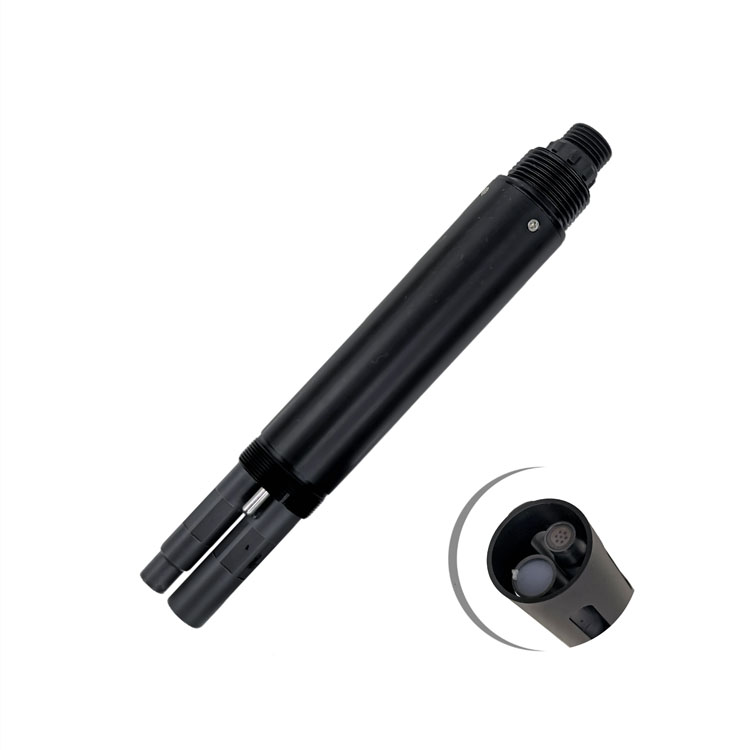
Industrial projects should be selected by wastewater category, treatment unit and decision value.
A strong procurement document should include process flow, sampling point, sensor range, output signal, cable length, installation fitting, cleaning access, calibration method and SCADA register mapping.
For EPC projects, these details reduce later disputes between instrument supplier, cabinet builder and site installer.
Industrial wastewater sites often have electrical noise, corrosive water, variable flow and heavy fouling.
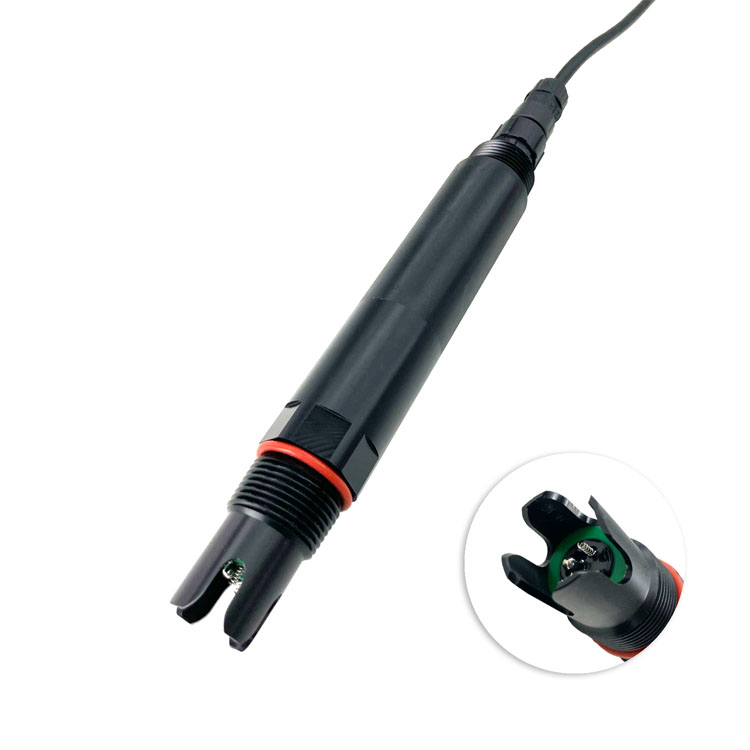
pH, ORP, conductivity, turbidity, TSS and selected COD or metal-related monitoring are common, depending on the process.
Conductivity helps show salt concentration, concentration cycles, abnormal inflow and potential corrosion or scaling conditions.
Yes. The recommended engineering interface is RS485 Modbus RTU, so values can be read by PLC, DCS, RTU, SCADA, industrial computer, recorder or IoT gateway.
Yes. The field device should be assigned a Modbus address, register scaling should be confirmed, and the power supply and cable route should be checked before commissioning.
Temperature changes can affect electrochemical, optical and conductivity measurements. Automatic compensation helps reduce drift when the water temperature changes.
No. The parameter list should follow wastewater source, treatment process and discharge requirement.
Yes, with shielded cable, proper grounding and documented Modbus settings.
The selected range should cover normal operation, expected alarm values and abnormal events without losing resolution in the working range.
A single sensor is enough when one decision is required. A station is better when several parameters must be interpreted together for discharge, process control or aquaculture management.
Confirm water type, expected concentration, installation method, cable length, output interface, power supply, controller type, cleaning access and required documentation.
Industrial and metallurgical wastewater monitoring requires a process-based sensor strategy. NiuBoL RS485 Modbus RTU water quality sensors support treatment-line monitoring, discharge supervision and industrial park integration where complex wastewater must be controlled with reliable field data.
Prev:Aquaculture Ammonia Nitrogen Monitoring: Risk Control for Fish Ponds and Recirculating Systems
Next:Online pH Meter Installation and Maintenance Guide for Industrial Water Quality Systems
Related recommendations
Sensors & Weather Stations Catalog
 Agriculture Sensors and Weather Stations Catalog-NiuBoL.pdf
Weather Stations Catalog-NiuBoL.pdf
Agriculture Sensors Catalog-NiuBoL.pdf
Water Quality Sensor Catalog-NiuBoL.pdf
Related products
 Combined air temperature and relative humidity sensor
 TDR Soil Moisture & Temperature Sensor for irrigation| RS485 |4-20mA| NBL-S-THR
 Soil pH sensor RS485 soil Testing instrument soil ph meter for agriculture |NBL-S-PH
 Wind Speed sensor Output Modbus/RS485/Analog/0-5V/4-20mA
 Tipping bucket rain gauge for weather monitoring auto rainfall sensor RS485/Outdoor/stainless steel
 Pyranometer Solar Radiation Sensor 4-20mA/RS485

Screenshot, WhatsApp to identify the QR code
WhatsApp number:+8615367865107
(Click on WhatsApp to copy and add friends)

