





— Blogs —
—Products—
 Consumer hotline +8618073152920
 WhatsApp:+8615367865107
Address:Room 102, District D, Houhu Industrial Park, Yuelu District, Changsha City, Hunan Province, China
Product knowledge
Time:2026-06-13 09:23:26 Popularity:758
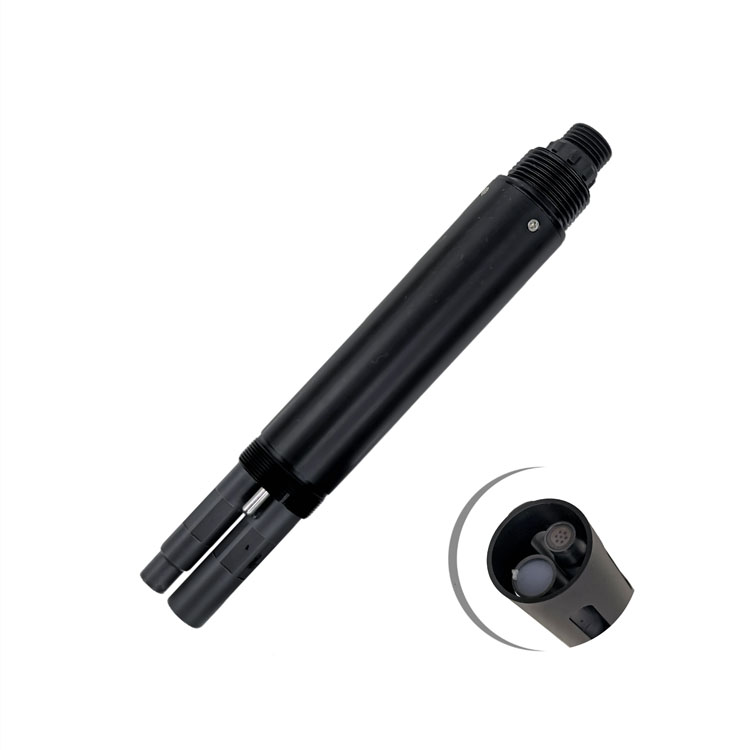
In aquaculture, ammonia nitrogen is not just a water quality number. It is connected with feeding load, biofilter performance, pH, dissolved oxygen, disease stress and production risk.
This article is written for distributors, system integrators, engineering contractors and industrial procurement teams that need water quality data to become usable control, alarm or compliance information. Key terms include aquaculture ammonia nitrogen monitoring, online ammonia nitrogen sensor for aquaculture, RS485 Modbus ammonium sensor, fish pond nitrogen monitoring, aquaculture water quality sensor system, fish pond monitoring, recirculating aquaculture system, shrimp farming.
The aquaculture material highlights that water quality directly affects production stability. Dissolved oxygen may drop after feeding, pH affects nitrifying bacteria and ammonia toxicity, and heavy metals can create additional stress. Ammonia nitrogen should therefore be monitored together with DO, pH and temperature rather than treated as an isolated parameter.
In factory aquaculture and recirculating systems, biological filtration converts toxic ammonia nitrogen into nitrite and nitrate. When pH, oxygen, biofilm activity or loading changes, this conversion can become unstable. Continuous monitoring gives the operator early warning before fish behavior or mortality becomes the first signal.
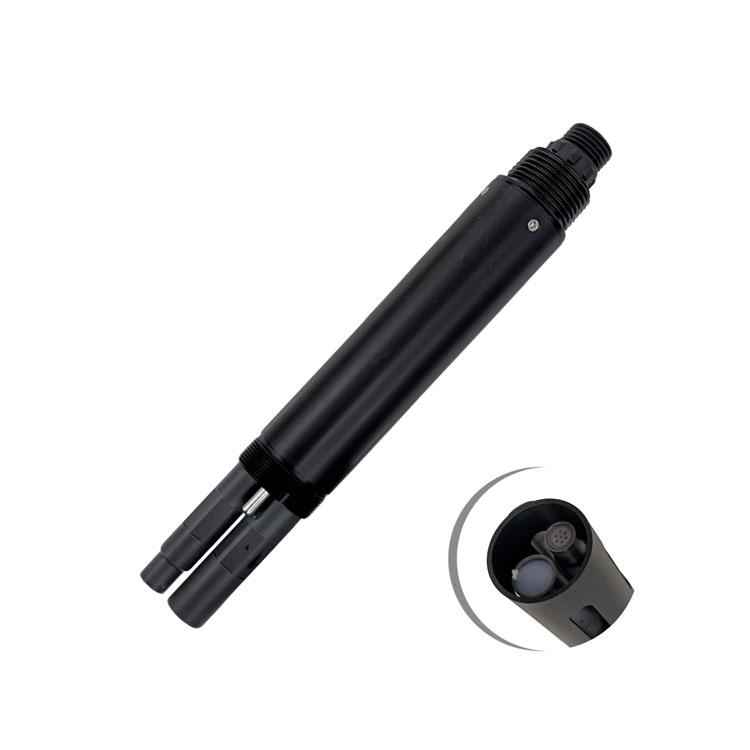
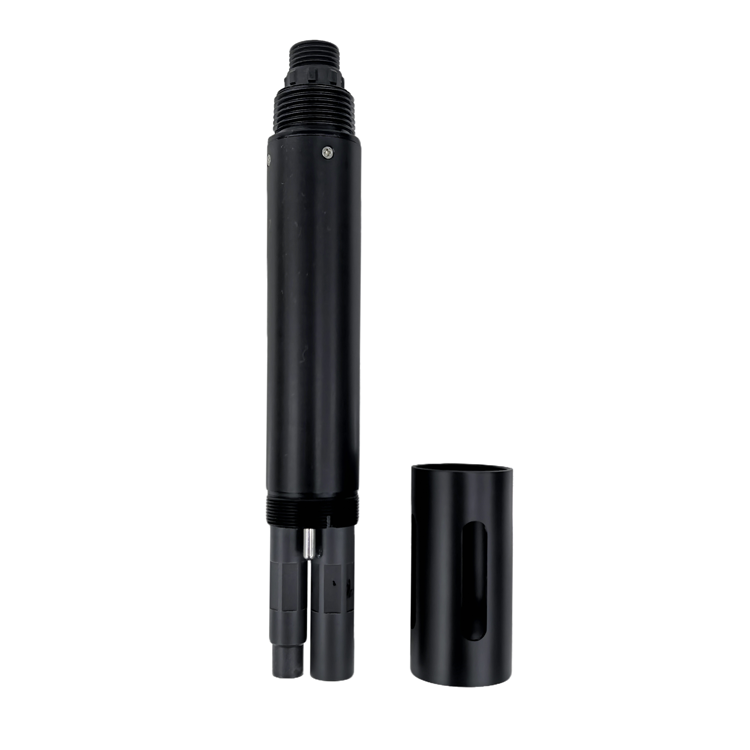
The NiuBoL NBL-WQ-NHN ammonia nitrogen sensor can be placed in ponds, tanks, return water channels or before and after biofiltration. It sends online data to a local controller, PLC, IoT gateway or cloud platform through RS485 Modbus RTU.
In multi-pond aquaculture, RS485 Modbus RTU is practical because several ammonia, DO, pH and temperature sensors can be addressed and polled by one gateway. The same data can be used for alarms, aerator control logic and farm operation records.
For engineering delivery, RS485 Modbus RTU should be treated as part of the measurement architecture. Address planning, register scaling, grounding, shielding and waterproof junctions should be documented before the system is handed over. This helps the buyer expand the project later without replacing the original measurement layer.
Ammonia nitrogen risk depends on the water condition. A value that appears acceptable in one pond may create greater stress in another pond if pH and temperature are higher or dissolved oxygen is low.
For procurement, this means the ammonia nitrogen sensor should often be specified as part of a water quality set rather than a stand-alone device. DO explains oxygen stress, pH helps interpret toxicity, and temperature supports compensation and biological activity analysis.
Useful ammonia monitoring should lead to actions such as reducing feeding, checking biofilter performance, increasing water exchange, reviewing aeration, or inspecting sludge accumulation. A farm dashboard that only shows a number but has no alarm rule is not enough.
For system integrators, alarm thresholds should be agreed with the farm according to species, density, growth stage and management style. This is where the monitoring system becomes a production tool instead of a display instrument.
The table summarizes NBL-WQ-NHN online ammonia nitrogen sensor parameters suitable for aquaculture nitrogen monitoring projects.
| Parameter | Specification |
|---|---|
| Model | NBL-WQ-NHN |
| Measurement principle | Ammonium ion-selective electrode with automatic temperature compensation |
| Measurement range | 0 to 10.00 mg/L / 0 to 100.00 mg/L / 0 to 1000.0 mg/L |
| Resolution | 0.01 mg/L for 0 to 100 mg/L range; 0.1 mg/L for 0 to 1000 mg/L range; 0.1 degC |
| Measurement accuracy | +/-5% of reading; temperature +/-0.3 degC |
| Calibration method | Two-point calibration |
| Power supply | 12 to 24 VDC |
| Output signal | RS485, Modbus RTU; 4-20 mA optional |
| Protection rating | IP68 |
| Working conditions | 0 to 40 degC, <0.1 MPa, pH 4 to 10 |
| Installation | Immersion or pipe/tank installation, 3/4 NPT; avoid upside-down or horizontal mounting |
| Housing material | ABS, PVC, POM |
A practical farm architecture starts from distributed sensors, then uses a pond gateway, local alarm device and cloud platform. The gateway should record address, pond number and parameter unit clearly so that maintenance staff do not confuse one pond with another.
Where aerators or blowers are controlled automatically, ammonia data should be used as decision support together with DO and pH. It should not blindly start equipment without a control strategy.
Manual test kits can show a value at one time, but aquaculture risk often develops between inspections. Feeding, temperature, algae activity, rainfall and aeration schedules can change ammonia behavior during the day and night. Continuous monitoring gives the farm a trend line that supports earlier action.
For high-density ponds, the most useful data is not only the maximum value. The rate of increase, duration above alarm level and relationship with DO and pH help the farm judge whether the issue is a short disturbance or a developing nitrogen-cycle problem.
In recirculating aquaculture, ammonia and nitrite trends are linked to biofilter health. A sudden ammonia increase after feeding may show overload, while persistent elevation can indicate biofilm weakness, poor oxygen supply or hydraulic short-circuiting.
By placing sensors before and after the biofilter, operators can estimate whether the treatment unit is removing nitrogen as expected. This approach is more useful than monitoring only the culture tank, because it connects water quality to a specific treatment function.
For farm owners, the monitoring system has value when it reduces production risk, labor pressure and energy waste. DO data can support aerator operation, pH helps interpret ammonia toxicity, and ammonia alarms can trigger feeding review or water exchange.
For distributors, the sales conversation should therefore focus on production continuity and serviceability. A farm is more likely to maintain the system when it clearly understands how each sensor supports daily decisions.
A useful aquaculture alarm should include warning level, action level and emergency level. The warning level may trigger extra observation, the action level may reduce feeding or increase water exchange, and the emergency level may require immediate aeration or staff notification. These levels should not be copied from a generic table without considering species, density and local practice.
The platform should also record alarm duration. A short spike after feeding and a six-hour high ammonia event are not the same operational problem. Duration helps the farm decide whether to inspect the biofilter, bottom sludge, aeration layout or feeding plan.
For integrators, this means the monitoring system should be delivered with alarm settings, notification rules and a simple response guide. That turns sensor data into farm management behavior.
Site environment challenge: Feeding and respiration create rapid changes in oxygen and nitrogen load.
System integration scheme: Use ammonia nitrogen with DO, pH and temperature sensors on an RS485 gateway.
User value delivered: Farm staff can adjust feeding and aeration before stress becomes visible.
Site environment challenge: Biofilter instability can allow ammonia or nitrite accumulation.
System integration scheme: Place sensors before and after biological filtration and trend the difference.
User value delivered: Operators can see treatment performance instead of guessing from tank behavior.
Site environment challenge: Shrimp systems are sensitive to water quality swings and bottom sludge.
System integration scheme: Monitor ammonia nitrogen and DO with alarm notification during night and early morning.
User value delivered: The farm reduces response time during high-risk periods.
Site environment challenge: Small organisms are sensitive to toxic nitrogen and pH shifts.
System integration scheme: Use low-range ammonia monitoring with pH and temperature context.
User value delivered: The operator protects early-stage production with earlier intervention.
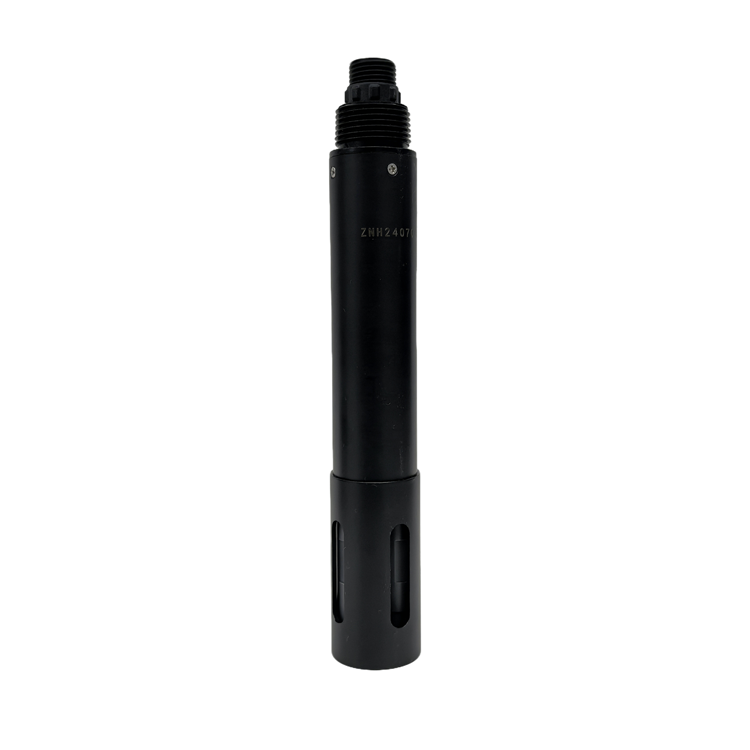
Aquaculture selection should focus on expected concentration, maintenance capacity and how the data will be used by farm staff.
Biofouling, suspended solids and algae can affect probe stability. The maintenance interval should be based on pond condition, not only on a calendar.
Cleaning and calibration tasks should be simple enough for farm staff to perform. If the farm cannot maintain the probe, the system integrator should include service visits or training in the project scope.
Aquaculture installation is exposed to cable pulling, floating debris, algae and changing water levels.
Ammonia nitrogen can stress or poison fish and shrimp, especially when pH and temperature increase or oxygen is low.
Yes. DO helps explain stress and biofilter performance, and it is also useful for aerator control.
Yes. The recommended engineering interface is RS485 Modbus RTU, so values can be read by PLC, DCS, RTU, SCADA, industrial computer, recorder or IoT gateway.
Yes. The field device should be assigned a Modbus address, register scaling should be confirmed, and the power supply and cable route should be checked before commissioning.
Temperature changes can affect electrochemical, optical and conductivity measurements. Automatic compensation helps reduce drift when the water temperature changes.
Yes. Multiple RS485 sensors can report to one gateway if cable length, addressing and power supply are designed correctly.
The interval depends on algae, suspended solids, biofilm and farm operation. High-density ponds usually need more frequent inspection.
The selected range should cover normal operation, expected alarm values and abnormal events without losing resolution in the working range.
A single sensor is enough when one decision is required. A station is better when several parameters must be interpreted together for discharge, process control or aquaculture management.
Confirm water type, expected concentration, installation method, cable length, output interface, power supply, controller type, cleaning access and required documentation.
Aquaculture ammonia nitrogen monitoring has value when it is connected with farm decisions. NiuBoL online ammonia nitrogen sensors support RS485 Modbus RTU integration for ponds, tanks and recirculating systems that need practical nitrogen risk control.
Prev:Discharge Outlet Water Quality Monitoring for Industrial and Municipal Compliance Projects
Next:Industrial and Metallurgical Wastewater Monitoring: Sensor Selection for Complex Treatment Processes
Related recommendations
Sensors & Weather Stations Catalog
 Agriculture Sensors and Weather Stations Catalog-NiuBoL.pdf
Weather Stations Catalog-NiuBoL.pdf
Agriculture Sensors Catalog-NiuBoL.pdf
Water Quality Sensor Catalog-NiuBoL.pdf
Related products
 Combined air temperature and relative humidity sensor
 TDR Soil Moisture & Temperature Sensor for irrigation| RS485 |4-20mA| NBL-S-THR
 Soil pH sensor RS485 soil Testing instrument soil ph meter for agriculture |NBL-S-PH
 Wind Speed sensor Output Modbus/RS485/Analog/0-5V/4-20mA
 Tipping bucket rain gauge for weather monitoring auto rainfall sensor RS485/Outdoor/stainless steel
 Pyranometer Solar Radiation Sensor 4-20mA/RS485

Screenshot, WhatsApp to identify the QR code
WhatsApp number:+8615367865107
(Click on WhatsApp to copy and add friends)

