





— Blogs —
—Products—
 Consumer hotline +8618073152920
 WhatsApp:+8615367865107
Address:Room 102, District D, Houhu Industrial Park, Yuelu District, Changsha City, Hunan Province, China
Product knowledge
Time:2026-06-13 09:23:24 Popularity:268
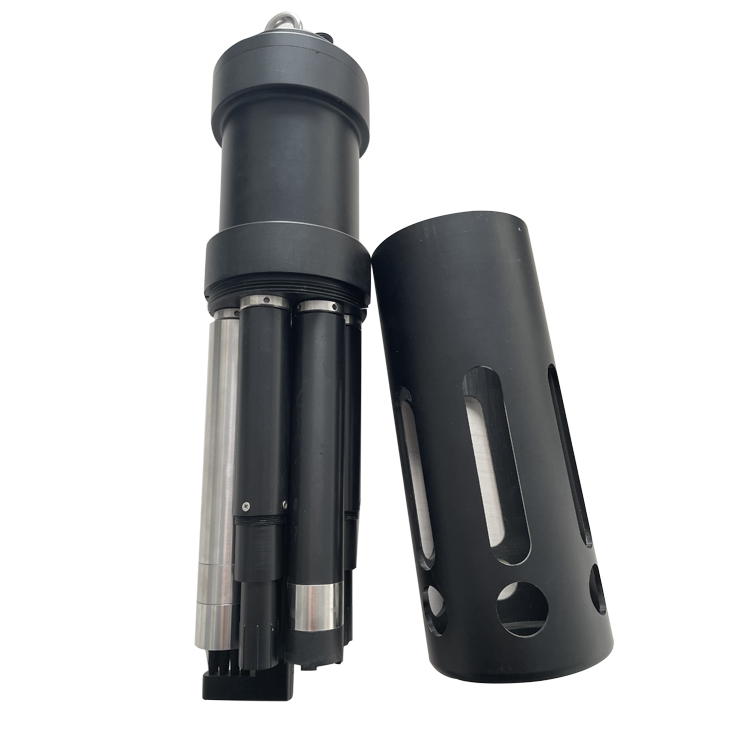
A discharge outlet is the last measurement point before treated wastewater enters a river, lake, municipal network or coastal receiving water. For project owners, it is also the point where process performance, environmental responsibility and compliance evidence meet.
This article is written for distributors, system integrators, engineering contractors and industrial procurement teams that need water quality data to become usable control, alarm or compliance information. Key terms include discharge outlet water quality monitoring, online wastewater discharge monitoring station, RS485 Modbus water quality monitoring, industrial effluent monitoring system, automatic discharge outlet monitoring, municipal wastewater outlet, industrial discharge point, river discharge supervision.
Industrial and domestic wastewater may contain pH variation, organic load, suspended solids, turbidity, conductivity change, dissolved oxygen depletion and other indicators that cannot be understood from occasional manual sampling alone. A real-time monitoring station gives the operator a continuous view of discharge quality and helps identify abnormal events before they become disputes or enforcement problems.
Discharge outlets must be located and constructed with environmental planning, anti-siltation, navigation, hydraulic safety, flood level, backflow prevention and receiving-water impact in mind. These civil engineering decisions are directly related to sensor installation because the monitoring point must represent the discharged water and remain serviceable during normal operation.
NiuBoL sensors can be installed at the discharge channel, outlet chamber, pumping station, final effluent pipe or automatic monitoring cabinet. The sensor layer measures pH, DO, conductivity, turbidity, temperature, COD, ammonia nitrogen and other required values, while the cabinet or RTU handles power, data acquisition and transmission.
RS485 Modbus RTU allows several field sensors to share one data acquisition system. For discharge monitoring, this is useful because pH, conductivity, turbidity, DO and other sensors can be polled by one RTU and uploaded to a plant SCADA or environmental platform.
For engineering delivery, RS485 Modbus RTU should be treated as part of the measurement architecture. Address planning, register scaling, grounding, shielding and waterproof junctions should be documented before the system is handed over. This helps the buyer expand the project later without replacing the original measurement layer.
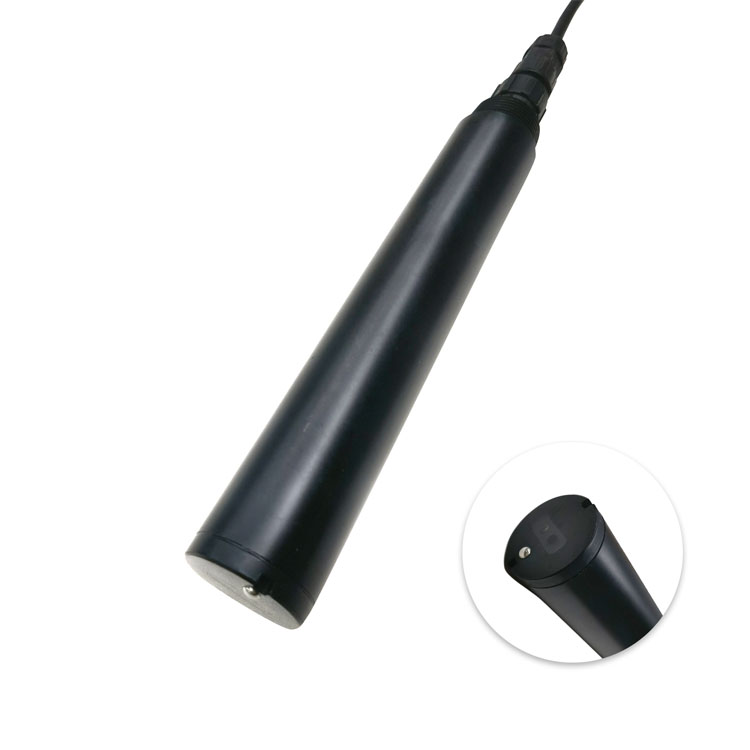
The outlet should avoid locations where sludge deposition, backwater, wave impact, flood submergence or short-circuit flow can distort the measurement. A water quality value is only useful when the sampling position represents the actual discharged stream.
For bank-side outlets, the structure may be simple, but the sensor still needs stable flow and maintenance access. For submerged or river-center outlets, the project often needs a sampling chamber, pump, pipeline or protected probe installation to avoid damage from scouring and collision.
Manual sampling remains useful for laboratory confirmation, but it cannot show the whole variation process of discharge water quality. Automatic monitoring supports timed measurement, interval measurement, continuous measurement and manual verification during commissioning.
For a procurement team, the important question is not only whether an instrument can measure one parameter. The system must also store trends, trigger alarms, support calibration records and allow the owner to explain what happened during an abnormal period.
The table gives a station-level procurement reference for an online discharge outlet monitoring project. Parameter combinations should be finalized according to permit requirements and water matrix.
| Parameter | Specification |
|---|---|
| System type | Online discharge outlet water quality monitoring station |
| Common parameters | pH, DO, conductivity, turbidity, temperature, COD, ammonia nitrogen and flow as required |
| pH reference range | 0 to 14 pH for online pH sensor |
| Conductivity reference range | 0 to 5000 uS/cm for online EC sensor |
| Turbidity reference range | 0 to 20 / 200 / 1000 NTU depending on range |
| Dissolved oxygen reference range | 0 to 20 mg/L or 0 to 200% saturation at 25 degC |
| Output signal | RS485 Modbus RTU field sensors; optional 4-20 mA depending on parameter |
| Power design | 12 to 24 VDC field sensors; station cabinet supplied by project power design |
| Protection rating | IP68 field probes; cabinet protection selected by outdoor site condition |
| Data functions | Timed measurement, interval measurement, continuous measurement and manual verification |
| Integration | RTU, PLC, industrial PC, SCADA, cloud platform or environmental reporting system |
| Cable material / length | Waterproof shielded cable, standard 5 m for many probes, customizable |
pH alarms can warn of neutralization problems, conductivity can show unusual salt or industrial inflow, turbidity and TSS can reveal solids escape, COD and ammonia nitrogen can indicate treatment instability, and flow data can convert concentration into pollutant load.
When the outlet data is linked with treatment process data, the operator can separate sensor fouling from real treatment change. This is valuable for wastewater plants, industrial parks and contractors responsible for operation service contracts.
For a discharge outlet project, the data chain should be described as a complete route: field probe, waterproof junction, cabinet power supply, acquisition module, communication gateway, platform storage and alarm notification. If one part of this chain is undefined, the owner may receive values but still lack usable evidence.
The inquiry document should therefore ask for Modbus address planning, parameter units, sampling interval, alarm threshold, data retention method and calibration record format. These items are especially important when the discharge point is used for environmental reporting or third-party operation assessment.
A final outlet station tells whether the discharged water is acceptable at the boundary, but it does not always explain where the problem started. For industrial or municipal plants with unstable inflow, upstream process monitoring can be added at equalization, biological treatment, clarification or filtration stages.
This layered monitoring approach helps operators separate a final-outlet event from a process event. For example, a final turbidity alarm may come from clarifier carryover, filter breakthrough or hydraulic disturbance; upstream data makes the troubleshooting path shorter.
Before ordering, the buyer should provide outlet photos, channel dimensions, pipe size, flow condition, available power, cabinet distance, expected cable route, parameter list and reporting interface. These details decide whether direct immersion, bypass sampling or cabinet-based monitoring is more practical.
When site information is missing, suppliers may quote a sensor that measures correctly in theory but becomes difficult to install. A stronger inquiry package usually reduces change orders during installation and gives the system integrator a clearer scope.
Site environment challenge: Flow and pollutant load vary by time of day and rainfall.
System integration scheme: Install pH, turbidity, conductivity, DO and selected organic/nitrogen indicators at the final effluent point.
User value delivered: The plant gains continuous discharge evidence and faster abnormal-event response.
Site environment challenge: Several factories may affect the same outlet and responsibility can be difficult to trace.
System integration scheme: Use a multi-parameter station with timestamped data and upstream sub-point monitoring where needed.
User value delivered: The operator can compare trends and investigate abnormal discharge more efficiently.
Site environment challenge: The outlet must not damage the receiving water or create hidden pollution pulses.
System integration scheme: Place a station at the discharge point and combine data with flow, rainfall and receiving-water monitoring.
User value delivered: Regulators and operators receive clearer evidence for water-environment management.
Site environment challenge: Wave, corrosion and backflow conditions can affect equipment life.
System integration scheme: Use protected sampling or cabinet-based monitoring with corrosion-resistant cable and waterproof treatment.
User value delivered: The project reduces service failures in harsh hydraulic environments.
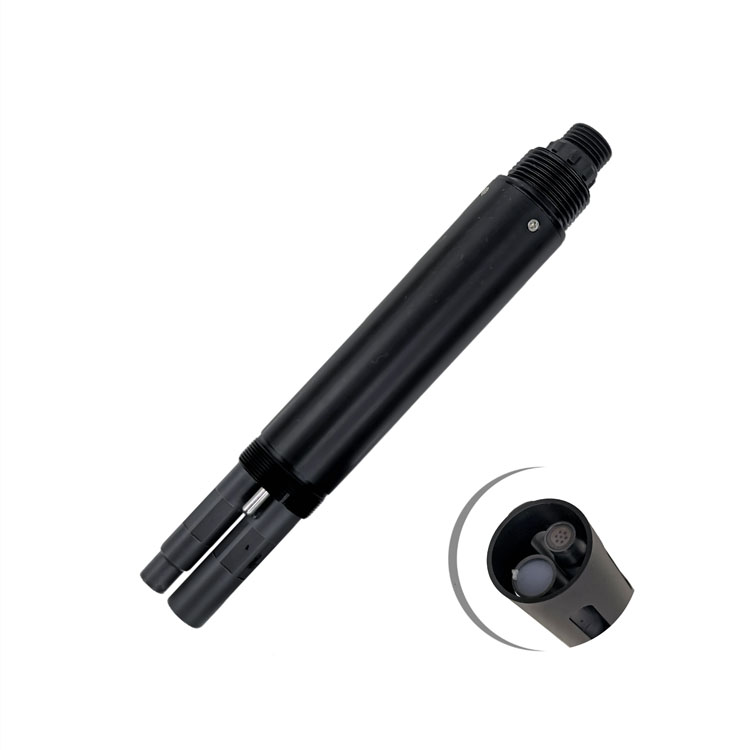
A discharge monitoring station should be selected by monitoring purpose, required parameters, site hydraulics and reporting interface rather than by sensor list alone.
The acceptance test should include public-page or platform data visibility, field reading stability, Modbus polling, alarm logic, calibration record, cabinet labeling and maintenance access. A station is not accepted simply because a number appears on a screen.
For long-term contracts, the handover file should include parameter ranges, sensor serial numbers, wiring schedule, Modbus register map, maintenance interval and reference-check method.
Most discharge monitoring problems are caused by sampling location, wiring, fouling or unclear alarm rules.
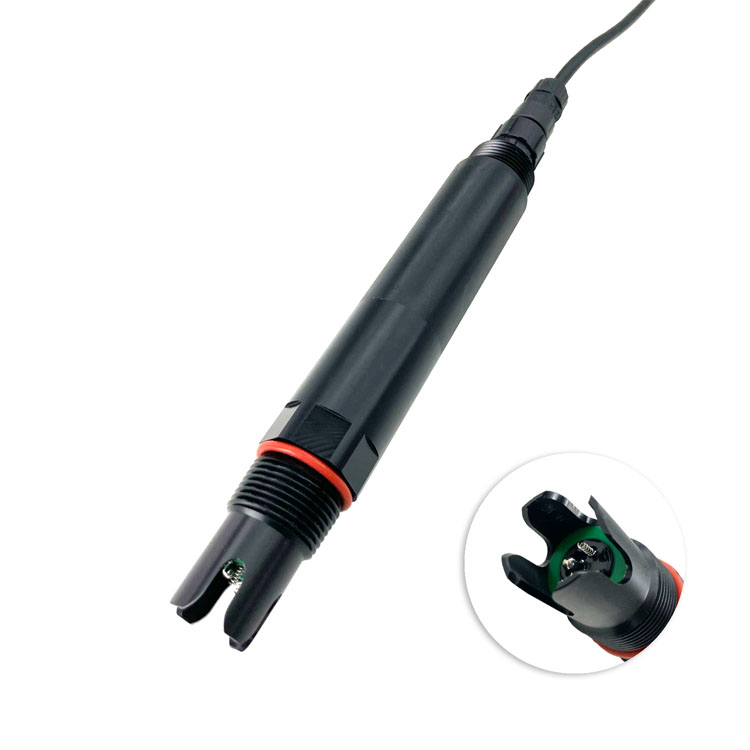
pH, turbidity, conductivity, temperature, DO, COD, ammonia nitrogen, suspended solids and flow are common, but the final list should follow the permit and process risk.
Yes. RS485 Modbus RTU allows multiple digital sensors to be polled by one RTU when address, cable length and power design are correct.
Yes. The recommended engineering interface is RS485 Modbus RTU, so values can be read by PLC, DCS, RTU, SCADA, industrial computer, recorder or IoT gateway.
Yes. The field device should be assigned a Modbus address, register scaling should be confirmed, and the power supply and cable route should be checked before commissioning.
Temperature changes can affect electrochemical, optical and conductivity measurements. Automatic compensation helps reduce drift when the water temperature changes.
Yes. Online monitoring provides continuous trend evidence, while laboratory checks are useful for verification, calibration and regulatory comparison.
Because a poor location can produce stable-looking data that does not represent the actual discharge stream.
The selected range should cover normal operation, expected alarm values and abnormal events without losing resolution in the working range.
A single sensor is enough when one decision is required. A station is better when several parameters must be interpreted together for discharge, process control or aquaculture management.
Confirm water type, expected concentration, installation method, cable length, output interface, power supply, controller type, cleaning access and required documentation.
Discharge outlet monitoring should be treated as an integrated compliance and process-control system. NiuBoL RS485 Modbus RTU water quality sensors and station configurations help industrial and municipal projects turn final effluent data into alarms, records and operational decisions.
Prev:pH Electrode Principle, Construction and Online Sensor Integration
Next:Aquaculture Ammonia Nitrogen Monitoring: Risk Control for Fish Ponds and Recirculating Systems
Related recommendations
Sensors & Weather Stations Catalog
 Agriculture Sensors and Weather Stations Catalog-NiuBoL.pdf
Weather Stations Catalog-NiuBoL.pdf
Agriculture Sensors Catalog-NiuBoL.pdf
Water Quality Sensor Catalog-NiuBoL.pdf
Related products
 Combined air temperature and relative humidity sensor
 TDR Soil Moisture & Temperature Sensor for irrigation| RS485 |4-20mA| NBL-S-THR
 Soil pH sensor RS485 soil Testing instrument soil ph meter for agriculture |NBL-S-PH
 Wind Speed sensor Output Modbus/RS485/Analog/0-5V/4-20mA
 Tipping bucket rain gauge for weather monitoring auto rainfall sensor RS485/Outdoor/stainless steel
 Pyranometer Solar Radiation Sensor 4-20mA/RS485

Screenshot, WhatsApp to identify the QR code
WhatsApp number:+8615367865107
(Click on WhatsApp to copy and add friends)

