





— Blogs —
—Products—
 Consumer hotline +8618073152920
WhatsApp:+8615367865107
Address:Room 102, District D, Houhu Industrial Park, Yuelu District, Changsha City, Hunan Province, China
Product knowledge
Time:2026-08-15 09:07:00 Popularity:283
Quick answer: An online water quality sensor needs a planned removal and restart procedure when an aquaculture pond is drained for harvesting, cleaning or preparation. A powered probe exposed to air can still return a number, but that number is not a pond-water measurement. Before draining, protect each sensing element using its own storage procedure and mark the channel out of service. Restore monitoring only after refilling, inspection and a suitable measurement check.
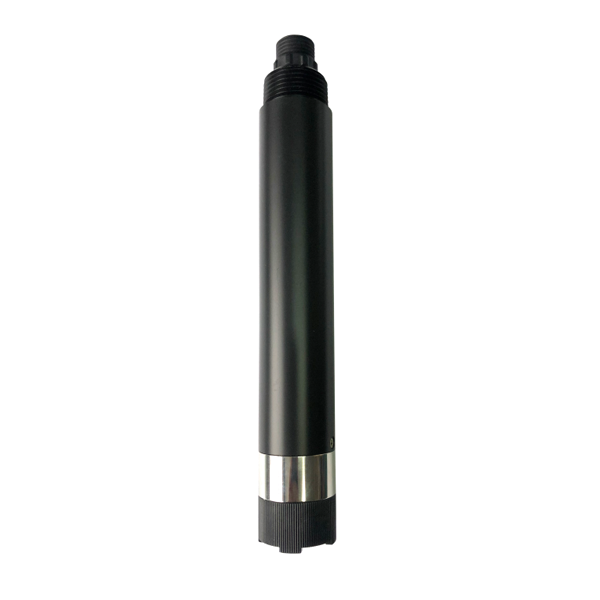
A fixed bracket that works at the normal pond level can leave a probe above water during harvest. It can also place the sensing end in disturbed sediment as the pond empties. Neither condition should be recorded as an ordinary change in water quality. Note the start of draining, remove probes before exposure or damage, and keep the time of removal with the pond record.
Assign one person to release the sensors from service and another responsibility for confirming the restart. Where aeration or another action depends on these channels, agree on the temporary operating procedure in advance. An inhibited alarm should remain visibly inhibited; silently suppressing it makes the subsequent data difficult to interpret.
The NiuBoL DO-4A above uses an optical cap and should be protected from impact and drying during storage. Its storage requirements must not be applied to ammonium electrodes or other probe types. Label the removed instrument with its pond identity, not just its Modbus address.
Do not leave a sensor rack in place merely because its probes are IP68. Pressure washing, scraping, cleaning chemicals and direct mechanical contact introduce different risks from normal immersion. Remove the instruments from the cleaning work area, protect cable ends and avoid suspending probes by their cables.
Use the model-specific cleaning and storage instructions. For optical DO, protect the fluorescent cap and maintain the prescribed moist storage condition. An ion-selective ammonium electrode has its own conditioning and storage requirements; it must not be placed in the DO storage cap or left in an improvised common solution. Confirm the preparation procedure for the delivered electrode version before planning the restart date.
The salinity probe below belongs to a separate channel. After a freshwater rinse or a new water supply, the previous pond salinity cannot simply be reused as the new operating value.
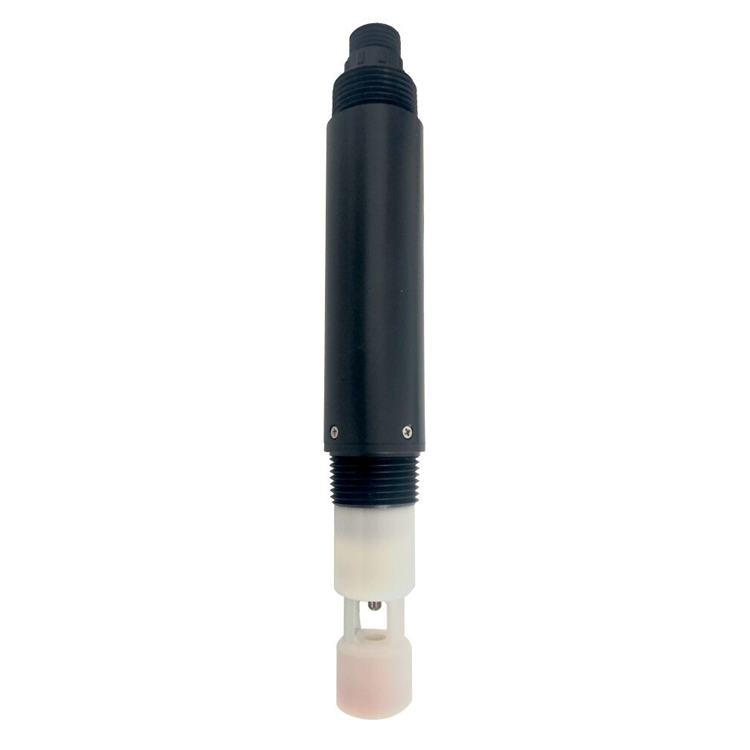
| Instrument | Model-specific information | Restart decision |
|---|---|---|
| NBL-WQ-DO-4A | 0-20.00 mg/L; +/-2% of reading; 0-50 C; pressure at or below 0.2 MPa | Check cap condition, immersion, stable response and salinity compensation |
| NBL-WQ-EC-S salinity | 0-70.0 PSU; 0.1 PSU resolution; +/-1.5% of reading; 0-50 C; pressure below 0.6 MPa | Check the new water rather than retaining the previous crop's value |
| NBL-WQ-NHN ammonium electrode | Selectable 0-10.00, 0-100.00 or 0-1000.0 mg/L; medium pH 4-10; temperature and pressure limits require application review | Confirm conditioning, usable accuracy at the intended alarm and matrix interference |
| Power / communications | These listed models use 12-24 VDC and RS485 Modbus RTU; each lists 0.2 W at 12 V | Verify the individual map and power budget; a shared protocol is not a shared register definition |
| Protection / cabling | IP68 probes; salinity and NHN standard cable 5 m | Inspect jackets and seals; confirm DO-4A cable and all jacket materials for the order |
The NHN accuracy specification is +/-10% or +/-1 mg/L. Confirm how those error terms apply to the ordered range and intended alarm before selecting this probe for low-level warning. A wide range or fine display does not by itself establish suitability for a sensitive aquaculture limit. The ammonium-selective measurement must not be presented as a direct unionized-ammonia toxicity reading.
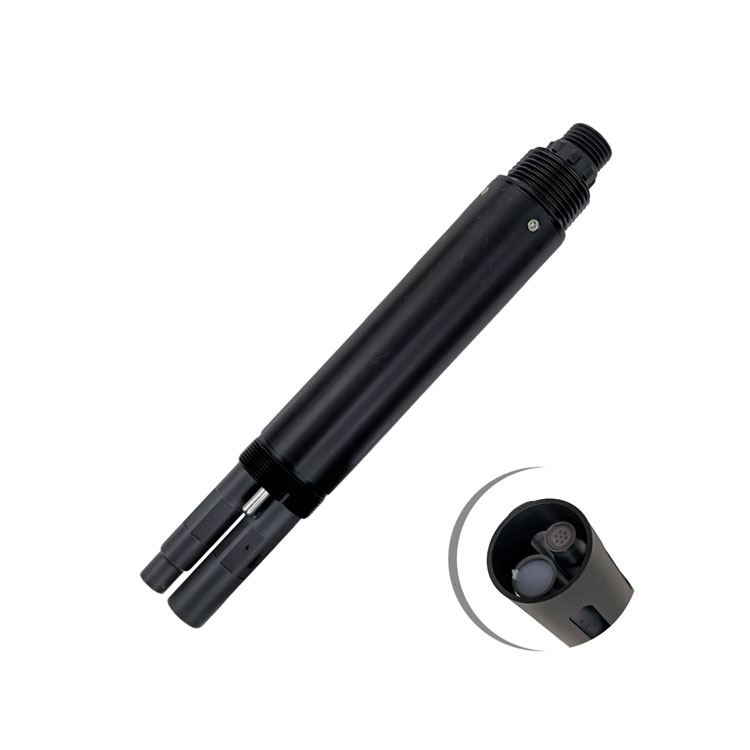
A separate fluorescence-based BOD probe is pictured below. If it is already part of the project, restore it according to its own checks. It is not a substitute for DO or a universal requirement for every pond.

Inspect the cap, windows, electrode surfaces and cable before reconnecting. Return the probe to a representative, safely retrievable position after the pond reaches the intended operating level. Allow the specified conditioning and stabilization; do not set one arbitrary waiting period for all instruments.
Record the refill source, water level and any treatment relevant to interpretation. Compare the restored channels with suitable independent checks under matched conditions. A temporarily high turbidity reading during sediment disturbance is a reason to inspect the water and location, not automatically to recalibrate the probe.
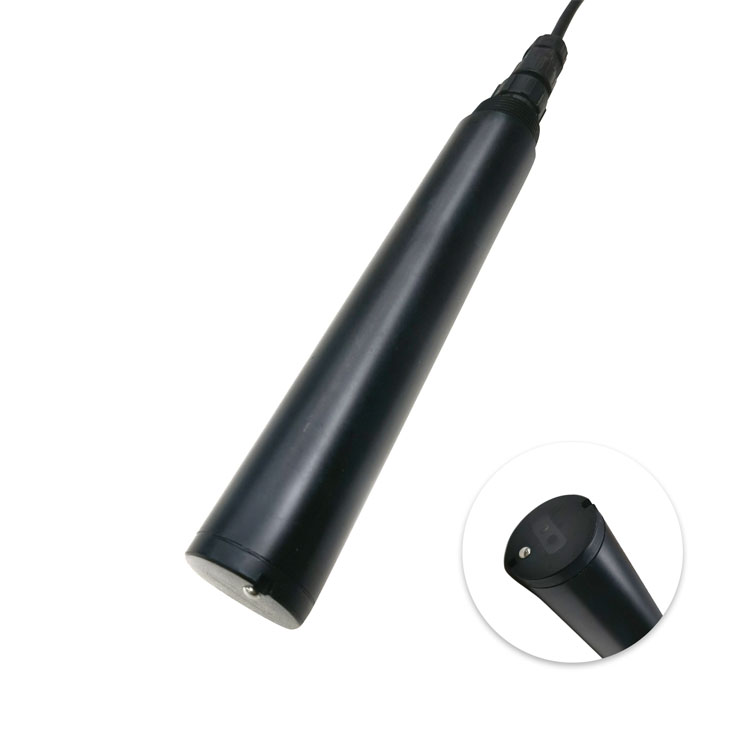
At the PLC, RTU or data logger, retain the gap between the old and new operating periods. Do not fill it with zero or carry the last value forward as fresh data. Confirm that the correct pond ID, units, timestamps and compensation settings survive reconnection before releasing alarms. The turbidity probe below measures its own optical condition; its successful restart does not validate the other channels.
Do not assume so. Air exposure, sediment contact and cleaning work can damage or invalidate different probe types. Plan removal, protected storage and an out-of-service data state before draining starts.
No. Optical caps and ion-selective electrodes have different requirements. Follow the delivered model's procedure and use separately identified containers where required.
No. An optical oxygen sensor can respond to oxygen in air. Its nonzero output is not proof that it remains submerged or represents pond water.
Check the actual salinity and the DO model's configured compensation. Do not assume automatic transfer from a separate salinity probe unless that function has been implemented and tested.
Send the installed models, storage duration, cleaning process, expected refill water, operating alarms and host interface. NiuBoL can review compatible replacements and service items without assuming that every spare is ready for immediate use without conditioning or checking.
A planned drain-and-refill procedure protects the instruments and keeps the monitoring history understandable. Treat removal, storage, conditioning and return to service as separate steps. Accept each channel on its own measurement basis before restoring the pond's normal alarm routine.
Prev:COD Sensor Maintenance: Cleaning, Drift and Wastewater Checks
Next:Professional WiFi Weather Station: Public Upload and Private Records
Related recommendations
Sensors & Weather Stations Catalog
 Agriculture Sensors and Weather Stations Catalog-NiuBoL.pdf
Weather Stations Catalog-NiuBoL.pdf
Agriculture Sensors Catalog-NiuBoL.pdf
Water Quality Sensor Catalog-NiuBoL.pdf
Related products
 Combined air temperature and relative humidity sensor
 TDR Soil Moisture & Temperature Sensor for irrigation| RS485 |4-20mA| NBL-S-THR
 Soil pH sensor RS485 soil Testing instrument soil ph meter for agriculture |NBL-S-PH
 Wind Speed sensor Output Modbus/RS485/Analog/0-5V/4-20mA
 Tipping bucket rain gauge for weather monitoring auto rainfall sensor RS485/Outdoor/stainless steel
 Pyranometer Solar Radiation Sensor 4-20mA/RS485


Screenshot, WhatsApp to identify the QR code
WhatsApp number:+8615367865107
(Click on WhatsApp to copy and add friends)

