





— Blogs —
—Products—
 Consumer hotline +8618073152920
WhatsApp:+8615367865107
Address:Room 102, District D, Houhu Industrial Park, Yuelu District, Changsha City, Hunan Province, China
Product knowledge
Time:2026-08-15 09:08:00 Popularity:322
Quick Answer: A professional WiFi weather station needs three compatible layers: suitable sensors, a logger that reads and stores their measurements, and an upload application for the intended destination. Wi-Fi supplies a network connection; it does not establish public-platform compatibility or preserve private records by itself. Specify those functions separately before ordering a NiuBoL station.
A farm may want rainfall and outdoor weather shared publicly while retaining irrigation records on its own server. A research installation may publish selected observations but need the complete measurement history locally. A contractor may need only the client's private dashboard. These are different data-delivery requirements even when the same access point provides internet connectivity.
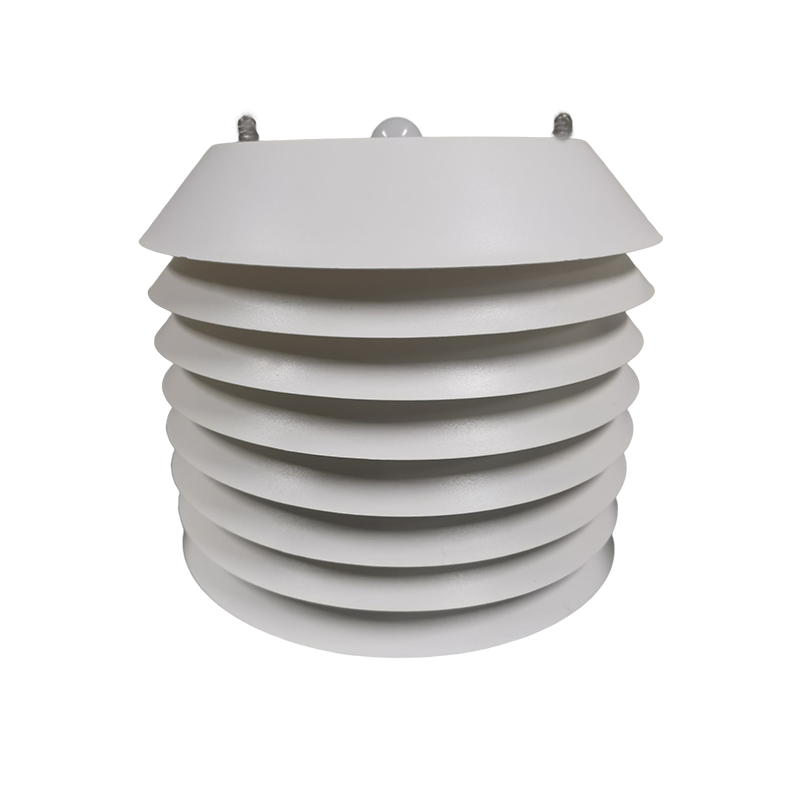
Start with a channel list rather than an upload logo. The NBL-W-THPLC shown above measures temperature, humidity, pressure, illuminance and CO2; it does not supply wind or rainfall. Its environmental channels can be useful in a greenhouse, but it is not a substitute for an outdoor wind-and-rain sensor. Similar housings and the same number of parameters do not imply the same measurements.
Define a private record containing the observed value, unit, observation time, measuring-point identity and validity status. Then identify which of those measurements should be forwarded publicly. Keep configuration credentials separate from exported observations. A public graph should not become the only place from which the owner can recover its operational history.
A practical signal path is weather sensor → RS485 Modbus RTU → data logger → site network → receiving application. A PLC or RTU may also need the measurements locally. Specify which device polls the bus; do not connect two independent polling masters to the same RS485 segment without a suitable design.
The NiuBoL TG462/TG462S logger family has an optional Wi-Fi module. Its RS485 acquisition, local storage and network functions are separate capabilities. An MQTT connection or transparent serial tunnel is not a tested upload application for every weather website. A named destination requires a defined payload, authentication and application-level response check.
| Layer | What must be demonstrated |
|---|---|
| Weather sensor | Correct channels, units, orientation, serial settings and register interpretation |
| Logger | Acquisition timing, calculated values, timestamp handling and retrievable local records |
| Wi-Fi network | Compatible client mode and authentication, usable coverage at the enclosure and permitted outgoing traffic |
| Receiving application | Accepted measurements, credentials, unit conversion and visible current observations |
| Private archive | Owner access, export format, retention and behavior when the internet is unavailable |
Wi-Fi coverage measured beside a laptop in an office does not establish coverage inside the installed cabinet. Test with the door closed and the intended antenna arrangement. If the network uses a sign-in web page or a managed authentication scheme, have the network administrator check compatibility before field installation.
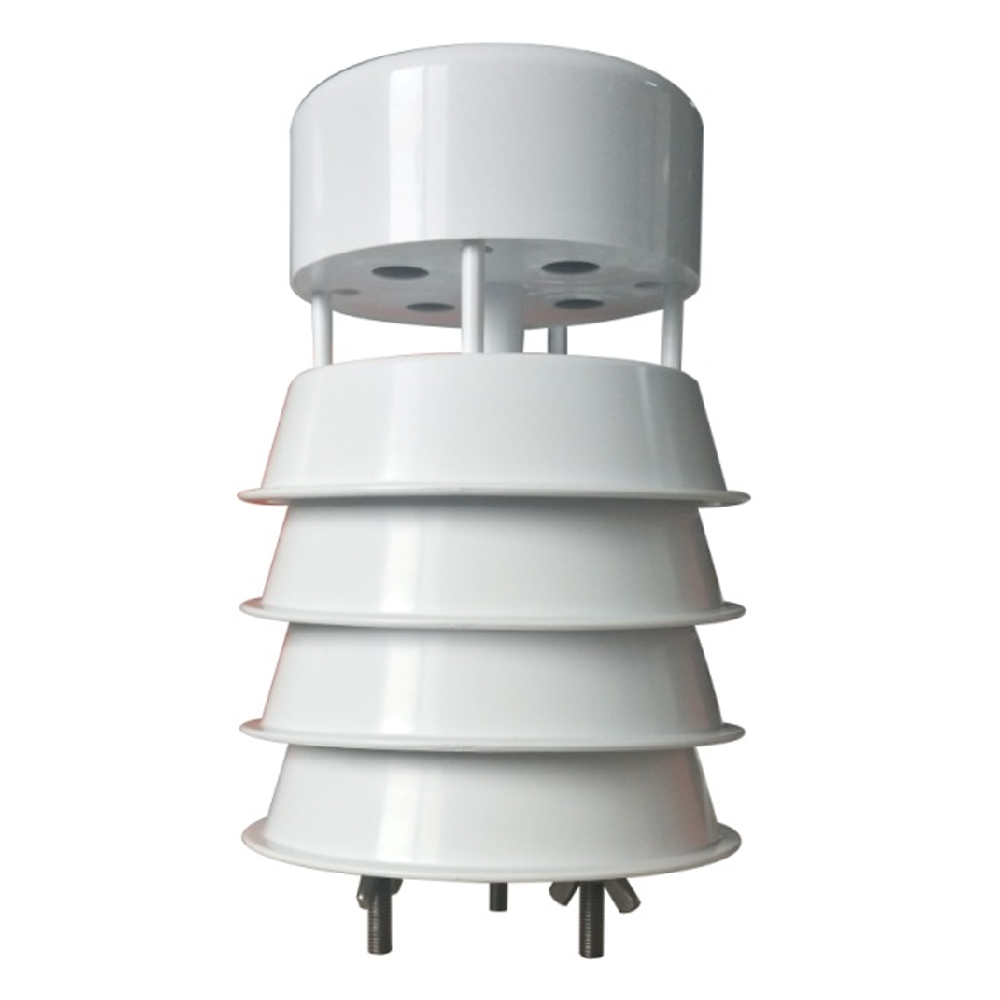
The NBL-W-51MUWS provides wind speed, wind direction, air temperature, relative humidity and barometric pressure. Its wired interface allows the logger to be positioned separately from the sensing head. This helps place the sensor for exposure and the communications equipment for service access, instead of choosing one compromised location for both.
| NBL-W-51MUWS item | Specification and selection meaning |
|---|---|
| Wind channels | Speed range 0-40 m/s; direction 0-360 degrees. Check the required event range before selection. |
| Temperature and humidity | Temperature measurement range -50 to 100 degrees C, accuracy +/-0.5 degrees C; humidity 0-100% RH, accuracy +/-5% RH |
| Electrical interface | 12 V DC; RS485 Modbus; listed baud rate 9600 |
| Power | Listed average consumption 0.3 W for the sensing head, not the full networked station |
| Outdoor construction | ABS; IP65; standard cable 2.5 m. Cable jacket specification and extensions must match the ordered assembly. |
| Operating environment | -40 to 80 degrees C; 0-95% RH. Measurement range is not the same as the permitted operating environment. |
Keep pressure definitions explicit. The sensor's station pressure is not automatically the sea-level-adjusted value expected by a public weather display. Any reduction or compensation must use the correct site information and algorithm. Likewise, a radiation channel in W/m2 is not interchangeable with illuminance in lux.
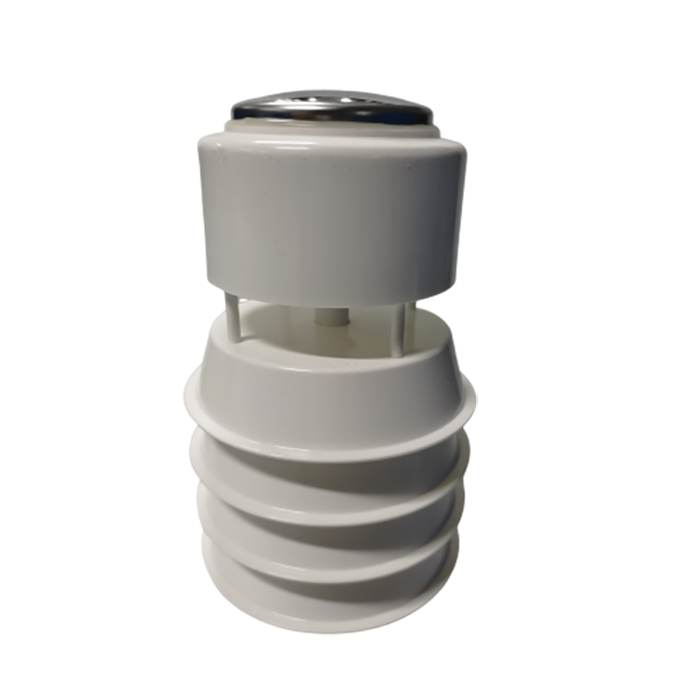
The NBL-W-61MUWS adds rainfall to the five meteorological channels. Before integration, distinguish accumulated rainfall, rainfall over a reporting period and rainfall intensity. If a cumulative counter is used to calculate period totals, document its reset and restart behavior; a negative difference after reset is not negative rainfall.
A logger collecting once per minute and uploading every ten minutes must not label one sample as a ten-minute mean without calculating it. A gust also needs a stated sampling and averaging basis. For direction, ordinary arithmetic averaging can fail across north: 359 and 1 degrees should not become a southerly result.
For a Weather Underground connection, use the current official PWS upload protocol. Its named fields include mph for wind speed, degrees F for temperature and inches for specified rainfall and pressure fields. Convert only at the outgoing interface and retain the original engineering units internally.
The upload requires station identification, a valid station key and time information. Test the actual observation time against the displayed record; a successful connection alone does not establish that the displayed value is current. Do not forward a retained old sample as a fresh observation after a sensor failure.
For a private server, obtain the required message structure before ordering integration work. Include unit labels, missing-value treatment and duplicate-record handling. Passing a JSON message to one endpoint does not demonstrate acceptance by another platform with a different schema.
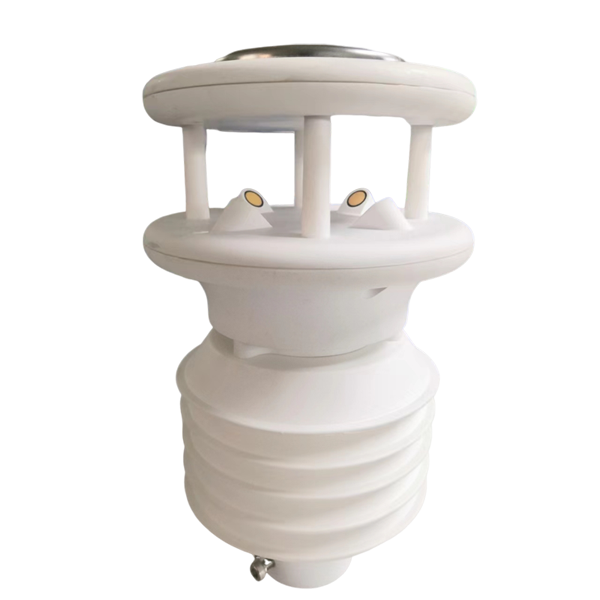
The NBL-W-71GUWS combines weather measurements with either solar radiation or illuminance as the seventh channel. Specify the selected light measurement, not both by assumption. Rainfall and radiation also need suitable exposure; a convenient roof location can introduce obstruction, reflected heat or shading that networking cannot correct.
A compact sensing head puts several measurements at one height. That arrangement can suit distributed observations, but a project requiring different reference heights for wind and air temperature may need separate instruments. Record the mast location, orientation and nearby obstacles so later comparisons have a physical basis.
Where the client needs local alarms, define their local execution and indication independently of the public upload. A delayed public page should not be treated as an engineered protective function. The professional WiFi weather station should retain an operational role even when the public-sharing route is unavailable.
Run a controlled internet interruption while leaving the sensor bus and logger powered. Check whether local acquisition continues, how a stale upload is identified and what records can be exported afterward. Then reconnect and observe whether the application resumes, retransmits or leaves a gap. Storage capacity alone does not prove automatic replay.
Test a separate sensor disconnection to distinguish missing field data from missing internet access. Check the indicated state in the logger and private platform. Finally, perform an authorized power restart and examine the clock, counters and configuration. These tests answer different questions; one restart test cannot establish all three behaviors.
For a quotation, state whether the work includes only sensor acquisition, a private-server connection, public upload software or both destinations. Identify who supplies network access and station credentials. Sensor channels, the optional Wi-Fi module and application configuration can change the cost independently; a sensor-head price is not a complete installed-station price.
No. Wi-Fi provides network access. The installed software must also support the destination's authentication, message fields and response handling. Require a demonstration with the proposed sensor and logger configuration rather than accepting connectivity as proof.
Yes, if the acquisition and software arrangement supports both paths. Specify the private archive, export access and public channel list separately, then test that a public-service interruption does not stop the required private recording.
No. The NBL-W-81GUWS includes particulate and noise measurements; those extra channels do not imply rainfall or solar radiation. Compare the named measurements and their ranges, not only the number in the product name.
Only when both exposure and radio performance are suitable. A wired RS485 link can separate the sensing head from the logger. Check permitted cable design, power at the sensor and antenna installation rather than moving the weather sensor beside a building for a stronger signal.
Provide the required channels, sensor location, network authentication, destination interface and private-record requirements. State whether the client expects automatic replay, calculated rainfall periods or local alarms, since those require defined application behavior rather than a Wi-Fi option alone.
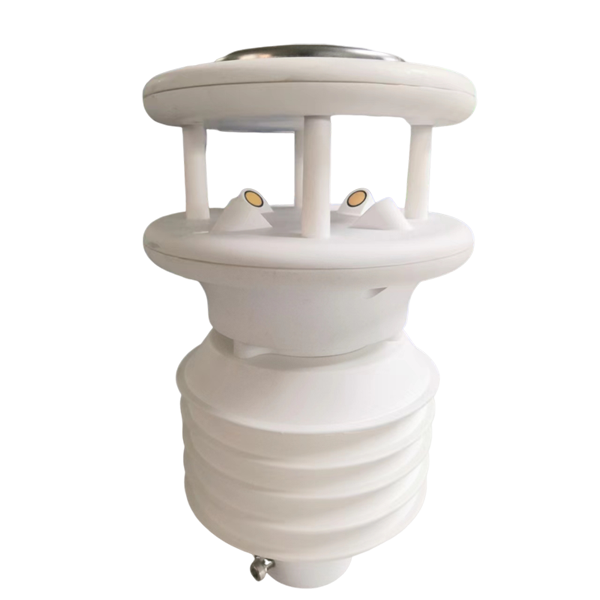
Select the measurements first, then verify acquisition, private retention and each upload destination as separate functions. A useful station produces interpretable observations during normal operation and makes gaps visible during failures. NiuBoL sensor and logger configurations can be assessed against that data path without assuming that a public-sharing service is included in every networked package.
Prev:Online Water Quality Sensor Care During Pond Draining and Refilling
Next:Water Quality Monitoring Equipment Replacement: Keep Old and New Records Separate
Related recommendations
Sensors & Weather Stations Catalog
 Agriculture Sensors and Weather Stations Catalog-NiuBoL.pdf
Weather Stations Catalog-NiuBoL.pdf
Agriculture Sensors Catalog-NiuBoL.pdf
Water Quality Sensor Catalog-NiuBoL.pdf
Related products
 Combined air temperature and relative humidity sensor
 TDR Soil Moisture & Temperature Sensor for irrigation| RS485 |4-20mA| NBL-S-THR
 Soil pH sensor RS485 soil Testing instrument soil ph meter for agriculture |NBL-S-PH
 Wind Speed sensor Output Modbus/RS485/Analog/0-5V/4-20mA
 Tipping bucket rain gauge for weather monitoring auto rainfall sensor RS485/Outdoor/stainless steel
 Pyranometer Solar Radiation Sensor 4-20mA/RS485


Screenshot, WhatsApp to identify the QR code
WhatsApp number:+8615367865107
(Click on WhatsApp to copy and add friends)

