





— Blogs —
—Products—
 Consumer hotline +8618073152920
WhatsApp:+8615367865107
Address:Room 102, District D, Houhu Industrial Park, Yuelu District, Changsha City, Hunan Province, China
Product knowledge
Time:2026-08-15 09:09:00 Popularity:275
Quick answer: Replace water quality monitoring equipment channel by channel, with a defined comparison period and a way to recover the previous arrangement. Keep the existing station's records separate from the replacement data until measurement method, sampling location, scaling and alarms have been checked. Matching RS485 connections or similar values on a screen is insufficient evidence that the replacement is equivalent.

An older station may have accumulated site-specific coefficients, filtering, alarm delays and naming conventions that are absent from a replacement quotation. Export these settings and identify which are instrument settings, which belong to the PLC and which are only dashboard presentation rules. Preserve the old record without copying every correction into the new probe.
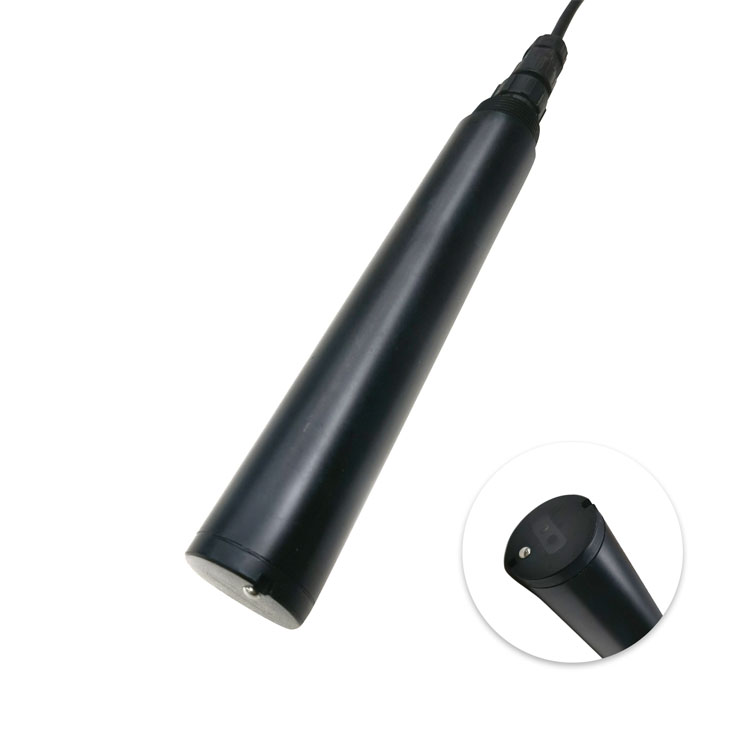
Begin with the physical measurement. The BOD-4S pictured above uses UV fluorescence to produce a BOD-related estimate. It does not perform the same procedure as a five-day laboratory BOD test. Likewise, changing between optical methods may change the response to the water matrix even if both channels display mg/L. Replacing the hardware must not silently change the meaning of an established report.
For each channel, write down the actual method, sample point, range, units, compensation, averaging and intended use. Keep an independent reference where the site needs one. A commissioning comparison should include representative operating conditions, not just one convenient stable sample.
During a parallel trial, keep the electrical arrangement deliberate. Two independently polling masters must not be connected to the same Modbus RTU segment. Use separate test interfaces, or one suitably configured master that reads both old and new devices. Check the total device loading, unique addresses, serial settings and power design before connection.
Create temporary tags that make the old and new measurements unmistakable. Record raw values, scaled values, acquisition times and quality states. Do not overwrite the historical channel with the replacement's output until the comparison is accepted. If the receiving system cannot hold parallel records, arrange separate temporary logging rather than losing the evidence needed to assess the change.
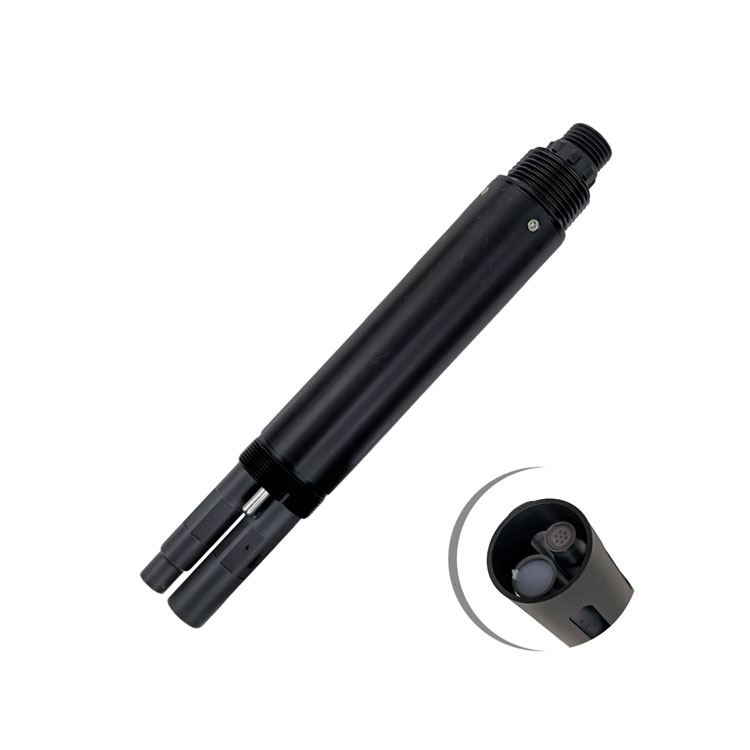
The immersion turbidity probe below is one possible replacement channel. Its range must be selected for the actual water; it should not inherit the old station's range merely because the tag name is unchanged.
| NiuBoL model | Measurement and operating facts | Replacement question |
|---|---|---|
| NBL-WQ-BOD-4S | Fluorescence; 0-300 mg/L; 0.1 mg/L resolution; 1 mg/L detection limit; 0-45 C, pressure below 0.1 MPa | Does the optical estimate correlate adequately with the site's reference over the intended water conditions? |
| NBL-WQ-TS | 90-degree scattering; selectable 0-20.00, 0-100.0 or 0-1000.0 NTU; 0-50 C, pressure below 0.2 MPa | Are range-specific accuracy, geometry and installation clearances suitable? |
| NBL-WQ-NHN | Ammonium ion-selective electrode; three selectable ranges to 10, 100 or 1000 mg/L; medium pH 4-10 | Are analyte basis, interference and achievable low-level uncertainty compatible with the existing duty? |
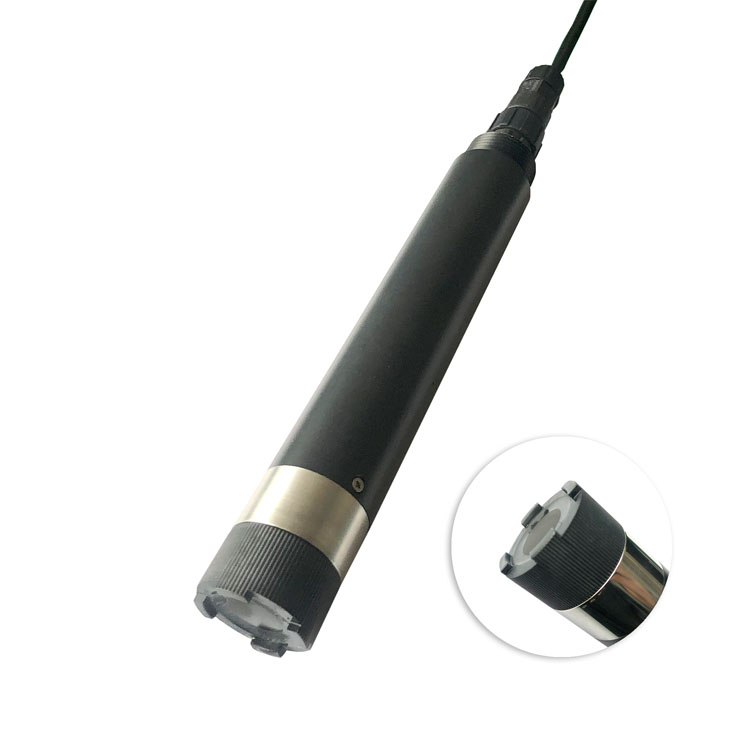
| NBL-WQ-DO | Optical; 0-20.00 mg/L; +/-2% F.S.; 0-45 C, pressure below 0.2 MPa | Does +/-0.4 mg/L meet the decision need, rather than merely matching the display resolution? |
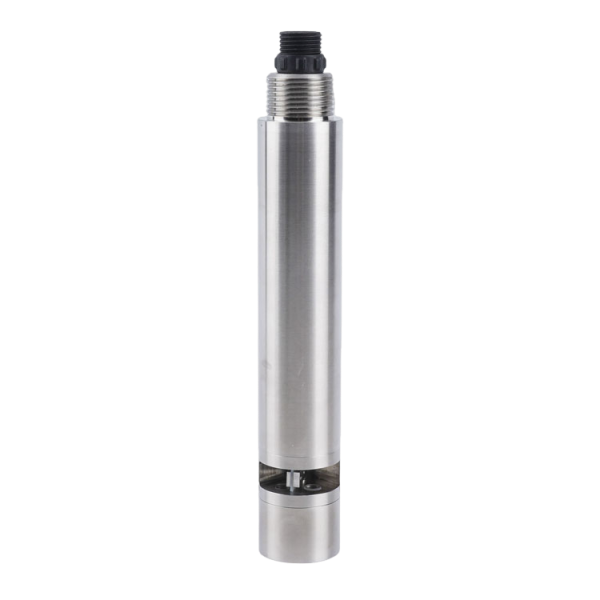
| NBL-WQ-COD | Dual-wavelength UV absorption; 0-200 or 0-500 mg/L equivalent KHP; +/-5% F.S.; 0-45 C, pressure below 0.1 MPa | Are method correlation, matrix changes and full-scale accuracy acceptable? |
All five listed models provide RS485 Modbus RTU, use 12-24 VDC, list IP68 protection and have a standard 5 m cable. BOD-4S, TS and NHN list 0.2 W at 12 V; base DO is below 0.3 W and COD lists 0.3 W at 12 V. These figures do not include a controller, telemetry or ancillary loads. Confirm cable-jacket compatibility rather than inferring it from the protection rating.
Not every accuracy statement is interchangeable. For BOD-4S, obtain an explicit full-scale or reading-based acceptance specification for the ordered model. For TS and NHN, resolve the applicable range and error terms before fixing a pass band. Set acceptance limits from those specifications and the site comparison, rather than using one generic percentage for every measurement.
If old and new records disagree, first compare their locations and timestamps. A flowing sample panel and an immersion probe can observe different water at different times. Then check the engineering units, decimal conversion, compensation and smoothing. Check surfaces and reference results before assuming the newer instrument should be adjusted to match the older one.
For optical BOD and COD, use paired reference samples over the conditions the station will actually encounter. A good fit at one concentration does not establish performance across a changed industrial discharge. Keep the unadjusted comparison records so a later reviewer can distinguish a method difference from a fitted correction.
Test the proposed changeover without allowing trial data to drive equipment unexpectedly. Verify the alarm destination, bad-data handling and restart behavior before approving the new channel for its assigned use. Retain a documented recovery configuration until the site accepts the replacement. The base DO probe below is a separate oxygen measurement, not an independent proof of BOD or COD equivalence.
Sometimes. Confirm available interfaces, polling capability, register handling, scaling and the ability to distinguish trial records. A common protocol does not ensure that existing software can decode a different instrument unchanged.
Choose a period that covers the relevant operating states and reference checks, including expected changes in water composition. A fixed number of days without representative conditions provides weak acceptance evidence.
No. Compare against an agreed measurement basis and uncertainty, not an assumed perfect old instrument. Differences can arise from method, location, timing, fouling or configuration.
Not automatically. Confirm the site's required reporting method and validate the optical relationship for the relevant water matrix. Keep required laboratory analysis where the reporting or compliance procedure calls for it.
Send the old models and protocol, point list, sample layout, existing reference method, intended acceptance limits and allowable outage. Ask NiuBoL to identify required adapters, software changes and model-specific service parts rather than quoting probes alone.
A controlled replacement preserves both service continuity and the meaning of the data. Keep the two records identifiable, investigate differences before fitting corrections and authorize each new channel only after its measurement and receiving-system behavior are accepted.
Prev:Professional WiFi Weather Station: Public Upload and Private Records
Next:Rain Gauge Supplier for Malaysia: Separate Supply from Local Commissioning
Related recommendations
Sensors & Weather Stations Catalog
 Agriculture Sensors and Weather Stations Catalog-NiuBoL.pdf
Weather Stations Catalog-NiuBoL.pdf
Agriculture Sensors Catalog-NiuBoL.pdf
Water Quality Sensor Catalog-NiuBoL.pdf
Related products
 Combined air temperature and relative humidity sensor
 TDR Soil Moisture & Temperature Sensor for irrigation| RS485 |4-20mA| NBL-S-THR
 Soil pH sensor RS485 soil Testing instrument soil ph meter for agriculture |NBL-S-PH
 Wind Speed sensor Output Modbus/RS485/Analog/0-5V/4-20mA
 Tipping bucket rain gauge for weather monitoring auto rainfall sensor RS485/Outdoor/stainless steel
 Pyranometer Solar Radiation Sensor 4-20mA/RS485


Screenshot, WhatsApp to identify the QR code
WhatsApp number:+8615367865107
(Click on WhatsApp to copy and add friends)

