





— Blogs —
—Products—
 Consumer hotline +8618073152920
 WhatsApp:+8615367865107
Address:Room 102, District D, Houhu Industrial Park, Yuelu District, Changsha City, Hunan Province, China
Product knowledge
Time:2026-06-13 09:23:34 Popularity:739
Turbidity testing is often discussed as a clarity measurement, but field projects also need to understand the surrounding water chemistry. Chloride, corrosion risk, suspended particles and process changes may all affect how the monitoring point is specified.
This article is written for distributors, system integrators, engineering contractors and industrial procurement teams that need water quality data to become usable control, alarm or compliance information. Key terms include turbidity testing methods, online turbidity sensor RS485 Modbus, chloride risk in water systems, NTU monitoring for industrial water, water turbidity inspection method, industrial water monitoring, pipeline corrosion control, surface water inspection.
The material discusses chloride as a common anion in water. Chloride may come from natural sources such as salt-bearing strata or seawater influence, and from human sources such as mining, petrochemical, food, metallurgy, leather, pharmaceutical, paper, textile and machinery wastewater.
High chloride can create salty taste, soil salinization, pipe corrosion and plant-growth problems. In stainless steel pipe pressure tests and circulating water systems, chloride limits may become a real engineering control value. Turbidity does not measure chloride, but both parameters may be needed in an industrial water monitoring plan.
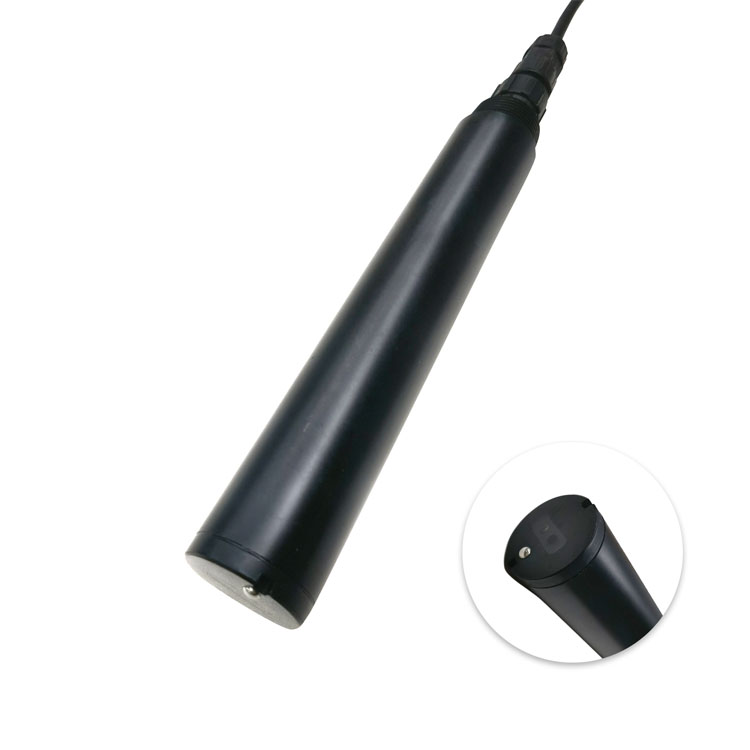
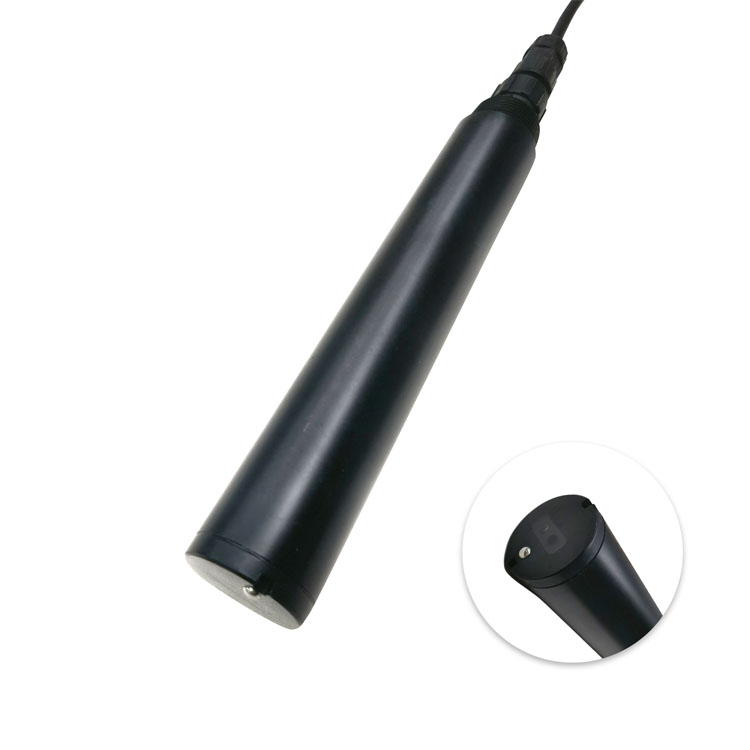
NiuBoL online turbidity sensors measure particle-related optical scattering in NTU and can be installed at water intakes, filtration outlets, industrial process water lines, discharge channels or environmental stations.
RS485 Modbus RTU allows turbidity values to be collected with conductivity, pH, chloride-related laboratory data or other online sensors. This makes it easier to connect field clarity changes with water chemistry and corrosion-control decisions.
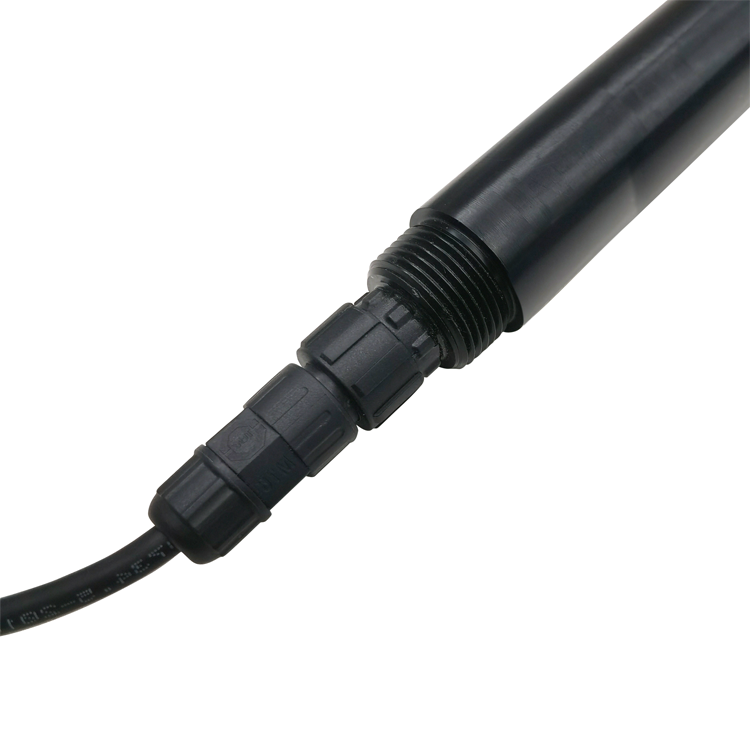
For engineering delivery, RS485 Modbus RTU should be treated as part of the measurement architecture. Address planning, register scaling, grounding, shielding and waterproof junctions should be documented before the system is handed over. This helps the buyer expand the project later without replacing the original measurement layer.
Turbidity is commonly measured by scattered light, especially 90-degree scattering. This method is sensitive for low turbidity and is suitable for online continuous monitoring when the optical window is maintained.
Transmission or absorbance-based methods may show large changes, but they are more affected by color and absorption and are not equivalent to a true turbidity measurement in many standard definitions.
If a project involves stainless steel pipelines, circulating water, seawater influence or industrial discharge, chloride risk should be reviewed together with turbidity. Conductivity or chloride-specific testing may be needed because turbidity alone cannot identify dissolved ions.
For example, circulating water chloride can show concentration cycles; turbidity can show suspended particles. Together they help explain scaling, corrosion and fouling risk.
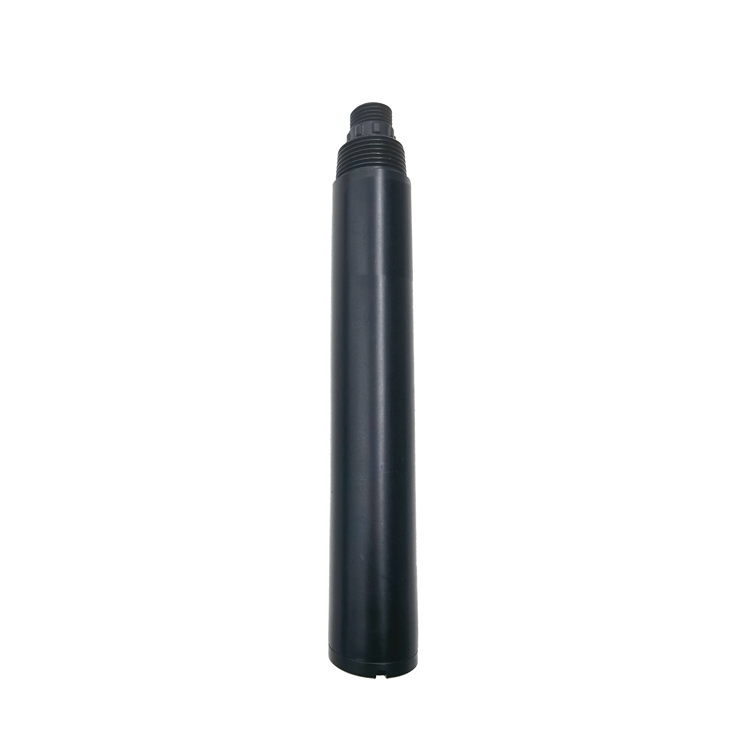
The table summarizes NBL-WQ-TS online turbidity sensor parameters for NTU inspection and online monitoring projects.
| Parameter | Specification |
|---|---|
| Model | NBL-WQ-TS |
| Measurement principle | 90-degree scattered light method with infrared LED source |
| Measurement range | 0 to 20.00 NTU / 0 to 200.0 NTU / 0 to 1000.0 NTU |
| Resolution | 0.01 NTU or 0.1 NTU depending on selected range; 0.1 degC |
| Measurement accuracy | +/-3% or +/-1.5 NTU for 0 to 20 NTU; +/-3% or +/-2 NTU for 0 to 200 NTU; +/-5% or +/-3 NTU for 0 to 1000 NTU; temperature +/-0.3 degC |
| Response time | T90 < 30 s under stable sample condition |
| Power supply | 12 to 24 VDC |
| Output signal | RS485, Modbus RTU |
| Protection rating | IP68, suitable for submerged use within rated depth |
| Housing material | POM and ABS |
| Installation | Immersion or flow-cell installation according to site layout |
| Cable material / length | Waterproof shielded cable, standard 5 m, customizable |
Online turbidity monitoring can support inspection by showing when water clarity changes between manual sampling rounds. This is valuable for surface water stations, treatment plants and industrial systems where particle changes can happen quickly.
For audit or compliance work, online data should be compared with approved reference methods and recorded with calibration events.
A water sample can be visually clear but still contain high chloride or dissolved salts. It can also be turbid while dissolved-ion concentration remains stable. Treating turbidity as a general water quality replacement leads to wrong conclusions.
For industrial buyers, this distinction is important. Turbidity supports particle and clarity control; conductivity or chloride testing supports dissolved-ion and corrosion risk control.
Chloride is relevant in stainless steel pressure testing, circulating water, coastal source water and industrial wastewater. High chloride can contribute to pitting, stress corrosion or scaling-related operating problems depending on the material and process.
An online turbidity sensor cannot measure chloride, but it can be part of a broader monitoring package that includes conductivity, pH and laboratory chloride checks. This combined view is more useful than a single indicator.
For contractors, a practical workflow is to check turbidity for suspended particles, conductivity for dissolved ion changes, and chloride by the required reference method when corrosion limits apply. Online sensors then provide trend information between formal tests.
This workflow is especially useful during flushing, commissioning, intake monitoring or abnormal wastewater events, where the site needs quick information and later documentation.
For many industrial water projects, a useful package includes turbidity for particles, conductivity for dissolved ion change, pH for chemical condition and laboratory chloride verification when corrosion limits matter. Each parameter answers a different question.
The platform should not merge these values into one vague water quality score for engineering use. Operators need to see which parameter changed and how it relates to the process. For example, high turbidity with normal conductivity suggests a particle event; high conductivity with low turbidity suggests dissolved-ion change.
This separation makes the monitoring system more valuable for troubleshooting and inquiry response. It also helps procurement teams justify why more than one sensor is needed.
When a project mentions turbidity, chloride and corrosion risk together, the quotation should separate online instruments from laboratory or chemical tests. Turbidity can be monitored continuously, while chloride may require a dedicated ion method or periodic laboratory confirmation depending on the requirement.
The buyer should state whether the goal is corrosion prevention, flushing acceptance, source-water surveillance or wastewater event tracking. Each goal changes the recommended parameter set and sampling frequency.
For industrial contractors, this distinction improves credibility. It shows that the monitoring plan is based on measurement principles rather than selling one sensor as a universal water quality answer.
If the monitoring point is outdoors, the cabinet, cable entry and sample line should also be checked for temperature, rainwater and maintenance access. This is especially important when the project owner expects unattended operation. Remote sites also need clear responsibility for routine inspection.
Site environment challenge: Storm runoff can increase particles and change water chemistry.
System integration scheme: Use turbidity with conductivity and pH monitoring at the intake.
User value delivered: Operators can respond to source-water events earlier.
Site environment challenge: Chloride concentration and suspended particles can increase corrosion or scaling risk.
System integration scheme: Combine turbidity trend with conductivity and chloride testing.
User value delivered: Maintenance teams can adjust blowdown, filtration or chemical treatment.
Site environment challenge: Excess chloride can create corrosion risk while particles affect cleanliness.
System integration scheme: Use turbidity inspection and chloride verification before pressure testing or flushing.
User value delivered: The project reduces avoidable corrosion and cleanliness disputes.
Site environment challenge: Industrial inflow may change color, particles and dissolved salts.
System integration scheme: Use online turbidity plus complementary chemistry indicators.
User value delivered: The owner gains a stronger basis for abnormal-event analysis.
Turbidity monitoring should be specified with the inspection purpose and related chemistry risks in mind.
A turbidity increase may indicate particles, biological growth, floc carryover or upstream disturbance. It does not identify chloride or other dissolved ions.
For engineering decisions, turbidity data should be interpreted with process knowledge, conductivity, pH, temperature and laboratory results where needed.
Turbidity inspection requires both optical stability and correct sampling location.
No. Turbidity measures optical scattering from particles. Chloride is a dissolved ion and needs a different measurement method.
Because industrial water projects often evaluate particle clarity and dissolved-ion corrosion risk together.
Yes. The recommended engineering interface is RS485 Modbus RTU, so values can be read by PLC, DCS, RTU, SCADA, industrial computer, recorder or IoT gateway.
Yes. The field device should be assigned a Modbus address, register scaling should be confirmed, and the power supply and cable route should be checked before commissioning.
Temperature changes can affect electrochemical, optical and conductivity measurements. Automatic compensation helps reduce drift when the water temperature changes.
A 90-degree scattered light method with stable optical design is commonly used for online NTU monitoring.
Indirectly, by showing particles and fouling risk. Conductivity or chloride testing is still needed for dissolved-ion corrosion risk.
The selected range should cover normal operation, expected alarm values and abnormal events without losing resolution in the working range.
A single sensor is enough when one decision is required. A station is better when several parameters must be interpreted together for discharge, process control or aquaculture management.
Confirm water type, expected concentration, installation method, cable length, output interface, power supply, controller type, cleaning access and required documentation.
Turbidity testing gives valuable particle and clarity information, but industrial water projects should also consider chloride and conductivity where corrosion or salinity risk matters. NiuBoL RS485 Modbus RTU turbidity sensors can be integrated with broader water quality monitoring systems for inspection, treatment and industrial process control.
Related recommendations
Sensors & Weather Stations Catalog
 Agriculture Sensors and Weather Stations Catalog-NiuBoL.pdf
Weather Stations Catalog-NiuBoL.pdf
Agriculture Sensors Catalog-NiuBoL.pdf
Water Quality Sensor Catalog-NiuBoL.pdf
Related products
 Combined air temperature and relative humidity sensor
 TDR Soil Moisture & Temperature Sensor for irrigation| RS485 |4-20mA| NBL-S-THR
 Soil pH sensor RS485 soil Testing instrument soil ph meter for agriculture |NBL-S-PH
 Wind Speed sensor Output Modbus/RS485/Analog/0-5V/4-20mA
 Tipping bucket rain gauge for weather monitoring auto rainfall sensor RS485/Outdoor/stainless steel
 Pyranometer Solar Radiation Sensor 4-20mA/RS485

Screenshot, WhatsApp to identify the QR code
WhatsApp number:+8615367865107
(Click on WhatsApp to copy and add friends)

