





— Products —
 Consumer hotline +8618073152920
WhatsApp:+8615367865107
Address:Room 102, District D, Houhu Industrial Park, Yuelu District, Changsha City, Hunan Province, China
Weather Stations
NiuBoL provides weather station sensors and integrated ultrasonic weather sensors for measuring wind speed, wind direction, air temperature, relative humidity, atmospheric pressure, rainfall, solar radiation and other meteorological parameters.
This category includes individual meteorological sensors and compact multi-parameter weather sensors such as 5-in-1, 6-in-1, 7-in-1 and other integrated configurations. These products can be connected to a compatible data logger or controller to build an automatic weather monitoring system.
If you are selecting a complete station with mast, data logger, power system and remote communication, see the Automatic Weather Station selection page.
 Solar Module Temperature Sensor
 CO2 Sensor & Transmitter RS485 Modbus / 4-20mA | Greenhouse & Indoor Air
 Illuminance Sensor RS485 & 4-20mA | 0-200,000 Lux | NBL-W-LUX
 PM2.5 & PM10 Sensor RS485 Modbus | NBL-W-PM
 Ultrasonic wind speed and direction sensor
 3D Ultrasonic Anemometer RS485 Modbus U/V/W | NBL-W-3D-UWDS
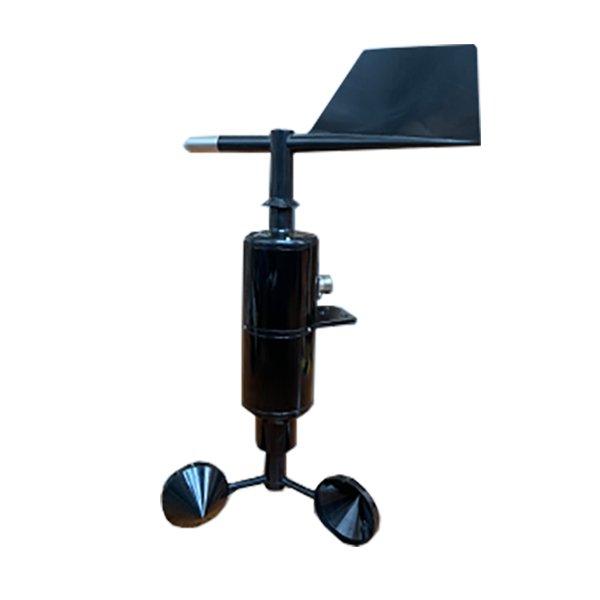 Mechanical three cup wind speed direction sensor Anemometer for weather station 4-20mA/RS485/Modbus
 PAR Sensor RS485 Modbus for Greenhouse & Plant Growth | NBL-W-PARS
 Evaporation sensor for measuring water evaporation & irrigation & environmental monitoring
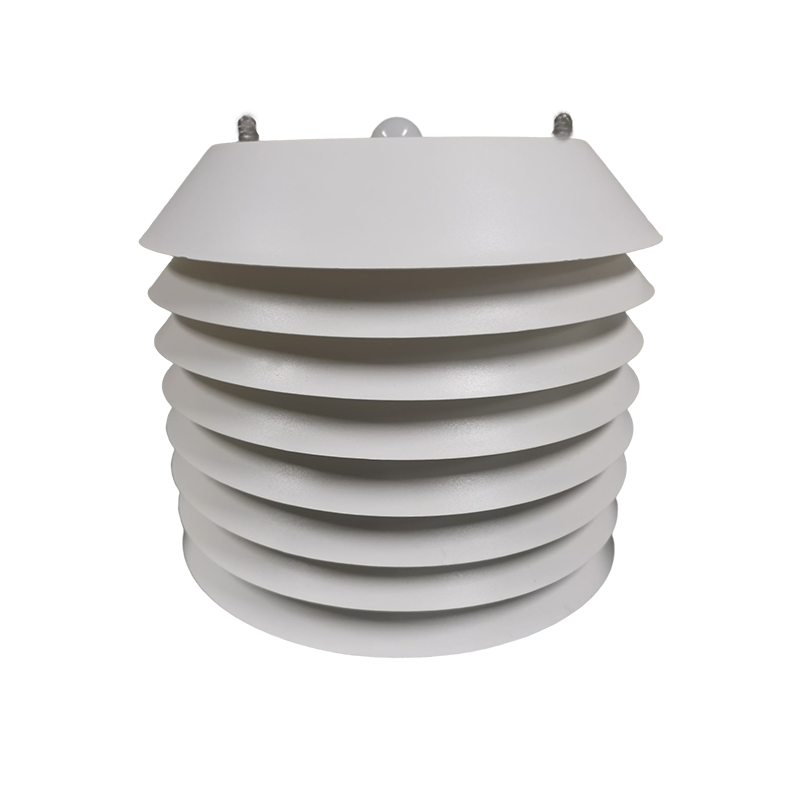 5-in-1 Temperature Humidity Pressure Light CO2 Sensor | NBL-W-THPLC
 Atmospheric Visibility Sensor | NBL-W-VS| 5m–10km RS485
 Sunshine Duration Sensor | RS485 & 4-20mA|NBL-W-SDS
Weather monitoring systems can use either a compact integrated sensor or separate individual instruments. The correct structure depends on installation space, required parameters, maintenance strategy and measurement-performance requirements.
| Selection Item | Integrated Weather Sensor | Modular / Separate Sensors |
| Installation | Compact and faster to install | More components but flexible positioning |
| Cabling | Fewer cables and connection points | Separate cabling for individual instruments |
| Maintenance | Simple system structure | Individual instruments can be serviced or replaced separately |
| Typical Use | IoT weather nodes, agriculture, environmental and compact installations | Research, professional stations and projects requiring dedicated sensors |
The number in an integrated weather sensor name refers to the number of measurement parameters included in that specific configuration. The exact parameter combination should always be checked on the individual product page rather than assumed from the number alone.
Common integrated parameters can include wind speed, wind direction, air temperature, relative humidity, atmospheric pressure, rainfall or solar radiation depending on the selected model. Some projects require additional standalone instruments when higher-performance solar radiation, precipitation or other measurements are needed.
Ultrasonic wind sensors measure wind speed and direction without rotating cups or vanes, reducing moving-part maintenance. Mechanical wind sensors use cup anemometers and wind vanes and remain widely used in conventional meteorological stations. Selection should consider required accuracy, starting threshold, icing or contamination risk, maintenance access and project budget.
Many NiuBoL weather sensors use RS485 Modbus for connection to a compatible data logger, PLC, RTU or IoT gateway. Other signal types can be available depending on the product.
Weather Sensors → RS485 / Other Signal → Data Logger / PLC / RTU → 4G / Ethernet / Wi-Fi / LoRaWAN → Cloud / SCADA / Private Server
Remote communication is normally provided by the data logger or gateway. A basic weather sensor should not automatically be assumed to include cellular or cloud communication unless the specific model states otherwise.
Agricultural Monitoring
•
Environmental Monitoring
•
Hydrology
•
Solar Energy
Research Stations
•
Road Weather
•
Industrial Sites
•
Remote IoT Stations
| Selection Item | Information to Provide |
| Required Parameters | Wind, temperature, humidity, pressure, rainfall, solar radiation or other parameters |
| Sensor Structure | Integrated multi-parameter sensor or separate instruments |
| Performance | Required range, accuracy, resolution and response time for each parameter |
| Output | RS485 Modbus or other required signal |
| Installation | Pole height, cross arm, mounting location and site exposure |
| Data System | PLC, data logger, RTU, IoT gateway, cloud platform or private server |
A1. Not necessarily. An integrated sensor measures several meteorological parameters, while a complete automatic weather station may also include a data logger, mast, power system, enclosure and remote communication equipment.
A2. Ultrasonic wind measurement has no rotating cups or vanes, which reduces moving-part maintenance and supports compact integrated designs.
A3. Yes, when the electrical interface and communication protocol are compatible. Confirm the sensor output, power supply and Modbus register information before integration.
A4. Yes, by using a compatible data logger or IoT gateway that supports the required remote communication and server protocol.
A5. Provide the required parameters, ranges and accuracy, integrated or separate-sensor preference, output interface, installation method, data logger or platform requirement and quantity.
If your project requires sensors together with a mast, data logger, solar power, battery, 4G communication, cloud platform or private-server integration, see the Automatic Weather Station selection guide or send the complete project requirements for system configuration.


Screenshot, WhatsApp to identify the QR code
WhatsApp number:+8615367865107
(Click on WhatsApp to copy and add friends)

