

— Blogs —
—Products—
 Consumer hotline +8618073152920
WhatsApp:+8615367865107
Address:Room 102, District D, Houhu Industrial Park, Yuelu District, Changsha City, Hunan Province, China
Product knowledge
Time:2021-11-28 22:11:52 Popularity:2729
Quick Answer: NB-IoT technology carries small telemetry messages through a mobile operator's licensed cellular network. A complete monitoring point still needs a sensor, acquisition electronics, an NB-IoT modem and a receiving application. Power Saving Mode and eDRX reduce radio activity by limiting reachability; they do not guarantee a particular battery life or immediate delivery of commands.
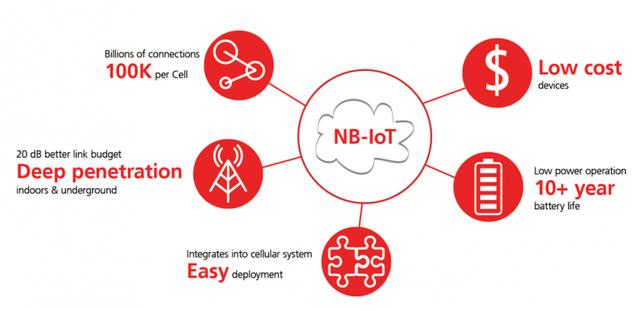
Long battery life, deep coverage and low device cost are design objectives, not guaranteed results for every installation. The energy used to take a measurement, the radio's operating cycle and the available network service must all suit the application. A low-power modem cannot make a continuously powered industrial analyser into a ten-year battery device.
The device uses licensed cellular spectrum and connects through an operator network. It normally needs a SIM or managed subscriber profile and an application endpoint. The project owner therefore depends on local service availability, supported bands and commercial arrangements.
The measurement path is sensor, local acquisition, NB-IoT modem, operator network and application server. The sensor converts a physical quantity into a value or signal. Acquisition electronics read it, apply the correct units and create a record. The modem carries a payload; the application decodes it and decides whether it represents a new measurement, a repeated message or an alarm.
An integrated NB-IoT sensor may contain all the field-side parts in one enclosure. A conventional RS485 instrument does not. It requires a compatible data logger or RTU with the appropriate communications option. Treat the field interface and the mobile-network interface as separate items in the equipment specification.
For a remote environmental point, a useful record includes device identity, measurement timestamp, parameter, value, unit and measurement status. Battery state and communications diagnostics can be separate health channels. A server receipt time is not necessarily the measurement time: the device may have stored readings before sending them.
Add a sequence number where the application needs to recognise retries or missing records. For example, two deliveries carrying the same device identity, timestamp and sequence number should not become two rainfall events. This is an application design choice, not a function obtained automatically by selecting an NB-IoT radio.
Power Saving Mode lets a registered device remain unreachable for periods while reducing radio activity. Extended Discontinuous Reception allows longer intervals between paging checks. These mechanisms can reduce average power, but attach attempts, retries, weak signal, reporting frequency and downlink requirements still determine real battery life.
The distinction matters when a project requires both battery operation and remote access. With PSM, the device can remain registered while it is not listening for incoming traffic. With eDRX, it checks for paging less frequently. The network participates in determining the supported settings; requesting a sleep or paging interval does not prove that the requested value was granted.
| Behaviour | Purpose | Consequence for the application |
|---|---|---|
| Periodic uplink | Send a scheduled measurement or accumulated record. | The report interval determines how long the platform may normally wait for new data. |
| PSM | Reduce radio activity between active periods. | Do not expect an arbitrary server command to reach the device during sleep. |
| eDRX | Space out the periods when the device listens for paging. | Downlink reachability and energy use must be balanced. |
| Retry after failure | Attempt delivery when a previous transaction did not complete. | Retries consume energy; repeated transmission needs an application duplicate policy. |
PSM's distinction between registration and reachability is defined in 3GPP TS 23.682, section 4.5.4. Specify when remote configuration can be delivered. A command to change tomorrow's reporting interval is different from a command intended to stop equipment immediately.
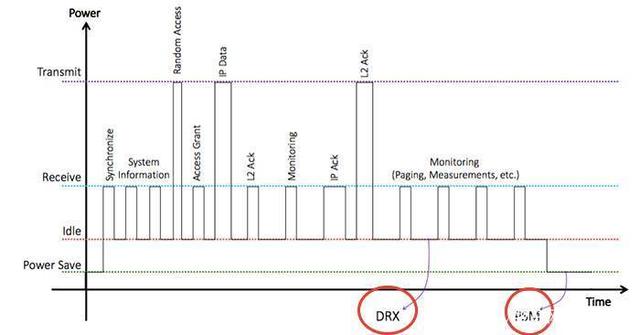
A radio sleep-current figure is only one term in the power budget. Include sensor warm-up, measurement time, processor activity, voltage conversion, radio transmission, receive periods and the current drawn between events. If several probes need different supply voltages, compare energy in watt-hours rather than adding ampere-hour ratings at different voltages.
Consider an illustrative sensor drawing 0.2 W for 30 seconds every 15 minutes. There are 96 measurement cycles per day, so sensor energy alone is 0.2 x 30 x 96 / 3,600 = 0.16 Wh/day. An assumed usable battery energy of 12 Wh would support that sensor load for 75 days before accounting for other loads. Radio activity, standby loads and conversion losses reduce the available period further. These are assumed values, not NiuBoL product specifications or a recommended warm-up time.
The calculation also shows why measurement and transmission intervals need not match. A logger might acquire several readings and send a batch, if its storage and firmware support that arrangement. The sensor energy remains even when the radio transmits less often. Conversely, a sensor that cannot settle during the available powered interval may require longer operation and a different energy source.
Use a current or power trace covering the entire wake, measure, send and sleep cycle. Repeat with the final antenna and realistic signal conditions. Brief high-current events may be missed by a meter showing only a slowly updated average, and a battery must supply the peaks as well as the required total energy.
RS485 defines the local electrical link. Modbus RTU defines a request-and-response protocol commonly carried on it. NB-IoT supplies a separate cellular transport. A gateway must read the correct register, interpret its scale and then encode an application message; merely joining an RS485 cable to a cellular terminal is not sufficient.
For example, if a sensor reports a value as an integer with a separate decimal-position word, the acquisition firmware must combine those fields before assigning an engineering unit. A different instrument may use a signed integer or a floating-point representation. Obtain the register map for the ordered sensor rather than copying a driver from another product with the same connector.
Decide which device is the Modbus client on a shared bus. Independently polling the same instruments from both a logger and another controller can introduce conflicts unless the arrangement is specifically designed for it. An NB-IoT endpoint should normally transmit acquisition results, not expose an unattended field bus directly to the internet.
| Task | Useful transmission approach | Important limitation |
|---|---|---|
| Meter or tank-level reporting | Periodic records with device health and event reporting where required. | A late report must not be mistaken for the current tank condition. |
| Weather observations | Locally acquired averages, extremes or event totals transmitted in scheduled records. | One instantaneous reading does not reconstruct wind variation or a rainfall event. |
| Water-quality trend monitoring | Transmit a valid reading after the probe has completed its required measurement sequence. | Probe power and stabilisation requirements may dominate the energy budget. |
| Equipment protection | Keep protective logic local; send state and alarm records for supervision. | Variable network delay and sleeping endpoints are unsuitable as the sole path for an immediate protective action. |
Specify a stale-data rule as well as an alarm limit. If a point normally reports hourly, an unchanged number on the screen does not prove a fresh reading arrived. The application should expose the last measurement time and distinguish a missed report from a genuine constant value.
NB-IoT is not a deterministic control network and is generally used for telemetry. Operator maps do not replace on-site testing, especially in underground chambers or metal enclosures. Confirm country bands, device certification, SIM lifecycle and application security.
Before ordering for another country, identify the destination operator, supported NB-IoT bands, subscriber provisioning and the application route. A working 4G phone or an activated conventional data SIM does not prove that an NB-IoT terminal will obtain the required service. Roaming, features and device approvals need confirmation for the actual deployment.
A private radio network may suit multiple low-data points within one managed site. A 4G data collector can be more suitable where the application needs more frequent transfers or larger records and has sufficient power. Wired acquisition remains useful around one station. None of these alternatives removes the need to define units, timestamps and failure handling.
The NiuBoL industrial RTU provides an acquisition-and-cellular route for compatible instruments. Specify whether the quotation is for a 4G version or an NB-IoT option, together with the destination network and sensor interfaces. Confirm the modem option, firmware functions and service for that configuration; an RS485 port alone does not establish NB-IoT compatibility.
Compare hardware, antennas, usable power supply, operator charges and field access costs as separate items. Ask whether the service allowance is based on message count or data volume, how downlink traffic is charged and who maintains SIM renewal. For a useful quotation, provide the sensor list, required upload interval, downlink needs, available power and the server protocol or receiving application.
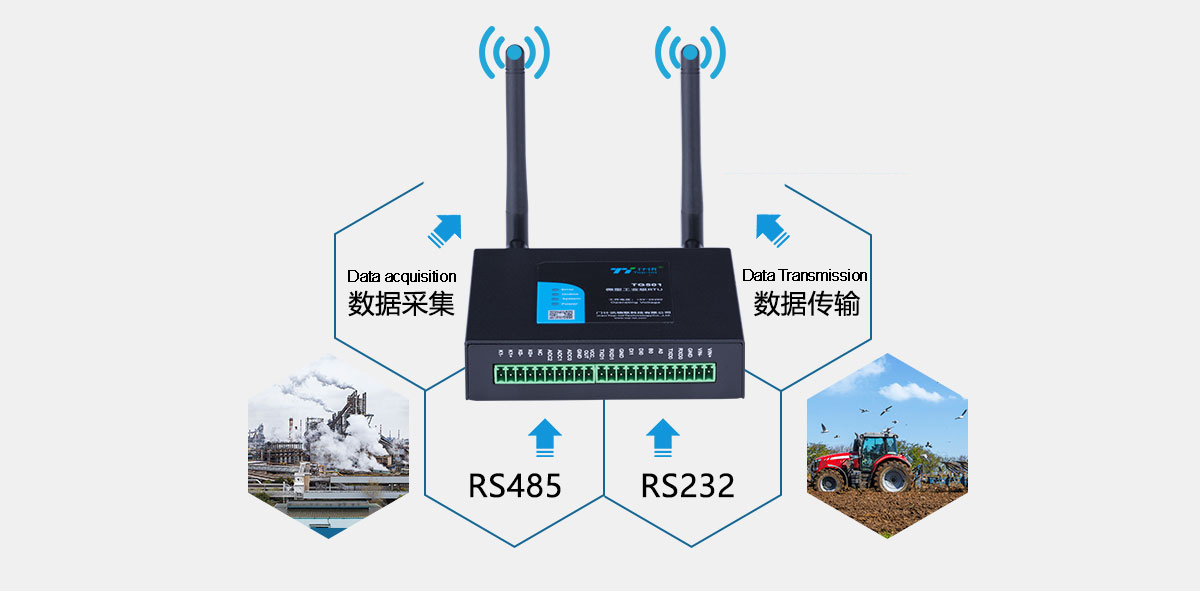
An NB-IoT device includes the cellular function needed to reach a compatible operator network. An RS485 sensor supplies local data and needs acquisition and communications hardware for remote transmission. Confirm whether the quoted equipment includes that complete chain or only the measuring probe.
Not normally: PSM allows it to retain network registration during the agreed sleep behaviour. Loss of coverage, network state or a full power cycle can still require connection procedures. Distinguish normal periodic operation from a cold start when measuring energy use.
The server can create a request, but delivery depends on device reachability and network handling. A sleeping PSM endpoint is not continuously listening. Specify the permitted command delay and command expiry; do not execute a delayed start command after it has become operationally inappropriate.
No. Estimate service life from usable battery energy and the complete device duty cycle, including sensing, receiving, retries and standby. Confirm the battery's pulse capability and site-temperature effects. A technology-level target is not an acceptance result for the supplied monitoring system.
No. It establishes a possible field-side interface. The collector also needs the appropriate modem, antenna, firmware and operator service, plus an application transport supported by the receiving server. These are distinct compatibility checks.
Provide the deployment country and operator, measured parameters, sensor outputs and supply, reporting interval, downlink requirements, power source and server interface. State explicitly whether NB-IoT is required or whether a 4G RTU alternative is acceptable; they should not be treated as interchangeable order descriptions.
NB-IoT technology addresses a low-data cellular telemetry task. Its usefulness depends on how acquisition, sleep, message delivery and the receiving application work together. Select the measuring instrument and communications configuration separately, then evaluate the energy and reporting behaviour of the complete monitoring point.
Related recommendations
Sensors & Weather Stations Catalog
 Agriculture Sensors and Weather Stations Catalog-NiuBoL.pdf
Weather Stations Catalog-NiuBoL.pdf
Agriculture Sensors Catalog-NiuBoL.pdf
Water Quality Sensor Catalog-NiuBoL.pdf
Related products
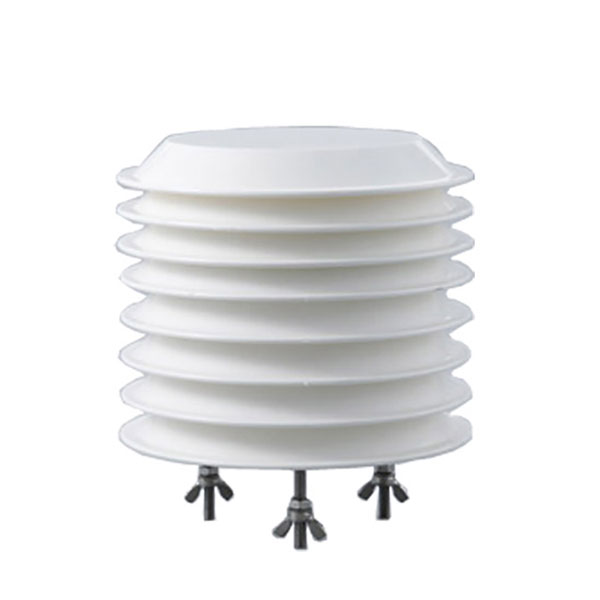 Combined air temperature and relative humidity sensor
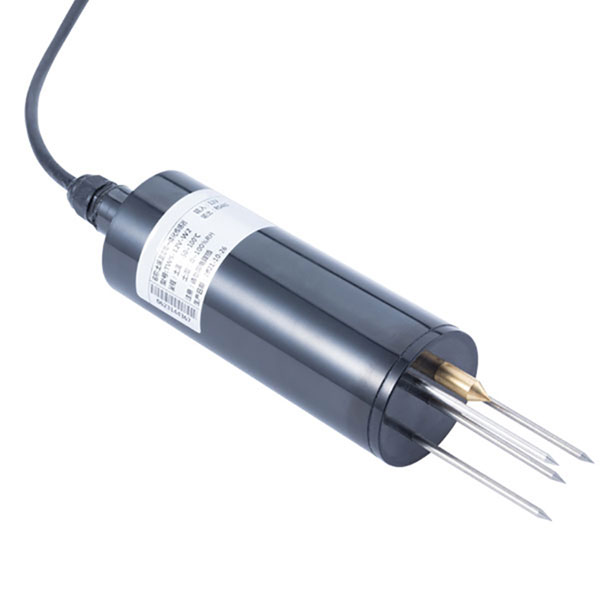 TDR Soil Moisture & Temperature Sensor for irrigation| RS485 |4-20mA| NBL-S-THR
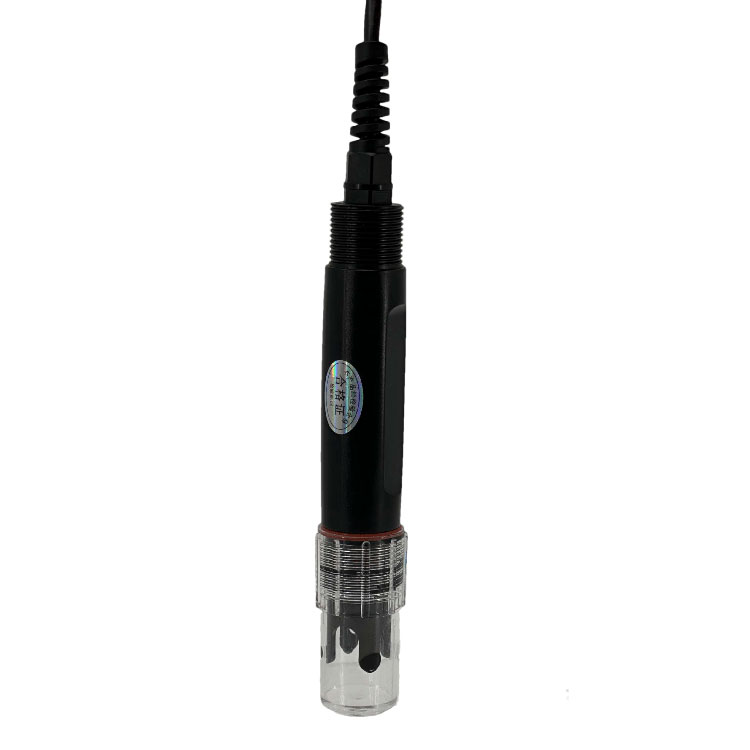 Soil pH sensor RS485 soil Testing instrument soil ph meter for agriculture |NBL-S-PH
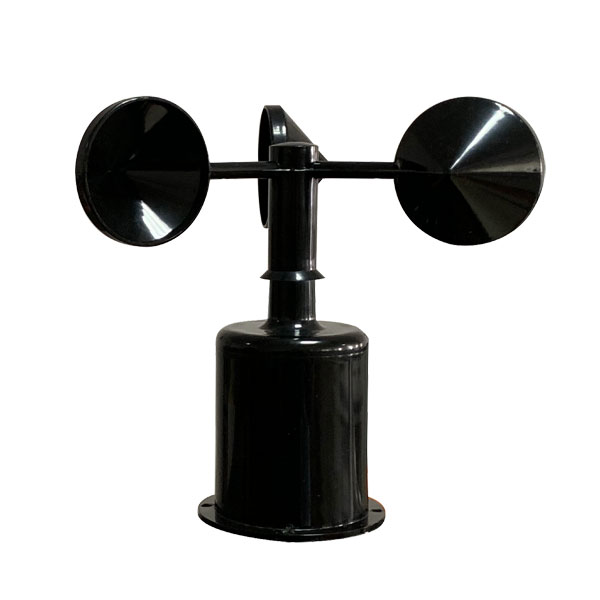 Wind Speed sensor Output Modbus/RS485/Analog/0-5V/4-20mA
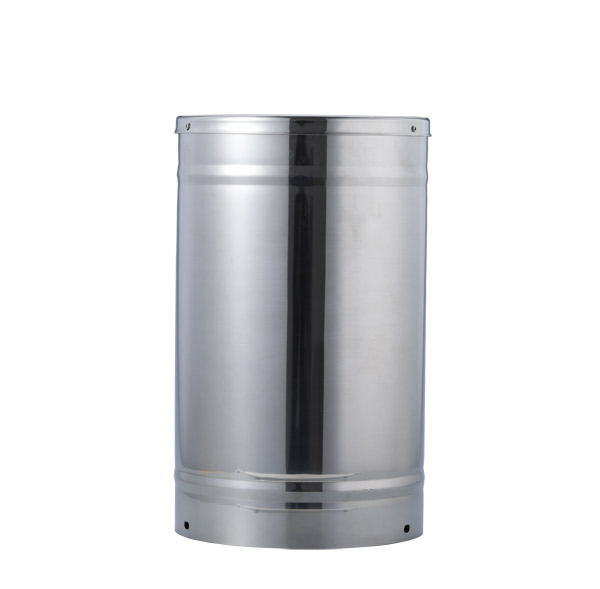 Tipping bucket rain gauge for weather monitoring auto rainfall sensor RS485/Outdoor/stainless steel
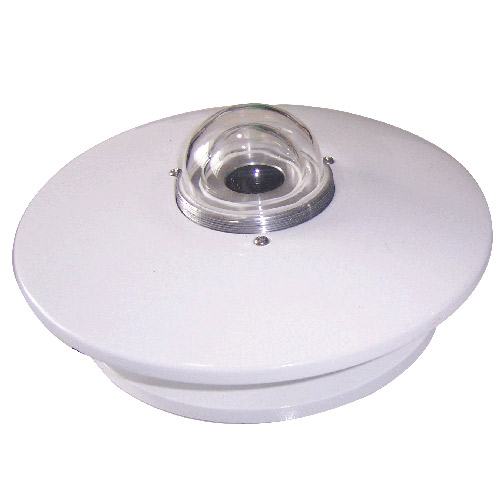 Pyranometer Solar Radiation Sensor 4-20mA/RS485


Screenshot, WhatsApp to identify the QR code
WhatsApp number:+8615367865107
(Click on WhatsApp to copy and add friends)