

— Blogs —
—Products—
 Consumer hotline +8618073152920
WhatsApp:+8615367865107
Address:Room 102, District D, Houhu Industrial Park, Yuelu District, Changsha City, Hunan Province, China
Product knowledge
Time:2021-11-30 20:39:57 Popularity:2235
Quick Answer: The industrial Internet of Things connects instruments and equipment to data services used for monitoring, maintenance and operating decisions. In an existing installation, the useful starting point is usually a missing observation or a delayed response, not a wholesale control-system replacement. Retain working instruments where practical, define what information must leave the site, and prove that operators can use it before expanding.
A treatment plant may record pump faults locally but learn about them only during the next inspection. A remote reservoir may have a functioning level transmitter without a historical record. A contractor may need to add environmental observations to a customer's existing SCADA system. These are different projects, even if all three use a cellular gateway.
Write the current operating question in one sentence: which event is missed, which value must be reviewed, or which maintenance visit might become unnecessary? Then inspect the existing signal path. The measurement may already exist in a PLC, making an additional sensor unnecessary. Alternatively, the dashboard may lack the value because the instrument is unsuitable or poorly installed; a network connection cannot correct that problem.
This is where an industrial IoT retrofit differs from a new measurement project. The integrator must preserve the functions that already work while adding a specific observation or service. Brownfield sensor integration should not turn a reliable local loop into a system that stops when the remote connection fails.
| Existing arrangement | Practical connection | Check before changing it |
|---|---|---|
| PLC already reads the instrument | Read an approved PLC data interface | Available protocol, access permissions and effect of extra requests |
| 4-20 mA instrument without logging | Use a suitable input channel or isolated signal arrangement | Loop power, input burden and whether the control loop must remain undisturbed |
| Standalone RS485 sensor | Use a compatible polling device | Protocol, addressing, register format and existing bus controller |
| Local data logger with export | Forward the required records | Timestamp meaning, file format, transfer method and retention |
| No trustworthy measurement | Install and validate the required sensor | Location, process compatibility and reference comparison |
Legacy analog signals can also join an IIoT system through an input module or controller. Replacing a working 4-20 mA instrument is unnecessary when the real need is to add logging and remote visibility.
Do not attach two Modbus masters to an existing serial bus and assume that both will poll successfully. If a PLC owns the bus, obtain measurements through the PLC or redesign the acquisition arrangement explicitly. For analog loops, adding a second current input is also not a matter of duplicating terminals; its effect on the loop must be assessed.
A gateway can transport messages, translate a supported protocol, poll devices or run an application, depending on the model and configuration. These functions must be distinguished. A cellular router carrying Ethernet traffic does not automatically create a historian, and a serial-to-network service does not necessarily understand every instrument connected to it.
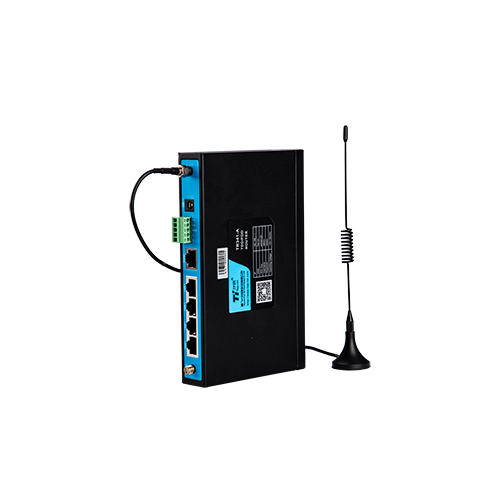
The NiuBoL TR341 industrial router is one option when serial and Ethernet equipment need an upstream connection. Its hardware and protocol provisions help define possible architectures; they do not establish that a particular customer's software, credentials or instrument register map has already been implemented.
| TR341 provision | Configuration detail | Integration consequence |
|---|---|---|
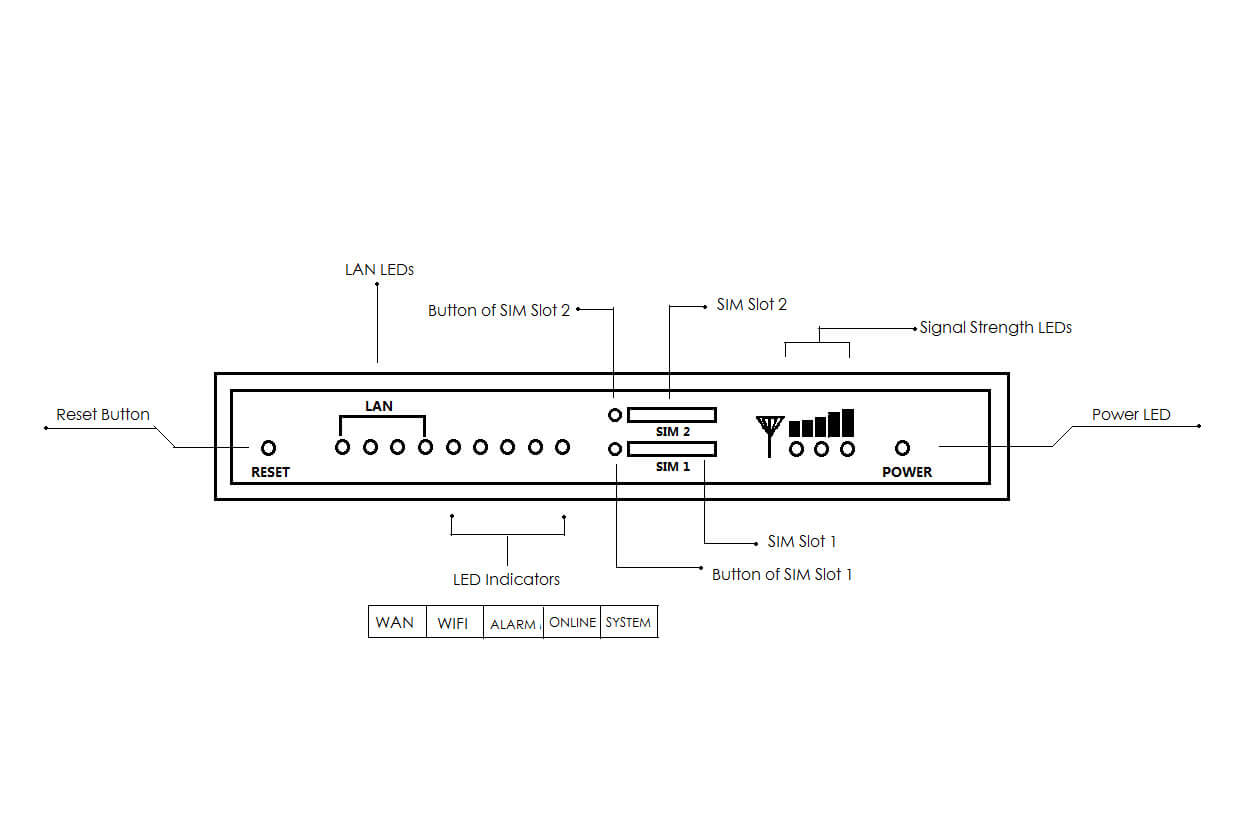
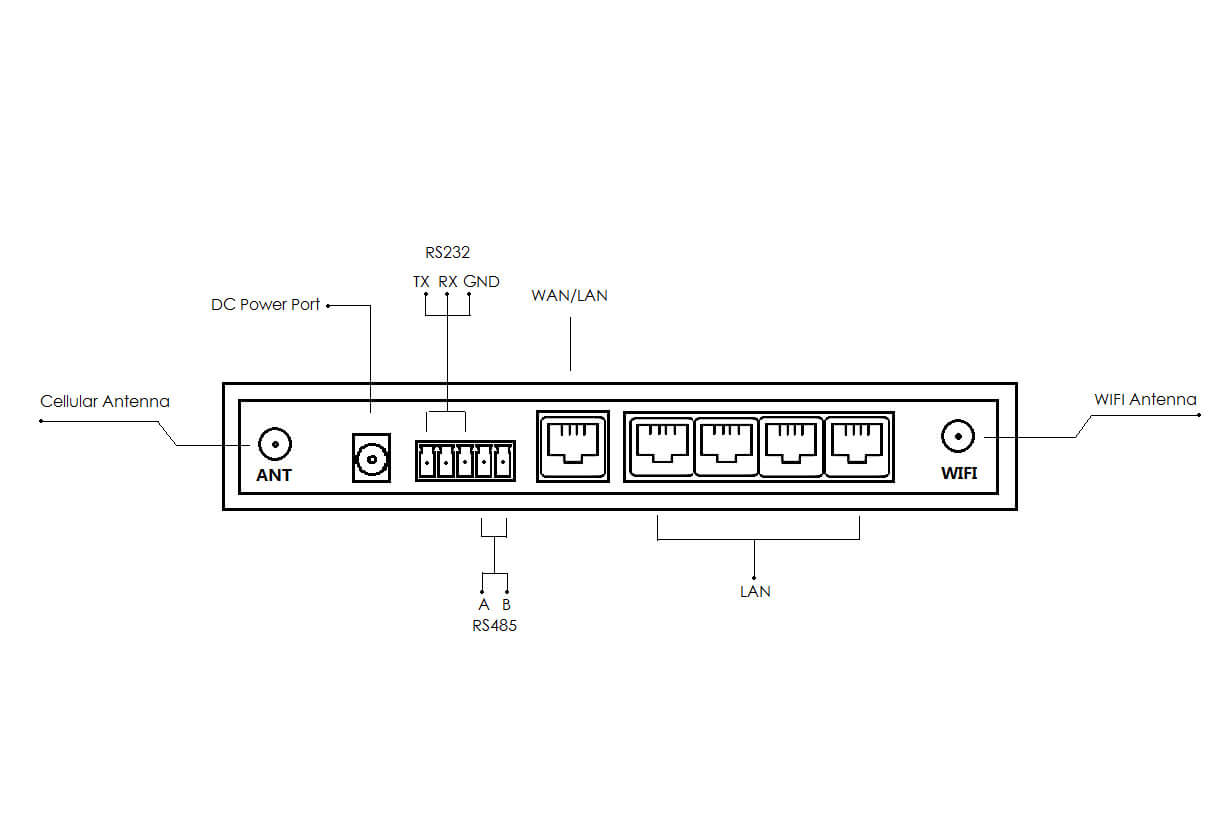
| Ethernet | Five 10/100 Mbps RJ45 ports; one WAN plus four LAN, or configurable LAN arrangement | Assign network roles before connecting plant segments. |
| Serial | One RS232 and one RS485 | Match signal levels, wiring and device protocol. |
| Serial services | Transparent TCP/UDP, Modbus RTU-to-TCP gateway, MQTT functions | Choose the required mode and test its mapping. |
| Cellular configuration | 4G model with region-dependent radio bands; dual SIM optional | Check carrier support and the ordered modem variant. |
| Supply | 5-35 VDC input; standard adapter 12 VDC, 1.5 A | Check installed loads and supply conditions, not just nominal voltage. |
| Environment | IP30 housing; -35 to 75 degrees C operation | Use an appropriate cabinet at outdoor sites. |
A second SIM is an optional hardware arrangement, not evidence of two simultaneous independent radios. Carrier selection, antenna position and actual failover behavior require testing. Nor should the router's Ethernet rate be treated as a promise of cellular throughput at a weak-signal remote site.
A plausible number can be more troublesome than a blank field. A level value can be correctly decoded but tied to the wrong tank. A pressure tag can arrive in kPa while the application expects bar. A pH value can be technically available but come from a fouled probe. Industrial data quality includes these physical and semantic checks, not just successful packet delivery.
For each retained channel, record the instrument identity, location, engineering unit, scaling and meaning of an invalid result. Keep acquisition time and arrival time separate where forwarding can be delayed. Show the age of the value in the interface so yesterday's measurement cannot quietly become today's operating decision.
Follow a known value through the whole path: instrument, PLC or logger, gateway and application. Include a negative value where relevant, a changing input and an unavailable channel. Verify that loss of communication produces an unavailable or stale indication rather than a convincing zero.
For totals such as delivered water volume, specify what happens after a counter reset or device replacement. A smaller counter value is not negative consumption. Preserve reset events and channel history so reports can distinguish a measurement discontinuity from a real process change.
Control and monitoring should be separated deliberately. Time-critical protection normally remains in the local controller. Remote software can support alarms, reports and set-point management, but the plant must define what happens when the wide-area connection is unavailable.
A read-only water treatment telemetry project has a smaller control risk than one permitting pump commands or chemical set-point changes. Start with the required access level. If writes are unnecessary, do not enable them merely because a protocol supports them. If writes are required, define authorization, allowable values, feedback and the conditions that reject a command.
Do not expose a PLC or sensor directly to the public Internet as a shortcut. Agree on the customer's remote-access architecture, restrict accounts and services, and test maintenance access separately from routine data transmission. A supported VPN feature still needs a suitable configuration and an owner responsible for credentials and updates.
The industrial Internet of Things can shorten the time between an event and an informed response. That benefit should be measured at the relevant stages: event occurrence, record collection, alert receipt, acknowledgment and corrective action. Faster transmission alone will not improve response if nobody is responsible for receiving the alert.
| Intended benefit | Measure it with | Avoid confusing it with |
|---|---|---|
| Fewer unnecessary visits | Visits avoided while required inspection and service tasks remain covered | Eliminating calibration or physical maintenance |
| Earlier fault awareness | Elapsed time from a known fault to operator acknowledgment | Gateway reporting interval alone |
| More complete records | Usable observations over the agreed reporting period | Every received message being a valid measurement |
| Better maintenance prioritization | Confirmed faults identified before the next planned visit | Counting every alarm as a prevented failure |
For remote asset monitoring, keep a reason for each alert and the operator's finding. Repeated false alerts may point to a poorly chosen threshold, an unstable input or a communications problem. The useful result is the confirmed operational issue, not a growing notification count.
There is no defensible universal percentage for downtime reduction or investment payback. Establish a baseline for the affected equipment and compare equivalent periods, taking operating load and maintenance changes into account. Installation, software, connectivity and support all belong in the cost comparison.
Select a pilot site with representative equipment and the intended network path. An office demonstration cannot prove reception at a remote pump station or permission to read a customer's live PLC. Obtain the relevant configuration details and agree on the commissioning window with operations staff.
Test normal acquisition, a failed sensor, a network interruption and restoration of power. Check which information continues locally, which records return after reconnection and which require an operator action. If storage is required, identify the device that actually provides it; do not assume every IIoT gateway buffers application data.
Before expansion, assign ownership of sensor service, register changes, SIM renewal, platform accounts and security maintenance. A software contractor may manage the application but have no authority to alter the controller. Make that distinction clear enough that the first fault reaches the person who can resolve it.
Send NiuBoL the existing instruments and controller models, interface documentation, required values, polling needs and target platform. Identify whether the project is read-only or includes remote commands. Include available power, installation environment and communications coverage. These details allow a proposed interface arrangement to be checked before hardware is selected.
No. Reuse trustworthy instruments when their signals can be acquired without disrupting the existing system. Replace a sensor when its measurement, condition or interface cannot meet the project requirement, not simply to add connectivity.
Usually it provides a separate communication or data-handling role. Verify any control capability explicitly. Local interlocks should remain with the equipment designed to execute them.
Yes, through a device or application that implements the required acquisition and conversion. Define register scaling, payload structure, topic naming and invalid-data behavior; the two protocol names alone are not an integration specification.
No. Records can be delivered to a local server or an approved private environment. Choose according to access, retention, support and security requirements rather than assuming one hosting model suits every owner.
Separate measurement faults, acquisition errors, network loss and application mapping. Check a known input at each stage. Changing the router will not fix a wrong register address or a poorly installed transmitter.
Compare hardware, panel modifications, integration, commissioning, recurring services and maintenance for the same required functions. A router-only price is not the cost of a working retrofit.
The industrial Internet of Things is useful when it closes a specific information gap without weakening existing operation. Reuse valid measurements, define the gateway's job, make data quality visible and verify an operational benefit before repeating the design across more sites.
Prev:RS485 vs RS232: Wiring, Distance, Topology and Selection
Next:Market analysis, development situation and trend comparison of NB-IoT and LoRa
Related recommendations
Sensors & Weather Stations Catalog
 Agriculture Sensors and Weather Stations Catalog-NiuBoL.pdf
Weather Stations Catalog-NiuBoL.pdf
Agriculture Sensors Catalog-NiuBoL.pdf
Water Quality Sensor Catalog-NiuBoL.pdf
Related products
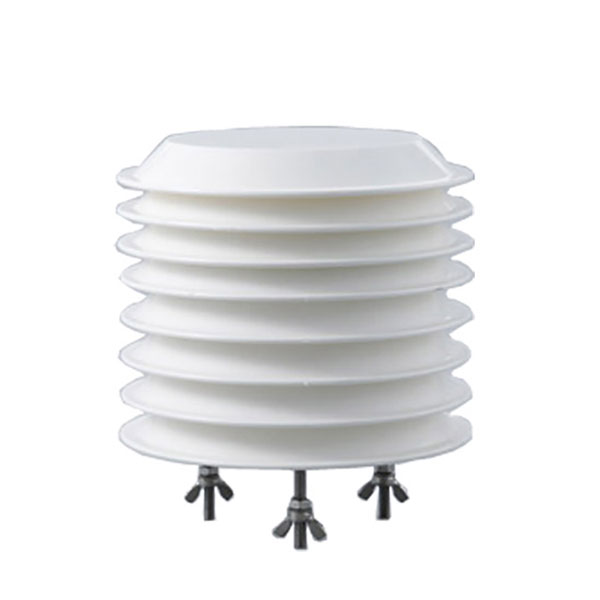 Combined air temperature and relative humidity sensor
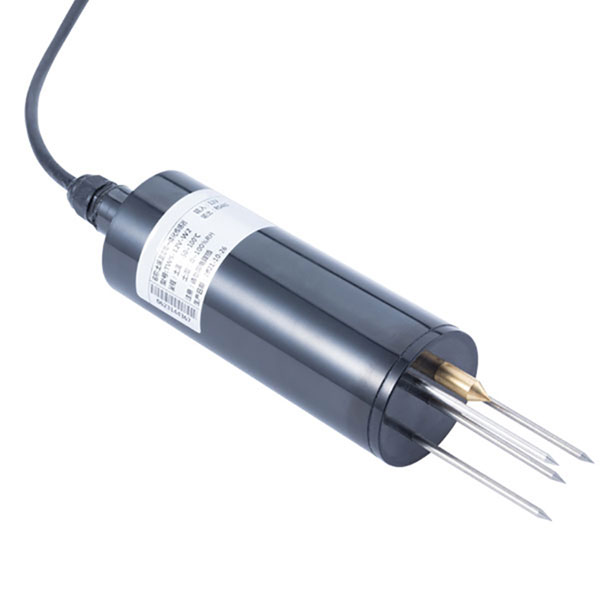 TDR Soil Moisture & Temperature Sensor for irrigation| RS485 |4-20mA| NBL-S-THR
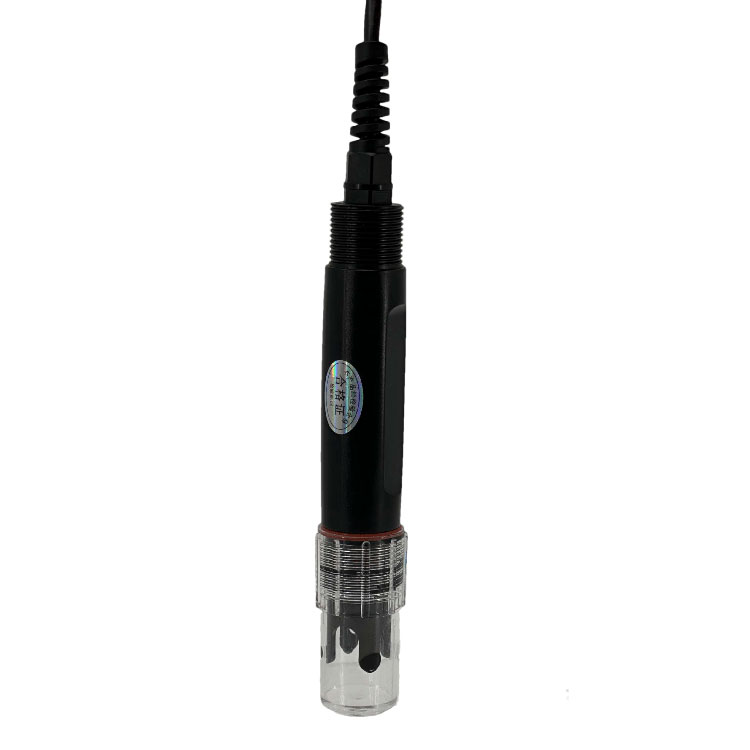 Soil pH sensor RS485 soil Testing instrument soil ph meter for agriculture |NBL-S-PH
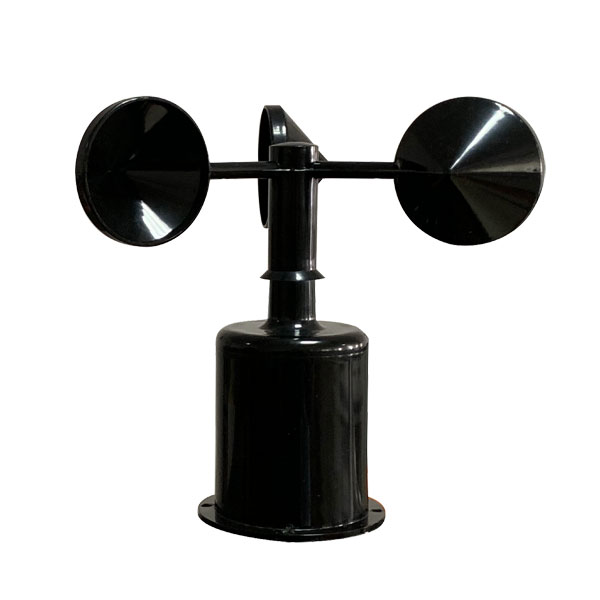 Wind Speed sensor Output Modbus/RS485/Analog/0-5V/4-20mA
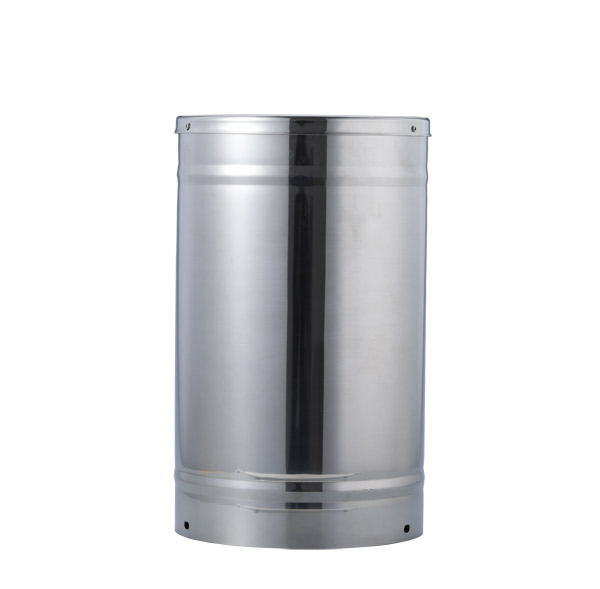 Tipping bucket rain gauge for weather monitoring auto rainfall sensor RS485/Outdoor/stainless steel
 Pyranometer Solar Radiation Sensor 4-20mA/RS485


Screenshot, WhatsApp to identify the QR code
WhatsApp number:+8615367865107
(Click on WhatsApp to copy and add friends)