





— Blogs —
—Products—
 Consumer hotline +8618073152920
 WhatsApp:+8615367865107
Address:Room 102, District D, Houhu Industrial Park, Yuelu District, Changsha City, Hunan Province, China
Product knowledge
Time:2026-03-09 15:56:50 Popularity:543
In industrial-grade environmental monitoring, smart agriculture, urban grid meteorology, and disaster early warning projects, automatic weather stations have become the preferred equipment for system integrators, IoT solution providers, project contractors, and engineering companies to build highly reliable data acquisition networks. The system supports 24/7 unattended operation, real-time monitoring of elements such as air temperature, humidity, wind speed and direction, air pressure, rainfall, illumination intensity, total radiation, PM2.5/PM10/TSP, noise, etc., transmitting data to the cloud platform via LoRa wireless networking or independent 4G upload for data aggregation, threshold alarms, and refined analysis. NiuBoL's multi-element automatic weather stations, designed and produced in accordance with WMO (World Meteorological Organization) observation standards, feature corrosion resistance, anti-interference, modular combination, and solar self-powering characteristics, suitable for meso-scale dense observation networks, grid forecasting, flash flood early warning, regional environmental monitoring, general aviation airports, and other scenarios.
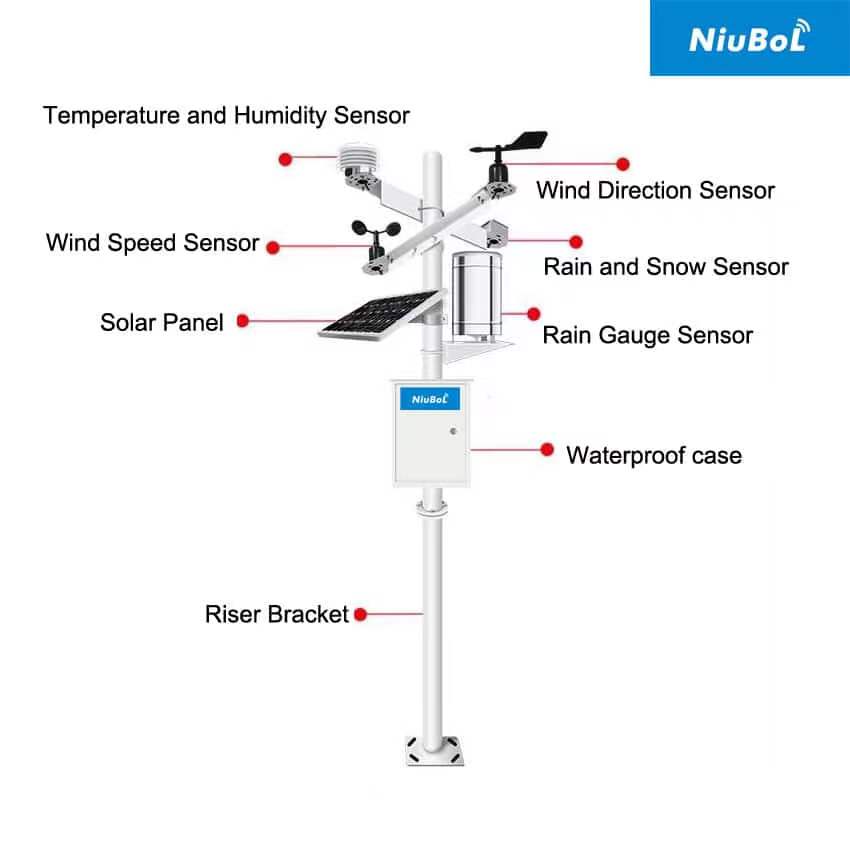
NiuBoL automatic weather stations are systematically optimized for long-term outdoor deployment engineering pain points, highlighting the following engineering characteristics.
Corrosion Resistance and Structural Stability
The bracket uses 304/316 stainless steel material, with key system components treated for corrosion resistance, enduring acid rain, salt spray, high humidity, and high-salt environments. Actual deployment data shows no obvious corrosion after continuous operation for more than 5 years in coastal or industrial pollution areas, far exceeding the 2-3 year maintenance cycle of ordinary carbon steel brackets.
Anti-Interference and Data Reliability
The full system integrates multi-level lightning protection (power, signal, communication), electromagnetic shielding, and surge protection, complying with IEC 61000-4 series standards. Sensor signals undergo isolation amplification and digital filtering, with strong anti-electromagnetic interference capability; even near high-voltage lines or during thunderstorms, data packet loss rate<0.5%. Complete lightning protection grounding design ensures stable operation in lightning-prone areas.
Modular and Flexible Configuration
Hardware adopts open modular architecture, supporting on-demand combination of meteorological sensors, communication modules, and power systems. In LoRa wireless networking mode, substations are self-powered by patch solar panels, no wiring required, expandable to hundreds of nodes arbitrarily. The master station aggregates and uniformly uploads via 4G, with networking distance up to 5-10 km (depending on terrain), greatly reducing cabling costs and construction cycles.
Low Power Consumption and Long-Term Unattended Operation
Average power consumption<3W, solar + large-capacity lithium battery combination supports continuous operation ≥7-10 rainy days. The collector features built-in low-power sleep and wake-up mechanisms, with intelligent adjustment of data upload intervals, suitable for long-term deployment in remote mountains, islands, or areas without mains power.
High Precision and Standard Compliance
Sensor accuracy complies with WMO CIMO guidelines and national meteorological industry standards, temperature ±0.2℃, humidity ±2%, wind speed ±2%, rainfall ±2%. Supports HJ 212 environmental data transmission protocol for easy access to provincial/national meteorological platforms, enabling data sharing and quality control.
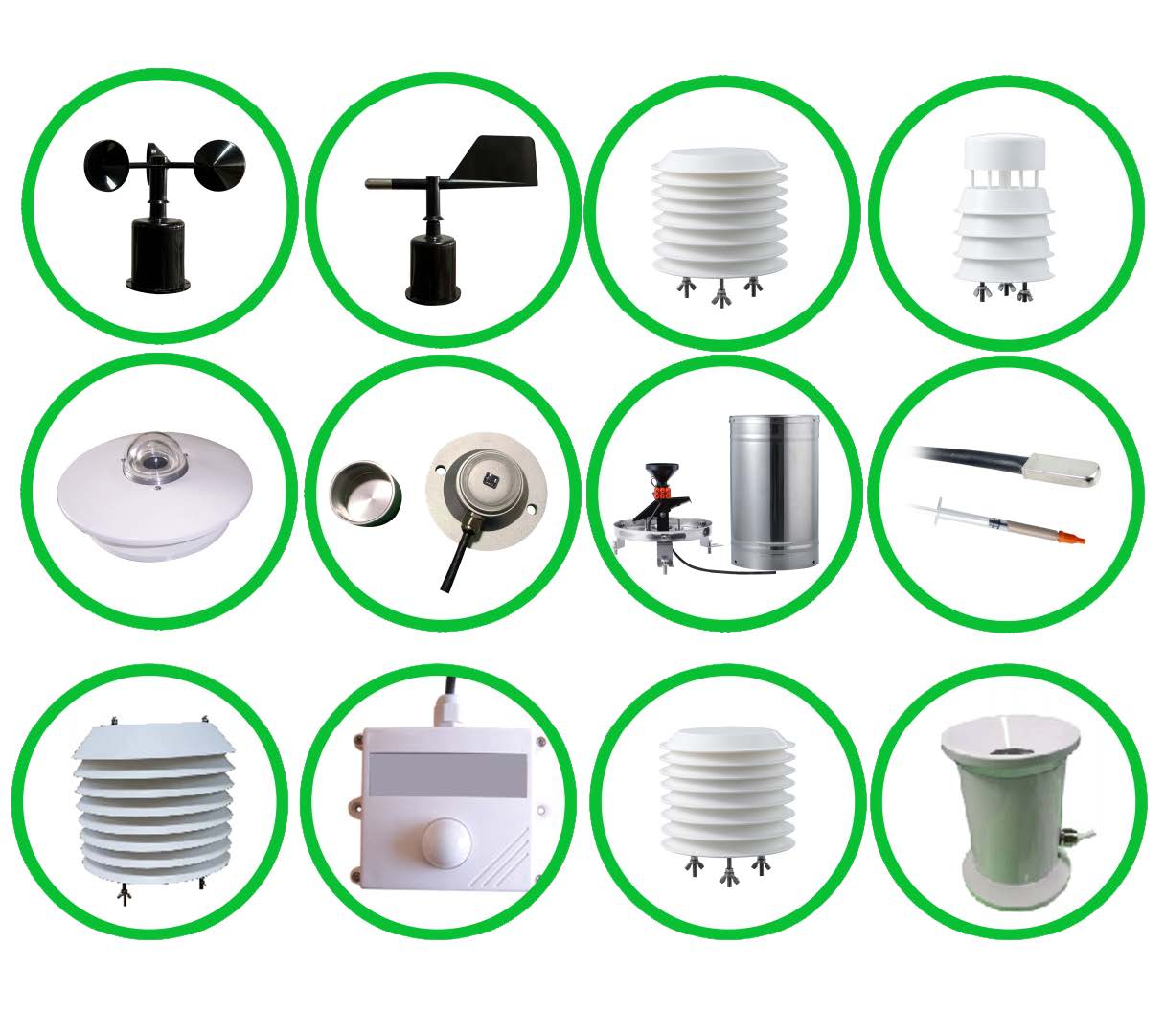
NiuBoL automatic weather stations consist of the following core modules, ensuring system completeness and maintainability.
Sensor Array
Independent sensors for each element, supporting hot-swappable replacement. Typical configuration includes air temperature and humidity, wind speed and direction, tipping bucket/optical rainfall, atmospheric pressure, photosynthetically active radiation, total radiation, soil temperature and humidity, PM2.5/PM10/TSP, noise, etc.
Data Acquisition and Transmission Unit
High-performance industrial-grade collector integrates ARM processor, multi-channel RS485/Modbus RTU interfaces, LoRa/4G dual-mode communication module. Supports local SD card cache ≥2 years of data, automatic retransmission after network disconnection.
Support and Protection Structure
Stainless steel truss or triangular tower bracket, optional height 2-10 m, complying with wind load specifications. Acquisition box IP67 protection, with internal temperature-controlled ventilation to prevent high temperature/condensation from affecting electronic components.
Energy Management System
Patch-type high-efficiency monocrystalline solar panels + lithium iron phosphate battery pack, MPPT charge controller optimizes energy harvesting, with low battery warning and overcharge/over-discharge protection.
Cloud Monitoring Platform
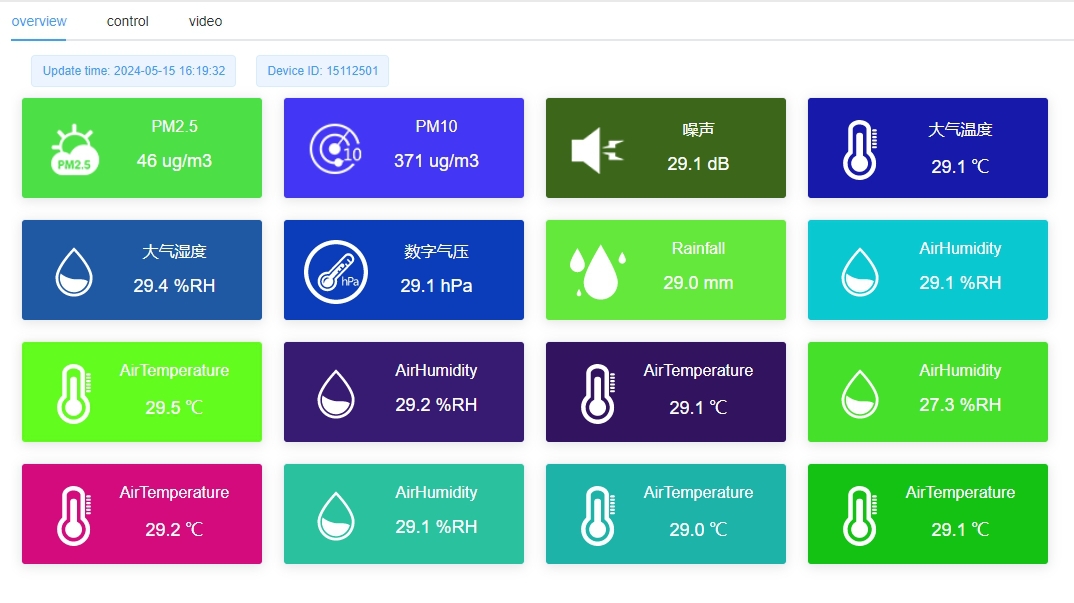
Web/mobile unified platform provides real-time dashboards, historical curves, multi-station comparisons, threshold alarms (SMS/email), API interfaces, and report export functions.
NiuBoL multi-element automatic weather station typical specifications are shown in the table below, supporting project customization.
| Element Category | Measurement Principle | Range | Resolution |
|---|---|---|---|
| Air Temperature | Digital Integrated PT1000 | -50~80 ℃ | 0.01 ℃ |
| Relative Humidity | Capacitive | 0~100% RH | 0.1% RH |
| Wind Speed | Ultrasonic / Three-Cup | 0~60 m/s | 0.01 m/s |
| Wind Direction | Ultrasonic / Wind Vane | 0~360° | 0.1° |
| Rainfall | Optical / Tipping Bucket | 0~9999 mm | 0.01 mm |
| Atmospheric Pressure | Silicon Piezoresistive | 300~1100 hPa | 0.1 hPa |
| Illumination Intensity | Silicon Photocell | 0~2000 μmol/m²/s | 1 μmol/m²/s |
| PM2.5/PM10 | Laser Scattering | 0~1000 μg/m³ | 1 μg/m³ |
| Parameter Category | Specific Description |
|---|---|
| Power Supply Method | Solar + Lithium Iron Phosphate Battery (≥7-10 consecutive rainy days) |
| Communication Method | LoRa Networking + 4G Master Station Upload; Supports RS485 Modbus RTU |
| Protection Rating | IP67 (Acquisition Box/Sensors) |
| Operating Temperature | -40~85 ℃ |
| Data Storage | Local ≥2 Years; Cloud Unlimited |
| Networking Distance | LoRa Typical 5-10 km (depending on terrain and antenna) |
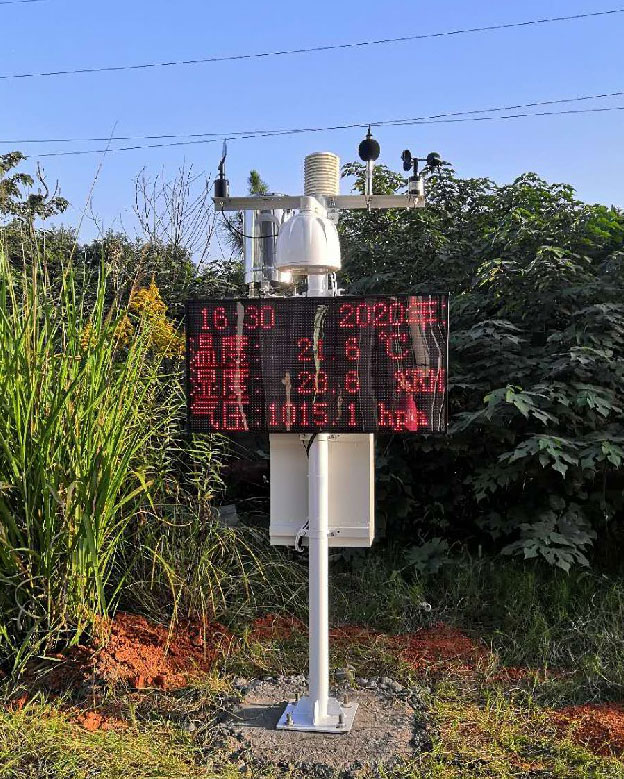
NiuBoL automatic weather stations have verified their engineering value in various professional fields.
1. Meso-Scale Dense Observation and Grid Forecasting
Deploy dozens to hundreds of stations in cities or regions to form high-density grids, providing fine-scale numerical forecast data sources and improving short-term severe convection warning accuracy.
2. Flash Flood and Geological Disaster Early Warning
Key deployment in mountainous areas for real-time monitoring of rainfall/soil humidity, threshold triggering flash flood/landslide warnings, accessing water resources/emergency platforms for rapid response.
3. Smart Agriculture and Facility Agriculture
Farmland/greenhouse stations monitor microclimate changes, linking irrigation/ventilation/shading equipment for precision agriculture management.
4. Environmental Protection and Industrial Park Monitoring
Integrate PM2.5/PM10/TSP/noise to meet grid environmental monitoring and enterprise boundary monitoring needs, with data directly transmitted to environmental protection platforms.
5. General Aviation and Tourist Scenic Areas
Airport runway meteorological observation, scenic area ecological monitoring, providing visibility/wind shear/negative oxygen ion data to support safe operation and tourist services.
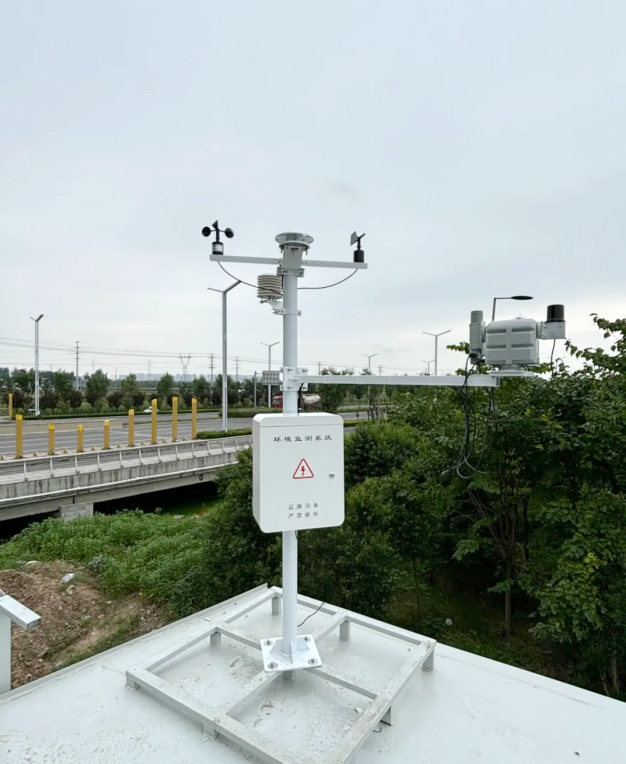
Deploying NiuBoL automatic weather stations requires adherence to the following engineering specifications.
1. Site Selection and Installation
Select open, unobstructed positions; wind speed/direction sensors at least 10 times height away from obstacles, rainfall gauge avoiding tree shade/eaves. Bracket foundation poured with concrete, ensuring wind resistance ≥ level 12.
2. Power Supply and Communication Optimization
Solar panels face south tilted 30-40°; battery pack capacity calculated as local longest consecutive rainy days ×1.5. LoRa networking requires planning master-slave nodes to avoid signal dead zones; 4G antenna elevated and with lightning protection.
3. Data Integration and Protocol Adaptation
Modbus register table standardization facilitates PLC/SCADA access. Cloud platform API supports custom alarm logic and third-party model invocation.
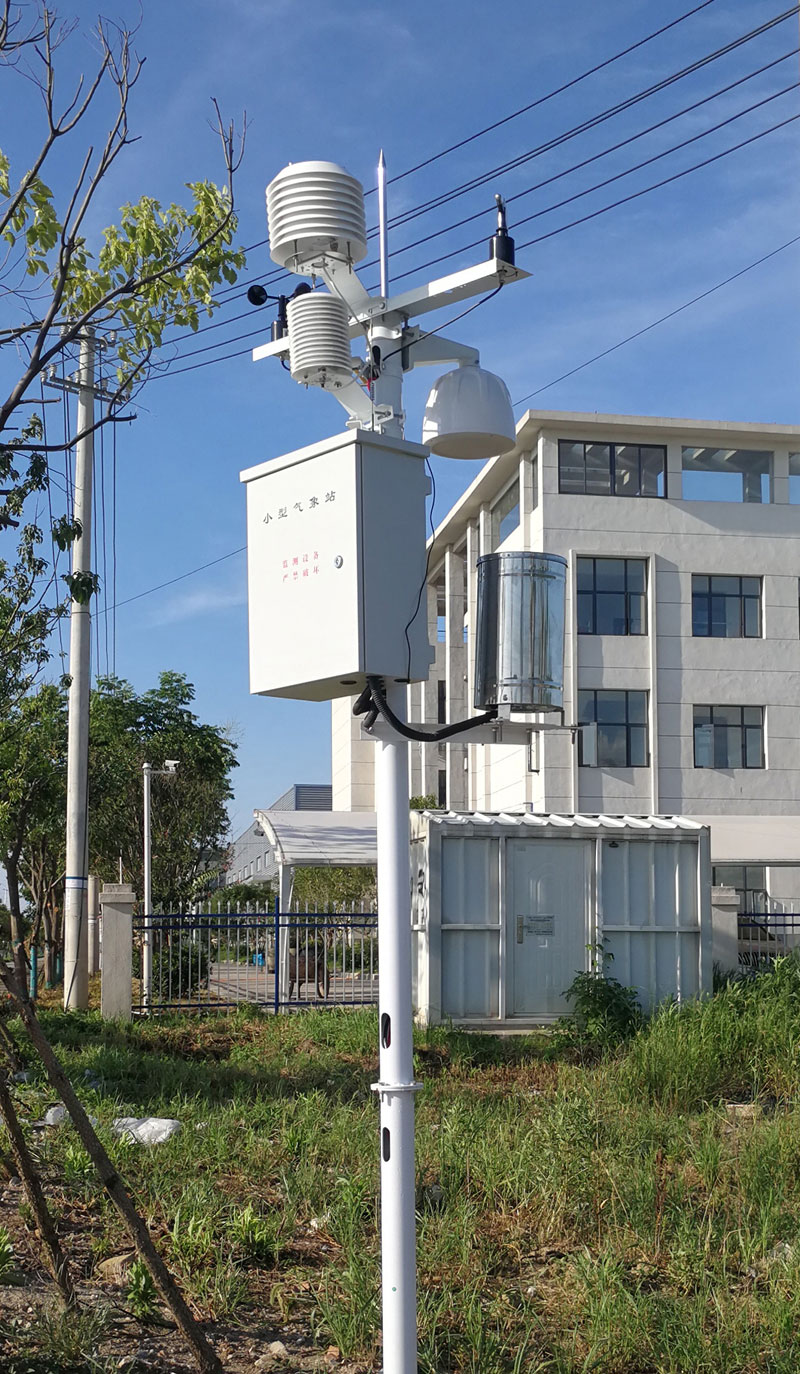
Q1. What are the core advantages of automatic weather stations compared to traditional manual observation?
A1: 24/7 unattended operation, high-frequency sampling, strong anti-interference capability, high data continuity, supporting remote diagnosis and automatic alarms, significantly reducing labor costs and improving data quality.
Q2. How to ensure data reliability in LoRa networking mode?
A2: Adopts star or mesh topology, master station 4G relay, substations local cache ≥7 days data, automatic retransmission after disconnection. Actual test networking packet loss rate<0.3%.
Q3. How durable is the system in coastal high-salt spray environments?
A3: 316 stainless steel + anti-corrosion coating design, salt spray test ≥1000 hours without obvious corrosion. Acquisition box IP67 + internal dehumidification ensures long-term stability of electronic components.
Q4. How to control power interruption risk in extreme weather?
A4: Battery pack capacity redundant design + low battery tiered alarms, platform warns 7 days in advance. Actual deployment records show normal operation during 12 consecutive rainy days.
Q5. Which third-party platforms does the system support docking with?
A5: Compatible with Modbus TCP, MQTT protocols, seamless access to provincial meteorological platforms, environmental protection clouds, agricultural IoT platforms, or private clouds.
Q6. Is it convenient to add PM2.5/noise and other elements later?
A6: Modular design supports hot-swappable expansion. Platform automatically identifies new sensors and configures acquisition channels without rewiring.
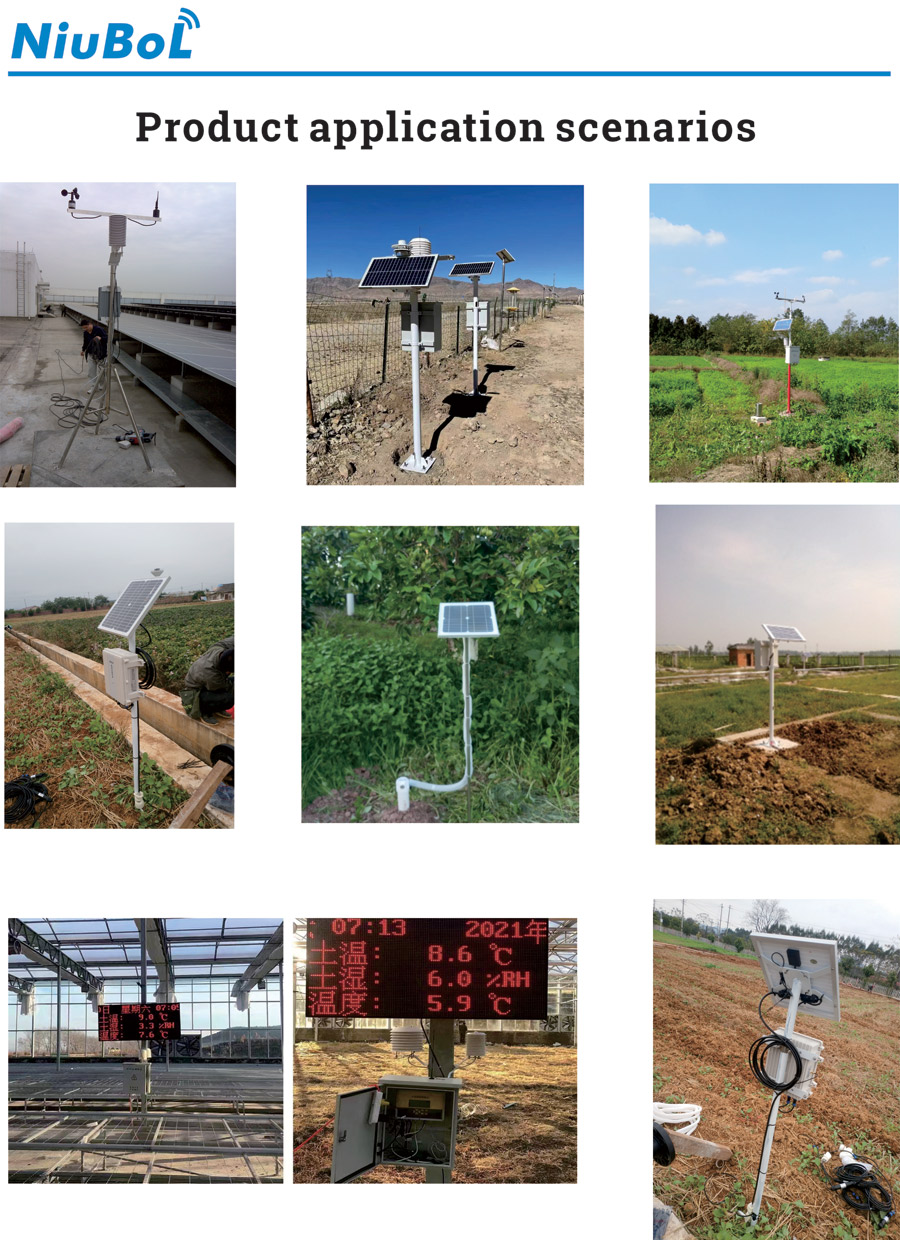
NiuBoL multi-element automatic weather stations, with WMO standard accuracy, corrosion-resistant anti-interference design, LoRa flexible networking, and solar self-powering as their core, provide highly reliable outdoor meteorological observation solutions for system integrators, IoT providers, and engineering companies. Through real-time multi-element data collection and cloud intelligent analysis, the system significantly improves operation efficiency and data value in grid forecasting, flash flood early warning, smart agriculture, and environmental monitoring projects. In meso-scale dense networks, regional disaster defense, industrial park monitoring, and other scenarios, its modular expansion, low maintenance costs, and standard protocol compatibility ensure fast engineering implementation and long-term stability. As a professional manufacturer, NiuBoL provides OEM/ODM services from sensors to complete stations, protocol adaptation, and on-site validation support to assist clients in building sustainable environmental monitoring networks. Welcome to consult detailed selection tables, engineering cases, or prototype testing schemes.
Related recommendations
Sensors & Weather Stations Catalog
 Agriculture Sensors and Weather Stations Catalog-NiuBoL.pdf
Weather Stations Catalog-NiuBoL.pdf
Agriculture Sensors Catalog-NiuBoL.pdf
Water Quality Sensor Catalog-NiuBoL.pdf
Related products
 Combined air temperature and relative humidity sensor
 Soil Moisture Temperature sensor for irrigation|NBL-S-THR
 Soil pH sensor RS485 soil Testing instrument soil ph meter for agriculture |NBL-S-PH
 Wind Speed sensor Output Modbus/RS485/Analog/0-5V/4-20mA
 Tipping bucket rain gauge for weather monitoring auto rainfall sensor RS485/Outdoor/stainless steel
 Pyranometer Solar Radiation Sensor 4-20mA/RS485

Screenshot, WhatsApp to identify the QR code
WhatsApp number:+8615367865107
(Click on WhatsApp to copy and add friends)

