





— Blogs —
—Products—
 Consumer hotline +8618073152920
 WhatsApp:+8615367865107
Address:Room 102, District D, Houhu Industrial Park, Yuelu District, Changsha City, Hunan Province, China
Product knowledge
Time:2026-03-30 14:22:41 Popularity:536
In modern agricultural production, the traditional model of “relying on the sky for food” is gradually being replaced by data-driven precision management. Although facility agriculture technology continues to advance, meteorological disasters such as heavy rain and flooding, continuous overcast rain, drought, and frost remain key factors restricting crop yield and quality. As a multi-element automatic observation device that complies with international WMO organization observation standards, the NiuBoL agricultural weather station provides system integrators and engineering companies with all-weather, automated, and highly reliable meteorological data collection and early warning support, helping agricultural production shift from passive response to proactive prevention and control.
This article systematically explains the impact mechanism of agricultural meteorological disasters on facility agriculture, the core technical advantages of the NiuBoL agricultural weather station, and its specific application paths in vegetable, persimmon, and cucumber greenhouse planting, providing directly implementable technical references for IoT solution providers and project contractors.
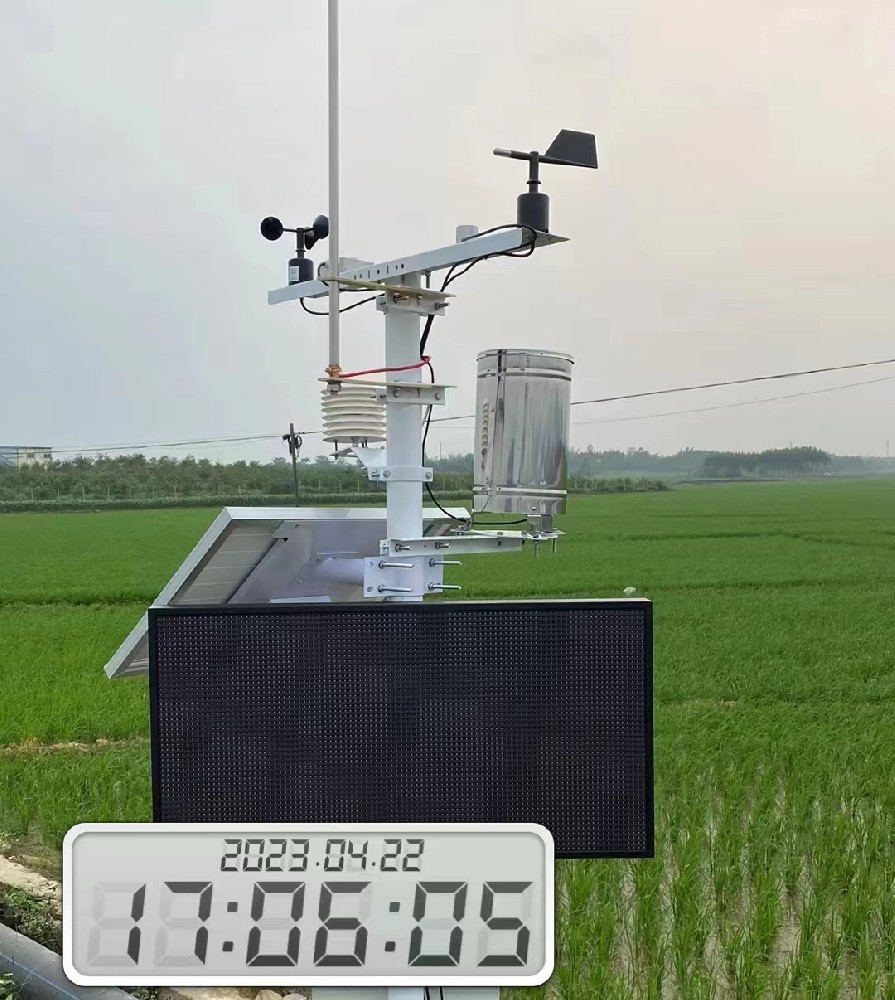
Although facility agriculture can partially regulate the environment, it still highly depends on meteorological conditions. Different disaster types have significantly different impacts on crop physiological processes, requiring targeted monitoring and intervention.
Heavy rain and flooding disasters easily cause waterlogging. Low-lying farmland accumulates water, leading to root hypoxia, while facility greenhouses face risks of film water accumulation and structural collapse. Aquaculture areas may experience overflow or dam failure. Continuous heavy precipitation further exacerbates soil waterlogging, destroying root vitality.
Long-term continuous overcast and rainy weather, accompanied by low temperature, low light, and high humidity, significantly inhibits crop photosynthesis. Excessive humidity inside facilities easily induces the spread of diseases such as rape sclerotinia, wheat stripe rust, and downy mildew. Economic crops are particularly severely affected. Continuous soil over-wetness further aggravates waterlogging, leading to root rot and nutrient absorption obstacles.
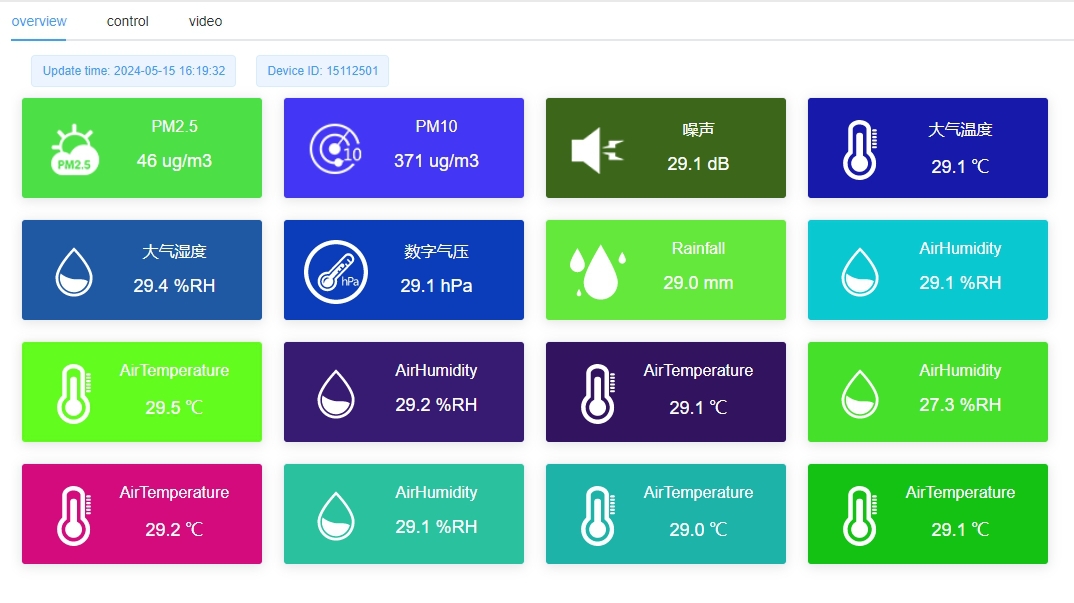
Under drought conditions, crops wilt and leaves wither, growth rate declines or even dies. Soil moisture continues to decrease, and reservoir storage is insufficient, directly affecting yield formation of winter wheat and rape in non-irrigated areas. Low precipitation also amplifies high-temperature stress and accelerates crop water transpiration loss.
The core mechanism of frost disaster is that low temperatures below 0°C cause water in crop cell gaps to crystallize into ice. Ice crystals continuously absorb free water from cells, leading to cytoplasmic dehydration, colloidal solidification, and eventual cell withering. Autumn-harvested crops such as corn, soybeans, and cotton are most sensitive to frost in the early maturity stage. Although facility greenhouses have some insulation effect, sudden low temperatures can still cause serious losses.
These disasters share the characteristics of strong suddenness and fast chain reactions. Traditional manual observation is difficult to achieve all-weather coverage and timely early warning, while the NiuBoL agricultural weather station provides an engineered solution for disaster monitoring through standardized sensor arrays and intelligent data processing.
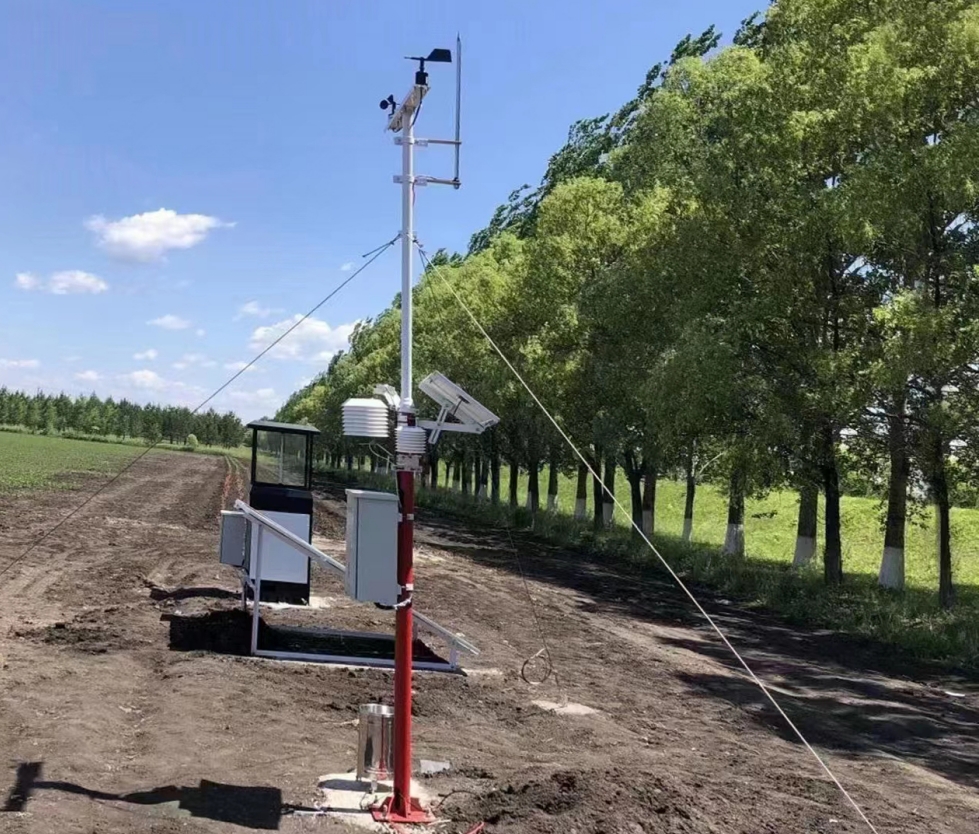
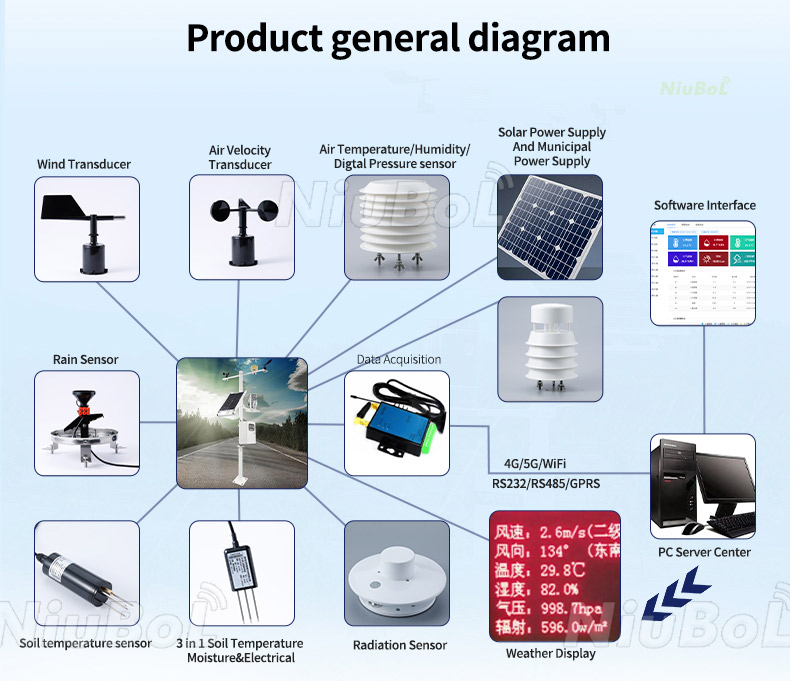
The NiuBoL agricultural weather station consists of meteorological sensors, a meteorological data recorder, and meteorological environment monitoring software. It is designed and produced strictly in accordance with international WMO meteorological observation standards and supports simultaneous observation of multiple elements such as wind direction, wind speed, air temperature, humidity, air pressure, rainfall, soil temperature, and soil humidity.
| Monitoring Element | Measurement Range | Measurement Accuracy | Resolution | Remarks |
|---|---|---|---|---|
| Wind Direction | 0~360° | ±3° | 1° | Ultrasonic or mechanical optional |
| Wind Speed | 0~60 m/s | ±(0.3+0.03V) m/s | 0.1 m/s | Anti-strong wind design |
| Air Temperature | -40~+60℃ | ±0.3℃ | 0.1℃ | Radiation shield protection |
| Air Humidity | 0~100% RH | ±3% RH | 0.1% RH | Stable in high-humidity environment |
| Air Pressure | 500~1100 hPa | ±0.5 hPa | 0.1 hPa | Temperature compensation |
| Rainfall | 0~9999 mm | ±4% | 0.1 mm | Tipping bucket or weighing type |
| Soil Temperature | -40~+80℃ | ±0.5℃ | 0.1℃ | Adjustable burial depth |
| Soil Moisture | 0~100% VWC | ±3% | 0.1% | FDR or TDR principle |
The device features automatic recording, over-limit alarm, and multiple data communication functions. The data recorder supports local storage and remote transmission. The communication interface is compatible with RS485 and Modbus RTU protocols, and also supports IoT transmission methods such as 4G/NB-IoT/MQTT, enabling seamless connection of data to cloud platforms or third-party IoT systems.
The meteorological environment monitoring software provides real-time data visualization, historical curve analysis, threshold setting, and alarm push functions. Users can achieve remote monitoring through mobile APP or Web platform, greatly reducing on-site inspection costs. The station design fully considers harsh field environments and adopts protection levels above IP65 to ensure long-term stable operation.
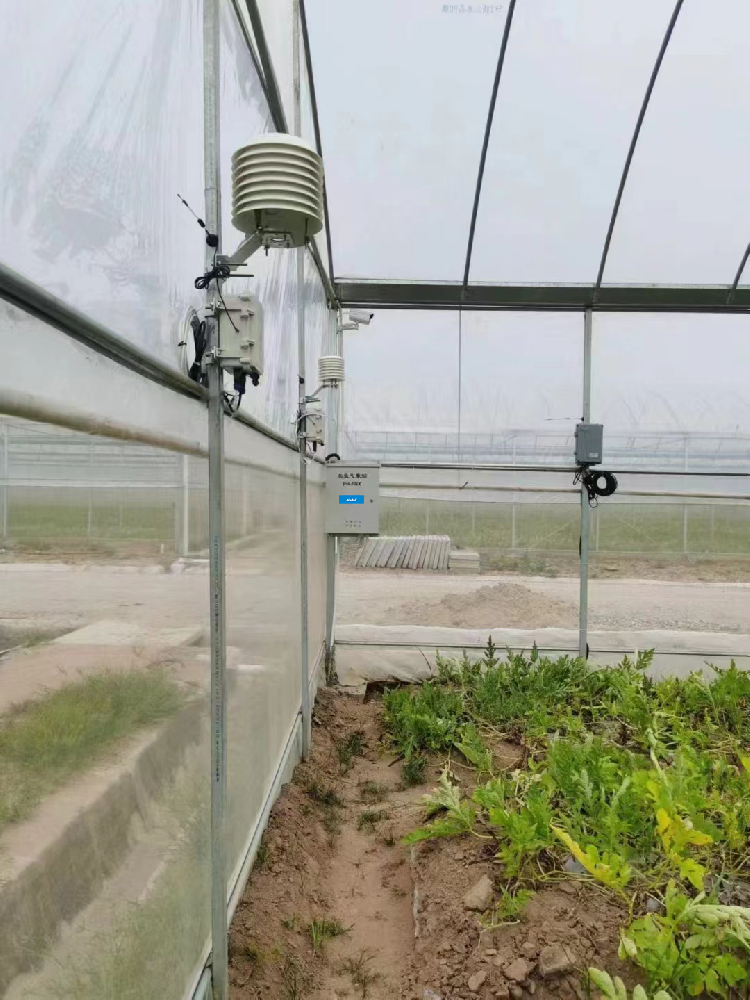
The “vegetable basket project” has promoted year-round supply of facility vegetables in China, but off-season greenhouse planting has extremely high requirements for environmental stability. Small fluctuations in temperature, humidity, light, carbon dioxide concentration, and other elements will affect vegetable photosynthetic rate, nutrient accumulation, and disease occurrence.
The NiuBoL agricultural weather station can be deployed in the field or inside the greenhouse to collect micro-climate data in real time. When the temperature is lower than the set threshold, the system automatically triggers an insulation cover reminder; when the greenhouse temperature is too high or humidity exceeds 80%, it promptly pushes ventilation and dehumidification alarms; when light is insufficient, it can link supplementary lighting control suggestions. Through precise environmental data, planting managers can control the greenhouse temperature within the optimal range for crops (most leafy vegetables 18~25°C during the day and 10~15°C at night) and maintain humidity at 60~80%, significantly reducing the risk of rotten vegetables and disease.
In large-scale vegetable bases, this station type can also achieve multi-point networking to form a regional meteorological monitoring network, providing short-term weather forecast services for harvesting and transportation links and reducing logistics losses. Integrators can directly connect NiuBoL data to intelligent irrigation, fertilization, or temperature control execution systems to form a closed-loop environmental regulation solution.
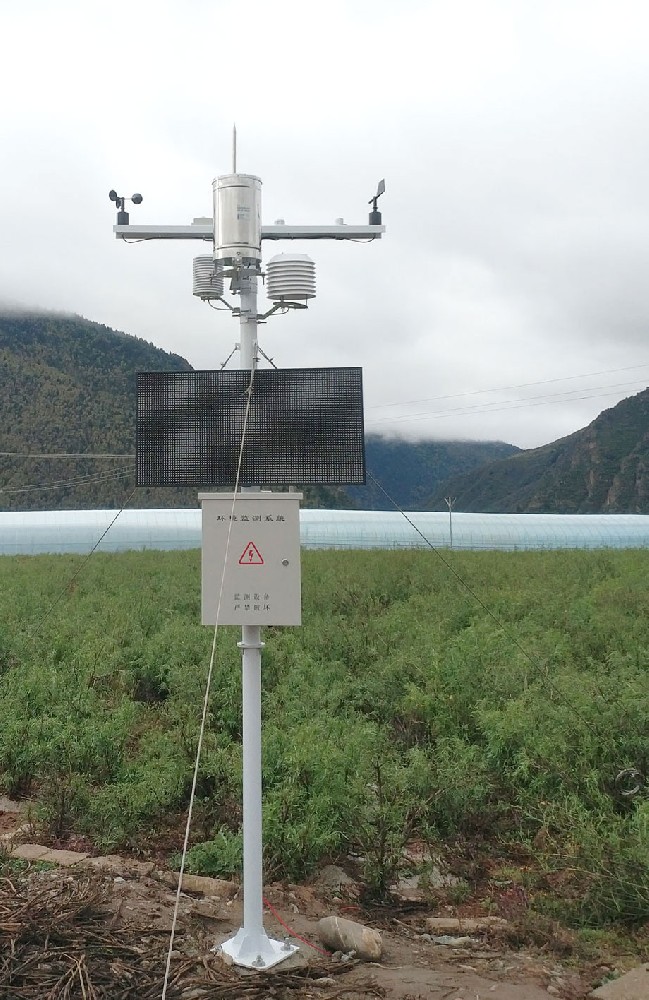
Persimmon, as a traditional economic fruit tree, prefers warmth and sufficient light and has high requirements for soil drainage and fertility. Traditional open-field planting is easily affected by frost damage and drought/flood, while greenhouse cultivation can extend the growth period through temperature and water control, improving fruit quality and sales cycle.
Persimmon tree germination requires temperatures above 10°C, branch and leaf growth is suitable above 15°C, flowering and fruiting around 22°C, fruit development around 25°C, and maturity around 20°C. Within this temperature range, the fruit skin is smooth, color is bright, flesh is dense, and flavor is rich. When light is sufficient, the fruit has thin skin, tender flesh, even coloring, and high water content; insufficient light during the young fruit stage easily causes fruit drop.
The NiuBoL agricultural weather station can monitor greenhouse temperature and humidity, light-related elements around the clock (indirectly assisting light judgment through air pressure and humidity), helping growers adjust greenhouse film ventilation, shading, or supplementary lighting measures in advance. In typical greenhouse persimmon production areas such as Yongji, Shanxi, the system can dynamically adjust environmental parameters according to production plans, achieving maturity delay of more than half a month, extending the sales window, and improving economic benefits. The data communication function also supports linkage with water-fertilizer integration systems to optimize fertilizer and water control strategies.
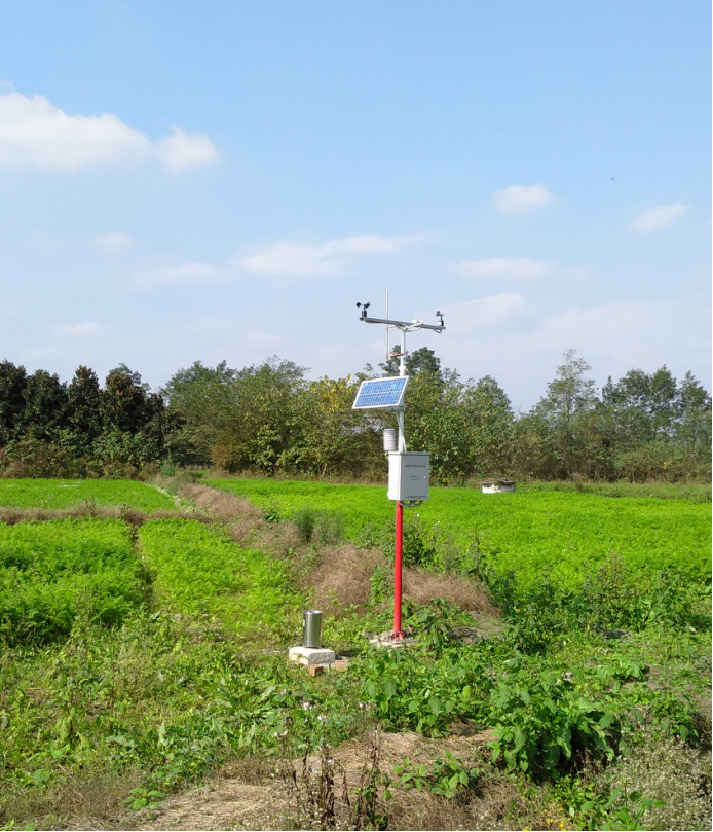
Cucumber growth temperature is suitable at 10~32°C, with the best daytime temperature 25~32°C and nighttime 15~18°C, ground temperature 20~25°C, and day-night temperature difference 10~15°C. Photosynthesis is inhibited above 35°C, and high-temperature obstacles occur at 45°C; low temperatures of -2~0°C easily cause freezing death. When humidity exceeds 80%, diseases such as downy mildew and leaf mold occur frequently.
In winter off-season cultivation, sudden weather changes (such as sudden warming after continuous overcast rain) or rain and snow causing snow accumulation on the greenhouse roof and cold air intrusion often lead to acute seedling death. The NiuBoL agricultural weather station provides early warning before the temperature difference exceeds the set value through real-time temperature and humidity sensors and over-limit alarm functions, guiding farmers to take timely measures such as film covering for insulation, heating and supplementary lighting, or ventilation and dehumidification.
Wireless transmission technology directly pushes greenhouse data to farmers’ mobile platforms, enabling remote decision-making without leaving home. Engineering companies can integrate this station type with existing temperature control and irrigation equipment to form a cucumber-specific environmental regulation solution, significantly reducing seedling death rate and improving yield and quality stability.
As a professional device for system integrators, IoT solution providers, and engineering companies, the NiuBoL agricultural weather station provides open data interfaces, supporting multiple protocols such as Modbus RTU and MQTT, making it convenient to connect to third-party cloud platforms or local SCADA systems. The device adopts a modular design for easy on-site installation and maintenance. The power supply supports solar + battery combination, adapting to environments without mains electricity.
Long-term operation data can be used to establish crop meteorological models and provide a foundation for precision agriculture decision-making. Compared with traditional manual observation, this station type significantly improves the level of observation automation and the timeliness of disaster monitoring, providing solid meteorological technical support for agricultural modernization.
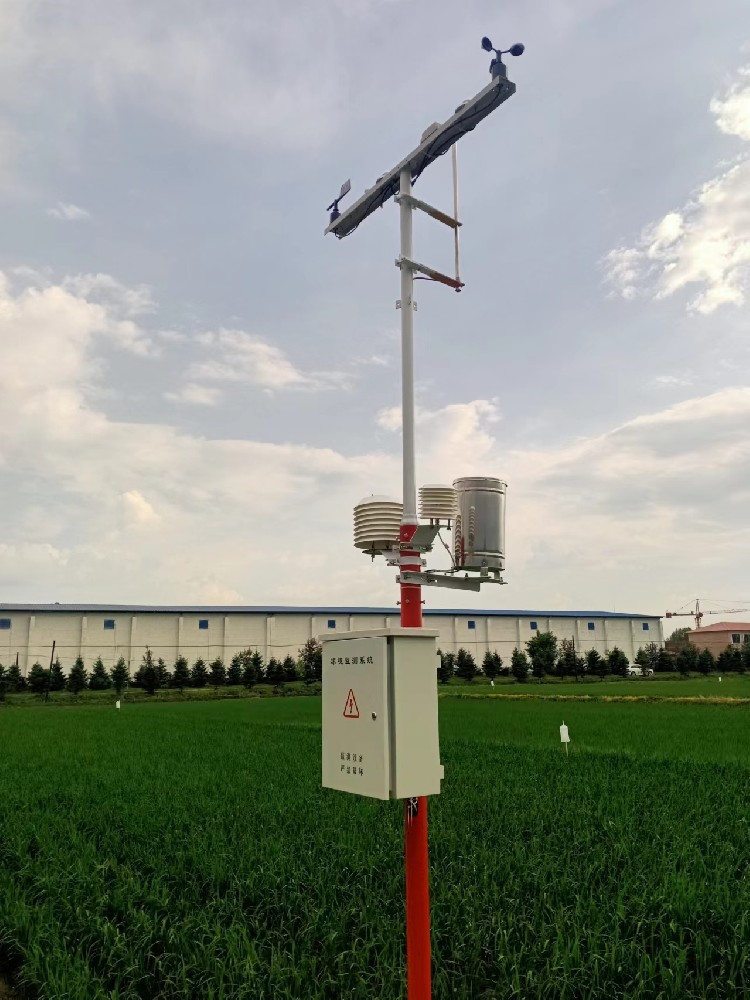
Q1. What is the main difference between NiuBoL agricultural weather station and ordinary weather stations?
NiuBoL agricultural weather station is specially designed for facility agriculture, with a focus on adding soil temperature and humidity monitoring, optimizing greenhouse micro-climate perception capabilities, and supporting over-limit alarms and IoT communication, making it more aligned with crop physiological needs.
Q2. Does this station type support remote monitoring and mobile phone alarms?
Yes. Through 4G or MQTT protocols, data can be uploaded to the cloud platform in real time and alarm information can be pushed to the mobile APP.
Q3. How to set the humidity control threshold in greenhouse vegetable planting?
For most leafy vegetables, it is recommended to control air humidity at 60~80%. When it exceeds 80%, the system automatically alarms to prevent high-humidity diseases such as downy mildew.
Q4. How is the frost warning function realized?
The device monitors air temperature in real time and triggers an alarm in advance when it approaches 0°C. Combined with historical data trend analysis, it helps users timely cover insulation materials or start heating equipment.
Q5. How large an area can one set of NiuBoL agricultural weather station cover?
A single station typically covers a radius of 50~100 meters. Multi-station networking can achieve full coverage of large bases, depending on terrain and crop types.
Q6. Is the device communication protocol open and easy to integrate?
It adopts standard Modbus RTU and MQTT protocols and provides an open communication manual, making it convenient for system integrators to quickly connect to existing IoT platforms.
Q7. How does light data assist decision-making in greenhouse persimmon planting?
Although light intensity is not directly measured, greenhouse light conditions are comprehensively judged through air pressure, humidity, and temperature to guide the use of shading nets or supplementary lights.
Q8. How difficult is equipment maintenance?
With modular design, sensors can be quickly replaced, and the software supports remote diagnosis. Annual maintenance volume is low, suitable for large-scale deployment.
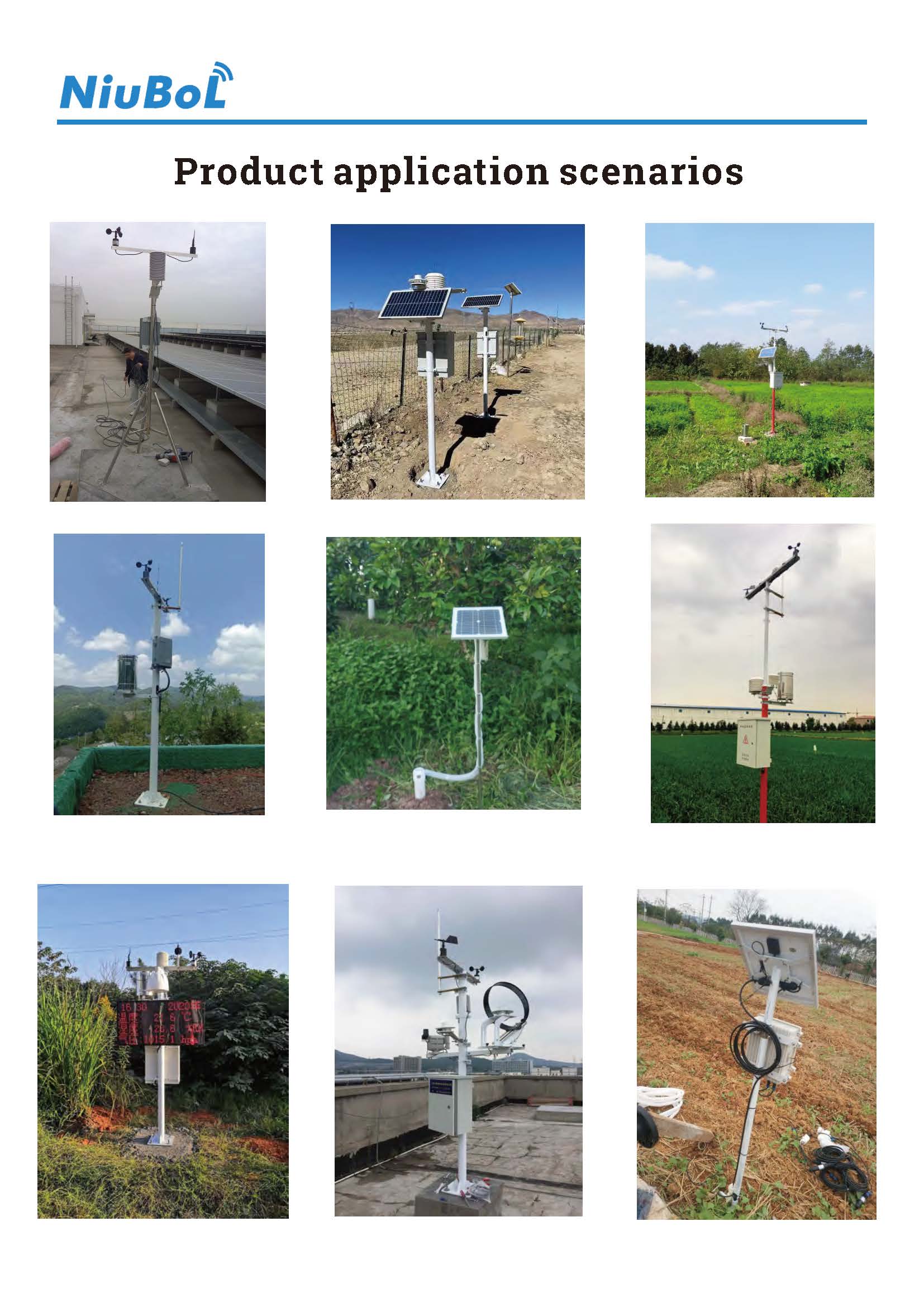
Based on international WMO standards, the NiuBoL agricultural weather station provides a reliable meteorological disaster prevention and control tool for facility agriculture through multi-element high-precision monitoring, intelligent alarms, and open data communication. In greenhouse planting scenarios such as vegetables, persimmons, and cucumbers, it helps users accurately grasp environmental changes, achieve active regulation, reduce disaster losses, and improve yield and quality.
For system integrators, IoT solution providers, and engineering companies, choosing NiuBoL means choosing a standardized, easy-to-integrate, and highly reliable meteorological perception solution. In the future, with the further integration of 5G and edge computing technologies, this series of products will continue to help China’s agriculture move toward digitalization and intelligence, providing solid technical support for the high-quality development of modern agriculture.
Related recommendations
Sensors & Weather Stations Catalog
 Agriculture Sensors and Weather Stations Catalog-NiuBoL.pdf
Weather Stations Catalog-NiuBoL.pdf
Agriculture Sensors Catalog-NiuBoL.pdf
Water Quality Sensor Catalog-NiuBoL.pdf
Related products
 Combined air temperature and relative humidity sensor
 TDR Soil Moisture & Temperature Sensor for irrigation| RS485 |4-20mA| NBL-S-THR
 Soil pH sensor RS485 soil Testing instrument soil ph meter for agriculture |NBL-S-PH
 Wind Speed sensor Output Modbus/RS485/Analog/0-5V/4-20mA
 Tipping bucket rain gauge for weather monitoring auto rainfall sensor RS485/Outdoor/stainless steel
 Pyranometer Solar Radiation Sensor 4-20mA/RS485

Screenshot, WhatsApp to identify the QR code
WhatsApp number:+8615367865107
(Click on WhatsApp to copy and add friends)

