





— Blogs —
—Products—
 Consumer hotline +8618073152920
 WhatsApp:+8615367865107
Address:Room 102, District D, Houhu Industrial Park, Yuelu District, Changsha City, Hunan Province, China
Product knowledge
Time:2026-03-30 14:16:06 Popularity:506
In the process of modern agriculture transforming toward scale and intensification, the construction of vegetable production bases has become the core pillar for ensuring the stability of regional food supply chains. From the automated greenhouse clusters in Shouguang, Shandong, to the rapidly expanding facility agriculture bases in southern Xinjiang, the production model is undergoing a profound change from “experience-driven” to “data-driven.”
For system integrators, IoT solution providers, and project contractors, building an efficient and stable agricultural production system centers on the precise perception of field micro-climate. The agricultural weather station solution provided by NiuBoL converts meteorological and environmental factors into quantifiable production instructions through high-precision environmental sensors, ensuring crops are always in the optimal growth range.
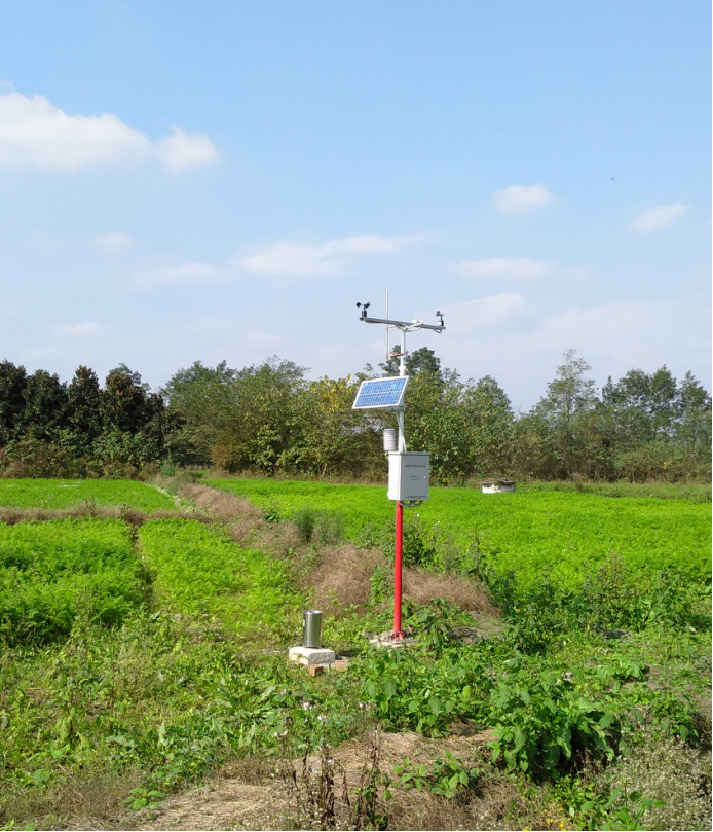
Facility vegetable planting (such as greenhouses) is far more sensitive to the environment than open-field cultivation. In advanced production bases like Shouguang, the application of IoT technology has gone beyond simple data monitoring to achieve deep coupling between sensors and actuators.
As the “sensory terminal” of the IoT system, the agricultural weather station continuously collects field environmental data in real time. When monitoring parameters deviate from preset plant physiological thresholds, the system automatically triggers ventilation, shading, supplementary lighting, or irrigation equipment through edge computing or cloud control protocols. This linkage mechanism based on measured data not only greatly reduces labor costs but also effectively avoids yield reduction risks caused by drastic environmental fluctuations.
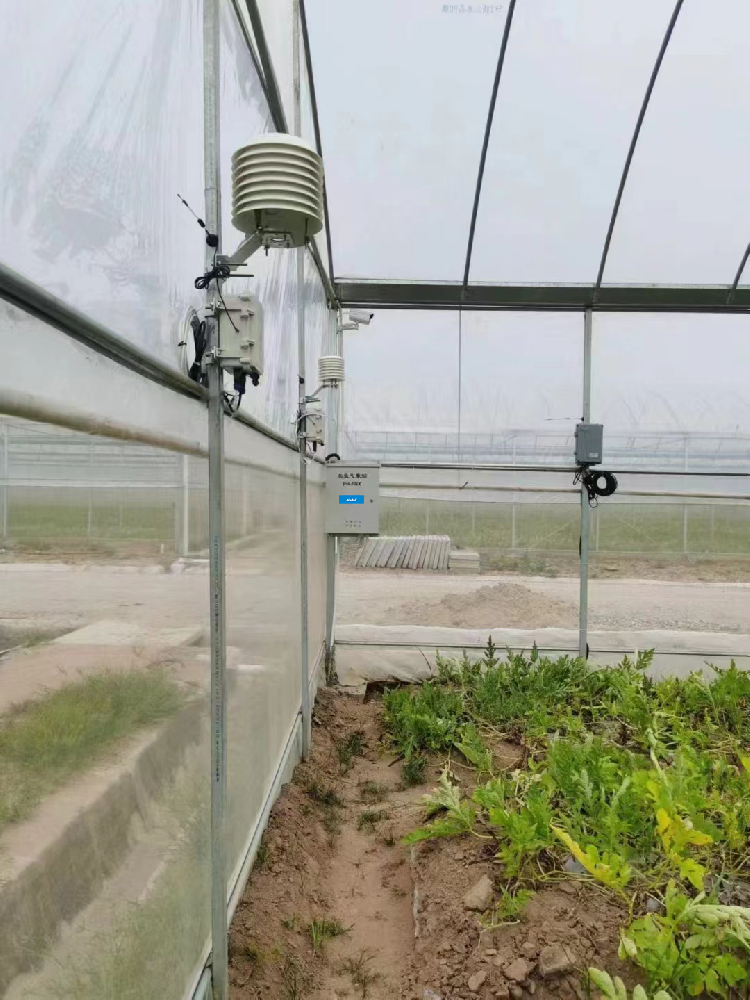
In large-scale planting, the premise of precision management is multi-dimensional parameter coverage. NiuBoL agricultural weather stations integrate a variety of industrial-grade sensors. The following are the technical parameters of each core sensor and their functional analysis in vegetable planting:
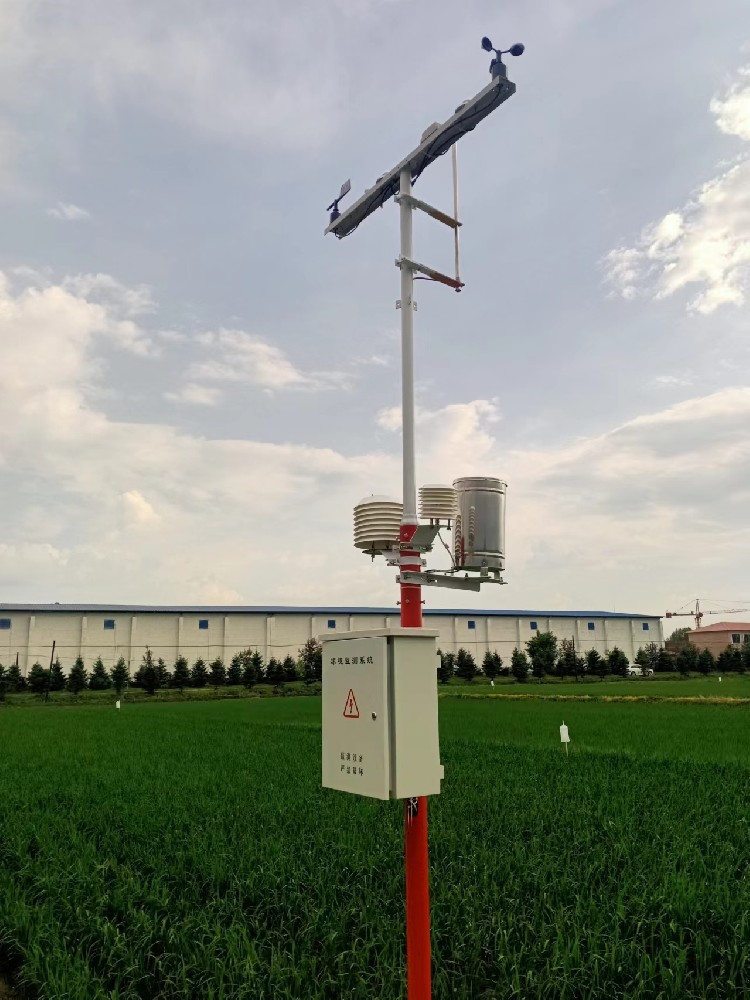
| Monitoring Element | Sensor Type | Typical Range | Resolution | Core Role in Vegetable Planting |
|---|---|---|---|---|
| Air Temperature | Digital integrated sensor | -40 to 80°C | 0.1°C | Monitor greenhouse heat accumulation, guide ventilation and insulation, prevent high-temperature burn or frost damage. |
| Air Humidity | Capacitive polymer | 0 to 100% RH | 0.1% RH | Regulate transpiration, warn of pest and disease risks (such as gray mold) in high-humidity environments. |
| Wind Speed | Three-cup / Ultrasonic | 0 to 60 m/s | 0.1 m/s | Evaluate windproof facility safety, link with automatic window opening system, optimize indoor gas exchange. |
| Wind Direction | Mechanical tail / Ultrasonic | 0 to 360° | 1° | Assist in analyzing local climate flow direction, optimize layout and ventilation design of large multi-span greenhouses. |
| Light Intensity | Silicon photocell / Total radiation | 0 to 200,000 Lux | 1 Lux | Determine photosynthesis rate, link with shading nets or LED supplementary lights to ensure light accumulation. |
| Rainfall | Single/Double tipping bucket | 0 to 4mm/min | 0.2mm / 0.1mm | Adjust irrigation plans in open-field planting, prevent waterlogging, guide rainwater collection systems. |
| Soil Temperature | PT100/1000 resistance | -40 to 80°C | 0.1°C | Affects root activity and nutrient absorption, a key indicator for determining sowing and transplanting periods. |
| Soil Moisture | FDR/TDR frequency domain reflection | 0 to 100% VWC | 0.1% | Core basis for drainage and irrigation, achieving water-saving irrigation and preventing root hypoxia or water deficit. |
| Atmospheric Pressure | Piezoresistive | 300 to 1100 hPa | 0.1 hPa | Assist in weather trend prediction and analyze differences in vegetable growth environments in high-altitude areas. |
| Evaporation | Pressure principle | 0 to 100 mm | 0.01 mm | Calculate crop water requirement (ET0), the core parameter for formulating scientific irrigation formulas. |
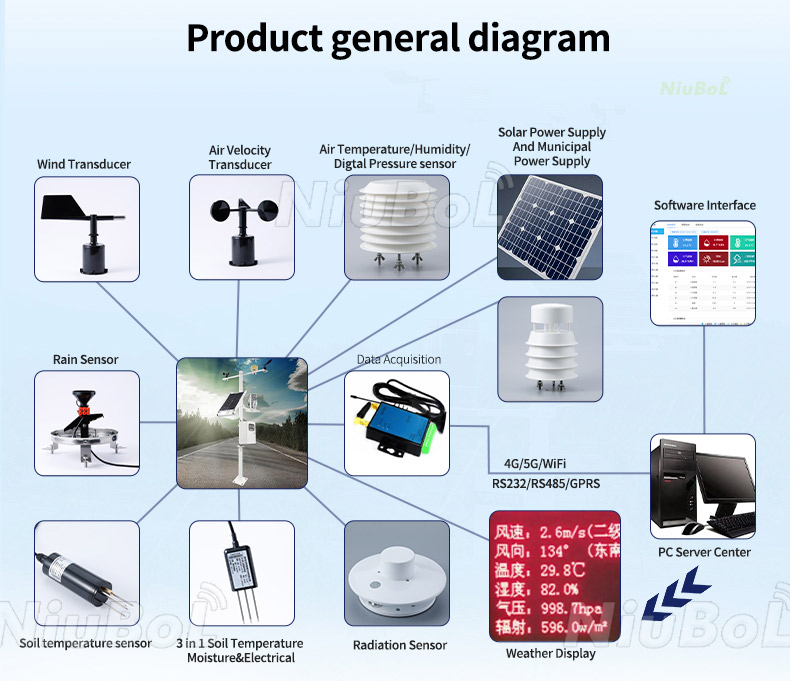
1. Temperature and Humidity and Transpiration Balance
Vegetable growth rate is highly dependent on the vapor pressure deficit (VPD) between the inside and outside of the leaves. Through air temperature and humidity sensors, the NiuBoL system can calculate VPD values in real time. When low humidity causes excessive transpiration, the automatic sprinkler system activates to increase humidity; conversely, exhaust fans are linked to reduce humidity and prevent the breeding of fungal diseases.
2. Photosynthesis and Energy Conversion
Light intensity sensors are the core of greenhouse light environment management. For light-loving vegetables (such as peppers and tomatoes), light monitoring data is directly fed back to electric shading curtains. In strong summer light, the system automatically deploys shading nets to prevent photoinhibition; in winter or rainy days, supplementary lighting decisions are made based on light intensity data.
3. Soil Moisture and Water-Fertilizer Integration
Soil moisture sensors combined with evaporation monitoring form a closed loop for precision irrigation. In large-scale intensive planting, blind irrigation leads to fertilizer leaching and water waste. The high-precision VWC (volumetric water content) data provided by NiuBoL sensors makes “on-demand irrigation” a reality, ensuring vegetable roots are always in the optimal oxygen and water balance state.
4. Leaf Wetness Sensor
In addition to conventional meteorological parameters, NiuBoL provides leaf wetness sensors specifically for high-value vegetables (such as colored sweet peppers and strawberries). The sensor simulates plant leaf morphology and monitors leaf wetness duration. Combined with air temperature and humidity data, the system can calculate “pathogen infection models” and issue warnings 24-48 hours before outbreaks of late blight or downy mildew, guiding precise pesticide application and reducing pesticide usage by more than 20%.
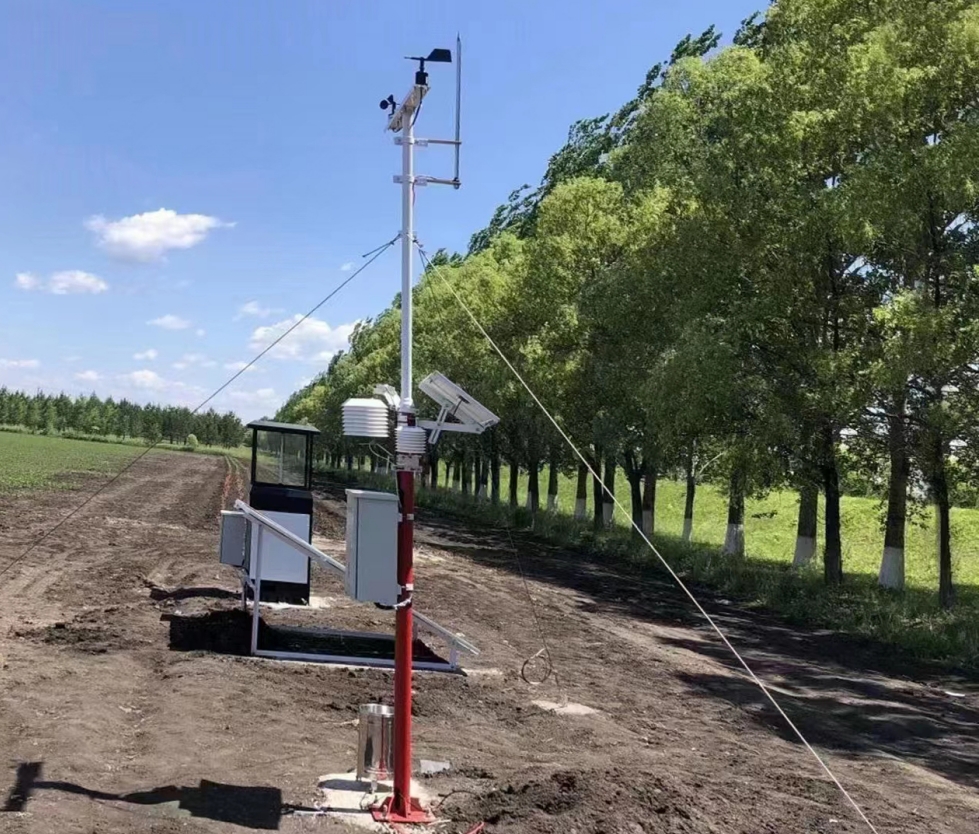
NiuBoL agricultural weather stations are specially designed for harsh outdoor and high-humidity greenhouse environments to meet the stringent requirements of engineering projects for long-term stability:
Material and Protection: Sensor housings use high-strength UV-resistant materials or aluminum alloy, with protection levels usually reaching IP65 or higher, effectively resisting fertilizer corrosion, pesticide spraying, and extreme weather.
Communication Protocol: Standard support for RS485 interface using industrial-grade Modbus-RTU protocol, with strong compatibility. This allows system integrators to easily connect weather stations to existing PLC, DCS, or smart agriculture cloud platforms.
Data Collection and Processing: Equipped with professional data collectors supporting 4G/5G, LoRa, or Ethernet transmission, ensuring reliable long-distance data transmission in remote planting areas and supporting breakpoint resume functionality.
For engineering companies and project contractors operating thousands of acres of bases, the return on investment (ROI) of introducing NiuBoL agricultural weather stations is very significant:
Resource Savings: Precision irrigation based on soil moisture and evaporation can save more than 30% of agricultural water on average and reduce fertilizer loss by 15%-20%.
Yield Improvement: By optimizing greenhouse micro-climate and avoiding yield reduction caused by extreme high or low temperatures, crop standardization is higher, and the commercial fruit rate can increase by 10%-25%.
Labor Optimization: Automated linkage replaces manual inspections. One manager can remotely monitor several times the traditional planting area, significantly reducing production costs.
| Characteristic | NiuBoL Industrial-grade Weather Station | Ordinary Consumer/Civil Weather Instrument |
|---|---|---|
| Sampling Frequency | 1s - 60s adjustable (real-time linkage) | 5min - 30min (view only) |
| Signal Output | Standard RS485 Modbus-RTU / 4-20mA | Private protocol / Only supports mobile App |
| Protection Level | Full metal or anti-UV material (IP65) | Plastic material (around IP54) |
| Calibration Certificate | Each device can be traced and calibrated | No calibration or factory estimation |
| Scalability | Supports expansion of NPK, water quality sensors, carbon dioxide sensors | Cannot be expanded, functions are fixed |
Q1. What is the recommended installation height for sensors in agricultural weather stations?
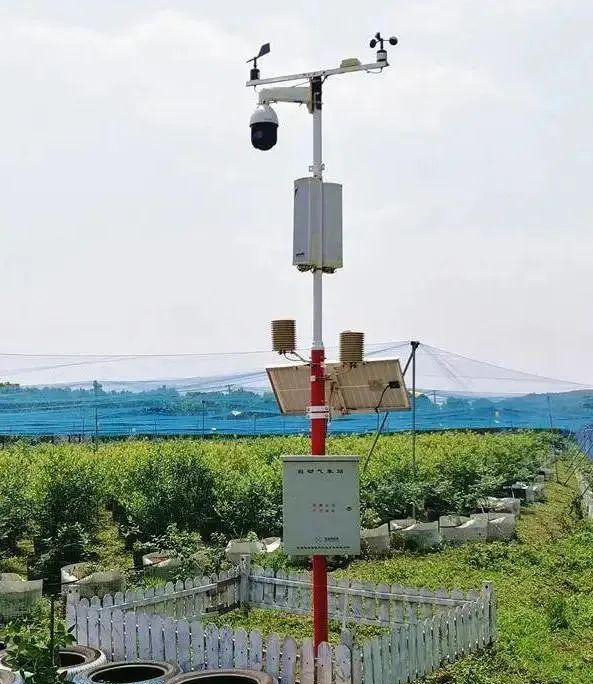
Air temperature and humidity sensors are usually recommended to be installed 0.5 - 1 meter above the crop canopy to reflect the actual crop growth environment; wind speed and direction sensors should be installed at the top of the bracket (2 - 3 meters) to avoid interference from surrounding obstacles.
Q2. How does the system handle sensor data deviation?
NiuBoL sensors are calibrated to standards before leaving the factory. In actual engineering applications, the data collector supports linear deviation compensation through software to adapt to specific soil media or environmental interference.
Q3. What power supply solutions does the weather station support?
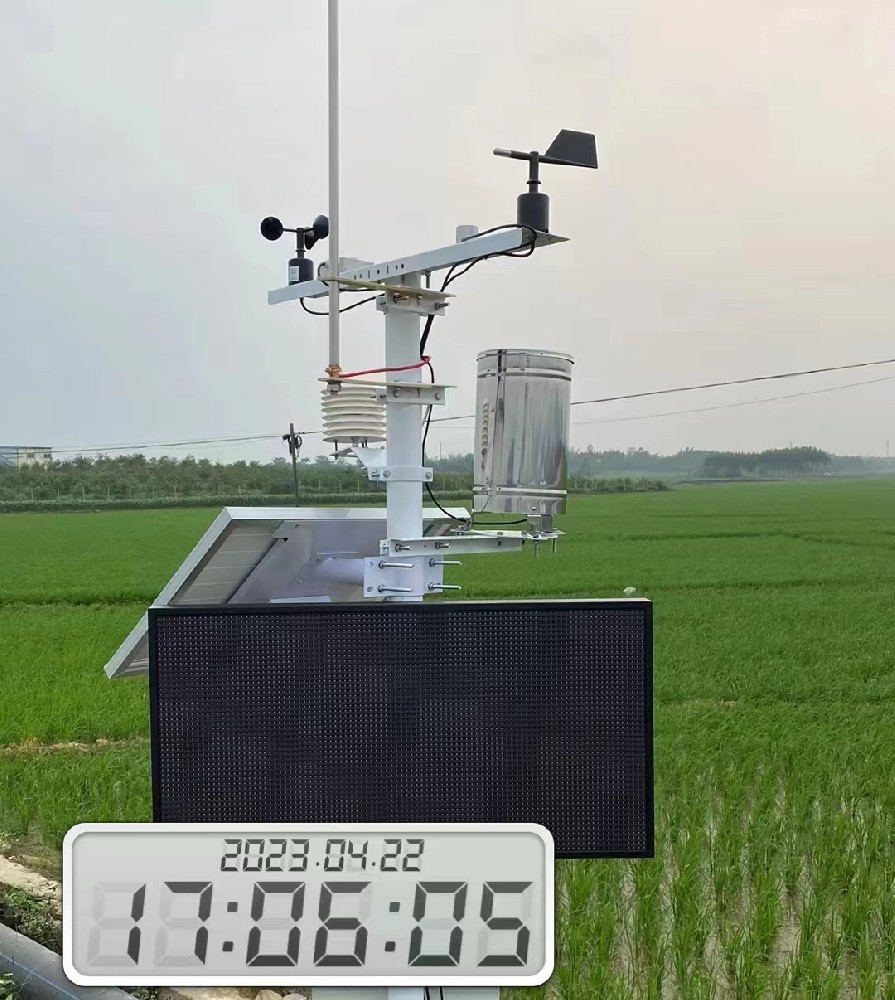
It supports AC 220V direct power supply or “solar panel + battery” power supply solutions. For large-scale wild planting areas, the solar power supply system can ensure continuous operation for more than 7 days in rainy weather.
Q4. Can soil moisture sensors measure moisture at different depths?
Yes. By configuring tubular soil moisture monitors or multi-layer insertion sensors, parameters of different soil layers such as 10cm, 20cm, and 40cm can be monitored simultaneously to build a root water absorption model.
Q5. Can this weather station be connected to third-party IoT platforms?
Yes. The device adopts the standard Modbus-RTU protocol and provides a complete register manual, allowing integrators to quickly integrate it into custom UI interfaces or decision support systems.
Q6. Can the weather station work normally in extremely cold regions (such as winter in Xinjiang)?
NiuBoL industrial-grade sensors have an operating temperature range covering -40°C to 80°C. For snowy areas, wind speed, wind direction, and rainfall sensors can be customized with heating functions to prevent equipment icing failure.
Q7. What is the maintenance cycle for the sensors?
It is recommended to perform physical cleaning every 6 - 12 months, especially for light and rainfall sensors, to remove dust, fallen leaves, or bird droppings on the surface to ensure measurement accuracy.
Q8. How to prevent lightning damage to the equipment?
Our weather station bracket system supports lightning rod installation, and the internal circuit integrates multi-level surge protection, which can effectively reduce the risk of lightning damage to sensors and collectors.
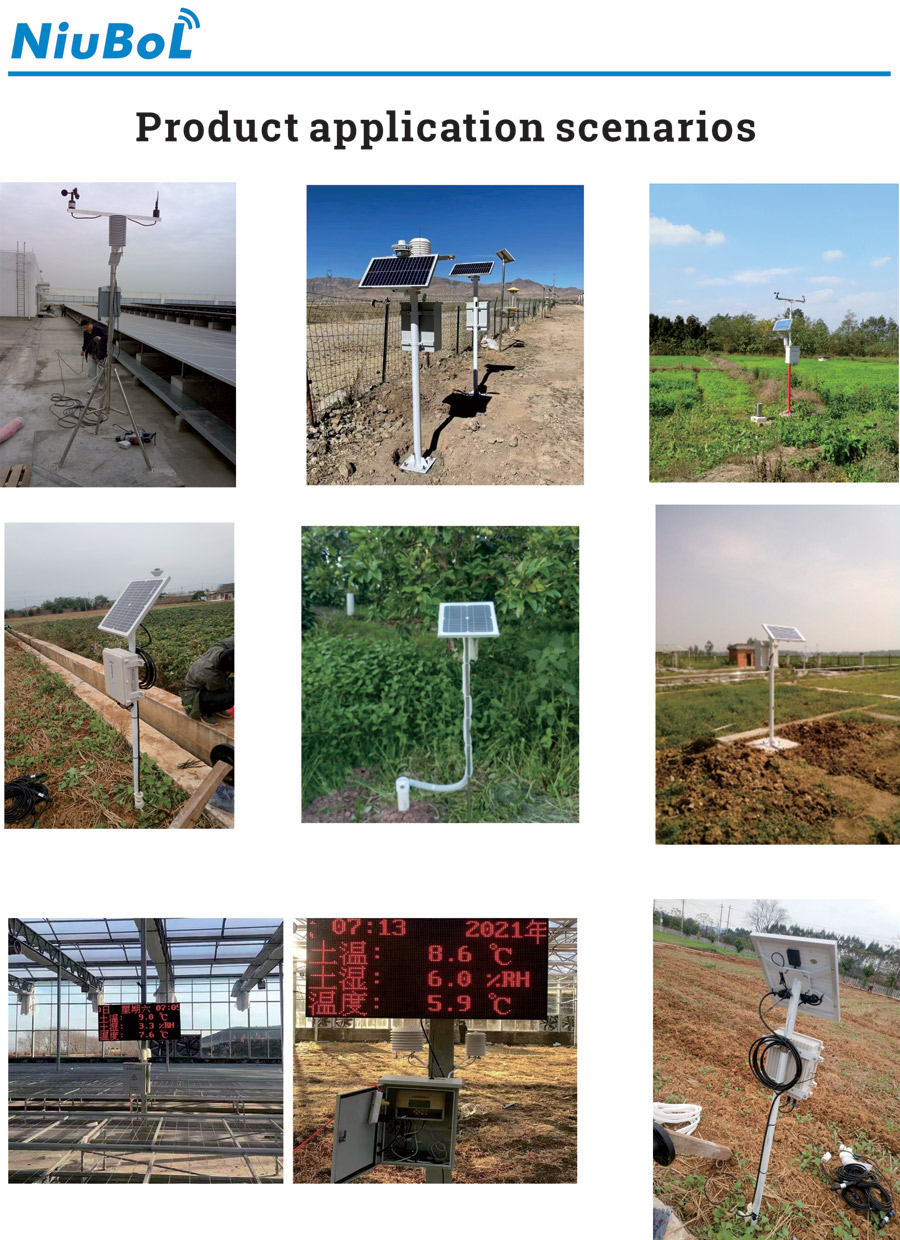
In the journey of agricultural modernization, NiuBoL is committed to providing global partners with high-precision and highly reliable sensing layer hardware. Through the in-depth analysis and real-time monitoring of field micro-climate by agricultural weather stations, large-scale vegetable production bases can achieve the leap from “relying on the sky” to “data-driven decision-making.” Whether for system integrators pursuing ultimate efficiency or project contractors focused on agricultural digitalization, NiuBoL is a trustworthy cornerstone for building a precision agriculture ecosystem.
If you are planning a smart agriculture project or greenhouse automation renovation, please feel free to contact our engineering team to obtain customized sensor integration solutions.
Prev:Smart Fisheries: Application of NiuBoL Water Quality Online Monitoring System in Smart Aquaculture
Related recommendations
Sensors & Weather Stations Catalog
 Agriculture Sensors and Weather Stations Catalog-NiuBoL.pdf
Weather Stations Catalog-NiuBoL.pdf
Agriculture Sensors Catalog-NiuBoL.pdf
Water Quality Sensor Catalog-NiuBoL.pdf
Related products
 Combined air temperature and relative humidity sensor
 TDR Soil Moisture & Temperature Sensor for irrigation| RS485 |4-20mA| NBL-S-THR
 Soil pH sensor RS485 soil Testing instrument soil ph meter for agriculture |NBL-S-PH
 Wind Speed sensor Output Modbus/RS485/Analog/0-5V/4-20mA
 Tipping bucket rain gauge for weather monitoring auto rainfall sensor RS485/Outdoor/stainless steel
 Pyranometer Solar Radiation Sensor 4-20mA/RS485

Screenshot, WhatsApp to identify the QR code
WhatsApp number:+8615367865107
(Click on WhatsApp to copy and add friends)

