





— Blogs —
—Products—
 Consumer hotline +8618073152920
 WhatsApp:+8615367865107
Address:Room 102, District D, Houhu Industrial Park, Yuelu District, Changsha City, Hunan Province, China
Product knowledge
Time:2026-05-04 09:44:59 Popularity:468
This article systematically introduces the definition of COD, determination principles, national emission standards, and how to achieve efficient and stable continuous detection through online monitoring technology. It focuses on recommending NiuBoL NBL-WQ-COD integrated online COD sensor, which adopts double wavelength ultraviolet absorption method, providing a reagent-free, fast-response reliable solution for complex water environments.
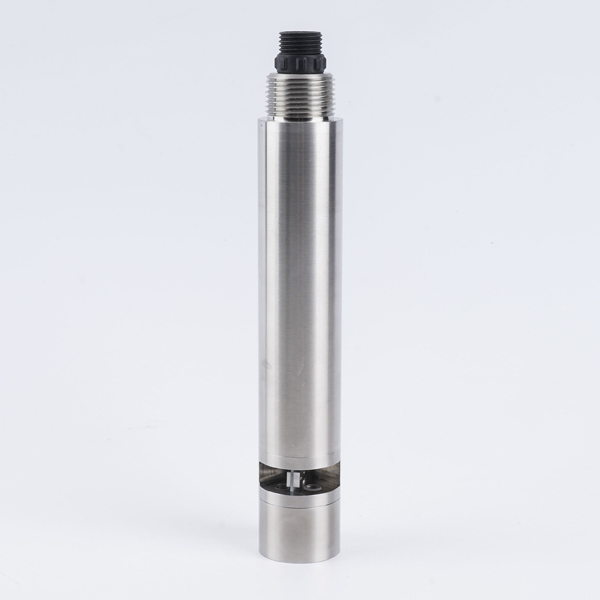
Chemical Oxygen Demand (COD) is a core organic pollution indicator in water quality monitoring and wastewater treatment. It reflects the total amount of reducing substances in a water sample that can be oxidized by strong oxidants, mainly organic matter. COD value is expressed in mg/L and directly reflects the degree of organic pollution in the water body. It is widely used in industrial wastewater discharge supervision, sewage treatment plant operation management and river pollution assessment. Together with BOD, TOC and other parameters, it constitutes an important basis for evaluating water organic load and treatment process efficiency.
This article systematically introduces the definition of COD, determination principles, national emission standards, and how to achieve efficient and stable continuous detection through online monitoring technology. It focuses on recommending NiuBoL NBL-WQ-COD integrated online COD sensor, which adopts double wavelength ultraviolet absorption method, providing a reagent-free, fast-response reliable solution for complex water environments.
National Standard Reflux Digestion Titration Method
Traditional COD determination mainly uses the potassium dichromate method. In strong acid medium, with silver sulfate as catalyst, organic matter in the water sample is oxidized through reflux digestion (usually 2 hours), and the remaining potassium dichromate is titrated with ammonium ferrous sulfate. This method has high accuracy but has shortcomings such as long digestion time, high energy consumption, large reagent consumption, and complex operation, making it difficult to meet high-frequency or real-time monitoring needs.
Rapid Digestion Spectrophotometry
To improve detection efficiency, most current COD analyzers use rapid digestion spectrophotometry. The core principle is: in strong acid medium, potassium dichromate oxidizes organic matter to generate Cr³⁺, and the absorbance of Cr³⁺ is measured at 600 nm ± 20 nm wavelength. The increase in absorbance is proportional to the COD value of the water sample, thereby converting the COD concentration. This method supports switching between high and low ranges, is relatively simple to operate, and is suitable for laboratory batch testing.
In China's wastewater discharge, chemical oxygen demand (COD) control standards are divided into national emission standards, local emission standards and industry standards. Standard formulation must comprehensively consider environmental capacity, socio-economic conditions and technical feasibility, serving as the legal basis for determining whether pollutant discharge behavior is compliant.
Although traditional laboratory methods are reliable in accuracy, they are difficult to cope with dynamic water quality changes and real-time supervision needs. Online COD sensors can continuously and automatically obtain data, timely discover over-standard risks, support process optimization and remote monitoring, and significantly reduce labor costs and secondary pollution.
Double wavelength ultraviolet absorption method is one of the current mainstream technologies for online COD monitoring. It utilizes the characteristic absorption of organic matter to ultraviolet light, requires no chemical reagents, avoids the use of dangerous reagents such as strong acids and potassium dichromate in traditional methods, and complies with the green and environmentally friendly development direction.
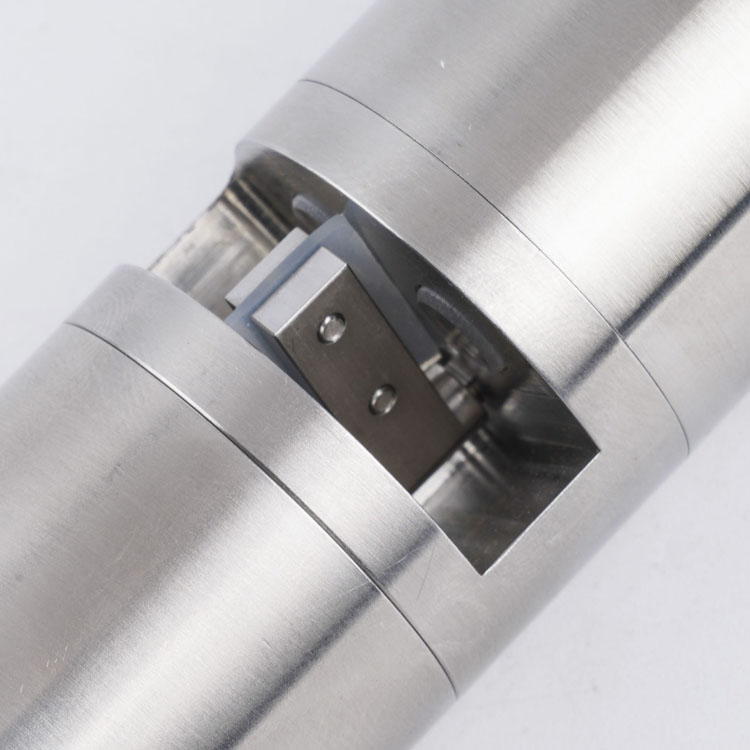
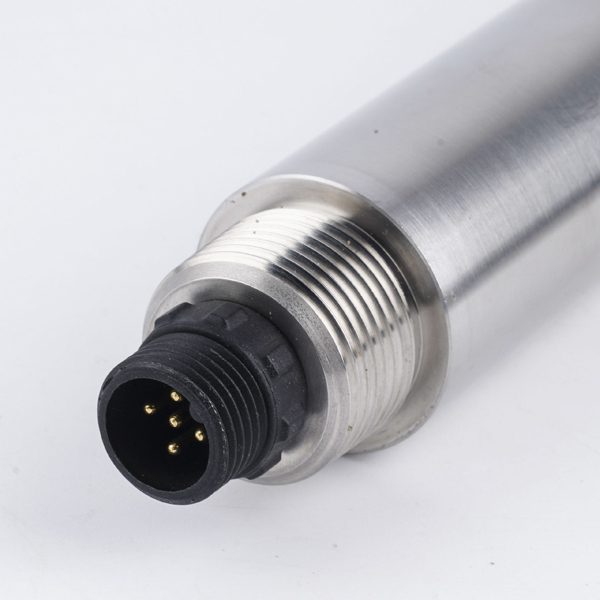
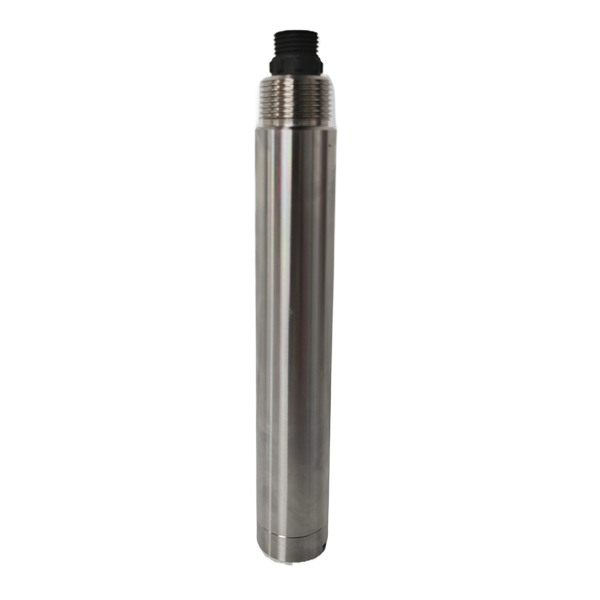
NiuBoL NBL-WQ-COD online COD sensor adopts double wavelength ultraviolet absorption method and is specially designed for industrial-grade continuous monitoring. It can simultaneously measure COD, turbidity and temperature parameters. The sensor is compact in size and easy to install, suitable for sewage treatment plants, industrial wastewater discharge outlets, surface water monitoring sections and other application scenarios.
Various dissolved organic substances in water have obvious absorption characteristics for 254 nm wavelength ultraviolet light. The NBL-WQ-COD sensor uses two light sources: one ultraviolet measurement light is used to detect organic matter absorption intensity, and one reference light is used to monitor water turbidity influence. Through dedicated algorithms to compensate for optical path attenuation in real time, it can effectively eliminate interference such as granular suspended solids and ensure stable and reliable measurement results.
| Parameter | Specification |
|---|---|
| Model | NBL-WQ-COD |
| Measurement Principle | Double Wavelength Ultraviolet Absorption Method |
| Range & Resolution | COD: 0~200.0 mg/L (Resolution 0.1 mg/L) Turbidity: 0~200.0 NTU (Resolution 0.1 NTU) COD: 0~500.0 mg/L (Resolution 0.1 mg/L) Turbidity: 0~400.0 NTU (Resolution 0.1 NTU) |
| Accuracy | 0~200.0 mg/L or NTU: ±5% of reading 0~500.0 mg/L or 400.0 NTU: ±5% of reading |
| Response Time (T90) | <30 s |
| Minimum Detection Limit | 0.2 mg/L (0-200 mg/L range) 0.4 mg/L (0-500 mg/L range) |
| Calibration Method | Two-point Calibration |
| Cleaning Method | Built-in cleaning brush |
| Temperature Compensation | Automatic Temperature Compensation (Pt1000) |
| Output Method | RS-485 (Modbus RTU), 4-20 mA (optional) |
| Working Conditions | 0~45℃, ≤0.2 MPa |
| Installation Method | Submersible installation, 3/4 NPT |
| Shell Material | 316L Stainless Steel |
| Protection Rating | IP68 |
| Power Supply & Consumption | 12~24 V DC; Working 0.4 W@12 V, Cleaning 2 W@12 V |
| Storage Temperature | -5~65℃ |
| Connector Type | M16-5 core waterproof connector male |
Q1. What is the meaning of COD and how is its unit expressed?
Chemical Oxygen Demand (COD) refers to the oxygen equivalent consumed when reducing substances in a water sample are oxidized by strong oxidants. It is usually expressed in mg/L. It is an important comprehensive indicator for evaluating the degree of organic pollution in water bodies.
Q2. What are the main methods for laboratory COD determination?
Common methods include reflux digestion titration method and rapid digestion spectrophotometry. The former is accurate but time-consuming, while the latter has higher detection efficiency and is suitable for batch analysis.
Q3. Why is online COD monitoring receiving increasing attention?
Online monitoring enables real-time continuous data collection with fast response and supports remote integration, overcoming the limitations of laboratory methods such as poor timeliness and inability to perform dynamic monitoring.
Q4. What are the advantages of double wavelength ultraviolet absorption COD sensors?
No need to add chemical reagents, avoiding secondary pollution; short response time (<30 s); automatic compensation for turbidity interference; simple maintenance and good long-term stability.
Q5. What scenarios is the NiuBoL NBL-WQ-COD sensor suitable for?
It is suitable for industrial wastewater discharge monitoring, urban sewage treatment plant effluent monitoring, surface water environmental quality monitoring and ecological restoration water body assessment, etc.
Q6. How to calibrate online COD sensors?
Use two-point calibration method with known concentration standard solutions at low and high concentration points. Verify regularly to ensure measurement accuracy.
Q7. What role does the Modbus RTU protocol play in online COD monitoring?
This protocol supports reliable digital communication between sensors and control systems such as PLC and DCS, achieving remote data collection, real-time monitoring and automation linkage.
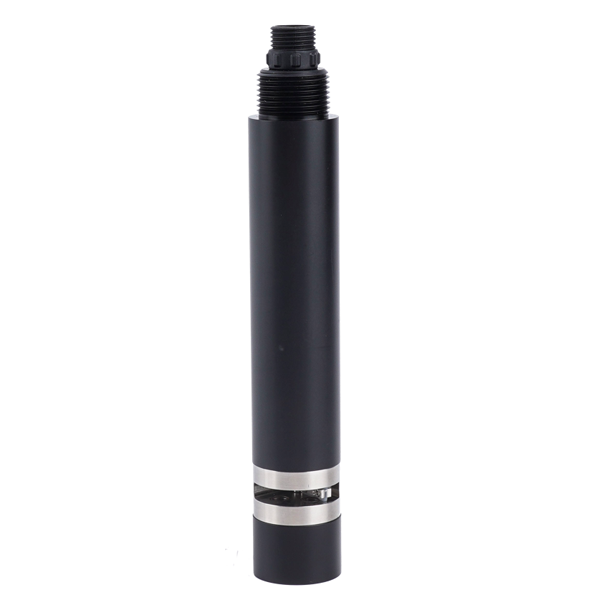
As a key parameter for organic pollution monitoring, accurate determination of Chemical Oxygen Demand (COD) is of great significance for wastewater compliant discharge, water environment quality evaluation and wastewater treatment process optimization. From traditional reflux digestion titration method to rapid spectrophotometry, and then to modern double wavelength ultraviolet absorption online monitoring technology, COD detection methods continue to develop toward high efficiency, environmental protection and real-time direction.
NiuBoL NBL-WQ-COD integrated online COD sensor, based on double wavelength ultraviolet absorption method, combined with built-in cleaning brush, automatic turbidity compensation and standardized output (RS-485 Modbus RTU, 4-20 mA), provides users with a stable, convenient and low-maintenance monitoring solution. It helps water affairs and environmental protection practitioners achieve the transformation from intermittent sampling analysis to continuous online control, improving overall water environment management efficiency.
In practical applications, it is recommended to select appropriate ranges according to on-site water quality characteristics, perform regular calibration and maintenance, and conduct joint analysis with other indicators such as BOD and ammonia nitrogen. Through scientific monitoring and precise governance, organic pollution load can be effectively reduced, promoting continuous improvement of water ecological environment and sustainable development.
 NBL-WQ-BOD-4A Online BOD Sensor.pdf
NBL-WQ-BOD-4S Online BOD Sensor.pdf
Prev:COD and BOD Online Monitoring: Definitions, Differences, Principles and Sensor Application Guide
Related recommendations
Sensors & Weather Stations Catalog
Agriculture Sensors and Weather Stations Catalog-NiuBoL.pdf
Weather Stations Catalog-NiuBoL.pdf
Agriculture Sensors Catalog-NiuBoL.pdf
Water Quality Sensor Catalog-NiuBoL.pdf
Related products
 Combined air temperature and relative humidity sensor
 TDR Soil Moisture & Temperature Sensor for irrigation| RS485 |4-20mA| NBL-S-THR
 Soil pH sensor RS485 soil Testing instrument soil ph meter for agriculture |NBL-S-PH
 Wind Speed sensor Output Modbus/RS485/Analog/0-5V/4-20mA
 Tipping bucket rain gauge for weather monitoring auto rainfall sensor RS485/Outdoor/stainless steel
 Pyranometer Solar Radiation Sensor 4-20mA/RS485

Screenshot, WhatsApp to identify the QR code
WhatsApp number:+8615367865107
(Click on WhatsApp to copy and add friends)

