





— Blogs —
—Products—
 Consumer hotline +8618073152920
 WhatsApp:+8615367865107
Address:Room 102, District D, Houhu Industrial Park, Yuelu District, Changsha City, Hunan Province, China
Product knowledge
Time:2026-05-04 09:52:04 Popularity:476
Chemical Oxygen Demand (COD) is one of the core indicators for assessing the degree of organic pollution in water quality monitoring. It can quickly reflect the total amount of reducing substances (mainly organic matter) in water. Together with BOD5, it constitutes an important basis for judging the biodegradability of water samples and the effectiveness of wastewater treatment processes. It plays a key role in industrial wastewater discharge control, sewage treatment plant operation management and surface water environmental quality evaluation. The selection of COD standards and testing methods directly affects the accuracy and compliance of monitoring data.
Chemical Oxygen Demand (COD) refers to the oxygen equivalent consumed by reducing substances that can be oxidized by strong oxidants in a water sample under specified conditions, expressed in mg/L. It mainly reflects the relative content of organic matter in the water body and is an important parameter for river pollution research, industrial wastewater characteristic analysis and sewage treatment facility efficiency evaluation.
COD value is often used in combination with Biochemical Oxygen Demand (BOD5). The BOD5/CODCr ratio is used to evaluate the biodegradability of wastewater. Generally, when the ratio is above 0.3, the wastewater is suitable for biological treatment processes; a lower ratio requires consideration of physicochemical pretreatment. In theory, the theoretical oxygen demand (ThOD) of organic compounds is usually between 0.5–3.0 g/g. Combined with water density conversion, factory drainage COD is generally controlled below 100 mg/L, which is more reasonable.
Research on COD determination methods in China started early. From the late 1970s to the early 1980s, multiple laboratories across the country conducted systematic verification of method accuracy and precision, and formulated a series of national standards with reference to relevant International Organization for Standardization standards.
COD analysis methods are mainly classified according to the type of oxidant used. The most commonly used are the potassium dichromate method (CODCr) and the permanganate index method (CODMn or Im).
Potassium Dichromate Method (CODCr)
In strong acidic medium, with silver sulfate as catalyst, potassium dichromate oxidizes organic matter in the water sample, reducing to Cr³⁺. This method has strong oxidation ability and an oxidation rate of about 90%. It is suitable for industrial wastewater and domestic sewage monitoring. It is more commonly used in European countries.
Permanganate Index Method (CODMn)
It is divided into acidic potassium permanganate method and alkaline potassium permanganate method. The former is suitable for water samples with low chloride ion content, while the latter is suitable for high-chloride water bodies such as seawater and salt lake water. This method has a lower oxidation rate (generally <50%) and is mainly used for surface water environmental quality evaluation. Japan widely uses the permanganate index method.
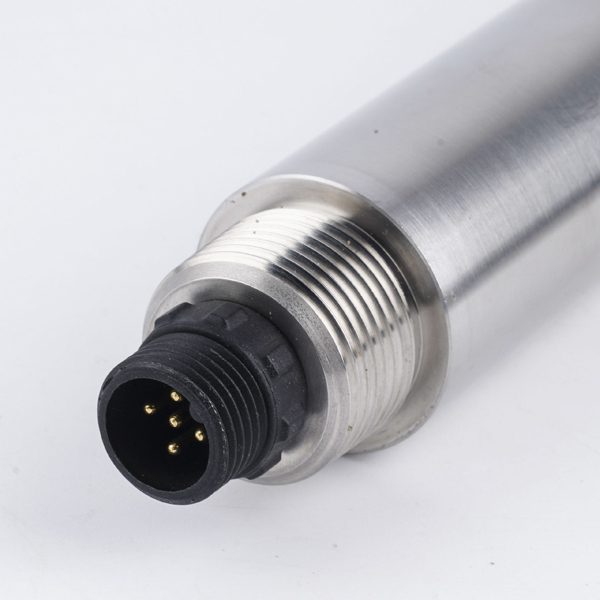
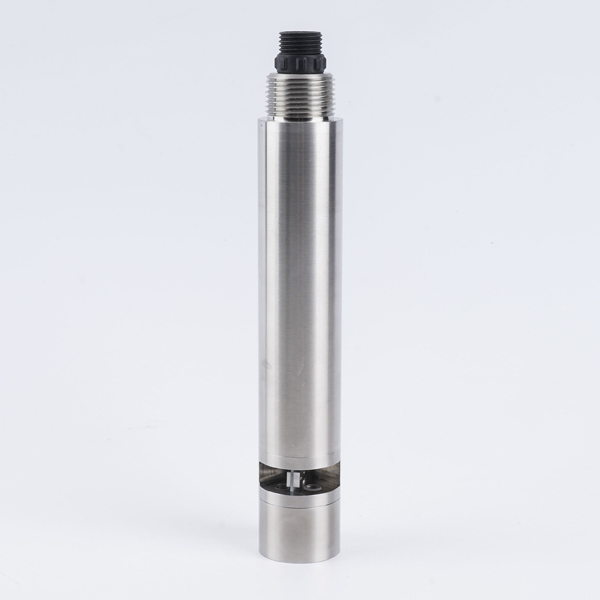
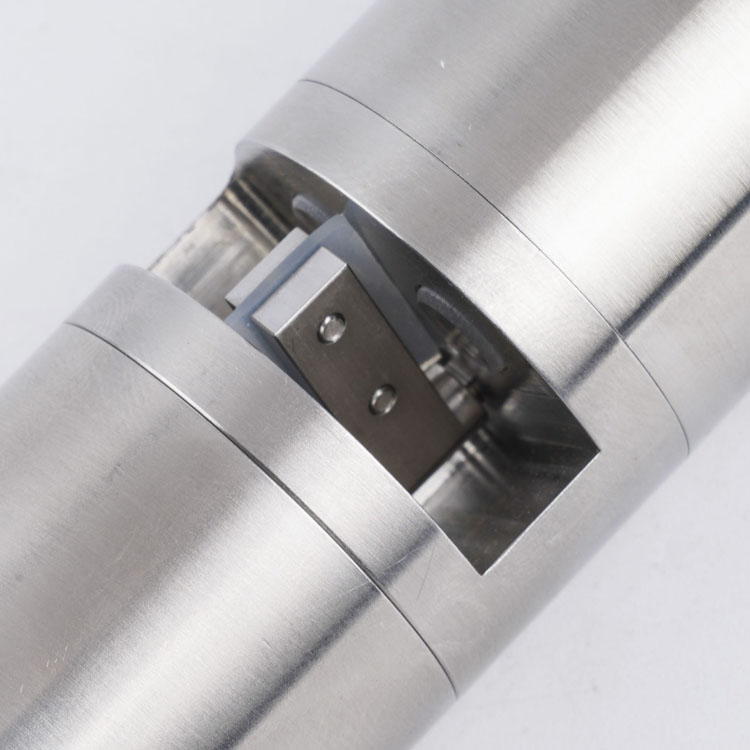
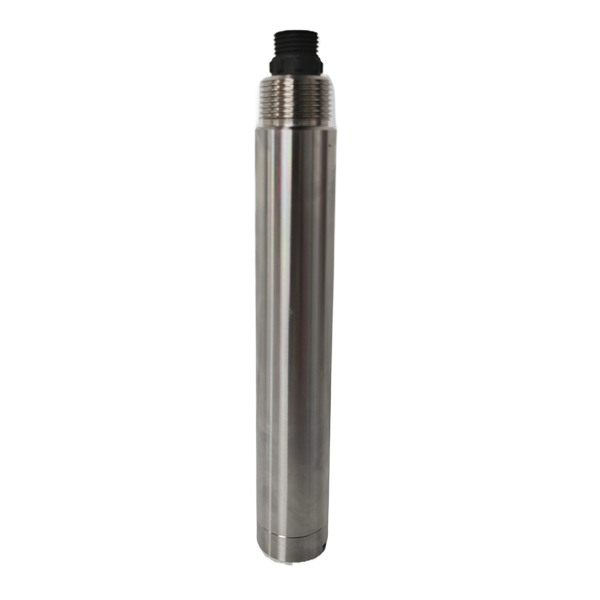
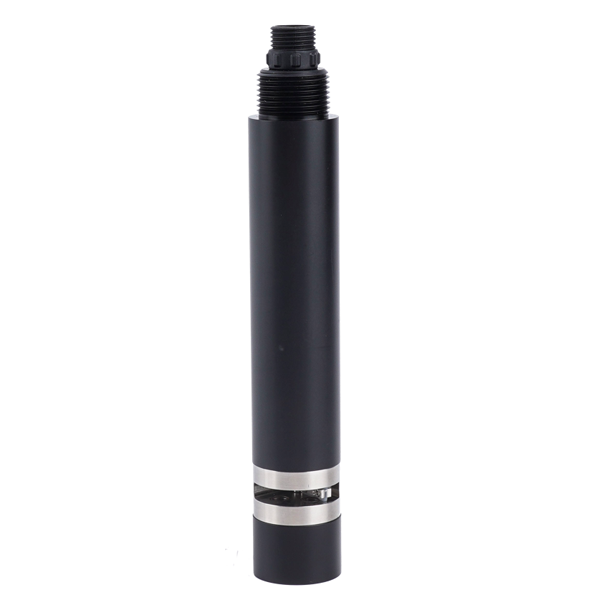
NiuBoL NBL-WQ-COD integrated online COD sensor adopts double wavelength ultraviolet absorption method and is specially designed for industrial site continuous monitoring. The sensor requires no chemical reagents and can simultaneously measure COD, turbidity and temperature parameters. It is suitable for sewage treatment plants, industrial discharge outlets and surface water monitoring.
Dissolved organic matter in water has characteristic absorption for 254 nm wavelength ultraviolet light. The sensor uses two light sources: one ultraviolet measurement light detects organic matter absorption intensity, and one reference light compensates for water turbidity influence. Through dedicated algorithms to compensate for optical path attenuation in real time, it can effectively reduce interference such as granular suspended solids and ensure stable and reliable measurement results.
| Parameter | Specification |
|---|---|
| Model | NBL-WQ-COD |
| Measurement Principle | Double Wavelength Ultraviolet Absorption Method |
| Range & Resolution | COD: 0~200.0 mg/L (0.1 mg/L) Turbidity: 0~200.0 NTU (0.1 NTU) COD: 0~500.0 mg/L (0.1 mg/L) Turbidity: 0~400.0 NTU (0.1 NTU) |
| Accuracy | ±5% of reading |
| Response Time (T90) | <30 s |
| Minimum Detection Limit | 0.2 mg/L (0-200 mg/L range) 0.4 mg/L (0-500 mg/L range) |
| Calibration Method | Two-point Calibration |
| Cleaning Method | Built-in cleaning brush |
| Temperature Compensation | Automatic Temperature Compensation (Pt1000) |
| Output Method | RS-485 (Modbus RTU), 4-20 mA (optional) |
| Working Conditions | 0~45℃, ≤0.2 MPa |
| Shell Material | 316L Stainless Steel |
| Installation Method | Submersible installation, 3/4 NPT |
| Protection Rating | IP68 |
| Power Supply & Consumption | 12~24 V DC; Working 0.4 W@12 V, Cleaning 2 W@12 V |
| Storage Temperature | -5~65℃ |
Q1. What is the main difference and relationship between COD and BOD5?
COD reflects the total amount of chemically oxidizable organic matter with fast determination; BOD5 reflects biodegradable organic matter and takes longer. The BOD5/CODCr ratio is used to evaluate wastewater biodegradability. When the ratio >0.3, it is suitable for biological treatment.
Q2. What is the difference between potassium dichromate method (CODCr) and permanganate index (CODMn)?
CODCr has strong oxidation ability and high oxidation rate, mainly used for industrial wastewater and emission standards; CODMn has lower oxidation rate and is mainly used for surface water quality evaluation. High-chloride water bodies require special correction methods.
Q3. What are the limitations of laboratory COD determination?
Traditional methods have long digestion time, large reagent consumption, complex operation, and cannot achieve real-time continuous monitoring.
Q4. What are the advantages of double wavelength ultraviolet absorption COD sensors?
No chemical reagents required, avoiding secondary pollution; short response time; automatic compensation for turbidity interference; simple maintenance, suitable for long-term online monitoring.
Q5. What application scenarios is the NiuBoL NBL-WQ-COD sensor suitable for?
It is suitable for industrial wastewater discharge monitoring, urban sewage treatment plant process control, surface water environmental quality continuous monitoring, etc.
Q6. How to ensure the accuracy of online COD monitoring data?
Perform regular two-point calibration, select appropriate ranges according to on-site water quality characteristics, and strictly follow installation and maintenance requirements.
Q7. What role does the Modbus RTU protocol play in online COD monitoring?
It supports reliable digital communication between sensors and control systems such as PLC and DCS, achieving remote data collection and automation integration.
Q8. Which method is China's COD emission standard mainly based on?
Wastewater emission standards are mainly based on CODCr (potassium dichromate method) results, while surface water quality evaluation is mainly based on CODMn (permanganate index).
As a key indicator for organic pollution monitoring, the formulation of COD standards and the selection of testing methods are directly related to the scientificity and effectiveness of water environment management. From potassium dichromate method to permanganate index method, from laboratory spectrophotometry and electrochemical methods to modern ultraviolet absorption online monitoring technology, COD detection methods continue to evolve toward high efficiency, environmental protection and real-time direction.
NiuBoL NBL-WQ-COD integrated online COD sensor, with double wavelength ultraviolet absorption method as the core, combined with self-cleaning design, automatic temperature compensation and standardized output (RS-485 Modbus RTU, 4-20 mA), provides users with a stable and reliable continuous monitoring solution. It helps water affairs and environmental protection practitioners break through the limitations of traditional laboratory methods, achieve real-time data collection and process optimization, and improve overall water environment management levels.
In practical engineering applications, it is recommended to select appropriate testing methods and instruments according to water body type and regulatory requirements, and conduct comprehensive analysis in combination with indicators such as BOD5. Through scientific monitoring and precise governance, organic pollution load can be effectively controlled, promoting continuous improvement of water ecological environment.
 NBL-WQ-BOD-4A Online BOD Sensor.pdf
NBL-WQ-BOD-4S Online BOD Sensor.pdf
Related recommendations
Sensors & Weather Stations Catalog
Agriculture Sensors and Weather Stations Catalog-NiuBoL.pdf
Weather Stations Catalog-NiuBoL.pdf
Agriculture Sensors Catalog-NiuBoL.pdf
Water Quality Sensor Catalog-NiuBoL.pdf
Related products
 Combined air temperature and relative humidity sensor
 TDR Soil Moisture & Temperature Sensor for irrigation| RS485 |4-20mA| NBL-S-THR
 Soil pH sensor RS485 soil Testing instrument soil ph meter for agriculture |NBL-S-PH
 Wind Speed sensor Output Modbus/RS485/Analog/0-5V/4-20mA
 Tipping bucket rain gauge for weather monitoring auto rainfall sensor RS485/Outdoor/stainless steel
 Pyranometer Solar Radiation Sensor 4-20mA/RS485

Screenshot, WhatsApp to identify the QR code
WhatsApp number:+8615367865107
(Click on WhatsApp to copy and add friends)

