





— Blogs —
—Products—
 Consumer hotline +8618073152920
 WhatsApp:+8615367865107
Address:Room 102, District D, Houhu Industrial Park, Yuelu District, Changsha City, Hunan Province, China
Product knowledge
Time:2026-03-03 13:49:37 Popularity:593
Campus meteorological station procurement should compare complete, usable project scopes rather than sensor counts alone. Two quotations can list the same weather elements yet differ in data access, software licensing, installation work and support. Define what the school will own, what it can export and which functions depend on recurring services before comparing totals.
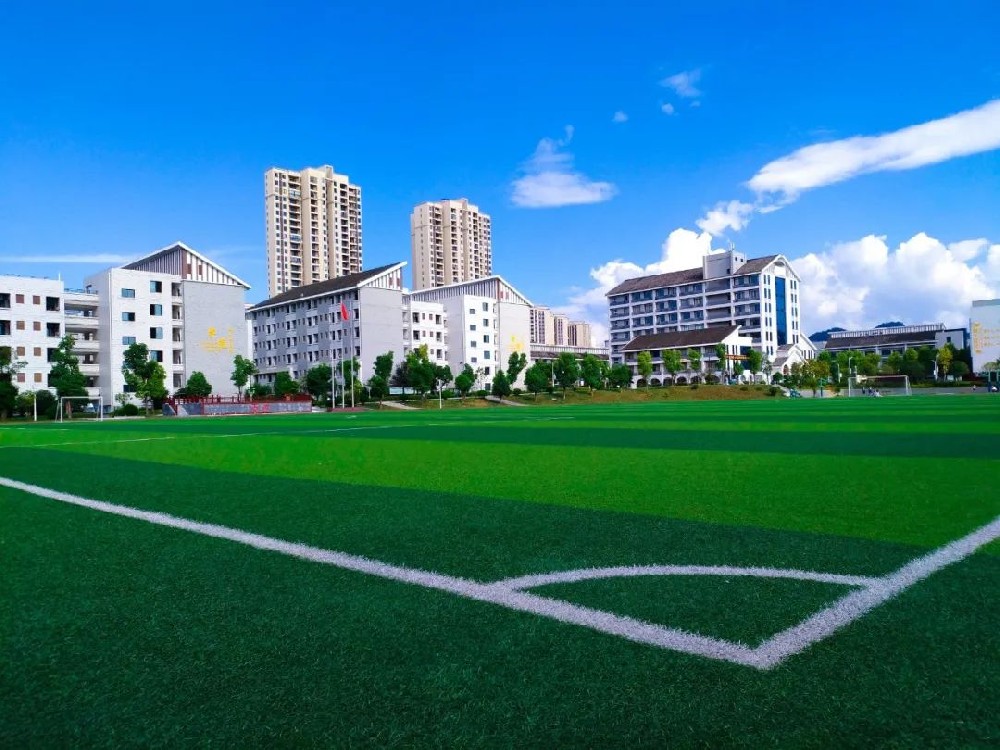
A geography club may need visible instruments and straightforward daily records. A university course may need timestamped observations for student programming. A campus facilities team may want another environmental input to its existing platform. Each can use a weather station, but they do not require the same display, software or support arrangement.
Write the first year of use as concrete activities: viewing current conditions, exporting a month of rainfall, comparing temperature between terms or retrieving data through an approved interface. Ask bidders to identify the supplied component or software function that enables each activity. A general promise of an interactive platform does not answer whether students can obtain the records needed for a lesson.
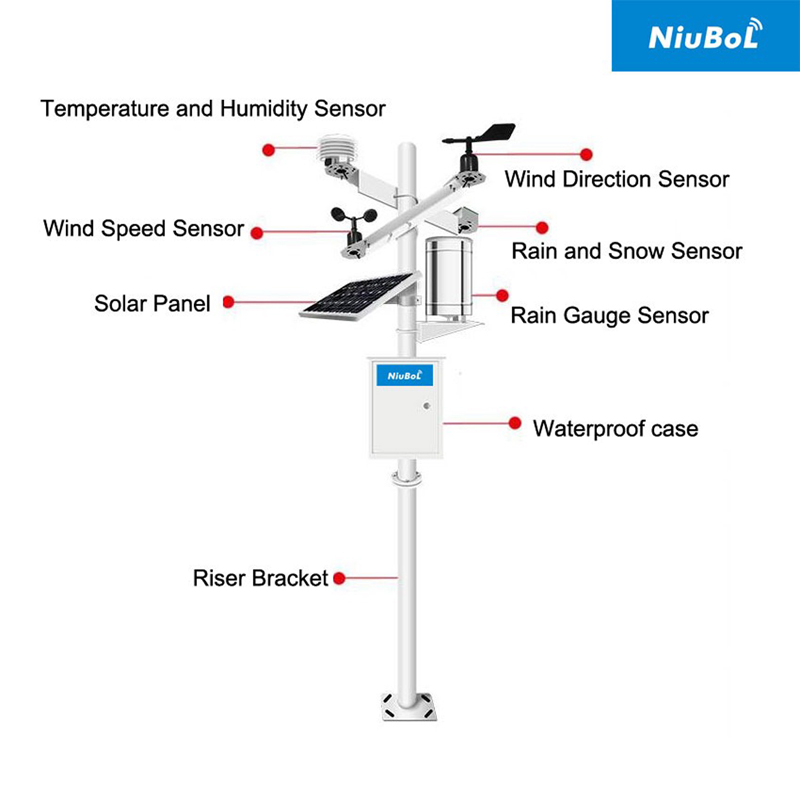
Cup and vane instruments make wind response visible, which can be useful in teaching. Ultrasonic instruments avoid rotating bearings but still need appropriate exposure, inspection and cleaning. Neither principle alone establishes greater accuracy, suitability for icing or a longer service life at the proposed school site.
| Procurement question | Separate cup and vane | Ultrasonic wind instrument |
|---|---|---|
| What can students observe? | Visible cup rotation and vane orientation | Electronic measurement without moving wind components |
| What needs service assessment? | Movement, bearings, alignment and damage | Acoustic paths, contamination, alignment and damage |
| What establishes performance? | The selected model's range, starting behaviour and accuracy | The selected model's range, response and accuracy |
| What determines data compatibility? | Ordered output and logger input | Ordered output and logger input |
A mechanical sensor can have digital output; an ultrasonic head does not automatically include every platform protocol. Compare the actual instruments and the receiving logger rather than treating one principle as teaching-only and the other as inherently research-qualified. Confirm any calibration evidence required by the school's specific work.
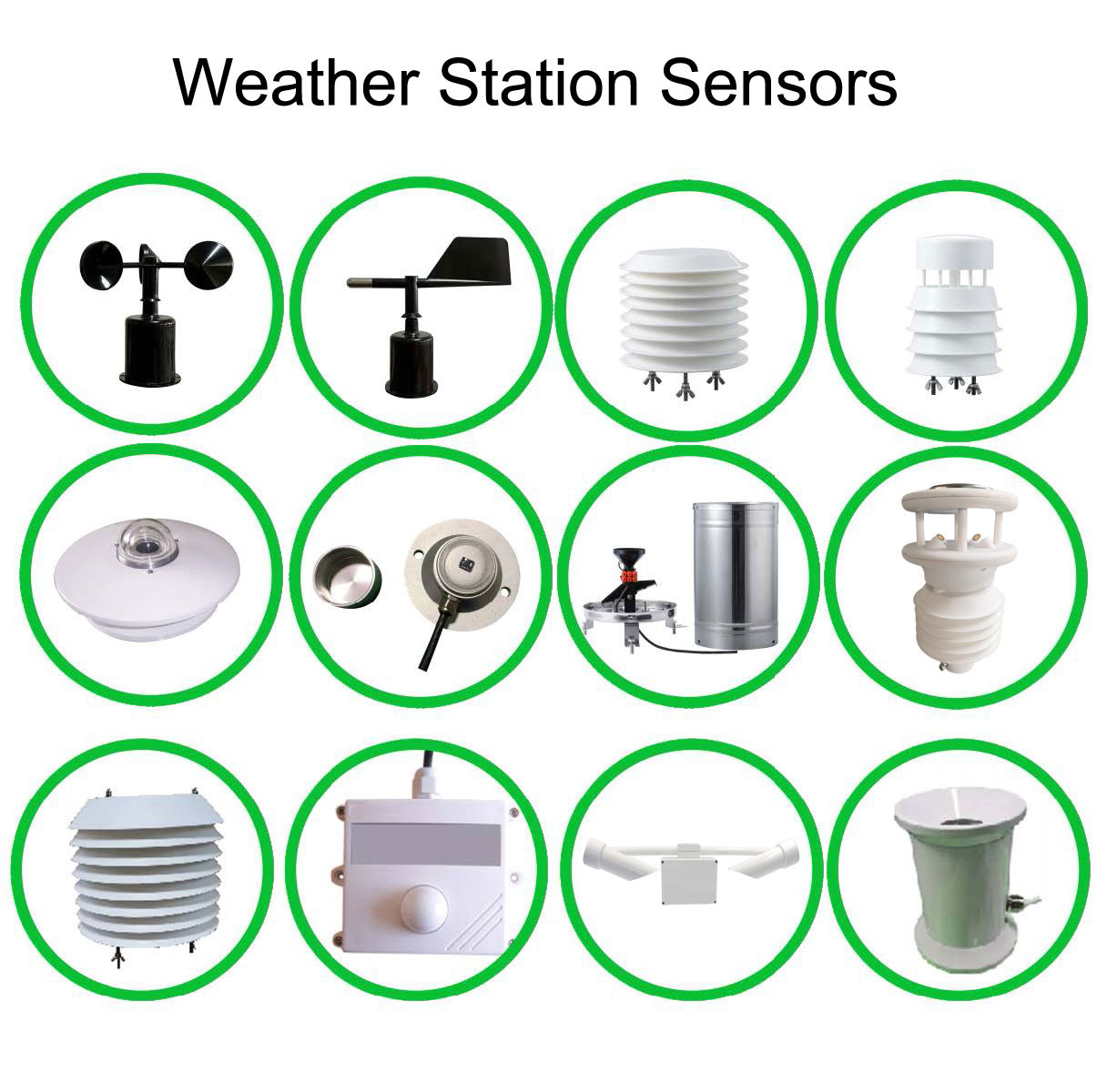
A six-element description often refers to air temperature, humidity, pressure, wind speed, wind direction and rainfall, but the ordered equipment schedule must state the actual combination. Optional radiation, soil or air-quality channels should have a defined teaching or operational use. They should not be added simply to lengthen a sensor list.
For example, the NiuBoL NBL-W-LBTH combines three atmospheric quantities in one assembly. Count the measurements separately from the number of physical devices and logger inputs. This avoids comparing three integrated quantities with three standalone sensors as though the equipment scope were identical.
| Component example | Technical scope | Quotation detail to request |
|---|---|---|
| NBL-W-LBTH | Temperature -40 to 80 C, ±0.5 C; humidity 0-100%RH, ±5%RH; pressure 10-1200 hPa, ±1.5 hPa | Output version, mounting, cable and required calibration documentation |
| NBL-W-LBTH digital version | 12-24 VDC; RS485 Modbus RTU | Compatible logger port and register documentation |
| NBL-W-SS and NBL-W-DS | Separate wind instruments; IP65 | Specific outputs, support arrangement and spare component identification |
| NBL-W-RS rainfall option | Nominal 0.2 mm resolution | Pulse or digital acquisition arrangement and collector mounting |
These are component examples, not one universal campus station specification. Obtain power consumption, enclosure rating, cable jacket requirements and operating limits for the assembled configuration. A sensor supply voltage does not specify a complete mains installation, and IP65 on a wind instrument does not establish the rating of a display or cabinet.
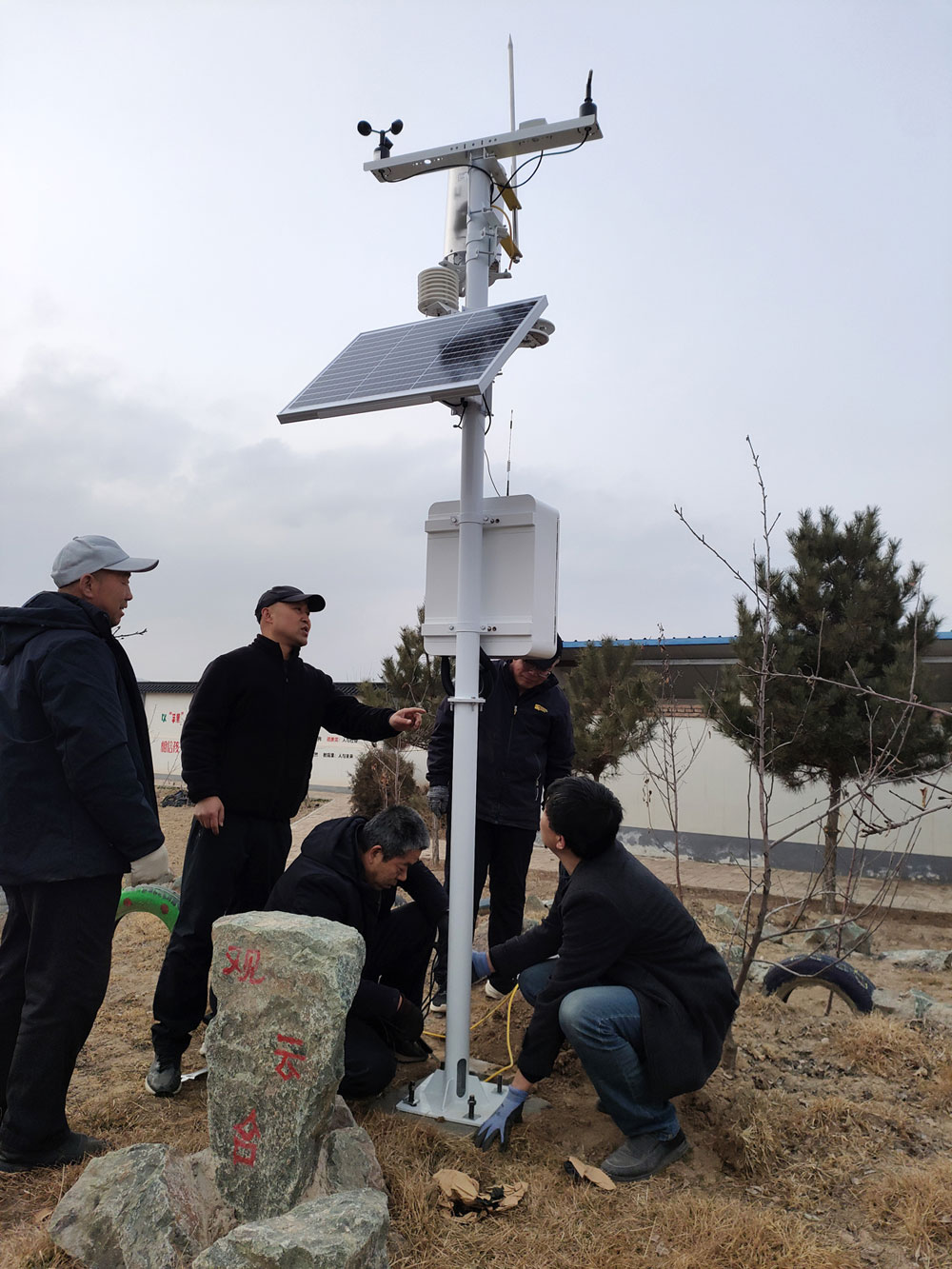
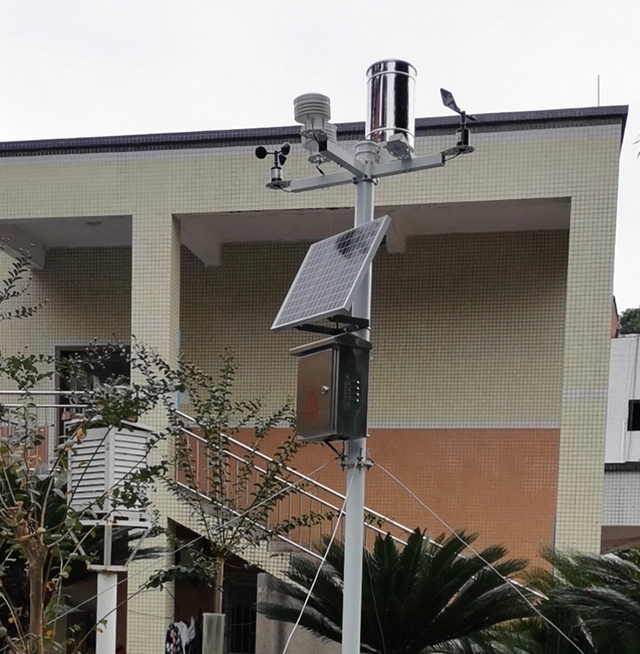
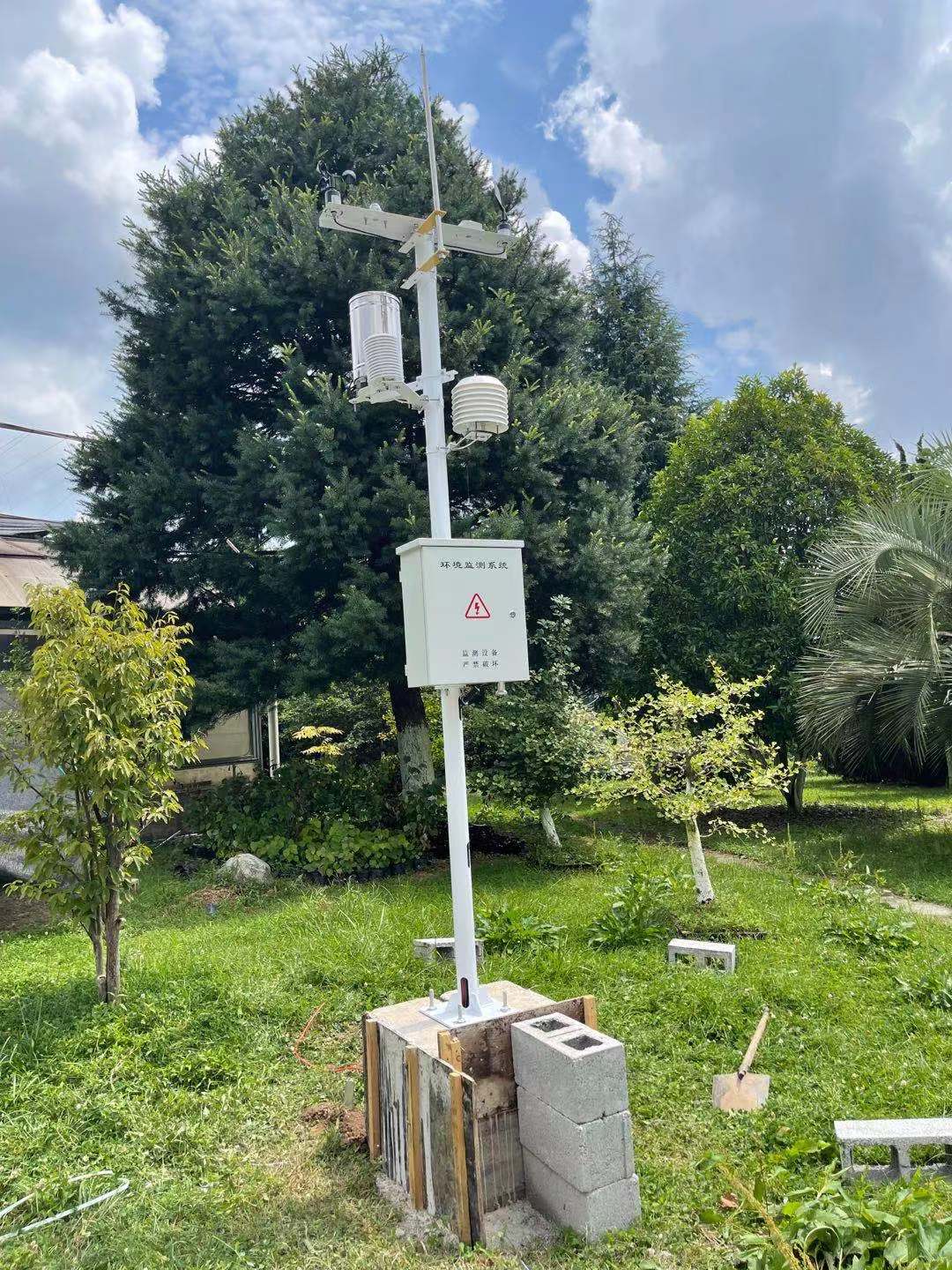
Separate equipment supply from foundations, mast erection, cable routes, electrical protection and network work. Identify who surveys the site and who approves the mounting design. A delivered sensor kit is not a completed observation installation merely because brackets appear in a component photograph.
Allow for the school's access arrangements, term dates and safe servicing. A contractor may need different equipment to install and maintain a tall mast than to mount a low display. Request site-specific civil and electrical scope rather than adopting a generic foundation size or assuming that a nearby socket is suitable.
Site suitability is a separate decision from package price. The campus weather station installation guide discusses observation and access arrangements. A quotation should identify the selected site and any unresolved limitations, so a cheaper proposal is not accepted on the assumption that every offered location provides equivalent observations.
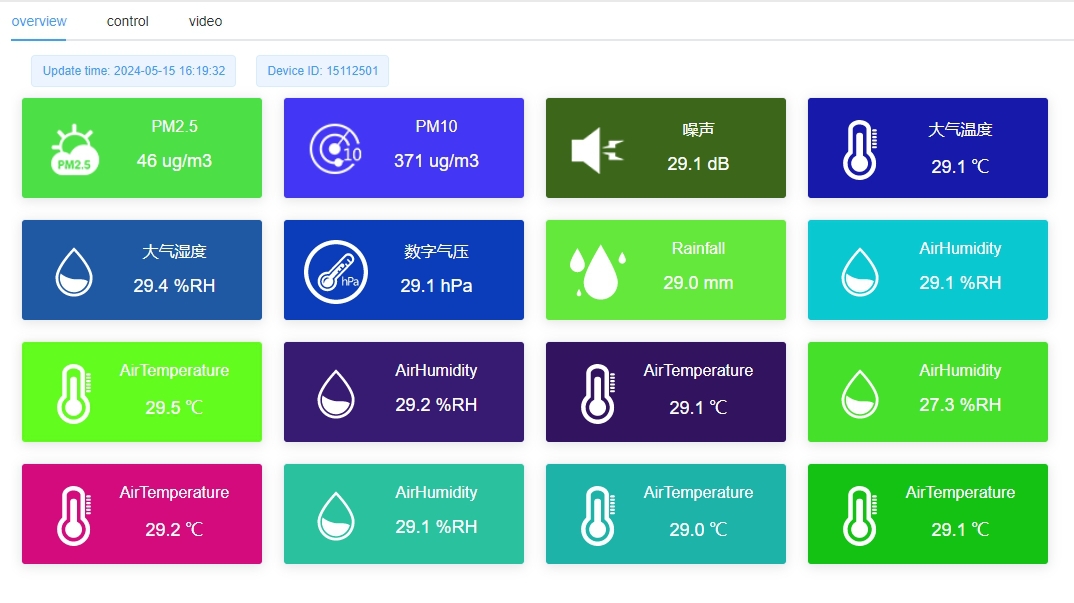
A screen displaying live values does not prove that the school can download historical records. Request a sample export with timestamps, units, channel names and missing-data indicators. Confirm whether an export includes the full purchased history, only the visible chart period or an additional paid service.
For programming lessons or integration, request the actual access method, authentication arrangement and any usage limits. Sensor-side RS485 Modbus RTU does not automatically provide a school-facing web API. The logger, gateway and software may each have different functions and terms.
| Software item | Question to settle before purchase |
|---|---|
| User access | Which staff and student roles are included, and who administers them? |
| History and export | What is retained, for how long, and in which downloadable format? |
| Service term | Which functions continue if a subscription is not renewed? |
| Integration | Is the required interface included, separately licensed or custom work? |
| Local operation | What remains available during an internet or hosted-service interruption? |
| Project handover | How are accounts, configuration files and available historical records transferred? |
These are terms to agree, not assumed NiuBoL package entitlements. For a multi-campus project, confirm whether the price covers each station, each user group or a central service. The same hardware quantity can have a different software cost depending on how the schools need to share access.
List the initial purchase and predictable recurring items separately: communications service, hosted software, inspection, cleaning, calibration where required and replacement parts. Include the cost of accessing the instruments. A low-mounted station with a nearby display and a roof installation requiring controlled access may have different service costs even with identical sensors.
Do not attach a fixed online price to an undefined project. Request itemised options for a basic teaching configuration, the required data-access arrangement and any justified extensions. Keep installation allowances visible so the school can distinguish a genuinely smaller scope from a more economical equivalent proposal.
Plan for staff changes. A teacher leaving should not remove the only account capable of exporting data or changing the station configuration. Ask for an institutional handover route and identify who receives support requests. Custom branding, bespoke lessons or software changes should be separately agreed with deliverables and costs, not inferred from a general equipment enquiry.
Only if the extra channels support activities the school will actually run. A usable rainfall history and accessible temperature export may provide more educational value than additional measurements with no lesson, suitable location or maintenance plan. Define the first year's tasks before adding options.
No. Select from the required performance, exposure, response and service conditions of the actual model. The absence of rotating parts does not establish a particular accuracy or eliminate inspection. Research suitability also depends on installation and the measurement method.
Not necessarily. Clarify which local storage, export, dashboard and integration functions are supplied. Separate hardware capability from software entitlement and recurring service. Ask for a demonstration of the exact function the school needs, using a sample record rather than a general dashboard screenshot.
That depends on the agreed storage and access arrangements. Establish an export format and retrieval process before purchase, including the scope of historical data available. Do not assume a cloud display subscription grants indefinite access or that ending it erases locally stored observations.
Match sensor models and outputs, logger functions, installation work, display, software term, communications and support scope. Mark omissions explicitly. Comparing totals without those items can favour a proposal that excludes essential work rather than one that delivers equivalent value at a lower cost.
Identify the support contact, remote diagnostic process, parts available for the selected equipment and any return procedure. Put the applicable service and warranty terms in the quotation. Do not rely on an unspecified promise of lifetime operation or assume every site visit is included.
Send the intended educational activities, preferred measurements, proposed site, available network and display requirements. State whether data export or integration is needed and who will maintain the station. Request a quotation separating equipment, software, installation assistance and recurring services.
A useful school purchase leaves the campus able to observe, retrieve and use its weather records after installation. Compare actual sensor versions and complete project scope, then make software access and continuing responsibilities explicit. This gives the school a clearer basis for selecting a configuration than either a headline price or an inflated element count.
Prev:Industrial Weather and Environmental Monitoring: Place Each Channel for Its Purpose
Next:Dust Monitoring System: Check Mist, Humidity and the Sampling Path
Related recommendations
Sensors & Weather Stations Catalog
 Agriculture Sensors and Weather Stations Catalog-NiuBoL.pdf
Weather Stations Catalog-NiuBoL.pdf
Agriculture Sensors Catalog-NiuBoL.pdf
Water Quality Sensor Catalog-NiuBoL.pdf
Related products
 Combined air temperature and relative humidity sensor
 TDR Soil Moisture & Temperature Sensor for irrigation| RS485 |4-20mA| NBL-S-THR
 Soil pH sensor RS485 soil Testing instrument soil ph meter for agriculture |NBL-S-PH
 Wind Speed sensor Output Modbus/RS485/Analog/0-5V/4-20mA
 Tipping bucket rain gauge for weather monitoring auto rainfall sensor RS485/Outdoor/stainless steel
 Pyranometer Solar Radiation Sensor 4-20mA/RS485

Screenshot, WhatsApp to identify the QR code
WhatsApp number:+8615367865107
(Click on WhatsApp to copy and add friends)

