





— Blogs —
—Products—
 Consumer hotline +8618073152920
WhatsApp:+8615367865107
Address:Room 102, District D, Houhu Industrial Park, Yuelu District, Changsha City, Hunan Province, China
Product knowledge
Time:2025-02-14 16:27:11 Popularity:1566
Quick Answer: Forest fire meteorological station alerts should identify weather conditions requiring review, not claim that a fire has been detected. Weather sensing, risk calculations, direct detection and human response are separate functions. A useful alert tells the responsible person what changed, where it was measured, how current the observations are and which procedure applies. Sending a notification does not establish that it was received, reviewed or acted on.
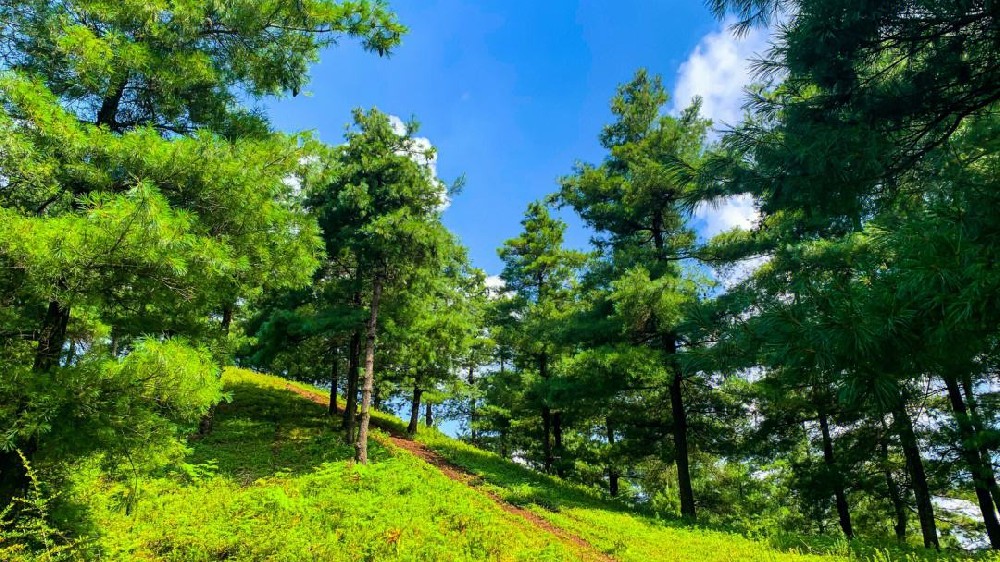
A forestry team may need to review drying conditions, an increasing wind trend or a loss of station data during a critical period. These are different events from a camera reporting a possible smoke plume. They should not share one label such as fire alarm merely because they appear on the same screen.
Decide who reviews each event and what information that person needs. A manager coordinating routine readiness, a technician repairing equipment and an operator verifying a detector report have different tasks. Sending every message to every recipient makes it harder to distinguish an operational weather concern from an urgent equipment fault or a separately reported incident.
The National Interagency Fire Center description of remote weather stations illustrates how weather observations are distributed to fire and resource managers. That role is distinct from confirming ignition. It does not imply that a particular NiuBoL configuration is approved for a national network or includes that network's communications service.
Weather can describe conditions relevant to fuel drying and potential fire behavior. It cannot establish that combustion has started at a particular location. An area can experience unfavorable weather without a detected fire, while an active incident can occur when a local weather indicator is not elevated.
Maintain separate event types in the application. A weather notification should identify the observed quantity or calculated index. A detector event needs the selected detector's own verification procedure. A reported incident must retain its status even if a later rain observation changes a weather indicator. One status should not silently overwrite another.

A station can supply temperature, relative humidity, wind and rainfall as configured. A calculated risk level needs a defined assessment method, valid input periods and appropriate history. There is no universal risk algorithm implied by the words weather station or Modbus RTU.
Show the input times and quality states with a calculated result. If a required channel is missing, the application needs an agreed unavailable or qualified state rather than automatically displaying a low category. A communication gap is not a valid observation of calm wind, low temperature or zero rainfall.
| NiuBoL measurement example | Component specification | What an alert must not imply |
|---|---|---|
| NBL-W-LBTH temperature | -40 to 80 degrees C; +/-0.5 degrees C | Air temperature is not fuel temperature or a flame measurement |
| NBL-W-LBTH relative humidity | 0-100% RH; +/-5% RH | Air RH is not the moisture percentage of litter or vegetation |
| NBL-W-LBTH electrical interface | 12-24 VDC; selected RS485 or 4-20 mA version | A field output is not a complete notification service |
| NBL-W-RS, 0.2 mm version | 0-4 mm/min; +/-4% in an indoor static test at 2 mm/min; 0-50 degrees C operation | Local rain does not establish uniform wetting across the forest |
| NBL-W-SS and NBL-W-DS wind instruments | IP65; selected output and supply versions | A valid local wind value does not establish conditions on every slope |
Specify cable jacket, length, power consumption and enclosure requirements for the ordered components and complete station separately. Radio equipment, logger and any detection unit add their own loads and operating limits. A measurement table for an air sensor cannot define the protection or autonomy of that entire installation.
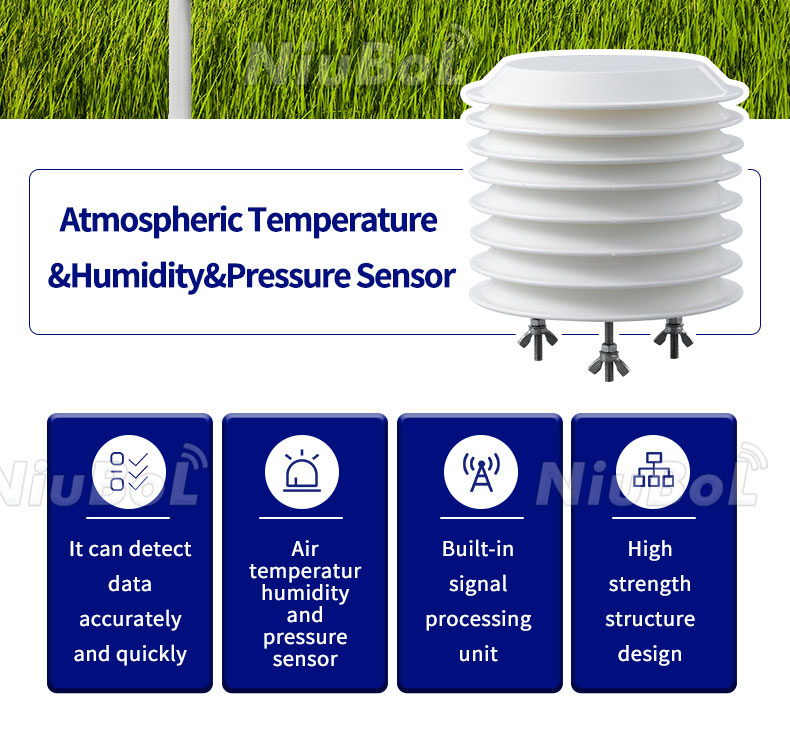
Include the station identifier and location, event type, observation time, current value, unit and the rule that caused the notification. Where the rule uses an average or accumulated value, identify its interval. Keep any calculated index and its method distinct from direct observations.
Consider an illustrative timing check: a wind observation made at 14:00 reaches the platform at 14:25 after a delayed upload. The record is 25 minutes old when received. It must not be presented as a new 14:25 wind change. A receiver that shows only arrival time can create a misleading sense of current conditions.
Give an operational notification a clear identifier so later acknowledgement, notes and closure refer to the same event. Repeated delivery of one event should not create several apparently independent changes. Conversely, suppressing duplicate messages must not hide a genuinely new event after conditions reset under the defined rule.
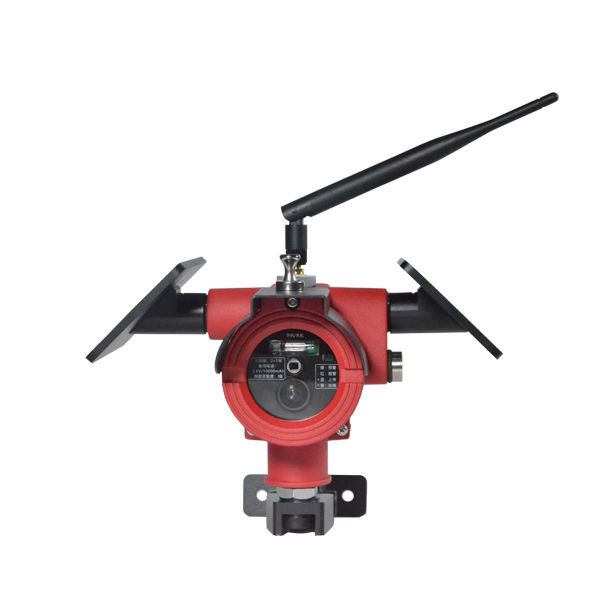
A camera, optical flame detector or thermal device addresses a different measurement and verification task. The equipment pictured below is separate from the meteorological channels. Its field of view, obstructions, environmental limitations and detection performance must be assessed for the selected device; they cannot be inferred from the weather station's coverage or its sensor accuracy.
If the project includes such equipment, retain its own identity, timestamp and availability. A working weather upload should not make an unavailable detector appear healthy. The reverse is also true: a detector report can require attention when a weather sensor is offline. Combining data on a map should preserve those separate states.
Notification services may include email, SMS or application messages, depending on the supplied platform, provider and regional availability. Confirm these functions as part of the project scope. The RS485 sensor itself does not send all three, and a successful local measurement is not a test of a remote notification provider.
Use identified test events during commissioning. Check the recipient, station name, event time, unit and application link; then check whether acknowledgement is recorded against the correct event. Do not treat a server's accepted-message response as proof that a person received or reviewed it. If the workflow requires escalation for an unreviewed event, test that escalation through the selected service.
Keep operational responsibility with the designated organization and its approved procedures. A weather threshold, notification test or equipment photograph does not demonstrate a guaranteed emergency response time. Do not configure an automatic all-clear solely because a message was acknowledged or one weather channel returned below its trigger.
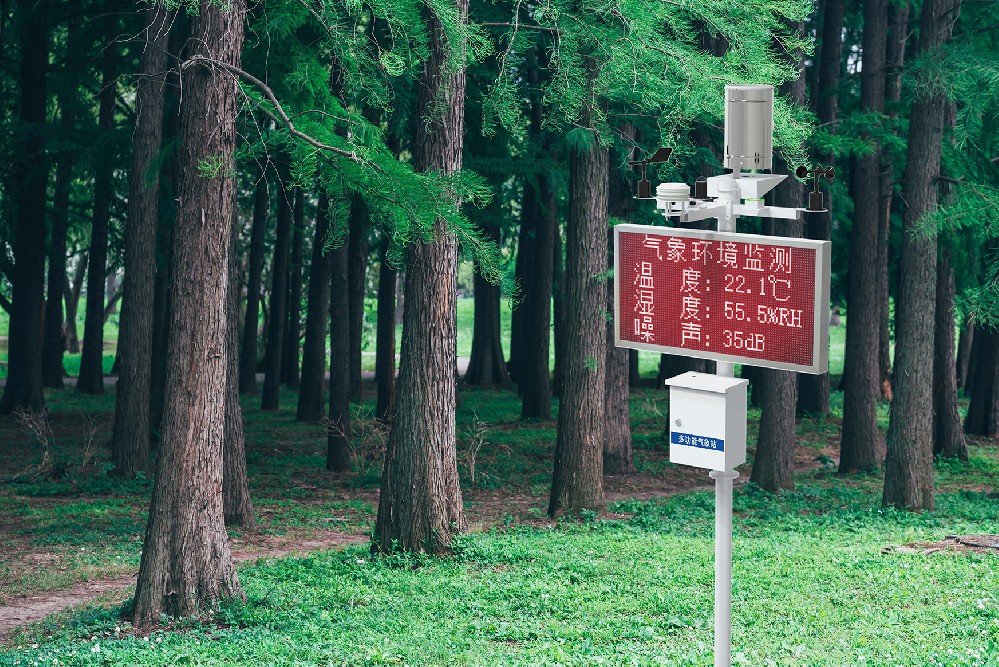
Separate weather concerns from equipment conditions such as stale observations, low supply, repeated restarts or a failed channel. A station that stops reporting during worsening conditions needs a fault indication, not the continued display of its last low category. Define the allowed data age for each function according to the project's actual reporting requirement.
Where supported, record local acquisition and retained history during a backhaul interruption. After restoration, distinguish recovered historical observations from new current readings. Restoring the chart's history does not retroactively deliver a missed live notification at the time it was needed.
In a multi-station network, show which station triggered an event and which locations remain unavailable. One functioning point cannot certify the state of every point on the map. Terrain and vegetation can also make two valid weather observations different; do not smooth away a local change merely to make the stations agree.
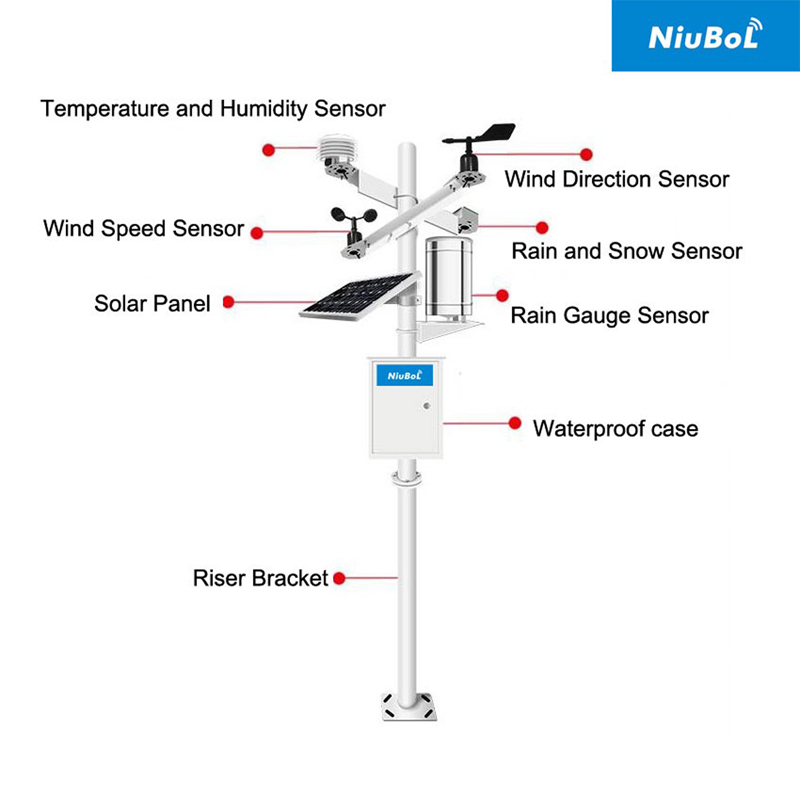
For a NiuBoL inquiry, describe the intended weather observations and the review workflow. State whether the project needs direct detection, an adopted fire-weather calculation, notification delivery or only data for an existing system. Include expected reporting times, site access, climate, power and communications availability.
Require the quotation to identify sensors, acquisition, backhaul, application functions and any recurring service separately. Confirm available interfaces and the data needed by the receiving platform. This makes it possible to evaluate the meteorological station configuration without assuming that every alert, detector or response function is included.
Review recipients and event rules when responsibilities change or the site is reconfigured. Keep test records distinguishable from operational events. The practical acceptance question is whether the intended person can interpret a current, correctly identified event and follow the applicable procedure, not simply whether a colored symbol appears on a map.
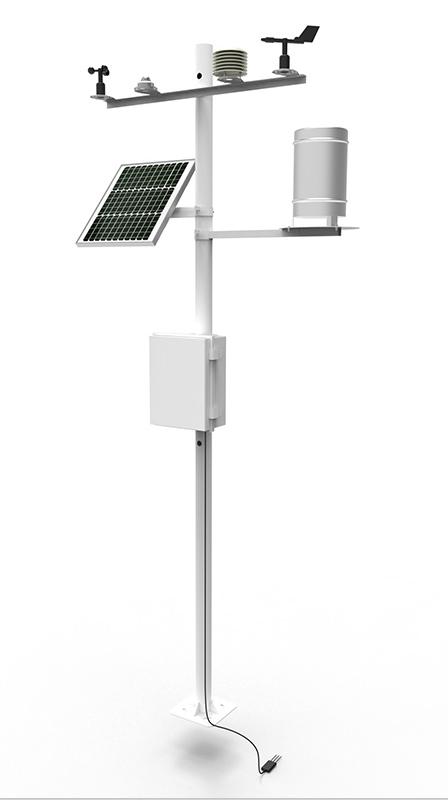
Weather observations alone cannot confirm ignition. Direct detection or an independently reported event requires a separate verification process. Keep weather-risk notifications and detected-event reports distinct.
No. It describes the output of the selected assessment method under its input conditions. Ignition, fuel and local conditions remain separate matters; a category is not a guaranteed event prediction.
Use the agreed unavailable or qualified state and identify the missing input and last valid time. Do not silently substitute zero or a low category to keep the display complete.
No. It records a workflow step. Condition review, any required action and event closure are separate steps defined by the responsible organization. An acknowledgement should not automatically create an all-clear.
Network delays can deliver an old observation after conditions have changed. Keeping observation time and receipt time separate prevents a delayed record from being interpreted as a fresh change.
Only if those functions and equipment are explicitly part of the supplied configuration. Sensor interfaces do not independently provide notification services, detector performance or a particular calculation.
Forest fire meteorological station alerts are useful when their meaning, data age and review path are clear. Separate weather assessment from direct detection, test the notification workflow independently of sensing, and expose station faults instead of hiding them behind a reassuring status. That gives the project a defined monitoring function without promising unverified prediction or response performance.
Prev:Scenic Area Weather Station Forecasts: Observations or a Separate Service?
Next:Solar Weather Station Panel Placement: Avoid Shade Without Biasing Sensors
Related recommendations
Sensors & Weather Stations Catalog
 Agriculture Sensors and Weather Stations Catalog-NiuBoL.pdf
Weather Stations Catalog-NiuBoL.pdf
Agriculture Sensors Catalog-NiuBoL.pdf
Water Quality Sensor Catalog-NiuBoL.pdf
Related products
 Combined air temperature and relative humidity sensor
 TDR Soil Moisture & Temperature Sensor for irrigation| RS485 |4-20mA| NBL-S-THR
 Soil pH sensor RS485 soil Testing instrument soil ph meter for agriculture |NBL-S-PH
 Wind Speed sensor Output Modbus/RS485/Analog/0-5V/4-20mA
 Tipping bucket rain gauge for weather monitoring auto rainfall sensor RS485/Outdoor/stainless steel
 Pyranometer Solar Radiation Sensor 4-20mA/RS485


Screenshot, WhatsApp to identify the QR code
WhatsApp number:+8615367865107
(Click on WhatsApp to copy and add friends)

