





— Blogs —
—Products—
 Consumer hotline +8618073152920
 WhatsApp:+8615367865107
Address:Room 102, District D, Houhu Industrial Park, Yuelu District, Changsha City, Hunan Province, China
Product knowledge
Time:2026-03-13 14:08:15 Popularity:453
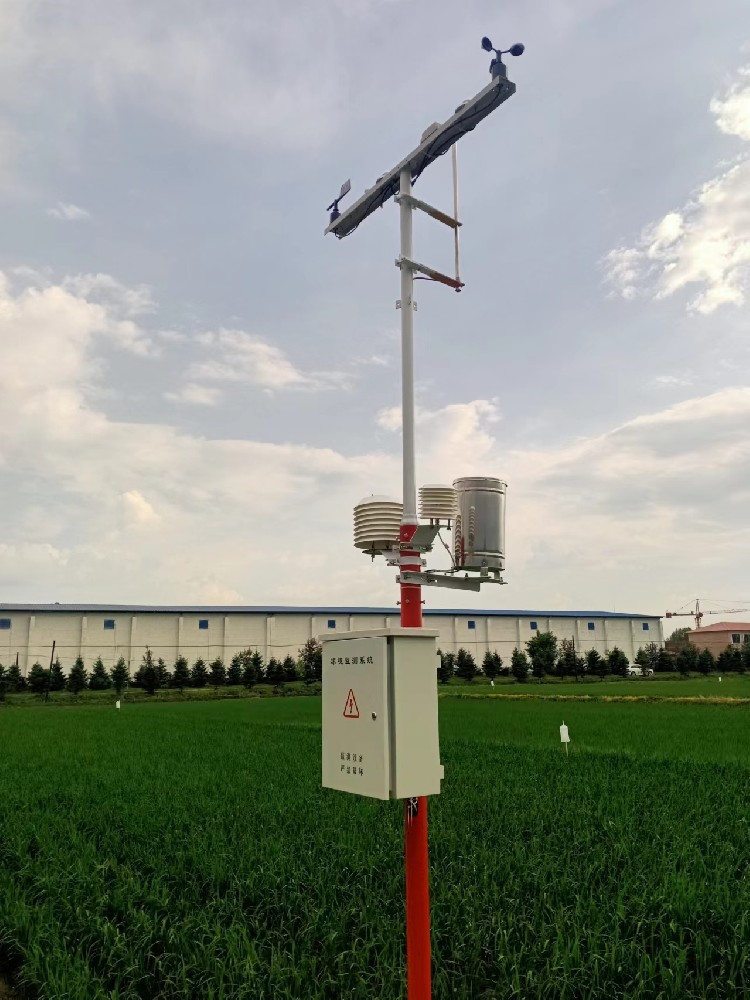
In modern precision agriculture production systems, small agricultural weather stations (AWS) serve as “digital sentinels.” The real-time environmental data they collect is the core basis for irrigation decisions, pest and disease early warning, and facility agriculture control.
However, agricultural weather stations are typically deployed in remote and harsh outdoor environments, long-term exposed to wind, sand, strong UV, heavy precipitation, and animal interference. Even high-quality automated instruments produced by NiuBoL require scientific regular maintenance to maintain sensor high sensitivity and extend equipment service life. For system integrators, standardized maintenance processes not only ensure data accuracy but are also key to reducing after-sales service costs and improving customer satisfaction.
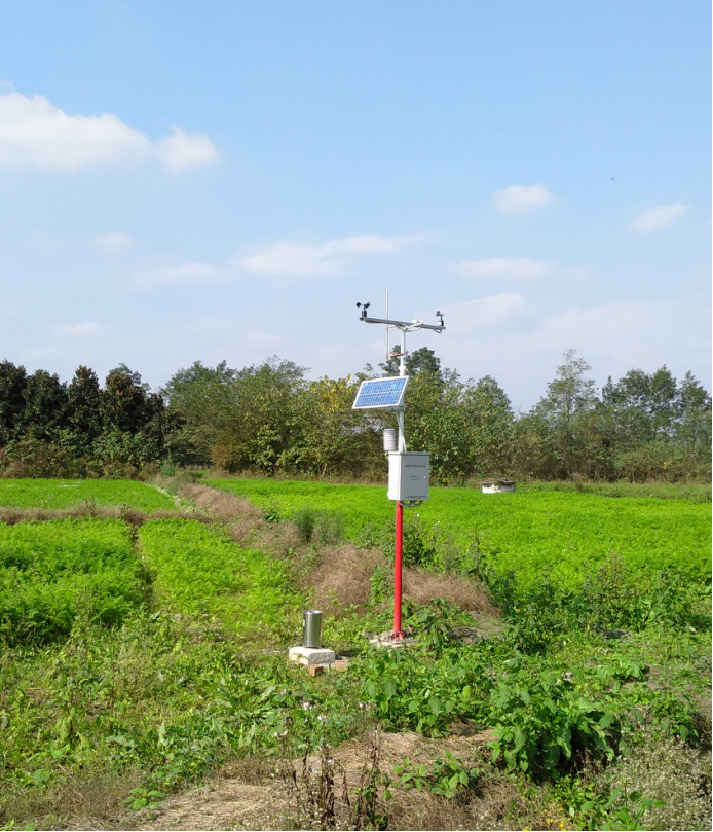
1. Integrity Check of Power Supply and Transmission Systems
The power supply system is the “heart” of continuous weather station operation.
Physical connections: Regularly inspect cable sheaths for damage due to UV aging, temperature-induced deformation, or rodent bites. Ensure connectors are free from oxidation, corrosion, or looseness.
Status monitoring: Check the status indicator lights on the data logger. For battery-powered systems, record voltage drop according to charge/discharge cycles and perform preventive replacement when necessary to prevent data loss due to unstable voltage.
Solar panel cleaning: Outdoor dust, bird droppings, or fallen leaves significantly reduce photoelectric conversion efficiency. Wipe the surface with a soft cloth to ensure charging power meets the equipment’s energy consumption needs in high-frequency acquisition mode.
2. Air Temperature/Humidity and Atmospheric Pressure Sensors
Dust-proof filtering: Temperature/humidity sensor probes are usually equipped with polymer filters or stainless steel sintered nets. Dust adhesion can cause response lag or high measurement bias. It is recommended to clean with low-pressure air blow or soft brush every quarter.
Radiation shield inspection: Ensure no insect nesting inside the louver box or radiation shield to maintain air circulation.
3. Soil Moisture and Soil Temperature Sensing Probes
Contact tightness: With soil wet-dry cycles, gaps may form between the sensor (probe or tube type) and soil. It must be ensured that the probe is in complete close contact with the soil; otherwise, measured volumetric water content (VWC) will show significant deviation.
Structural stability: Check whether the sensor burial depth is affected by tillage or surface runoff causing displacement.
4. Rain Gauge Accuracy Maintenance (Tipping Bucket and Piezoelectric Types)
Channel clearing: The collection funnel of rain sensors is prone to accumulation of leaves, insects, or silt. Regularly clean the internal filter to prevent drainage blockage causing undercounting.
Level calibration: Use a level to check if the rain gauge cylinder is tilted. Even slight tilting changes the effective rain collection area, leading to systematic errors.
5. Mechanical and Ultrasonic Wind Speed/Direction Instruments
Mechanical wear check: For traditional wind cups and vanes, manually test rotation flexibility. Increased start-up wind speed usually indicates lubrication failure or dust in bearings.
Ultrasonic probe maintenance: Although NiuBoL all-in-one ultrasonic weather stations have no moving parts, ensure the ultrasonic reflection space is free from spider webs or debris obstruction.
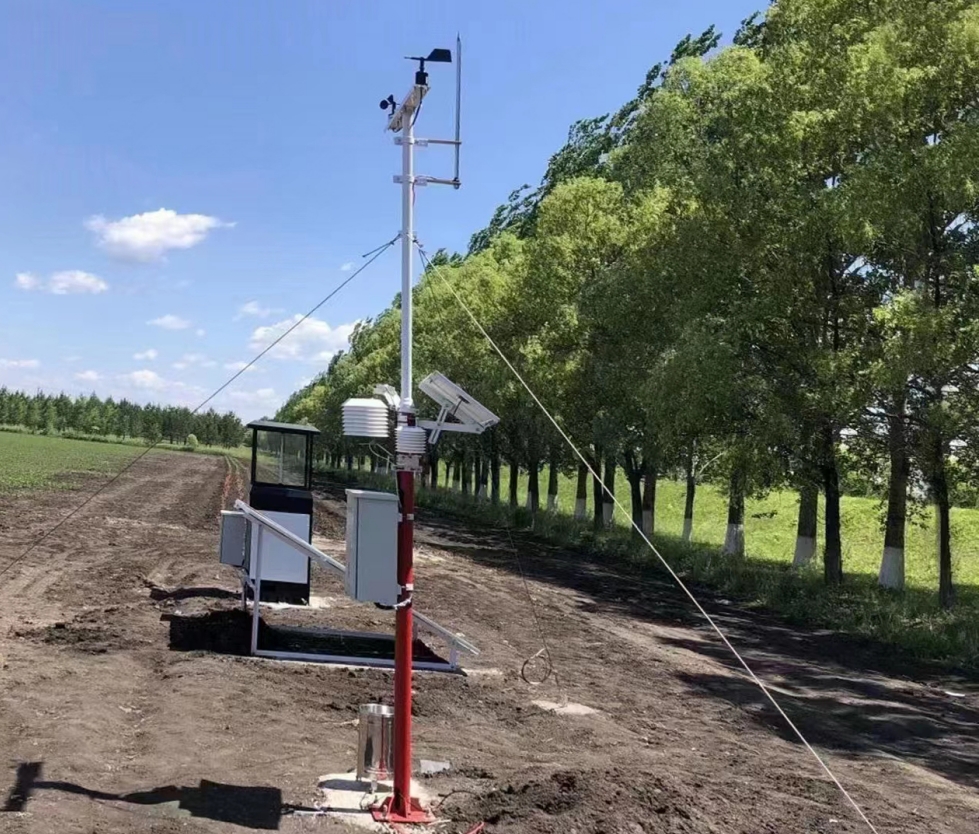
Proper installation is the first step to reducing later maintenance workload. For project contractors, site selection must follow WMO standards while considering actual farmland conditions:
| Site Selection Element | Engineering Requirement | Reason Analysis |
|---|---|---|
| Openness | Distance to obstacles should be 8-10 times the obstacle height | Avoid wind speed attenuation and turbulence interference caused by buildings or trees |
| Electromagnetic Environment | Keep away from transformers, high-voltage lines, and strong radiation sources | Prevent high-frequency interference from strong magnetic fields on high-precision analog signal acquisition |
| Surface Representativeness | Choose flat terrain with representative crop areas | Ensure temperature/humidity and soil data truly reflect field averages |
| Safety | Consider lightning protection facilities and anti-vandalism measures | Reduce lightning strike risks and human interference |
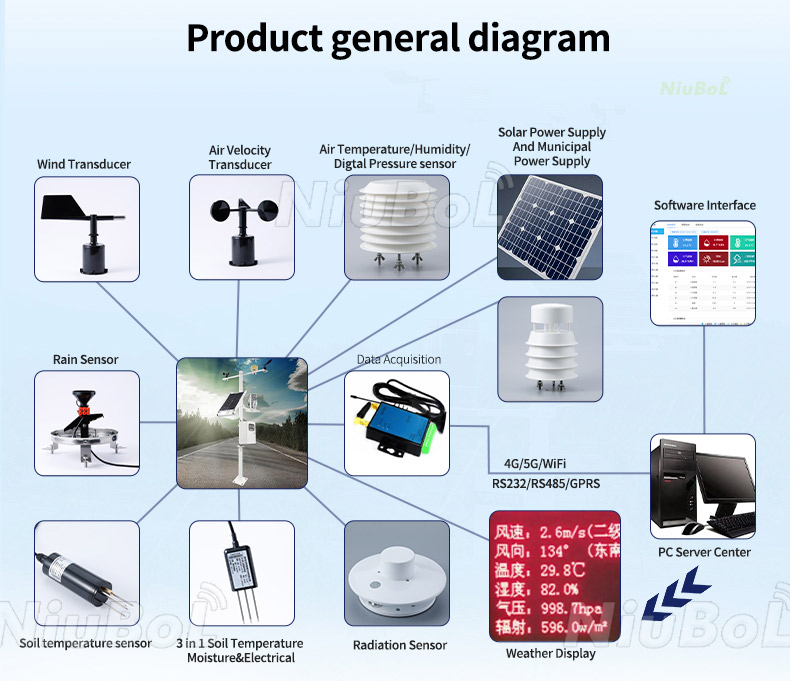
For system integrators, understanding perception-layer protocols is a prerequisite for platform docking.
| Component Name | Measurement Item | Output Signal | Recommended Maintenance Cycle |
|---|---|---|---|
| All-in-One Sensor | Wind speed, wind direction, temperature, humidity, pressure | RS485/Modbus-RTU | Every 6 months |
| Tipping Bucket Rain Gauge | Rainfall intensity, cumulative rainfall | Pulse/RS485 | Every 3 months (increase frequency during rainy season) |
| Soil Sensor | Moisture, temperature, conductivity | RS485/Modbus-RTU | Every 12 months |
| Solar Power Supply | 60W-100W system | 12V/24V DC | Every 3-6 months |
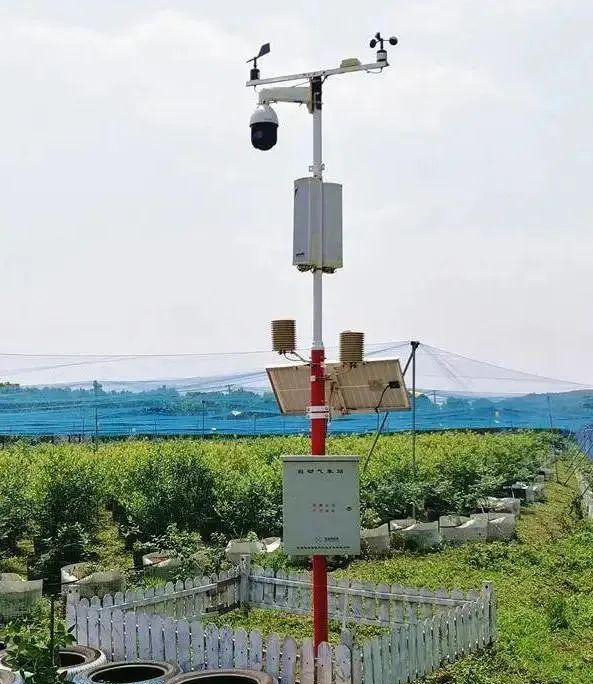
Q1: Why is the wind speed measured by the weather station significantly lower than weather forecast data?
A1: This is usually caused by site selection issues. If the weather station is installed on the side of a building or near trees, it creates a shielding effect. Additionally, if bearings of mechanical wind speed sensors are heavily dusted, increased friction causes low readings. Please check site openness and clean bearings.
Q2: Does an ultrasonic weather station really require no maintenance at all?
A2: Although ultrasonic technology eliminates mechanical wear, in harsh environments, probe surfaces with heavy salt fog (coastal) or severe dust can still affect acoustic phase detection. It is recommended to wipe the surface every six months depending on environmental conditions.
Q3: How to determine if the battery needs replacement?
A3: Observe the system’s operational stability during consecutive cloudy/rainy days. If voltage drops rapidly below 11V at night causing transmission interruption but recovers after daytime charging, the battery capacity has severely degraded and should be replaced promptly.
Q4: What causes drastic jumps in soil moisture sensor readings?
A4: The most common reason is poor probe-soil contact or electromagnetic interference from nearby high-power water pumps or transformers. Check the tightness at the probe burial site and the grounding of the cable shield.
Q5: How to perform on-site calibration of the rain gauge?
A5: Slowly pour a known quantity of water into the funnel and observe if the recorded value matches the converted rainfall. If the error is large, check if the tipping bucket is level or if the sensor’s magnetic element is offset.
Q6: Does the weather station require special maintenance in winter low temperatures?
A6: In cold regions, focus on checking snow accumulation on solar panels. For precipitation sensors with heating assistance, ensure the heating module operates normally to prevent freezing blockages. NiuBoL sensors are designed for temperatures down to -40°C and require no additional physical insulation.
Q7: If the sensor cable is bitten by animals, can it be soldered on-site?
A7: Soldering is possible, but waterproofing must reach IP67 level, and solder joints should maintain low resistance. For RS485 signal lines, maintain twisted-pair characteristics; it is recommended to replace the entire cable with NiuBoL original high-strength shielded cable.
Q8: When communication is abnormal, where to troubleshoot first?
A8: First check if the supply voltage is normal; second, verify no RS485 bus address conflicts; finally, use test software to check Modbus command responses to determine if it is a perception-layer fault or gateway protocol parsing issue.
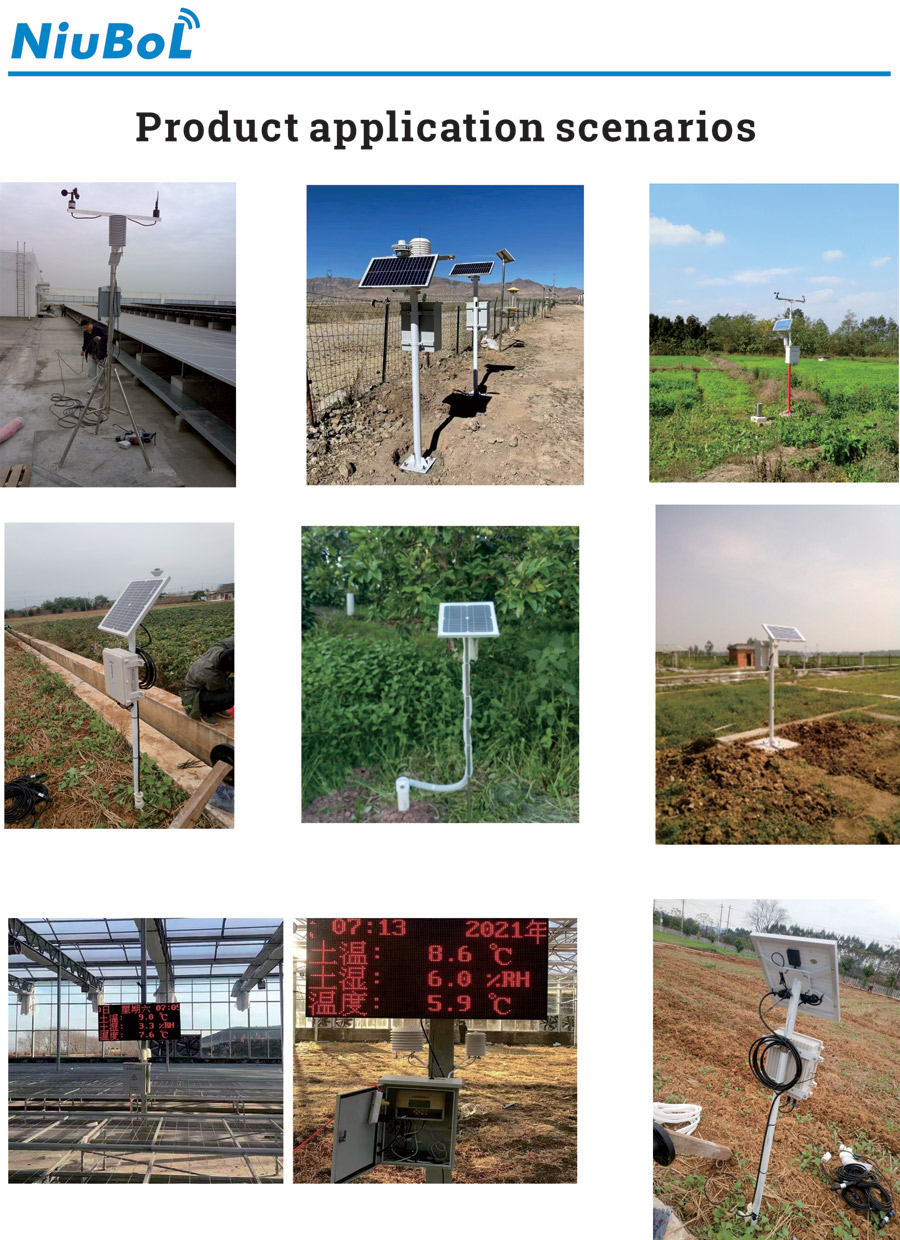
Maintenance of small agricultural weather stations is not just cleaning and reinforcement but safeguarding agricultural asset value. Through regular professional inspections, system integrators can significantly reduce system downtime, ensuring every piece of data supports precision production.
NiuBoL is committed to providing high-integration, low-power-consumption, easy-maintenance monitoring hardware for industrial-grade customers. From ultrasonic wind monitoring to high-precision soil moisture analysis, our equipment is designed with full consideration of outdoor environmental complexity from the outset. Choosing NiuBoL means choosing long-term technical support and engineering assurance.
If you are preparing large-scale agricultural IoT projects or need the more detailed “NiuBoL Sensor Modbus Register Manual,” please contact our engineering team immediately. We will provide full-process technical advisory services from selection, installation to post-maintenance.
Next:NiuBoL Ultrasonic Weather Station: Core Monitoring Solution for Forest Fire Prevention Projects
Related recommendations
Sensors & Weather Stations Catalog
 Agriculture Sensors and Weather Stations Catalog-NiuBoL.pdf
Weather Stations Catalog-NiuBoL.pdf
Agriculture Sensors Catalog-NiuBoL.pdf
Water Quality Sensor Catalog-NiuBoL.pdf
Related products
 Combined air temperature and relative humidity sensor
 Soil Moisture Temperature sensor for irrigation|NBL-S-THR
 Soil pH sensor RS485 soil Testing instrument soil ph meter for agriculture |NBL-S-PH
 Wind Speed sensor Output Modbus/RS485/Analog/0-5V/4-20mA
 Tipping bucket rain gauge for weather monitoring auto rainfall sensor RS485/Outdoor/stainless steel
 Pyranometer Solar Radiation Sensor 4-20mA/RS485

Screenshot, WhatsApp to identify the QR code
WhatsApp number:+8615367865107
(Click on WhatsApp to copy and add friends)

