





— Blogs —
—Products—
 Consumer hotline +8618073152920
WhatsApp:+8615367865107
Address:Room 102, District D, Houhu Industrial Park, Yuelu District, Changsha City, Hunan Province, China
Product knowledge
Time:2026-08-03 09:36:53 Popularity:244
Quick Answer: A residual chlorine sensor used for dosing control should not return to automatic operation merely because sample flow has resumed. Restore representative water, check stable flow and pressure, confirm electrode readiness and compare the reading with an appropriate reference. Then verify the controller's approved restart behavior. A low or frozen reading during sample loss is not a confirmed low disinfectant concentration in the process.
Chlorine control depends on a stable sample flow and pH context. A sensor alone cannot correct an unstable dosing point or a poorly designed sampling line. Identify whether the interruption came from a closed valve, blocked takeoff, pump stop, drained flow cell or loss of instrument power.
Preserve the event time and the last valid process observation. Follow the plant's approved fallback procedure while the measurement is unavailable. Do not let an invalid channel automatically demand more chemical because its displayed value is low, or leave an old apparently satisfactory value labelled as current.
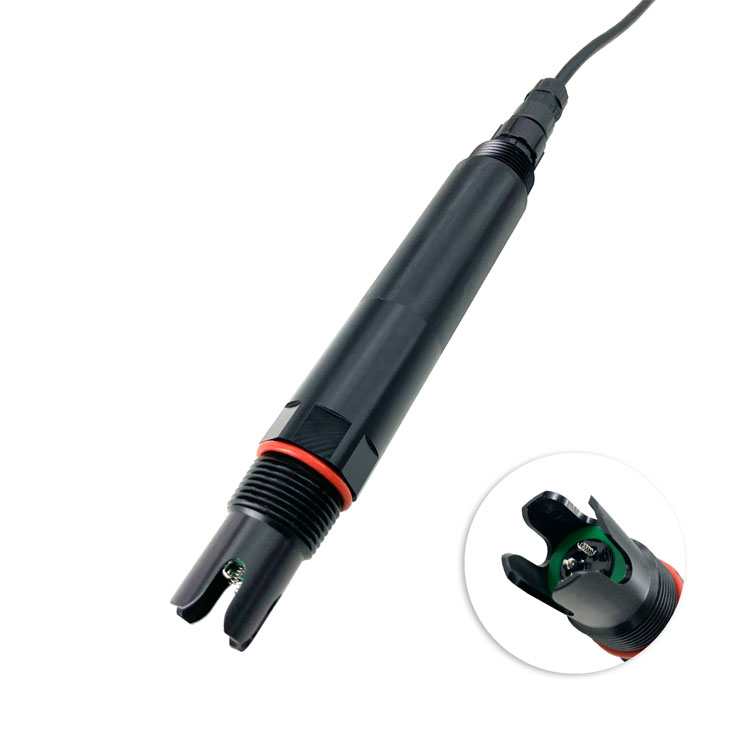
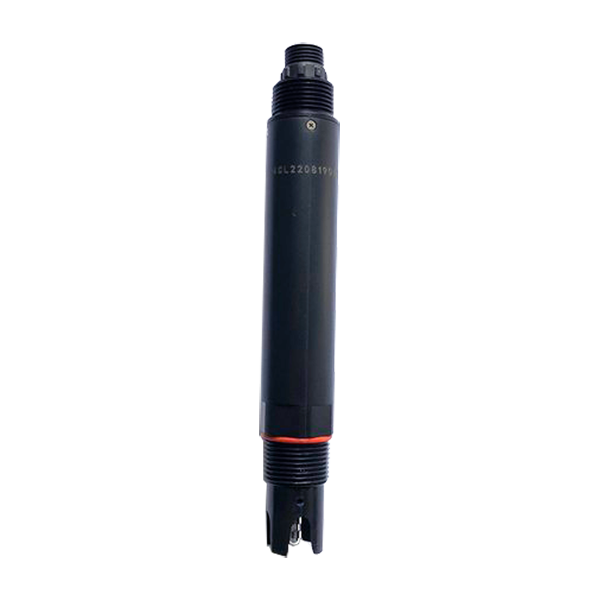
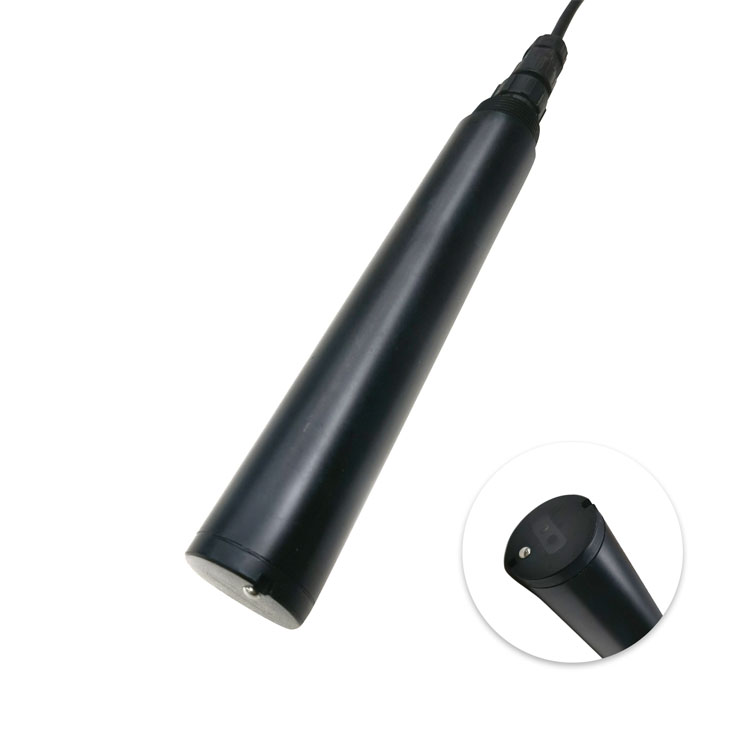
The opening image shows the NiuBoL NBL-WQ-CL. The separate CL-4A below requires its own restart and configuration checks.
| Item | NBL-WQ-CL | CL-4A |
|---|---|---|
| Measurement basis | Constant-voltage method; HClO basis | Constant-voltage method; HOCl-related response |
| Range; resolution | 0-2.000 mg/L; 0.001 mg/L | 0-2.000 or 0-20.00 mg/L; 0.001 or 0.01 mg/L by range |
| Accuracy requirement | +/-5% or +/-0.05 mg/L; confirm percentage basis and application of the terms | Low-range +/-5%; confirm basis and high-range specification for the offered unit |
| Working sample conditions | 5-50 degrees C; pressure below 0.1 MPa; pH 4-9 | 0-60 degrees C; pressure at most 0.2 MPa; pH 4-9 |
| Sample flow | Stable 30-60 L/h; matching flow cell | Recommended stable 30-60 L/h; matching flow cell |
| Supply; consumption | 12-24 VDC +/-10%; 0.2 W at 12 V | 12-24 VDC; 0.2 W at 12 V |
| Signal | RS485 Modbus RTU | RS485 Modbus RTU; optional 4-20 mA |
| Materials; protection | POM/PTFE; IP68 | 316L housing configuration; IP68 |
| Cable | Standard 5 m; confirm ordered jacket and joints | Confirm supplied length, jacket and extensions |
These conditions apply to the matching assembly, not unrestricted insertion into a pressurized main. Verify actual flow at low source demand as well as normal operation. A valve position or pump-running indication does not establish that the flow cell is receiving the required water.
After an interruption, inspect the takeoff, line, flow cell and outlet. Remove the cause of sample loss, restore the permitted pressure and flow, and check for air pockets. Ensure the measuring region receives moving sample water near the flow-cell inlet rather than an improvised stagnant pocket.
Allow fresh process water to displace the line and cell contents before making a reference comparison. The required time depends on actual volume, flow and electrode response. Do not assign every installation the same restart delay or equate first water at the drain with a validated fresh measurement.
For the wider installation and commissioning review, see the chlorine flow and calibration guide. After an event, document what was restored and which conditions have actually been checked.
A brief wet interruption, prolonged dry storage and electrode replacement are not the same service condition. Prepare new or long-stored NBL-WQ-CL and CL-4A electrodes with the applicable 24-hour tap-water activation procedure. That is not an automatic requirement for every short sample-flow stop; obtain the applicable return-to-service procedure for the actual event.
Inspect the electrode and connections without damaging the sensing region. Check flow, pH, temperature and reference validity before changing calibration. A slope change made to match stale water can conceal the sampling problem and introduce a new error after normal sample delivery returns.
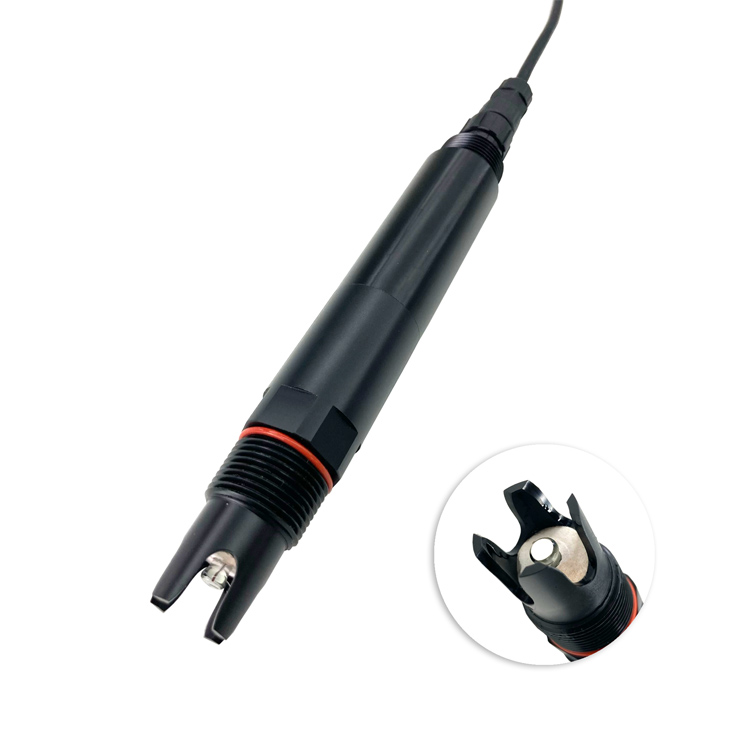
The separate pH sensor below provides important chemistry context. Automatic temperature compensation in the chlorine probe is not proof of automatic pH correction, and an HOCl-related result must not be relabelled as total chlorine.
Take the reference at a location and time corresponding to the water at the restored sensor. Use the project's appropriate analytical method and identify whether it reports the same relevant disinfectant fraction. A remote sample taken later can differ because of transport, disinfectant loss or a real process change.
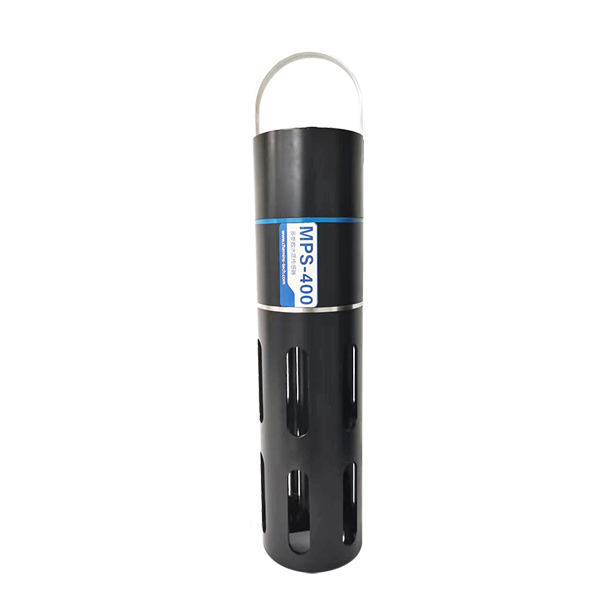
If disagreement remains, investigate sample delivery, bubbles, electrode preparation and the measurement basis before adjustment. A pH change can alter the HOCl/hypochlorite balance. An unchanged ORP value, from the separate instrument below, does not independently prove the chlorine result is correct.
| Restart finding | Next check | Do not assume |
|---|---|---|
| Low reading with uncertain flow | Actual flow, blockage and sample availability | That extra dosing is the correct response |
| Stable reading immediately after a long stop | Line displacement, cell renewal and timestamps | That stability proves current process water |
| Good reference agreement but wrong PLC value | Register, units, scaling and held-value logic | That another electrode calibration is needed |
| Prepared sensor and reference still disagree | Disinfectant basis, pH, sampling and actual model procedure | That all residual-chlorine methods are interchangeable |

At the PLC, RTU or data logger, verify that the channel has resumed updating and that flow and instrument validity are represented as required by the project. RS485 Modbus RTU does not by itself supply an independent low-flow switch or a complete dosing safeguard.
Under the responsible operator's procedure, test the transition from maintenance or fallback operation, the permitted alarm response and the intended dosing equipment. Retain any supervised restrictions until the process and control checks are complete. Do not claim one universal pump action is safe for every loss-of-sample event.
For a NiuBoL service or retrofit review, provide the interruption history, actual flow and pressure, sensor model, reference results, pH, temperature and controller behavior. Identify whether independent sample-flow information is available. A multiparameter assembly is not evidence that a dedicated chlorine measurement or flow-cell function is included.
Not solely on that indication. Confirm representative sample renewal, electrode readiness, valid comparison and the approved controller restart conditions.
No. New or long-stored electrodes have preparation requirements that differ from a short wet interruption. Use the procedure appropriate to the actual model and service condition.
The instrument may still measure water retained in the cell or the receiver may hold an earlier value. Neither condition proves that the displayed value represents current process water.
ORP can provide context in an established process strategy, but it does not independently establish the chlorine species or concentration. Retain the required chlorine comparison.
Record the interruption and corrective work, actual sample conditions, preparation, reference comparison, signal validity and supervised control check. Identify who authorized return to the intended operating mode.
A residual chlorine sensor restart is complete when fresh sample delivery, measurement validity and control behavior have each been checked. Keep loss of sample distinguishable from low residual, and resolve disagreement before changing calibration or increasing dose. Turbidity remains a separate sample-context measurement, not a chlorine reference.
Prev:Online Conductivity Sensor for RO: Comparing Feed and Permeate
Next:Ammonia Nitrogen Sensor Across a Biofilter: What the Difference Means
Related recommendations
Sensors & Weather Stations Catalog
 Agriculture Sensors and Weather Stations Catalog-NiuBoL.pdf
Weather Stations Catalog-NiuBoL.pdf
Agriculture Sensors Catalog-NiuBoL.pdf
Water Quality Sensor Catalog-NiuBoL.pdf
Related products
 Combined air temperature and relative humidity sensor
 TDR Soil Moisture & Temperature Sensor for irrigation| RS485 |4-20mA| NBL-S-THR
 Soil pH sensor RS485 soil Testing instrument soil ph meter for agriculture |NBL-S-PH
 Wind Speed sensor Output Modbus/RS485/Analog/0-5V/4-20mA
 Tipping bucket rain gauge for weather monitoring auto rainfall sensor RS485/Outdoor/stainless steel
 Pyranometer Solar Radiation Sensor 4-20mA/RS485


Screenshot, WhatsApp to identify the QR code
WhatsApp number:+8615367865107
(Click on WhatsApp to copy and add friends)

