





— Blogs —
—Products—
 Consumer hotline +8618073152920
WhatsApp:+8615367865107
Address:Room 102, District D, Houhu Industrial Park, Yuelu District, Changsha City, Hunan Province, China
Product knowledge
Time:2026-08-03 09:36:47 Popularity:264
Quick Answer: An online ORP sensor replacement should not inherit an existing dosing setpoint solely because its thread and output match. Confirm the electrode/reference basis, operating water, measurement range and signal interpretation. Check the new assembly with an appropriate standard and in the actual process before deciding whether the old operating limit remains suitable.

ORP is valuable when the process decision concerns oxidizing or reducing conditions, not the concentration of one chemical. It should not directly replace residual chlorine, ozone or sulfide concentration measurement where the project requires that specific result.
Before replacement, record the installed model, sensing electrode, reference arrangement if known, location, depth, output configuration and controller limits. Keep the last valid checks and note why replacement is being considered. An old probe with a contaminated reference is not a valid calibration reference for its replacement.
Confirm whether the historical record is raw potential against the installed reference or a converted value. Do not assume that every displayed mV value uses the same reference scale. If that basis is unknown, resolve it before transferring an endpoint or applying an offset.
The opening photograph shows the NiuBoL NBL-WQ-ORP. The separate ORP-4 variants have different range and accuracy specifications. A common 3/4 NPT fitting does not establish electrical or process interchangeability.
| Replacement item | NBL-WQ-ORP | ORP-4A / ORP-4S |
|---|---|---|
| Sensing method | Platinum electrode | Platinum electrode |
| Range; resolution | -1500 to +1500 mV; 1 mV | -2000 to +2000 mV; 1 mV |
| Accuracy | +/-20 mV | +/-6 mV |
| Water conditions | 0-50 degrees C; pressure at most 0.2 MPa | 0-50 degrees C; pressure at most 0.2 MPa |
| Supply; consumption | 12-24 VDC; 0.2 W at 12 V | 12-24 VDC; 0.2 W at 12 V |
| Output; calibration | RS485 Modbus RTU; one-point calibration | RS485 Modbus RTU; optional 4-20 mA; one-point calibration |
| Housing; protection | ABS/PC alloy; IP68 | POM/ABS for 4A; POM/316L for 4S; IP68 |
| Fitting; cable | 3/4 NPT; standard 5 m shielded cable | 3/4 NPT; standard 5 m shielded cable |
Confirm the ordered reference system, all wetted components and cable jacket for the actual chemistry. A housing material name does not establish compatibility of every seal or electrode component. Neither stated resolution nor improved instrument accuracy establishes the correct chemical endpoint.

An old mV limit belongs to an operating arrangement, not just a probe. Review the oxidant or reducing agent, pH band, water composition, mixing, sample location and response time. Replacement after a dosing-chemical change is not a like-for-like event even if the instrument model is unchanged.
In disinfection, retain the appropriate residual measurement and process verification. The separate chlorine sensor below measures another quantity; an ORP value cannot be converted universally into disinfectant mg/L. In wastewater oxidation or reduction, use the process designer's endpoint checks rather than copying a generic internet ORP target.
For broader application selection, see the ORP sensor application guide. Replacement work should establish which existing assumptions remain valid, not introduce an untested universal threshold.
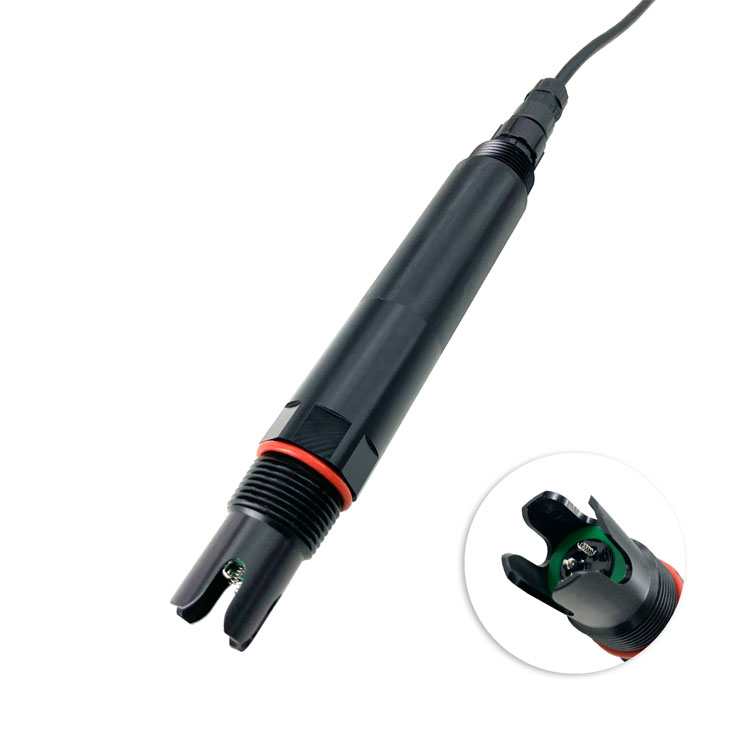
Use a suitable ORP standard with its assigned value for the applicable reference system and temperature. Follow the delivered assembly's stabilization and one-point calibration procedure. A pH buffer is not an ORP standard simply because both probes are electrochemical.
Where practical, compare a checked old probe and the checked replacement in the same representative water at the same time. Allow stabilization and keep the geometry and mixing comparable. If the old probe failed its standard check, treat its process disagreement as evidence to investigate, not a value the new probe must be forced to reproduce.
| Finding | Check next | Setpoint consequence |
|---|---|---|
| Standards agree, process observations differ | Reference basis, location, chemistry and stabilization | Investigate before carrying over the limit |
| Replacement disagrees in the standard | Correct solution, temperature, preparation and documented procedure | Do not use a process offset to hide an instrument problem |
| Probe output agrees but PLC value differs | Signed format, register mapping or current-loop scaling | Correct acquisition before changing process settings |
| Changed pH or dosing chemistry | Current endpoint relationship and independent process checks | Reassess the operating limit rather than assuming transfer |
Restore the intended depth and position after service. A different insertion length or a mount closer to an injection point can change the observation even when the replacement works correctly. Keep the sensing end downward; these assemblies must not be horizontal or inverted. Follow the ordered model's inclination requirement.
The separate pH probe below can help document process context. A pH change can affect ORP interpretation, but pH is not a correction factor that automatically makes two ORP measurements equivalent. Keep the two measurements and their locations identifiable.
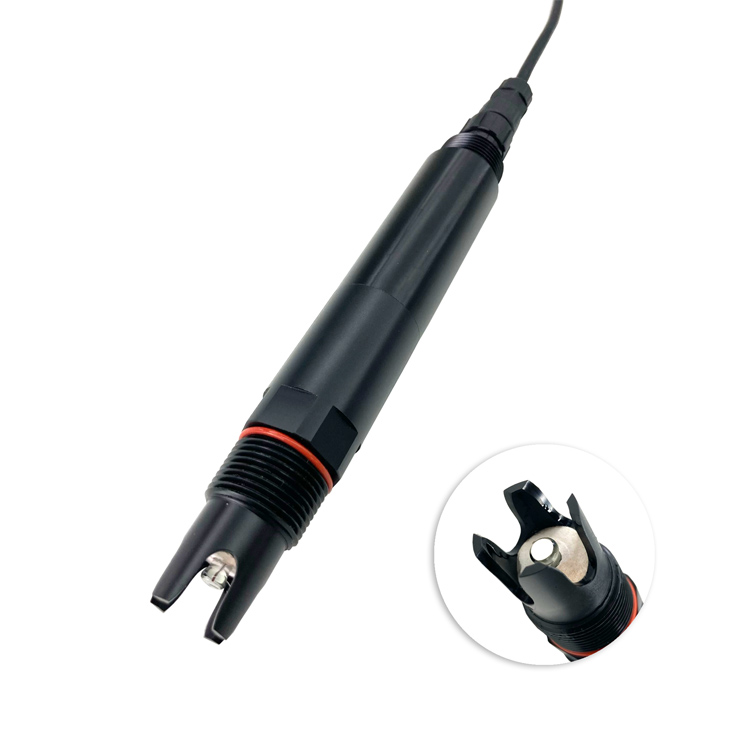
Place the dosing loop in its approved maintenance state before disconnecting the probe. For RS485 Modbus RTU, verify the new address, communication settings, register data type and signed mV. Do not assume that two models use the same register layout because they share the protocol.
For a delivered ORP-4 current-output option, verify its configured span against the PLC input conversion. As an illustrative calculation only, a -2000 to +2000 mV span mapped linearly to 4-20 mA puts 0 mV at 12 mA. If the PLC mistakenly retains a -1500 to +1500 mV span, 16 mA displays +750 mV instead of +1000 mV. Confirm the actual configured span rather than adopting this example as a factory setting.
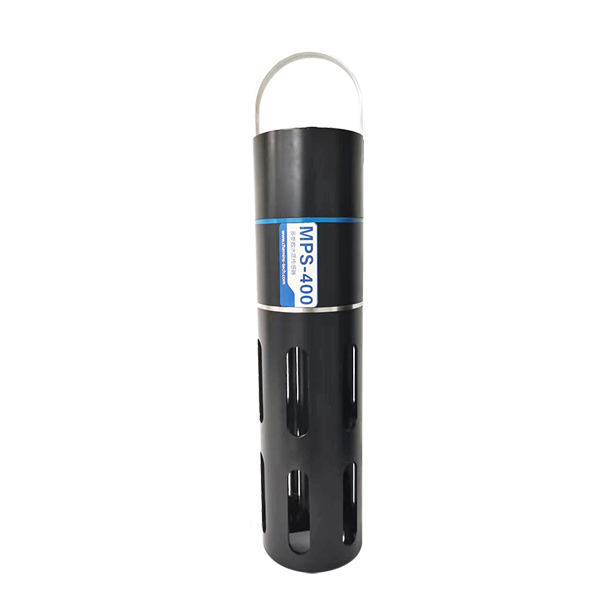
Check alarm direction, dosing response, validity handling and the transition back to automatic operation under the responsible operator's procedure. Retain a record of changed hardware, calibration, scaling and any approved setpoint change. A multiparameter replacement must identify the actual ORP module, not merely the assembly family.
Only after confirming measurement basis, process conditions and receiver interpretation. Better stated accuracy does not by itself establish equivalence to the historical operating relationship.
Not without investigation. Check both with an appropriate standard and establish whether the old result remained valid. Matching a failed reference can transfer its error.
No. Confirm the delivered register map, address, signed data interpretation and units. Test the final stored value before re-enabling the associated dosing logic.
Send NiuBoL the old assembly, reference information, water chemistry, operating range, mounting dimensions, cable route, receiver settings and reason for replacement. Include the actual dosing task and existing verification records.
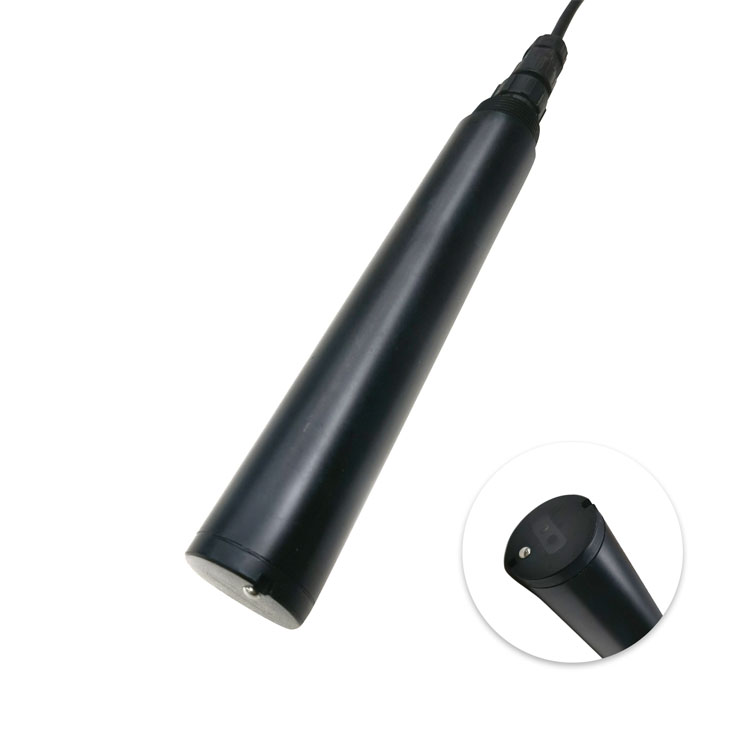
No. Particles or deposits may warrant investigation, but a turbidity reading cannot establish redox chemistry or validate a dosing endpoint. Use it only where it answers a defined diagnostic question.
An online ORP sensor replacement is complete when the new measurement, installation and receiving system are verified for the actual process. Carry over an existing setpoint only after its basis has been checked; do not use the replacement exercise to preserve an unexplained offset or outdated chemical relationship.
Prev:Online BOD Sensor: Keeping Wastewater Trends Valid After Process Changes
Next:Online Conductivity Sensor for RO: Comparing Feed and Permeate
Related recommendations
Sensors & Weather Stations Catalog
 Agriculture Sensors and Weather Stations Catalog-NiuBoL.pdf
Weather Stations Catalog-NiuBoL.pdf
Agriculture Sensors Catalog-NiuBoL.pdf
Water Quality Sensor Catalog-NiuBoL.pdf
Related products
 Combined air temperature and relative humidity sensor
 TDR Soil Moisture & Temperature Sensor for irrigation| RS485 |4-20mA| NBL-S-THR
 Soil pH sensor RS485 soil Testing instrument soil ph meter for agriculture |NBL-S-PH
 Wind Speed sensor Output Modbus/RS485/Analog/0-5V/4-20mA
 Tipping bucket rain gauge for weather monitoring auto rainfall sensor RS485/Outdoor/stainless steel
 Pyranometer Solar Radiation Sensor 4-20mA/RS485


Screenshot, WhatsApp to identify the QR code
WhatsApp number:+8615367865107
(Click on WhatsApp to copy and add friends)

